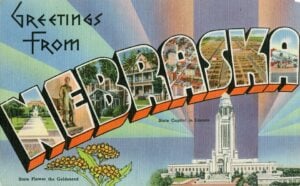
Since Nebraska became a U.S. state in 1867, it has participated in presidential elections. Like other Midwestern and Rocky Mountain states, Nebraska has long maintained a strong Republican presidential voting pattern. Recent results show a divide between Nebraska’s 1st and 3rd districts and the 2nd. Since 1992, Nebraska has split its Electoral College votes, making it one of only two states, along with Maine, to do so. This article examines Nebraska’s presidential election history and its congressional district results since the Electoral College split.
Nebraska’s Early Presidential History
Nebraska became a state on March 1, 1867, joining the Union as the 37th state and holding its first presidential election in 1868. The first settlers who came to Nebraska consisted mainly of Civil War veterans and Unionists. From the start, Nebraska strongly favored Republicans, who won 70.7% of the popular vote in the 1872 presidential election.
By the late 1800s, Nebraska’s presidential elections shifted with changes in its agrarian economy. The economic problems brought about the emergence of the significant Populist movement, which turned the state into a political battlefield. In the pivotal 1896 election, Lincoln native William Jennings Bryan became the Democratic-Populist candidate, defeating Republicans in Nebraska for the first time.
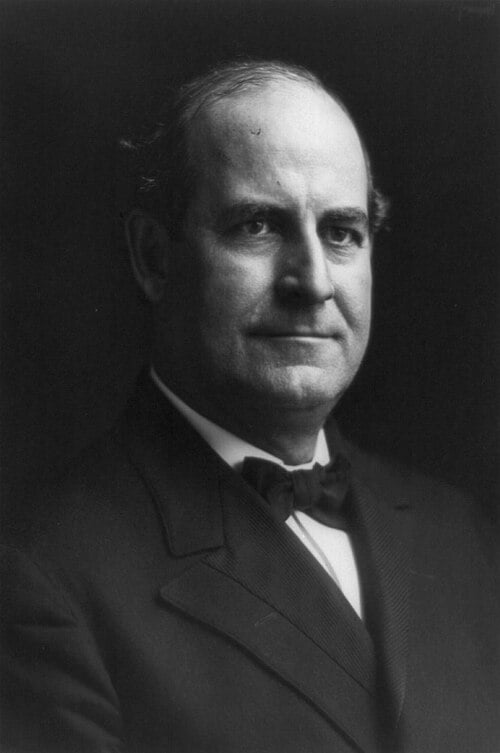
The early 20th century brought major shifts between the two dominant parties. Republicans reclaimed Nebraska under William McKinley in 1900 and Theodore Roosevelt in 1904, but Bryan won the state again in 1908. The divided 1912 election fractured Nebraska’s Republican base, allowing Democrat Woodrow Wilson to win the state with a progressive coalition. In 1916, with William Jennings Bryan’s endorsement, Wilson won Nebraska again by a larger margin.However, this would be the last Democratic win for nearly two decades.
By 1920, there was a national backlash against Wilson’s presidency and the war. The 1920’s saw three consecutive Republican landslides, and Nebraska followed suit. However, things were about to change all across the country.
From Populism to the New Deal Era
The Great Depression caused President Herbert Hoover’s popularity to plummet heavily. In the 1932 U.S. Presidential election, Democratic nominee Franklin D. Roosevelt (F.D.R.) defeated Hoover in a landslide. That year, the former carried Nebraska very decisively, even winning all but two of the state’s counties. Four years later, Roosevelt won Nebraska once again. However, his 1936 margin was lower than what was seen in previous elections.
Although some Nebraska farmers liked Roosevelt’s New Deal agricultural policies, others found them to be counterproductive. The 1936 election was the last time a Democrat carried Nebraska until 1964 and the last to win it by double digits. Even in F.D.R.’s last two presidential landslides, Nebraska voted strongly Republican.
However, in 1948, Democrat Harry Truman kept Republican Thomas Dewey’s Nebraska victory to a single-digit margin. Evidently, Truman campaigned in support of federal price supports, which resonated with some farmers in the region.
The economic circumstances of the time thus created a pattern whereby party preferences flowed along with economic performance. Ultimately, agricultural downturns once hurt incumbent parties, but Nebraska’s early political volatility eventually gave way to strong conservatism.
The 1950’s saw Nebraska’s historical Republican dominance showcased to the nth degree. Republican nominee Dwight D. Eisenhower, a World War II hero from neighboring Kansas, won two consecutive landslides in 1952 and 1956, respectively. His numbers in Nebraska certainly mirrored his national wins. The 1960 U.S. Presidential election proved to be one of the closest in U.S. history, with Democrat John F. Kennedy just barely claiming victory over Richard Nixon, Eisenhower’s vice president. Despite a close race, Nebraska proved to be one of Nixon’s strongest states in 1960. The country was about to experience significant changes throughout the 1960s, and Nebraska would be in for the ride.
One Last Democratic Win
Following the assassination of John F. Kennedy in 1963, the United States was still in mourning by the time of the 1964 U.S. presidential election. With most Americans backing Democratic President Lyndon Johnson, Republican nominee Barry Goldwater faced an uphill battle as a candidate seen as too conservative. However, some traditionally Republican states were sticking to their voting patterns. This could explain why Johnson narrowly carried Nebraska that year. It would prove to be the last time a Democrat would carry the state.
Continued Republican Dominance
Richard Nixon comfortably won Nebraska in 1968 and expanded his margin in the 1972 Republican landslide. Gerald Ford, who became president after Nixon’s resignation over Watergate, was born in Nebraska despite representing Michigan. Ford ran as the Republican nominee in the 1976 U.S. Presidential election against Washington outsider Jimmy Carter, from Georgia.
Carter’s main wins that year came in the South, Northeast, and parts of the Midwestern Rust Belt. Carter, a peanut farmer, appealed to many Midwestern farmers as a “common man,” keeping Ford’s margins in Kansas, South Dakota, and North Dakota to single digits. However, Nebraska was an exception, as Ford’s birth state was one of his strongest that year.
Carter’s presidency was marked by high unemployment, double-digit inflation, and Americans being held hostage in Iran. Republican Ronald Reagan continued Nebraska’s solid Republican trend with landslide wins in 1980 and 1984, followed by his vice president, George H.W. Bush.
Electoral College Split
Since adopting the congressional district system in 1992, Nebraska has become increasingly conservative. Republicans George H.W. Bush and Bob Dole won Nebraska in 1992 and 1996 despite competitive three-way races against Bill Clinton and independent Ross Perot. Over the next ten years, the state would continue to vote heavily in favor of George W. Bush in the 2000 and 2004 elections.
2008: Nebraska’s First Electoral Split
In 2008, Nebraska split its electoral votes for the first time, with John McCain winning statewide and two districts while Barack Obama won the 2nd District. Obama became the first and, so far, last Democrat to exceed 40% in Nebraska since 1964.
Despite McCain’s rural support, the recession and war backlash helped Obama gain rural and suburban voters, including in the 2nd District. Nebraska returned to unified Republican support in 2012 and 2016, giving all five electoral votes to Mitt Romney and Donald Trump. However, the competitive nature of the 2nd Congressional District reemerged in the next two cycles.
In 2020, Donald Trump secured the vote in the state, but Democrat Joe Biden won in the 2nd District. The pattern repeated in 2024, with Trump winning statewide and two rural districts while Harris won the 2nd District, giving Republicans a 4–1 split.
How Nebraska Allocates Electoral Votes
Nebraska allocates its five Electoral College votes using a unique “Congressional District Method” rather than the traditional winner-take-all system. Under this model, two electoral votes are awarded to the statewide popular vote winner, representing the state’s two Senate seats. The remaining three electoral votes are distributed individually to the winner of each congressional district.
Nebraska is one of only two states in the nation to use this system, alongside Maine. This specific framework makes Nebraska’s individual congressional districts highly relevant to presidential campaigns. Because Nebraska allocates votes by district, a candidate can lose statewide but still win an electoral vote by carrying a specific district.
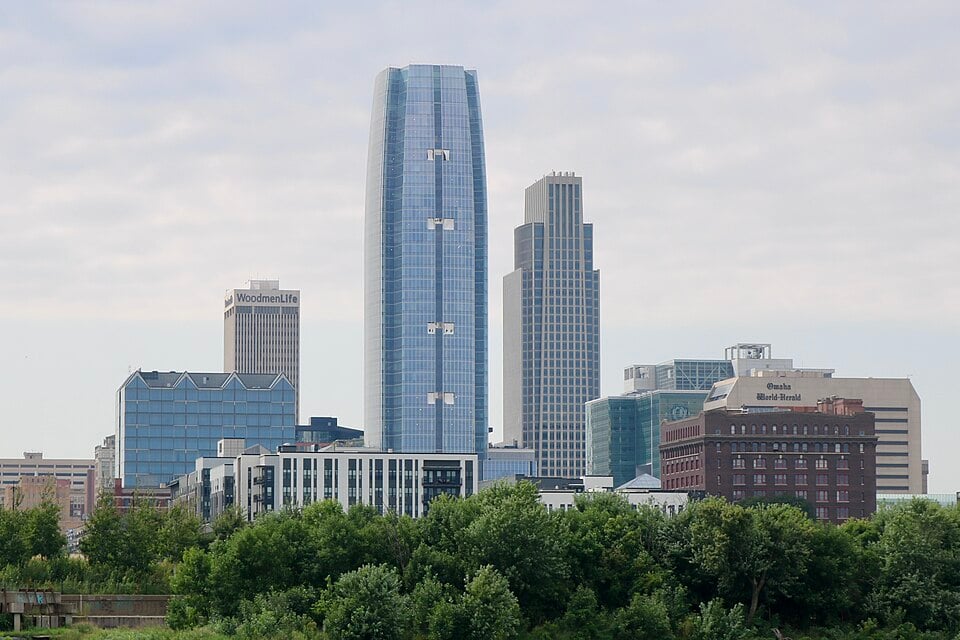
Nebraska’s 2nd District, which includes Omaha, most often differs from the statewide result. While Nebraska’s rural districts lean Republican, the urban and suburban 2nd District remains highly competitive. This has allowed Democrats to win one electoral vote in close elections, making the reliably red state a key battleground.
Nebraska’s 2nd Congressional District
Centered on Omaha, Nebraska’s 2nd District includes Douglas and Saunders counties and parts of Sarpy County. While most of Nebraska is rural and Republican-leaning, the 2nd District is an urban and suburban hub. This demographic makeup has made the district a key presidential battleground.
Over time, the 2nd District has established a reputation for political competitiveness, frequently moving against the broader statewide consensus. In 2008, Democrat Barack Obama won the district’s single electoral vote while Republican John McCain won the rest of Nebraska. After backing Republicans in 2012 and 2016, the district diverged again in 2020, backing Democrat Joe Biden while Trump won statewide. This independent streak persisted into 2024. In 2024, Democrat Kamala Harris won the 2nd District with 51.6%, while Donald Trump won Nebraska with 59.3%.
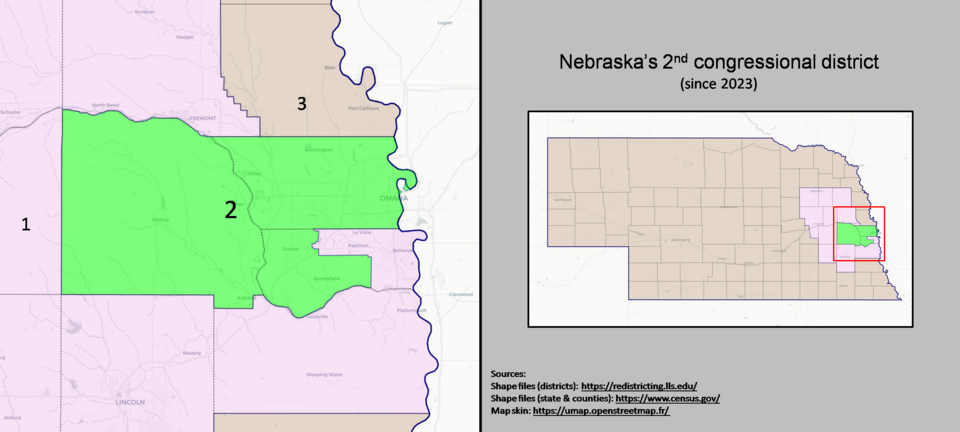
Map: CX Zoom via Wikimedia Commons, CC BY-SA 4.0.
The district’s unique behavior highlights how Nebraska’s district-based allocation provides a completely different Electoral College dynamic compared to winner-take-all states. In a standard winner-take-all system, a candidate winning a state by any margin absorbs 100% of its electoral influence. Nebraska’s system instead permits the 2nd District to act as an independent political landscape. This structure guarantees that local shifts in the Omaha area directly impact the national electoral tally, preventing a single statewide majority from fully erasing the distinct political preferences of the urban electorate.
Recent Presidential Elections and Nebraska’s Electoral Votes
Nebraska’s recent presidential cycles showcase the dynamic nature of its split electoral allocation. While Nebraska’s statewide vote favors Republicans, the urban 2nd District remains a battleground.
In 2016, Donald Trump achieved a clean sweep of the state’s five electoral votes. However, the 2nd District diverged in both 2020 and 2024, awarding its single vote first to Joe Biden and then to Kamala Harris.
These outcomes show how the district system preserves Omaha’s local electoral voice despite statewide majorities. This marked the first time Nebraska’s 2nd District backed a losing Democratic nominee, reinforcing its status as a distinct political landscape.
What Nebraska’s Presidential History Shows
Nebraska’s presidential history demonstrates a deep-rooted, long-term Republican voting tendency, yet its unique allocation system proves that statewide results and congressional districts do not always move together. While a Democratic presidential candidate has not won Nebraska statewide since Lyndon B. Johnson in 1964, individual districts have occasionally broken the state’s unified front.
The political significance of Nebraska’s modern era lies entirely within the 2nd Congressional District. By swinging to Democratic nominees in 2008, 2020, and 2024, this Omaha-centered battleground has repeatedly asserted its independence from the heavily conservative rural districts. Ultimately, Nebraska’s history shows that local demographics can override statewide trends, making every single district vote count on the national stage.
Conclusion
The overriding characteristics of Nebraska’s history of presidential elections are conservative principles supplemented with a flexible election system. Nebraska’s district-based allocation ensures local political shifts are reflected nationally. The 2nd District demonstrates how Nebraska’s voting system can produce different results that reflect both urban and local preferences.
Sources:
National Archives — 2024 Electoral College Results
Nebraska Secretary of State — Previous Elections
National Archives — Distribution of Electoral Votes
National Archives — Electoral College Results
Editor’s Disclaimer: This article examines Nebraska’s presidential election history and the state’s congressional district-based Electoral College system using publicly available election records and historical sources. Election results, percentages, and historical information are presented for informational and historical purposes. While every effort has been made to ensure accuracy, readers are encouraged to consult the cited official sources for the complete election record. This article does not endorse any political candidate, political party, or electoral position.
