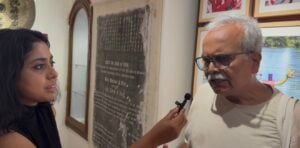
KOLKATA, INDIA — After taking me to Bangkok and Hua Hin in Thailand, my latest travelogue with Presence News brought me closer to home—to an unfamiliar yet charming corner of India where Chinese immigrants have preserved their culture and traditions for generations.
For the past two weeks, I have been exploring Kolkata’s Chinatown, tracing a story of a fifth-generation merchant family keeping its food heritage alive through its sauces, a temple and a club fighting to sustain their traditions despite dwindling enrolment, and a newly opened gallery attracting curious high school and college students every Sunday. Their stories reveal a community determined not only to preserve its past, but also to find new possibilities—and international attention—to ensure its culture survives for generations to come.
Behind the congested and bustling streets of the Tiretti Bazaar area lies a neighborhood shaped by Chinese history and architecture. Many structures are faded, some are abandoned, while others have been occupied by small shops. Yet the walls still tell the story of a community that came to Kolkata in the 18th century. Today, the fifth generation continues to live here, holding on to its roots and culture.
This is Kolkata’s Chinatown!
A Historic Chinatown Facing a Changing Future
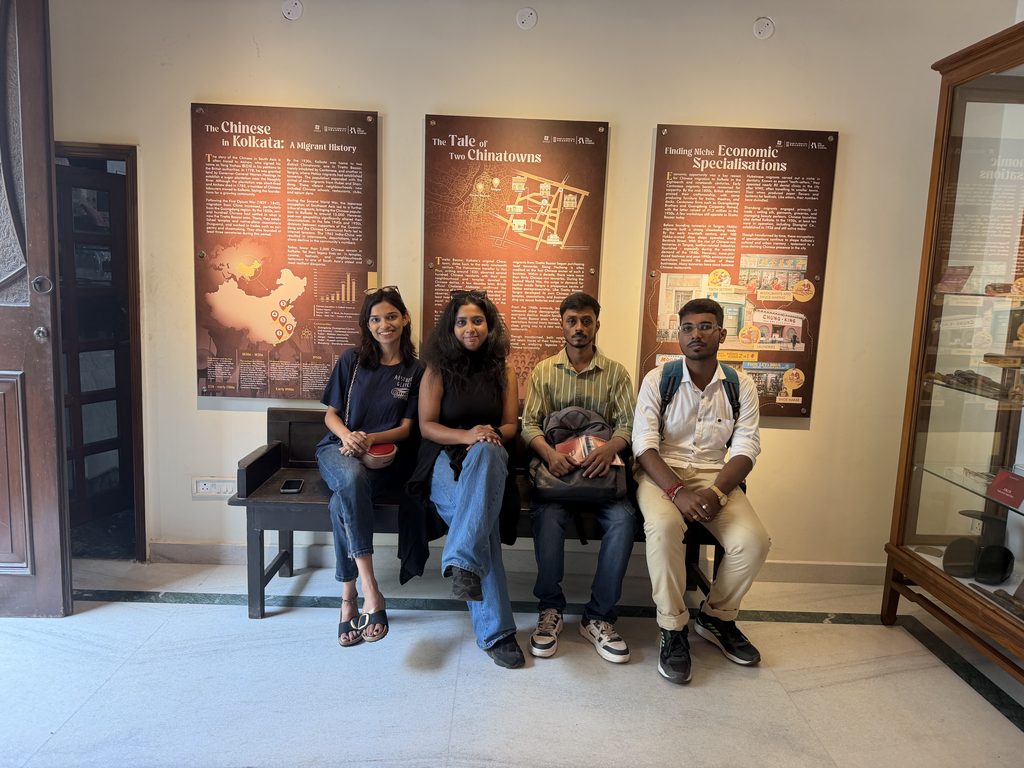
This month, a new Chinese Heritage Gallery was inaugurated in the area. Interestingly, many young people from other communities visited the gallery on Sunday, curious to learn about Chinese culture and history and to show support for a community whose population has declined from around 20,000 to approximately 2,000 in Kolkata.
The area known as Chinatown is filled with old buildings carrying Chinese architectural details. But many corners are now surrounded by dirt, open slaughterhouses, and unhygienic conditions, with the historic neighborhood increasingly resembling a semi-urban wholesale market.
Still, not everything is lost.
The new gallery, along with growing interest from the local Bengali community, has brought some hope. Youngsters, vloggers, volunteers and history students have started visiting the area and showing interest in preserving its heritage.
A Family Business Keeps Kolkata’s Chinese Food Heritage Alive
Amid this changing Chinatown, the smiling face of Dominic Lee, a fourth-generation Chinese-Indian, remains closely connected to the community and its business history.
Lee is associated with Pou Chong, a company known for its sausages, sauces, and noodles.
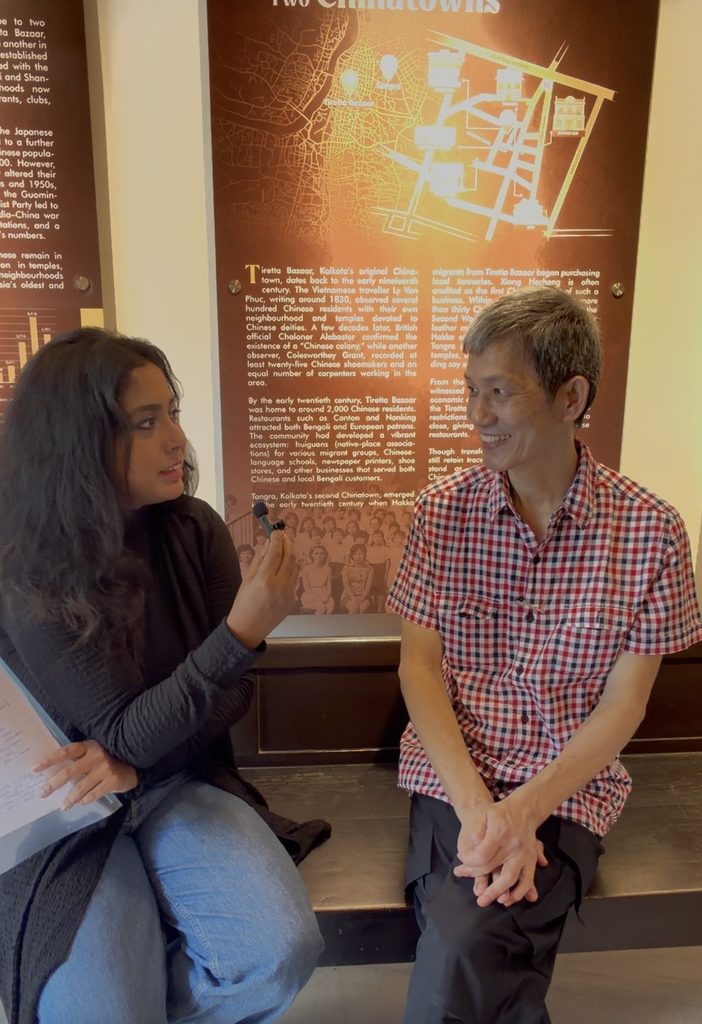
“My great-grandfather was a herbal doctor. He came here around the 18th or 19th century. At that time, China was economically weak, and there were civil wars. People had heard about Calcutta, which was then the British capital in this part of Asia. By that time, there were already Chinese clubs and temples in Cheenapara, and he started his herbal practice here,” Lee said.
Chinese migration to Kolkata during that period had a strong economic reason. People came in search of work and opportunities, while conditions in China pushed many to look for a better means of survival.
Lee’s father, a third-generation Chinese born in Calcutta, also had to find a way to survive after his own father died.
He noticed that local people loved chilies and chutneys. He began making homemade sauces, which became popular within the Chinese community.
At that time, the Chinese population in Kolkata was much larger, with the community helping the distribution business grow.
The real challenge came after the 1962 India-China war, when a large number of Chinese people left India.
For those who stayed, survival meant adapting to new circumstances.
“The challenge led us to travel to different states, including Bombay and Hyderabad. We started with five-star hotels,” Lee said.
From Family Recipes to a Kolkata Classic
Lee also believes Kolkata gave birth to one of the city’s most famous Chinese-Indian dishes.
“Calcutta is the birthplace of chili chicken,” he said.
According to Lee, chili chicken developed from the meeting of two food cultures.
“People in Calcutta liked green chili and masala, while Chinese cooking used soya sauce. The two tastes came together, and that is how the fusion happened,” he said.
Today, chili chicken has traveled far beyond Kolkata, becoming popular in cities around the world.
For Lee, the lesson for the next generation is simple. “Manners, honesty and earning in the most honest way, while maintaining quality without duplicity — that is what helps you last,” he said.
“You cannot satisfy everyone’s taste, but you should focus on your own strength,” he said, explaining that his strength lies in authentic taste and quality.
His advice to the next generation is equally straightforward.
But when he looks at the neighborhood where he grew up, Lee feels that something important has already disappeared.
“The neighborhood culture is gone,” he said.
Preserving Culture Beyond the Neighborhood
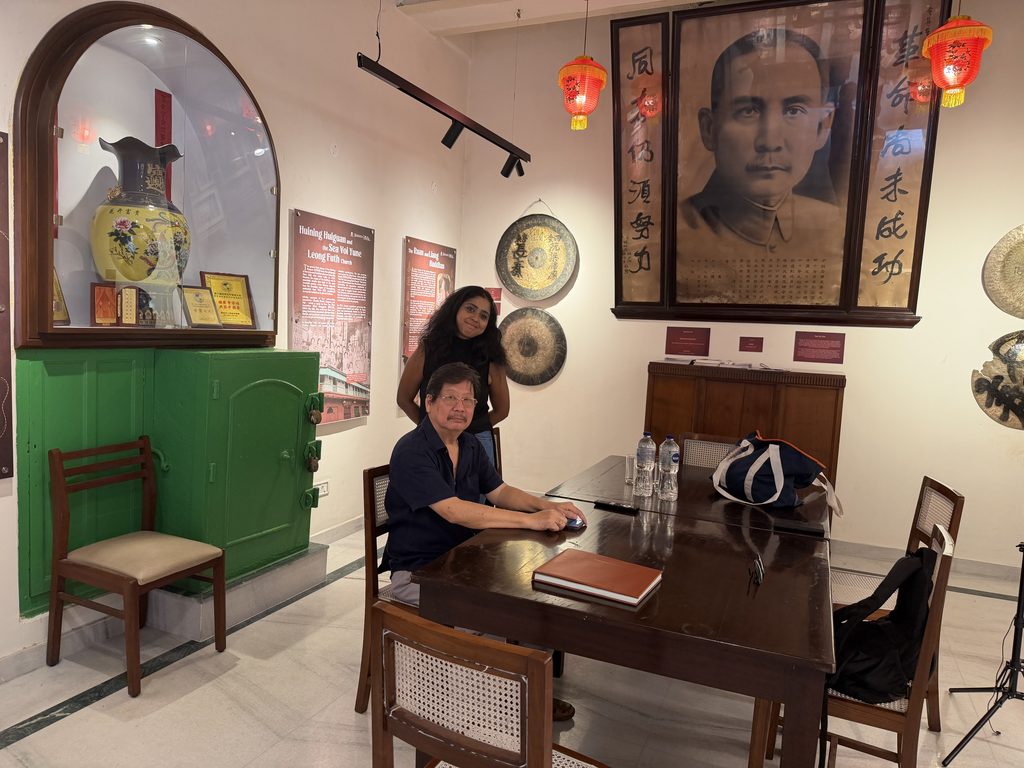
Chen Yao Hua, president of the All India Chinese Association, shares the same concern as Lee. Deeply involved in collecting rare traditional Chinese artifacts, Chen hopes the new gallery will bring greater attention to the history and help Chinese culture survive.
Nam Soon Church and the Community Behind It
A few lanes behind the gallery stands Nam Soon Church, one of the most significant reminders of Kolkata’s historic Chinese community. Established in 1820, the temple is regarded as the oldest surviving Chinese temple in Kolkata.
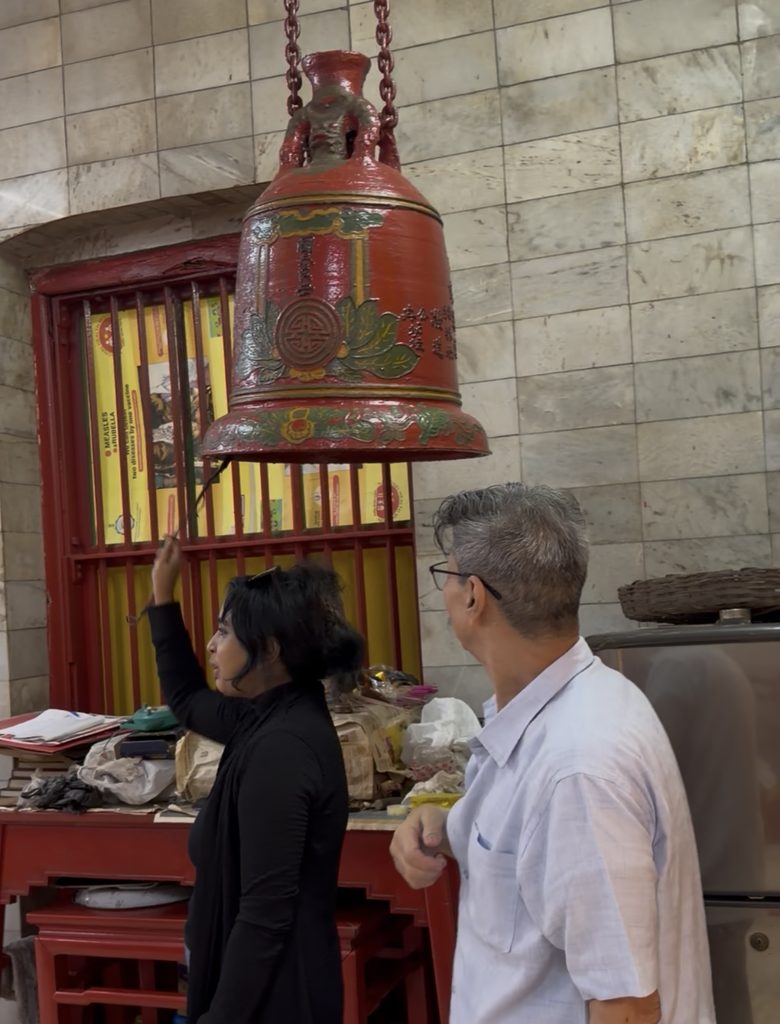
The walk from the gallery to Nam Soon Church still carries traces of the once-vibrant community. Old buildings, Chinese architectural details, and remnants of community institutions remain visible.
But they now exist alongside crowded markets, roadside meat and chicken shops, garbage, and poorly maintained surroundings.
The old character of the neighborhood is slowly disappearing.
Why the Next Generation Matters
Ho Yuen Htat, the President of the Nam Soon Church club, believes the community itself also needs to change.
“I have told people in my community that we need to be more open. Chinese people are generally more private, but now we should be more outgoing and mix with everyone. Otherwise, our community will continue to become smaller,” Ho said.
According to Ho, the younger generation is leaving, making it increasingly difficult to maintain traditions.
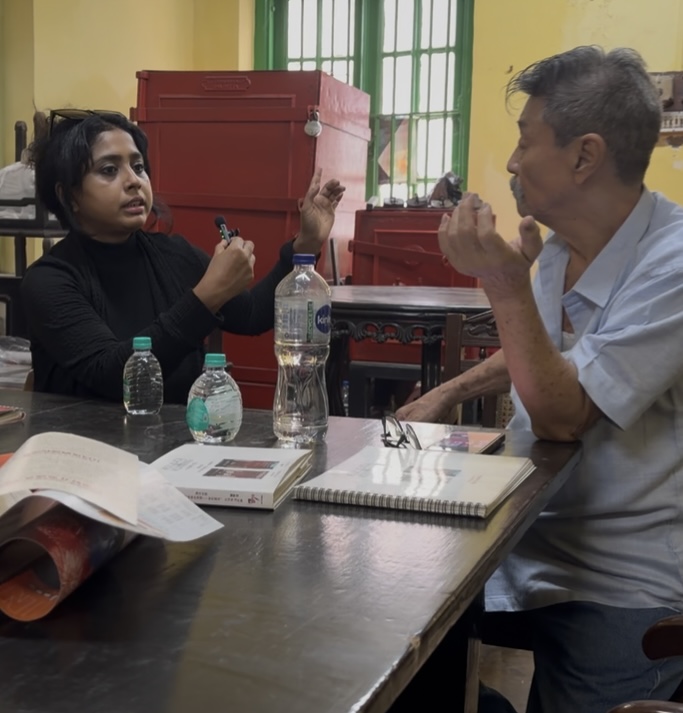
“Culture is not only about buildings. It is about people living together, speaking the language, celebrating festivals, maintaining community institutions, and passing traditions from one generation to another,” he said.
For him, Nam Soon Church is not simply a temple.
“It is connected with our community and our history. Our ancestors came here and built these institutions. They created a place where people could pray, meet, celebrate, and help each other. When you lose a place like this, you are not just losing an old building. You are losing part of the history of the people who built it,” he said.
Preserving More Than Buildings
On the changing surroundings of the temple, Ho said the old buildings are increasingly difficult to recognize amid the markets and commercial activity.
“We are not saying that other people should not live here. Everyone has the right to live and work here. But there should also be respect for the history and culture of the Chinese community,” he said.
Earlier, he said, there were many Chinese families in the area, along with schools, clubs, businesses and community activities.
Today, many families have moved away, particularly younger people.
“So when outsiders come into the area, they see it simply as another part of Kolkata. But for us, this is our history,” Htat said.
He believes the biggest problem is the shrinking size of the community itself.
“If young people don’t stay, who will continue the traditions? Who will maintain the clubs? Who will teach the language? Who will look after the temples? You cannot preserve culture only by preserving a building. You need people,” he said.
“Chinese people are generally more private. I don’t tend to mix with anyone,” “I advise them to be more open to outsiders. But now, we need to be more open and mix with everyone. Otherwise, this attitude will make our community disappear further,” said Ho Yen Htat, 72, president of Nam Soon Church and a second-generation resident of Cheenapara in central Kolkata.
His concern reflects a community that has lived in Kolkata for generations but is now steadily shrinking.
Hope for a Living Chinatown
Still, Ho believes there is hope.
“The government, heritage organizations and the community all have a role. People should understand that Chinatown is part of Kolkata’s history. The Chinese community has lived here for generations. We have contributed to the city, and our culture has become part of Kolkata’s identity,” he said.
His message to the younger generation is clear.
“Don’t forget where you came from. You can go anywhere in the world. You can build your career and your life elsewhere. But you should remember your history and your culture. If we forget that, then one day there may be buildings left, but there will be no community behind them,” Htat said.
And perhaps the connection between the Chinese community and the wider city is already beginning to show what that openness can create.
An Outsider Finds a Community Worth Preserving
Veteran Kolkata photographer Bijoy Chowdhury first came to Chinatown in 2000, when a Bombay-based company assigned him to cover the area.
“I was an art college graduate. In 2000, I was assigned by a Bombay-based company to cover Chinatown. After coming here and working on the story, I felt almost angry with myself. Even though I lived nearby, how had I never known about this place?” he recalled.
He completed the project, but Chinatown left a lasting impression on him.
“Anyway, I submitted the project, but this place left an impact on me. Now my circle of friends is full of Chinatown residents. Even today, we are going to a Chinese restaurant for lunch,” Chowdhury said.
He also remembered his first interactions with the community.
“Initially, during my first interviews, I felt that they avoided talking to outsiders. But once they trust you, that bond can last forever,” he said.
Editor’s Disclaimer: This article is based on reporting, interviews and firsthand observations gathered by a Presence News reporter during their on-site coverage in Kolkata, India. The views and statements expressed by individuals quoted in this article are attributed to those sources and do not necessarily reflect the views of Presence News or its editorial staff.
