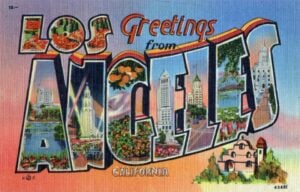
LOS ANGELES, CA— Los Angeles is the most populous city in California and the second-most populous city in the United States. As California’s largest city, Los Angeles plays an important role in the state’s presidential voting patterns. Early presidential election results often focused on larger areas like Los Angeles County and California, making city-level comparisons more difficult. For this comparison, the analysis begins with the 1964 presidential election, when Los Angeles city results are available. It’s interesting to see how voting patterns in Los Angeles County and the growing city of Los Angeles have changed over the years.
Los Angeles County in Early Presidential Elections
Los Angeles County was not always the sprawling metropolitan region it is today. During the 19th and early 20th centuries, agriculture was an important part of the region’s economy as Los Angeles developed and expanded. The Southern Pacific Railroad was an influential economic and political force in California during this period. Los Angeles County supported Democratic presidential nominees in the early presidential elections following California’s admission to the Union, before Republican Ulysses S. Grant carried the county in 1872. The county subsequently developed a strong Republican voting pattern that continued through much of the early 20th century.
Los Angeles County consistently supported Republican presidential nominees during much of the early 20th century. However, in the 1912 U.S. Presidential election, some changes were beginning to be seen as Los Angeles voted heavily for former President Theodore Roosevelt, who was running under the Progressive “Bull Moose” banner. Roosevelt’s strong performance in California in 1912 reflected the appeal of the Progressive Party during an election marked by a major split within the Republican Party.
Despite backing the progressive Roosevelt in 1912, Los Angeles went back to voting heavily for the Republican nominee in 1916 and in all three Republican landslides of the 1920’s: 1920, 1924, and 1928. The Progressive Party did not maintain the electoral strength it had demonstrated in 1912, while Los Angeles continued to experience substantial population growth and migration during the following decades. Some historians have linked the region’s changing political alignment to migration and demographic changes during this period. This made Los Angeles a Republican stronghold for a brief period. However, things were about to change, not only in Los Angeles, but all over the United States.
Franklin D. Roosevelt and the New Deal
The Great Depression coincided with a major shift in Los Angeles County’s presidential voting patterns. Franklin D. Roosevelt carried Los Angeles County in each of his four presidential campaigns, as the region underwent significant economic and demographic changes during the Depression and World War II.
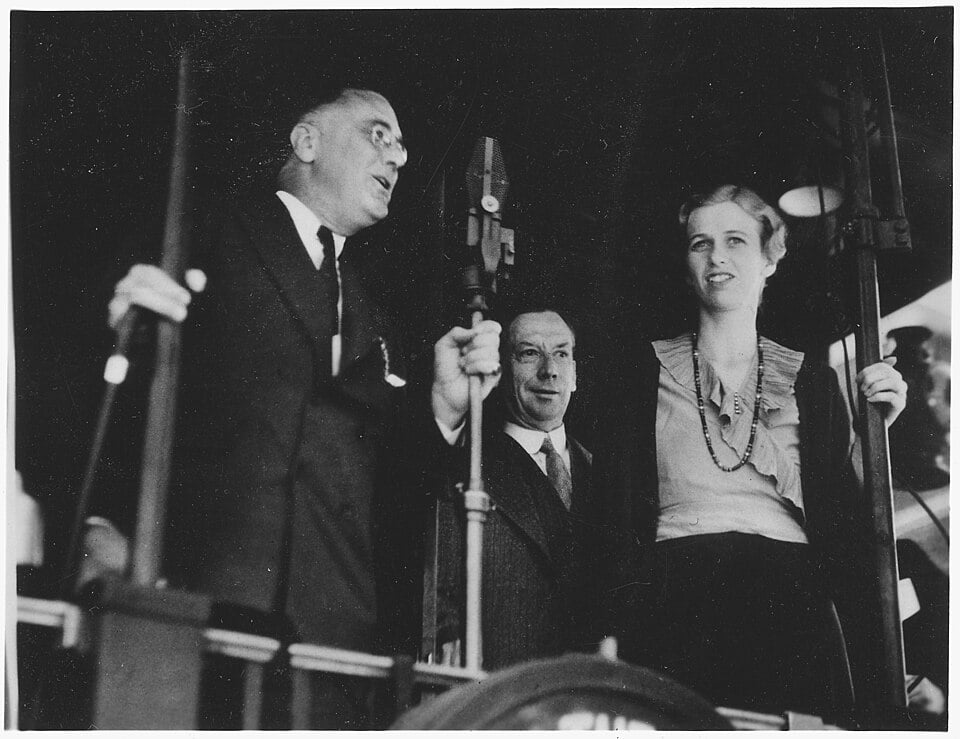
Roosevelt’s New Deal coalition included organized labor, immigrant communities, and other groups that became important components of the Democratic electorate. Federal investment and wartime production contributed to major economic and industrial growth in Southern California. The region’s political alignment changed substantially during the New Deal and wartime periods.
The county’s voting patterns reflected the broader political changes taking place in California and across the nation
The period established a new political pattern in Los Angeles that would continue to evolve in the postwar decades. However, in the 1948 U.S. Presidential election, Los Angeles barely voted for Democrat Harry Truman, as did California as a whole. This was an indicator that a brief Republican resurgence would occur in the area.
Postwar Los Angeles and the Rise of California Politics
During the 1950s, California became increasingly important in presidential politics as its population and economy expanded. Propelled by a massive post-World War II manufacturing boom and rapid suburbanization, the city’s population exploded with an influx of defense workers, expanding middle-class families, and growing minority communities.
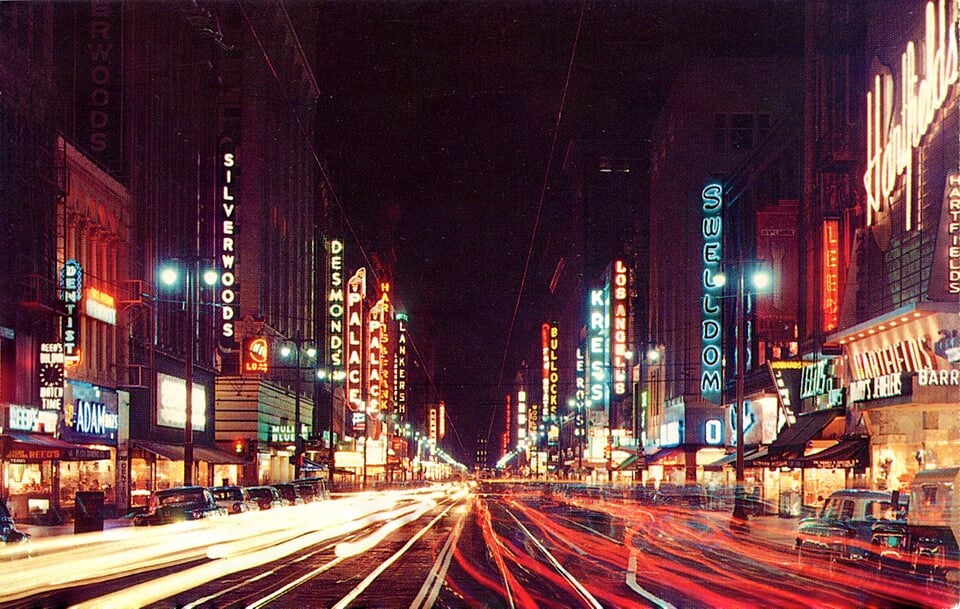
The region’s growing electorate increased Southern California’s importance in presidential campaigns, particularly as suburban communities expanded. Despite its diversity, the region favored Republican Dwight D. Eisenhower’s moderate conservatism and internationalism. Eisenhower won Los Angeles County and California in both 1952 and 1956. The rise of California Republicans like Vice President Richard Nixon also increased the state’s importance in presidential campaigns.
Kennedy, Nixon, and the 1960’s
The 1960 presidential election highlighted California’s emergence as a pivotal political battleground, pitting John F. Kennedy against Vice President Richard Nixon. Nixon carried California narrowly in 1960, while Kennedy won the national election by a slim margin.
As the decade progressed, profound social upheaval, civil rights movements, and anti-war protests reshaped both national and local politics. Crucially, the 1964 presidential election marks the beginning of the city-level results series examined in this article.
Johnson won the city by a wide margin, reflecting the broader Democratic performance in California and nationally that year. The 1964 election began an uninterrupted run of Democratic presidential victories in the City of Los Angeles that continued through the 2024 election. Although California and Los Angeles County continued to support Republican presidential nominees in several subsequent elections, the city of Los Angeles would not follow suit.
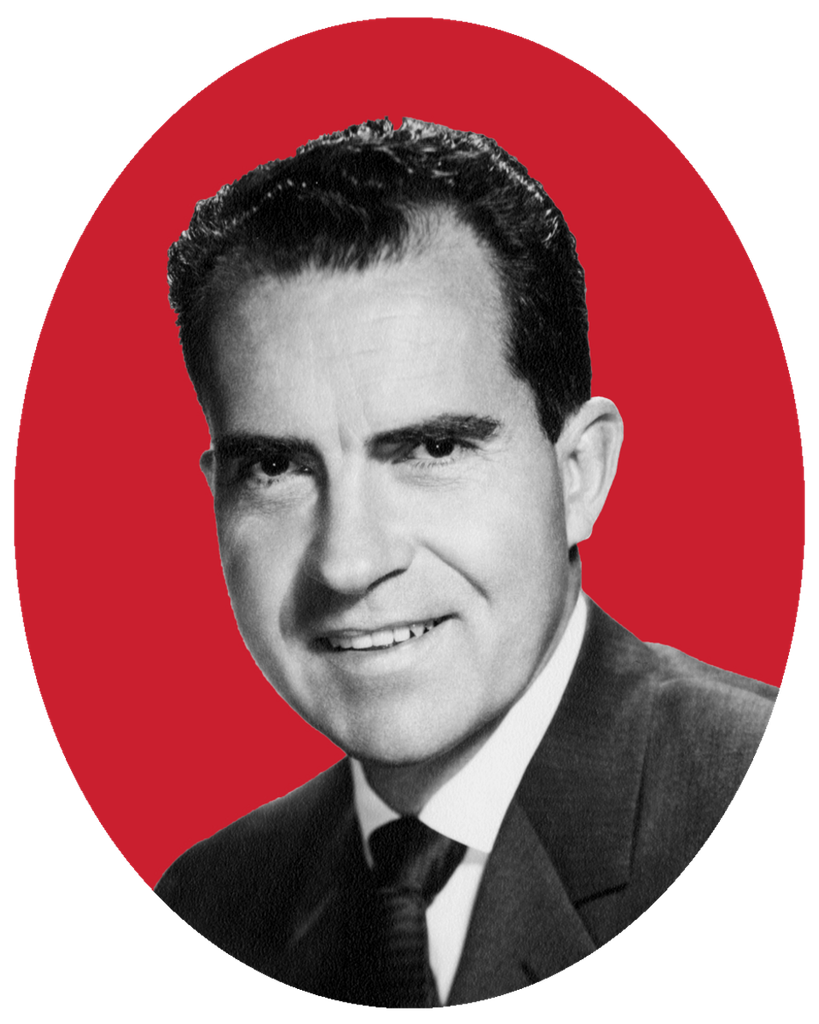
By 1968, the political pendulum swung again amidst national racial and social turmoil. Nixon narrowly carried California in 1968, while the Democratic vote was divided among multiple candidates and Nixon campaigned nationally on his ‘silent majority’ message. In the 1972 US Presidential election, Nixon carried California by double digits in the midst of a national landslide. However, although Los Angeles County would also vote Republican in these two elections, the city of Los Angeles would give the majority of its votes to Democratic candidates Hubert Humphrey and George McGovern in both 1968 and 1972, respectively. Nevertheless, Nixon did come close to carrying the city in the latter election.
Post-Watergate and the Rise of Reagan
When Nixon resigned in the midst of the aftermath of Watergate, his successor, Gerald Ford, promised to heal the wounds of the nation. The 1976 Democratic nominee, Jimmy Carter, who was running as a Washington outsider, was promising a restoration of faith in government. Ford narrowly carried California, while Carter won the national election and carried the City of Los Angeles and Los Angeles County.
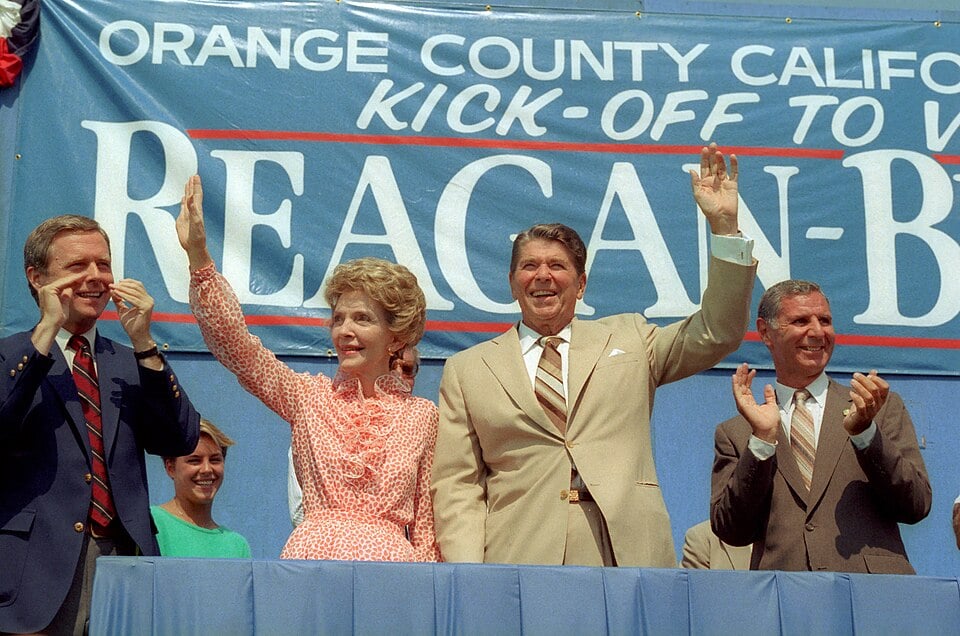
By 1980, the United States was dealing with high inflation, elevated unemployment, and the Iran hostage crisis. Former California Governor Ronald Reagan, who had almost seized the Republican nomination in 1976, won the 1980 Republican primary. Reagan defeated Carter decisively in the 1980 presidential election and won California by double digits. Carter was able to narrowly win the city of Los Angeles in the midst of his defeat.
However, Reagan came closest to winning the city among Republican presidential nominees in the period covered by the city’s results series. Reagan also increased Republican support in some areas that had previously supported Democratic candidates. Independent candidate John Anderson received a significant share of the vote, providing another option for voters who did not support either major-party candidate. The 1980 election was the last presidential election in which the Democratic nominee received less than a majority of the vote in the City of Los Angeles.
Reagan’s California Dominance and the Changing Los Angeles Vote
In his second and more decisive landslide in 1984, Reagan once again carried California. However, this would be the last time a Republican presidential nominee would carry California by double digits. It would also be the last time a Republican nominee would carry Los Angeles County and the last time a Republican nominee would get 40 percent or more of the vote in the city of Los Angeles. Although Mondale lost the national election by a wider margin than Carter had in 1980, the number of votes cast for the Democratic nominee in Los Angeles increased. Interestingly, at the time, this contrasted greatly with the Republican voting suburbs surrounding both the Los Angeles area and other metropolitan parts of California. Some suburban areas that had historically supported Republican presidential candidates shifted toward Democratic candidates in later elections.
Reagan’s successor, George H.W. Bush, won California in 1988, giving the Republican Party its third consecutive presidential victory in the state. It would be the last time a Republican nominee would carry California in a presidential election and get 30 percent or more of the vote in Los Angeles. The Democratic voting pattern that had become established in the City of Los Angeles would subsequently become more pronounced in Los Angeles County and California
The 1990’s: Clinton and a Changing Los Angeles
During the 1990s, the City of Los Angeles continued to record strong Democratic presidential margins. In the 1992 presidential election, Democrat Bill Clinton emerged victorious in the city, capturing 62.4% of the vote (633,283 votes). Clinton received 62.4% of the vote in the city, compared with 21.7% for incumbent George H.W. Bush.
Four years later, the city accelerated its partisan shift. In the 1996 election, Clinton won re-election and expanded his local support, securing 67.2% of the city’s vote (576,146 votes), while Republican Bob Dole received 23.5%. The decade also brought demographic and economic changes to Los Angeles. Beginning in 1992, no Republican presidential nominee received 30% or more of the vote in the City of Los Angeles through the 2024 election. In addition, although Clinton won the city of Los Angeles handily in 1996, it was the last time the Democratic percentage in the city was under 70 percent. Independent candidate Ross Perot also received a significant share of the vote in both elections.
Los Angeles in the 21st Century
2000 and 2004
As the 21st century began, Democratic presidential nominees continued to win the City of Los Angeles by substantial margins. In the 2000 election, which was one of the closest in U.S. history, Democratic candidate Al Gore won the City of Los Angeles, while George W. Bush won the national election following the Supreme Court’s decision in Bush v. Gore.
Following the September 11 attacks, President Bush’s approval ratings rose sharply before declining in subsequent years. However, by 2004, the country had become split again, this time over involvement in conflicts in the Middle East. Democrat John Kerry won California and the City of Los Angeles in 2004. Nonetheless, Kerry’s margin in California was the state’s narrowest presidential margin since 1988 and the last time through 2024 that the state’s presidential margin was in single digits. Bush received 27.4% of the vote in the City of Los Angeles, making him the closest Republican presidential nominee to approach the 30% mark since 1988.
2008 and 2012
During the 2008 and 2012 presidential elections, the City of Los Angeles gave Barack Obama more than three-quarters of its presidential vote.
In the historic 2008 presidential election, Obama captured 76.3% of the municipal vote (931,093 votes). His Republican opponent, John McCain, received 21.8% (265,941 votes). The 2008 election took place amid the financial crisis, the recession, and continued debate over U.S. military involvement overseas. Four years later, the 2012 presidential election yielded a remarkably similar statistical distribution inside the city limits. Obama won re-election with 76.4% of the city’s vote (902,038 votes). Republican challenger Mitt Romney secured 21.0% (248,182 votes).
Obama’s percentage of the city vote changed by only 0.1 percentage point between 2008 and 2012. However, overall raw voter turnout inside the municipality dropped slightly, with Obama receiving approximately 29,000 fewer raw votes during his 2012 re-election bid compared to his initial 2008 milestone.
2016 and 2020
In the 2016 and 2020 presidential elections, the City of Los Angeles recorded some of its highest vote shares for Democratic presidential nominees in the modern period.
In the 2016 presidential election, Democrat Hillary Clinton won the city with 78.5% of the vote(1,017,038 votes). Trump’s 16.4% was the lowest Republican share in the city’s modern results series at that point.
The 2020 presidential election produced a substantial increase in the number of votes cast in the City of Los Angeles. Biden received 76.6% of the city’s vote. Biden’s share dipped 1.9 points from Clinton’s 2016 high, but higher turnout produced a record 1,223,737 votes. Trump’s share rose to 21.4%, adding over 130,000 votes for a total of 342,545. Trump’s percentage and total number of votes increased in the City of Los Angeles compared with 2016.
The 2024 Election
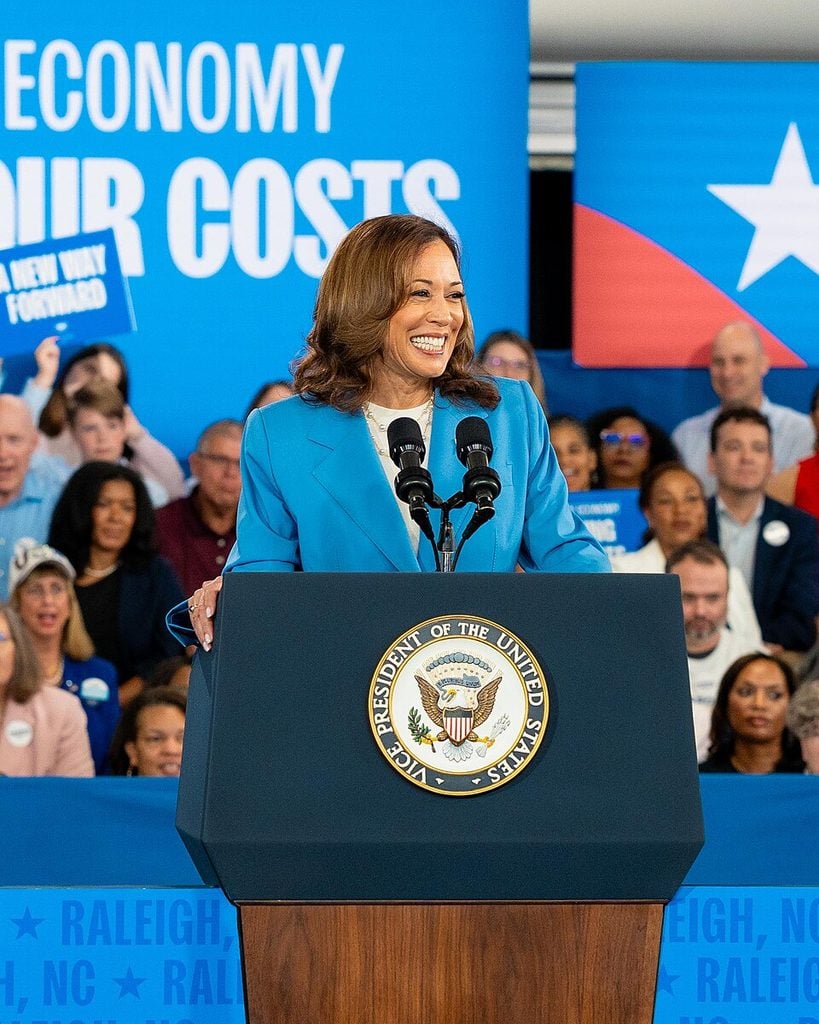
In the 2024 presidential election, California native Kamala Harris carried California and the City of Los Angeles. Harris received a smaller vote share in California and Los Angeles than Biden did in 2020. Trump’s 2024 vote share in California was the highest received by a Republican presidential nominee in the state since 2004. Trump received about 26.5% in Los Angeles, the highest Republican share there since George W. Bush in 2004. Harris received 70.16% of the vote in Los Angeles, the lowest share for a Democratic presidential nominee since Bill Clinton’s 67.2% in 1996, with 976,781 votes. That total was below Hillary Clinton’s 2016 total and Joe Biden’s 2020 total.
How Los Angeles’ Presidential Voting Has Changed
Over more than a century, Los Angeles grew from a relatively small city into one of the nation’s largest metropolitan centers, while its presidential voting patterns changed substantially. In the 19th century, Los Angeles and the surrounding county supported Democratic candidates in several presidential elections before the region developed a stronger Republican voting pattern.
The Great Depression and New Deal era coincided with a major change in the region’s presidential voting patterns. Domestic migration, immigration, and economic diversification in aerospace, entertainment, and technology reshaped the city. Los Angeles continued voting Democratic even when California and Los Angeles County backed Republicans.
While Los Angeles County and California remained politically competitive into the 1980s, the city consistently leaned Democratic. Los Angeles’ voting history reflects California’s broader political changes in the late 20th and early 21st centuries.
Conclusion
More than a century of presidential results shows how Los Angeles’ political patterns changed as the city grew into a major metropolitan center. Its electoral history includes both Democratic and Republican support before becoming consistently Democratic in presidential elections beginning in 1964.
These presidential election results provide a record of how voting patterns in Los Angeles have changed over time. They can be viewed alongside Los Angeles’ demographic, economic, and social changes to understand its role in presidential elections.
Sources:
Los Angeles County Registrar-Recorder/County Clerk — Official Election Returns
California Secretary of State — Statewide Election Results
National Archives — Electoral College Results
U.S. Census Bureau — Historical Census Data
Library of Congress — Los Angeles Mapped
Wikimedia Commons — Historical Images and Photographs
Editor’s Disclaimer: This article is a historical overview of presidential election results and voting patterns involving the City of Los Angeles, Los Angeles County, and California. Election results and historical information were compiled from publicly available records, including official election records from the Los Angeles County Registrar-Recorder/County Clerk, the California Secretary of State, the National Archives, the U.S. Census Bureau, and the Library of Congress. Because historical election records and geographic reporting methods have changed over time, results for the City of Los Angeles and Los Angeles County are presented separately where applicable. This article is intended for historical and informational purposes and does not endorse or oppose any political party, candidate, or ideology.
