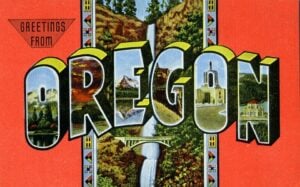
Since becoming the 33rd state on February 14, 1859, Oregon has played a distinctive role in American presidential politics. Oregonians cast their first presidential ballots in 1860 and have participated in every presidential election since. Over 160 years and 42 elections, Oregon has served as a national bellwether and reflected major political shifts. For much of its first century, the Beaver State leaned reliably Republican, punctuated by occasional Populist and New Deal shifts. By the late twentieth century, Oregon became competitive before emerging as a Democratic stronghold in 1988. Exploring this evolution reveals how regional priorities shaped national outcomes. This article will trace the historical timeline of Oregon’s presidential voting journey from its 1860 debut through the modern era.
Oregon’s Early Presidential Elections (1860-1900)
Oregon first voted in a presidential election in 1860, supporting Abraham Lincoln.
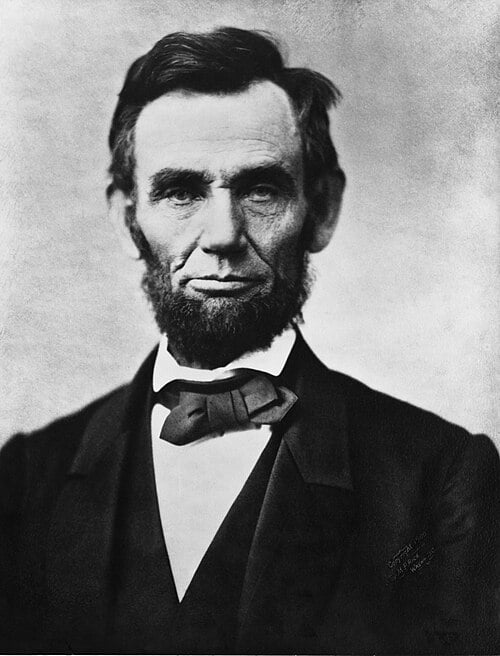
This was during a very divisive time in the United States, as it preceded the American Civil War by about five months. The pro-Union Abraham Lincoln won Oregon by a razor-thin plurality of fewer than 300 ballots. Interestingly, the running mate of Lincoln’s Democratic opponent, John C. Breckinridge, was Oregon’s own U.S. Senator, Joseph Lane, who happened to be pro-slavery. After the Civil War began, Oregon remained with the Union. In 1864, Oregon again backed Lincoln, this time by a wider margin.
As Reconstruction took hold, there began to be political changes throughout Oregon. Arguments about federal authority, civil rights, and immigration divided voters in the state. In the 1868 U.S. presidential election, Oregon ended up being one of the only Northern states Ulysses S. Grant lost to Horatio Seymour. However, four years later, Grant carried Oregon easily. Over the next decade, Republicans strengthened their support in Oregon through pro-business policies, tariffs, and infrastructure improvements. This allowed the Republican nominee to carry Oregon in the presidential elections of 1876, 1880, 1884, and 1888. However, things were about to change.
An economic depression occurred in the 1890s, which resulted in a Populist movement that gained much support in Oregon. In 1892, Republican Benjamin Harrison won Oregon by a plurality, followed by Populist James B. Weaver and Democrat Grover Cleveland. Four years later, William Jennings Bryan narrowly lost Oregon to Republican William McKinley by roughly 2,000 votes. However, in the 1900 presidential election, with the economy booming, McKinley carried Oregon decisively in a rematch with Bryan.
Oregon’s Presidential Elections During the Early 20th Century (1900-1948)
Oregon started the Twentieth Century as a strong Republican state. After voting decisively for McKinley in 1900, Oregon repeated the pattern four years later, providing Theodore Roosevelt with a landslide win in the state. Roosevelt’s handpicked successor, William Howard Taft, easily carried Oregon in 1908. However, by 1912, the Republican Party became fractured after Theodore Roosevelt decided to make a return with his Bull-Moose Progressive campaign. This enabled Democrat Woodrow Wilson to narrowly win Oregon that year. Despite being reelected in 1916, Wilson lost Oregon, albeit narrowly, to Republican Charles Hughes. Evidently, Wilson’s policies did not resonate enough with the majority of voters in the state.
The booming economy of the Roaring Twenties enabled Republican nominees to carry Oregon decisively in all three of the decade’s presidential elections. Warren Harding, Calvin Coolidge, and Herbert Hoover carried Oregon in the presidential elections of 1920, 1924, and 1928, respectively. However, things were about to change, both across Oregon and the whole United States, for that matter.
The Great Depression and the Rise of Democratic Support
The economic downfall, which followed the stock market collapse of 1929, resulted in a break in the Republican dominance of certain U.S. states, including Oregon. Democrat Franklin D. Roosevelt carried the state in all four consecutive presidential elections: 1932, 1936, 1940, and 1944.
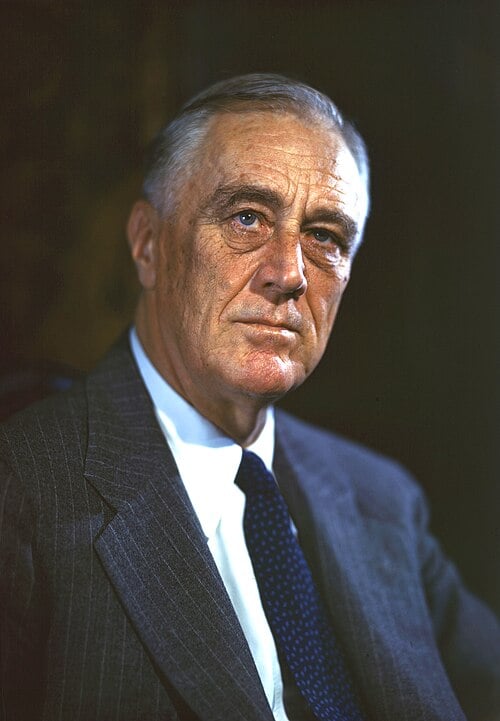
Roosevelt carried Oregon decisively in the first two elections in which he was the Democratic nominee. However, as the issues shifted from the economy towards more global conflicts, his numbers in 1940 and 1944 were smaller.
The 1948 presidential election saw Republican Thomas Dewey pull off a close win over Harry Truman, who won the presidency that year in one of the biggest upsets in American history. Interestingly, Oregon voted differently than neighboring Washington that year, which was an unusual occurrence at the time. It would only happen one more time following this election.
Republican Dominance and the Changing Political Landscape
By the 1950s, following an unpopular reaction to the presidency of Harry Truman, World War II hero Dwight D. Eisenhower rose to prominence as a Republican nominee. Eisenhower, known by many as “Ike,” was able to reach across political lines with his support of policies that appealed to people of all ideologies.
In the midst of two electoral landslides in the 1950s, Eisenhower carried Oregon by comfortable margins. This republican streak continued in 1960 when Richard Nixon, Eisenhower’s vice president, won the state narrowly over Democrat John F. Kennedy, who ended up barely squeaking out a national win.
Nixon, from neighboring California, had a Western appeal to Oregon voters and kept some of the traditionally Republican voting citizens in the state by his side. However, Kennedy won back some working-class voters who had voted for Eisenhower, as well as held appeal to Catholics and immigrants in the state, especially in the urban areas.
The Kennedy-Johnson Elections and Oregon’s Political Realignment
By the time of the 1964 U.S. Presidential election, the country was still in mourning following the assassination of John F. Kennedy. This resulted in many citizens rallying behind President Lyndon Johnson, who had served as Kennedy’s vice president and had assumed the presidency following the former’s assassination. In addition, Barry Goldwater, the 1964 Republican nominee, was considered too conservative for the mainstream. Johnson’s huge win in Oregon that year mirrored his national landslide win. Four years later, however, the returning Richard Nixon, a Republican, was able to narrowly win Oregon in a three-way race against Democrat Hubert Humphrey and George Wallace, running as an Independent. Oregon’s neighbor, Washington, narrowly voted for Humphrey, which would mark the last time that Washington and Oregon would not vote for the same Presidential nominee.
Watergate, the Vietnam War, and the 1970s Presidential Elections
George McGovern, the 1972 Democratic nominee, had a similar feature to the 1964 Republican nominee, Barry Goldwater. He was seen as too ideologically extreme; only the former was seen as too liberal.
In the midst of his huge 1972 electoral landslide, Nixon pulled off a huge win in Oregon, as he would in the majority of the states in the U.S. Following Nixon’s resignation in 1974 in the aftermath of Watergate, many Americans were looking to put the Watergate scandal and the Vietnam War behind them.
Gerald Ford, a Republican, who had assumed the presidency following Nixon’s resignation, had gained some political capital, although he had lost much due to pardoning his predecessor. Democratic nominee Jimmy Carter, from Georgia, was a Washington outsider promising a change.
In a tight election, Carter pulled off a national victory. Oregon would stay in the Republican column in 1976, although by fewer than 2,000 votes. In addition to some urban areas, Carter did well in some rural and working-class counties, while Ford dominated the suburbs, a huge voting bloc for Republicans at the time.
The Reagan Era and Oregon’s Last Republican Presidential Victory
The Presidency of Jimmy Carter, although notable for certain diplomatic and legislative achievements, was marked by high unemployment, double-digit inflation, and the Iranian hostage crisis.
Republican nominee Ronald Reagan, despite being seen as too conservative for the mainstream by some, built steam throughout his 1980 campaign. Meanwhile, John Anderson, a socially liberal Republican who had participated in the 1980 Republican primary, ran as an Independent. Anderson presented himself as an alternative to Democrats frustrated with Carter and Republicans who thought Reagan was too extreme.
In the end, Reagan defeated Carter in a national landslide and pulled off a comfortable win in Oregon. Anderson did well for an Independent nominee in the state, receiving nearly 10 percent of the vote.
Four years later, with a healthy economy, Reagan pulled off an even larger national landslide, winning all but one state.
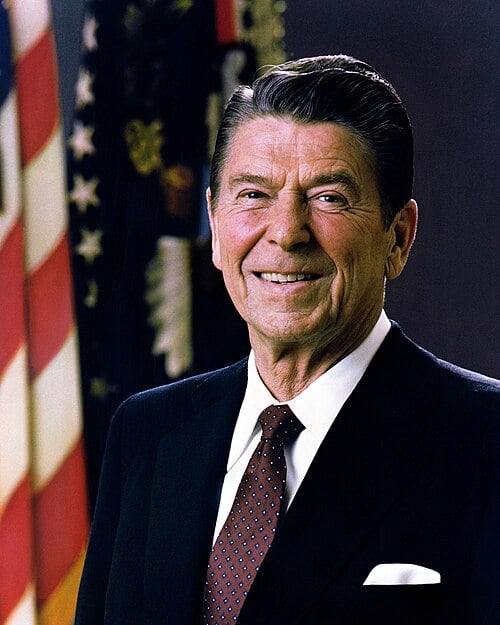
In Oregon, Reagan once again triumphed by a large margin.
However, the 1984 Democratic nominee, Walter Mondale, actually won a larger number of raw votes in Oregon than Carter had in 1980. Perhaps, this was an indicator that things were about to change, as 1984 marks the last time to date that a Republican nominee has won the state of Oregon in a presidential election.
The Emergence of Oregon as a Democratic Stronghold
The 1988 presidential election was a third consecutive Republican landslide win. Republican nominee, Vice President George H.W. Bush, was able to bring much of the nation behind him with the support of President Reagan, who had maintained high approval numbers throughout his presidency.
However, Democratic nominee Mike Dukakis was able to win back many working class voters in both urban and rural areas that had voted for Reagan in either 1984 or 1980, or both. In addition, certain voters, especially in the metropolitan areas of the United States, which included Oregon’s Portland area, were beginning to see the Republican party as too conservative.
In the end, Oregon would end up being one of the only ten U.S. states, plus the District of Columbia, that Dukakis would win in 1988. Although winning the state very narrowly over Bush, this marked a consecutive pattern of Oregon voting Democratic in presidential contests. 1988 was also the last presidential race in which the states of Oregon and Washington would not vote the same as their Pacific Coast neighbor, California.
Bill Clinton’s Victories Cement Oregon’s Democratic Shift
President George H.W. Bush saw high approval numbers his first year in office. However, by 1992, the country was in a slight recession. In addition, Bush was primaried by Pat Buchanan, resulting in some ‘more conservative’ Republicans breaking with the president.
To add to matters, Democratic nominee Bill Clinton was presenting himself as a New Democrat, championing both liberal and conservative policies. Also, Independent nominee Ross Perot had a populist campaign that attracted many economically conservative voters who may have otherwise voted for Bush and offered an alternative to voters hesitant to vote for Clinton due to character issues.
In the end, Clinton won the 1992 U.S. Presidential election and won Oregon comfortably. In addition to Perot obtaining significant numbers for an Independent in the state, 24.21% of the vote, Clinton was able to win over a significant number of suburban voters, and even some urban and rural voters who had previously voted Republican.
Four years later, with a healthy economy, President Bill Clinton won reelection by even larger numbers in which he was elected. Although once again on the ticket, Perot was less of a factor in 1996, although he did receive a little over 8 percent of the vote in Oregon. In addition, Republican nominee Bob Dole had a hard time getting voters on his side. It was the first time since the 1940s that a Democratic nominee had won Oregon in consecutive elections, perhaps an indicator that Oregon was about to become a Democratic stronghold.
Oregon Presidential Elections in the 21st Century
The 2000 U.S. Presidential election saw Oregon become competitive again. That year, Republican nominee George W. Bush, son of George H.W. Bush, won a narrow victory following a controversial vote count in Florida. Oregon’s results reflected the tightness of the race as Democratic nominee Al Gore won the state by a narrow margin of 0.44. In addition to Bush winning back a number of suburban and rural voters, Gore lost support to the Green Party Candidacy of Ralph Nader, who received a little over 5 percent of the vote in Oregon in 2000. This would be the closest a Republican nominee would come to winning Oregon since it last did so in 1984 for Reagan.
George W. Bush won a narrow reelection in 2004. Although he had received high approval ratings in the aftermath of the September 11th attacks, Bush had received significant backlash by 2004 as the country was once again divided, this time over involvement in the Middle East. That year, Democratic nominee John Kerry received a higher percentage of votes than Gore had four years prior. Nonetheless, Bush still kept Kerry’s margin of victory in the single digits, becoming the last Republican nominee to carry certain areas of Oregon that year. The 2004 presidential election would be the last time Oregon would be decided by single digits.
Obama’s Elections and the Strengthening of Oregon’s Democratic Alignment
By 2008, the opposition to Bush’s War on Terror had grown substantially. This was in addition to the country experiencing an economic meltdown. Democratic nominee Barack Obama, who was promising change, defeated Republican nominee John McCain in an electoral college landslide. That year, Obama became the first Democratic nominee to carry the state of Oregon by double digits since Lyndon Johnson in 1964 and the first nominee to win the state by over 10 points since Ronald Reagan in 1984. Four years later, Obama, although not as heavily supported due to what many voters perceived as insignificant change under his watch, still maintained a decent amount of support. This resulted in him not only winning reelection but winning Oregon once again by double digits. By this time, Oregon, along with its Pacific Coast neighbors Washington and California, was considered a Democratic stronghold.
Trump’s Presidential Campaigns and Oregon’s Changing County Voting Patterns
In 2016, the Republican nominee Donald Trump narrowly defeated Democratic nominee Hillary Clinton in the Electoral College, although the latter won the popular vote. Not surprisingly, Oregon went for Hillary by a comfortable, double-digit margin. However, changes in voting habits in the counties were showing, as some more traditionally Republican voting counties voted for Hillary, while others that had voted Democratic voted for Trump.
The COVID-19 Pandemic took place in the midst of the 2020 U.S. Presidential election. President Donald Trump, although obtaining political capital while in office, had received backlash in the midst of the economic turmoil that accompanied the pandemic. Meanwhile, Democratic nominee Joe Biden was promising a change to normalcy. Biden won the 2020 election via a decisive popular vote win but a very close win in the Electoral College. Oregon once again voted strongly for the Democratic nominee. Trump, however, was able to crack 40 percent of the vote.
The most recent presidential election, which took place in 2024, pitted then vice president Kamala Harris, the Democratic nominee, against the returning Donald Trump. The latter won the election, becoming the first president since Grover Cleveland to win a non-consecutive term. Oregon voted for Harris by large numbers although Trump still cracked 40 percent of the vote in the state and flipped certain counties that previously voted Democratic, in some cases, for many years.
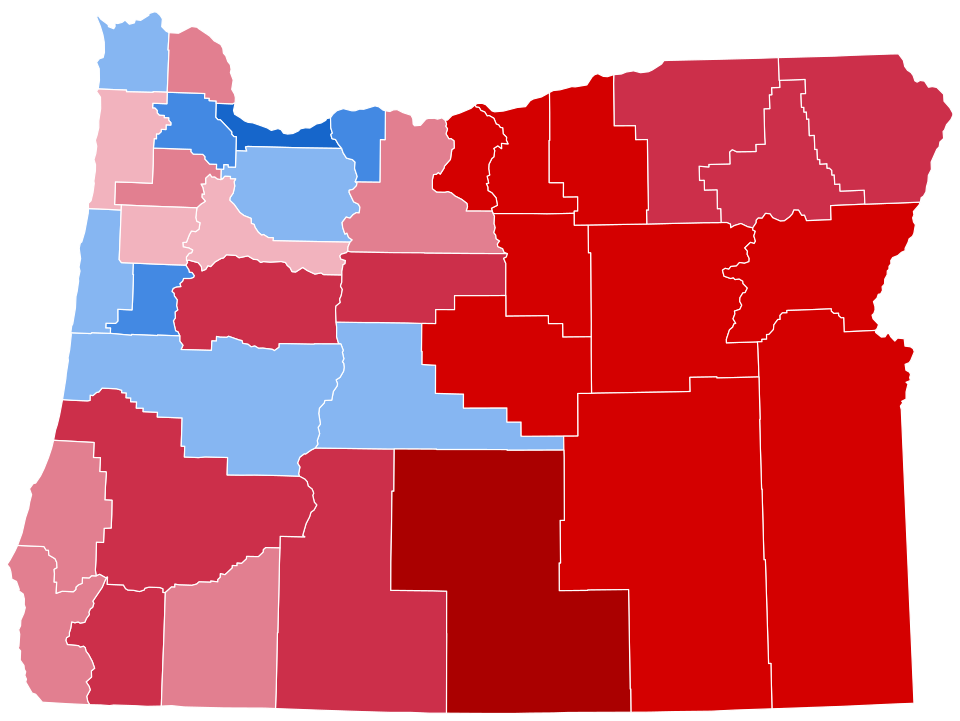
Although Oregon was solidly Democratic in the past three presidential elections, it voted a little to the right of its Pacific Coast neighbors, California and Washington.
Conclusion
Oregon’s presidential voting history reflects a clear shift across more than a century of elections. From 1860 through the early twentieth century, Oregon largely supported Republican presidential candidates.
Throughout the mid-twentieth century, Oregon became competitive, often switching parties and backing the national popular vote winner. Oregon began a decade-long streak of Democratic presidential victories in 1988, when it backed Michael Dukakis.
Sources:
Oregon Secretary of State – Elections Process & History
National Archives – Electoral College Results
Library of Congress – U.S. Election Statistics: Presidential Elections
Federal Election Commission – Election Results and Voting Information
Ballotpedia – Presidential Voting Trends in Oregon
Dave Leip’s Atlas of U.S. Presidential Elections
USA.gov – Find Results from Past Elections
Editor’s Disclaimer: This article examines Oregon’s presidential election history from 1860 through 2024 using historical election records and publicly available sources. Election results, voting patterns, and political developments are presented for historical and informational purposes. Analysis of voter behavior and political realignments reflects historical context and should not be interpreted as an endorsement of any political party or candidate.