
Historical election results reveal how a region’s socioeconomic, demographic, and ideological landscape shapes changing political preferences. For example, examining Washington’s presidential election history can provide insight into how these factors have influenced voting outcomes over time. Presidential votes reflect changing public priorities, economic conditions, national events, and party platforms. By tracking these historical voting patterns, analysts can identify long-term political realignments, moving from short-term deviations to permanent regional transformations.
Washington became the 42nd state on November 11, 1889. Since 1892, Washington has shifted from Republican strength to competitive elections and recent Democratic dominance.
This article explores Washington state’s political evolution by focusing on its presidential winners, electoral vote allocations, and popular-vote margins. Analyzing election results from 1892 onward reveals how Washington evolved from a battleground into a Democratic stronghold.
Washington’s Early Presidential Elections: 1892–1928
In the U.S. presidential election of 1892, Democratic Grover Cleveland won nationally, becoming the first U.S. President to be elected to a second non-consecutive term. However, then-incumbent President Benjamin Harrison, who was the Republican nominee, carried Washington in 1892. The Pacific Northwest at the time aligned with the Republican Party’s platform of protective tariffs, economic growth, and federal investments. Also, Washington’s admission to statehood happened under Benjamin Harrison’s watch.
Four years later, Democrat William Jennings Bryan comfortably won Washington, despite Republican William McKinley winning the presidency. The panic of 1893 and Bryan’s uniting of anti-gold-standard voters in Washington, who were hurting from the Depression contributed to this. However, this would be the last time a Democrat would win Washington until 1916.
The 1900 U.S. Presidential election was a rematch between Bryan and McKinley, who was the incumbent president this go-around. By then, William Jennings Bryan’s populist movement had faded across much of the country, especially in Washington. Also, economic prosperity had returned to much of the country. Therefore, McKinley ended up winning the state this time and by a pretty significant margin.
Four years later, President Theodore Roosevelt, who had assumed the presidency following the assassination of McKinley, was the Republican nominee. Roosevelt won Washington in 1904, supported by voters who favored his conservation efforts, railroad regulation, and economic reforms. In 1908, Roosevelt declined to run for re-election, and his handpicked candidate, William Howard Taft, carried Washington comfortably. However, the former became disenfranchised with the latter’s policies and decided to run as a 3rd party nominee in 1912. That year, Roosevelt won the state of Washington.
Progressive Politics and Republican Dominance
After the Republican-party fracture that occurred in 1912, the 1916 U.S. Presidential election saw a more unified party under Charles Hughes. Despite renewed Republican dominance, Wilson embraced progressive policies that had appealed to Washington voters four years earlier. Wilson narrowly won Washington in 1916, marking the Democrats’ last victory there until 1932.
The economically prosperous 1920s, also known as the ‘Roaring Twenties,’ saw three consecutive Republican presidential landslides. Traditionally Republican Washington strongly backed Warren Harding, Calvin Coolidge, and Herbert Hoover in the 1920, 1924, and 1928 elections. However, things were about to change in the state of Washington, and the whole country.
The Great Depression and World War II Era: 1932–1948
By the time the 1932 U.S. Presidential election came around, the Great Depression had swept the country, and President Herbert Hoover’s popularity had plummeted. Democratic nominee Franklin D. Roosevelt defeated Hoover in a national landslide and carried Washington decisively. Roosevelt’s New Deal policies gained widespread support for their promise to end economic suffering. Roosevelt won landslide victories in 1936, 1940, and 1944, comfortably carrying Washington in all three elections. Roosevelt also endeared himself to voters with his reassurance as the nation dealt with World War II.

President Harry Truman, who had assumed the office following the passing of F.D.R., ran as the Democratic nominee in 1948. By this time, however, there became a split in progressive voters, particularly in Washington. Many who were dissatisfied with the Truman’s Cold War policies decided to cast their votes for Progressive Party Candidate Henry A. Wallace. In addition, many voters in Washington returned to voting Republican in 1948, this time for nominee Thomas Dewey, who had also been the Republican nominee four years prior.
Despite this, Truman narrowly won Washington in 1948, mirroring his close national victory. However, Republican dominance in Washington was about to return, although quite as strongly as before.
Republican Strength and Political Competition: 1952–1984
General Dwight D. Eisenhower, also known as “Ike,” was a popular World War II hero who had emerged as the Republican nominee in 1952. Running as a “moderate” Republican, Ike acknowledged the still heavily popular New Deal programs that had been put in place. However, the support of these programs under F.D.R. had shifted the voting demographics in many states, including in Washington. Ike won the state of Washington in both of his national landslide wins in 1952 and 1956. However, while his margin of victory both times in the state was comfortable, they were still just slightly in the single digits. This provided that while Washington could throw its support behind a nominee such as Eisenhower, it did not reflect its Republican support decades prior in the 1920’s.
From Swing State to Democratic Shift
The 1960 U.S. Presidential election pitted Republican nominee Richard Nixon, Eisenhower’s vice president, against Democratic nominee John F. Kennedy. Although Eisenhower was popular during his time as U.S. president, the country was in a recession in 1960. Like F.D.R. before him, Kennedy was able to use the power of media, this time with the power of television, to present his message to voters. This enabled him to win back Democratic voters who had voted for Eisenhower or who were newly registered. However, the ever-growing suburbs in the country, including those in the state of Washington, were showing their allegiance to the Republican Party. In addition, Kennedy’s Catholicism was a problem for certain Protestant voters. Nixon ended up winning Washington narrowly in 1960 while Kennedy won nationally by the skin of his teeth.
Johnson’s Landslide and the Close Election of 1968
Following the assassination of John F. Kennedy, much of the country was still in mourning by the time the 1964 U.S. Presidential election came around, showing great support for Democratic President Lyndon Johnson. In addition, the Republican nominee, Barry Goldwater, was seen as way too conservative for many voters, including Washington Republicans. In the midst of a massive landslide, Johnson won the state of Washington decisively in 1964. However, this did not mean that Republican relevance in Washington would disappear overnight. 1964 was the last time a Democratic nominee would win Washington by double digits until 1992.
Johnson’s vice president, Hubert Humphrey, became the 1968 Democratic nominee after the former dropped out of the race. The returning Richard Nixon was the Republican nominee while Alabama Governor George Wallace ran as an Independent. While much of the nation shifted to the right in 1968, many states, including Washington, showed very close results. Humphrey received a last-minute boost in certain areas of the country, particularly on the Pacific Coast.
Therefore, Humphrey narrowly won Washington in 1968 while Nixon pulled off a close national win. Nonetheless, this would be the last time a Democratic nominee would win the state of Washington until 1992. This was also the last election in which Washington and neighboring Oregon would not vote for the same candidate in a presidential election.
Republican Resurgence and Washington’s Last GOP Victory
Four years later, like how the Republican Goldwater had been seen as too conservative for the mainstream, the Democratic nominee in 1972, George McGovern, was seen as too far to the left for many voters. President Richard Nixon won the state of Washington decisively in 1972 in the midst of a massive landslide victory. Nixon resigned in 1974 amidst the Watergate scandal and, therefore, then Vice President Gerald Ford assumed the presidency. Although Ford was able to gain some political capital, distancing himself from his predecessor, much of the nation was ready for a change by the time the 1976 U.S. presidential election came around.
The Carter-Ford Contest and Washington’s Political Divide
The Democratic nominee that year, former Georgia governor Jimmy Carter, was running as a Washington outsider, promising to restore hope to the nation. Carter was able to get a significant number of rural and some urban voters in Washington on his side. Most suburban voters, on the other hand, voted for Ford, who ended up narrowly winning Washington in 1976 while Carter pulled off a close national victory.
Reagan’s Rise and the 1980 Election
Carter’s presidency, despite some diplomatic and legislative achievements, was marked by high unemployment, double-digit inflation, and hostages in Iran. The 1980 Republican nominee, Ronald Reagan, while gaining much momentum, was still seen with skepticism by some voters for what was perceived as his far-right views, which mirrored Goldwater’s in 1964. Independent nominee John Anderson, a social liberal Republican who had been defeated in the 1980 Republican primary, presented himself as an alternative to voters who were dissatisfied with Carter but thought Reagan was too conservative. Carter thought he might have a chance in Washington, even though he narrowly lost it in 1976, and even did a last-minute campaign stop in Seattle.
However, Reagan won the state of Washington by double digits in 1980 amidst a massive landslide. However, John Anderson did reasonably well for an Independent nominee in Washington, getting a little over 10 percent of the vote, thereby preventing Reagan from winning a majority of the vote in the state. Nonetheless, 1980 would prove to be the last election that Washington would vote more Republican than the nation at large and the most recent time a Democratic nominee would not crack 40 percent of the vote in the state.
Reagan’s Landslides and the End of Republican Dominance
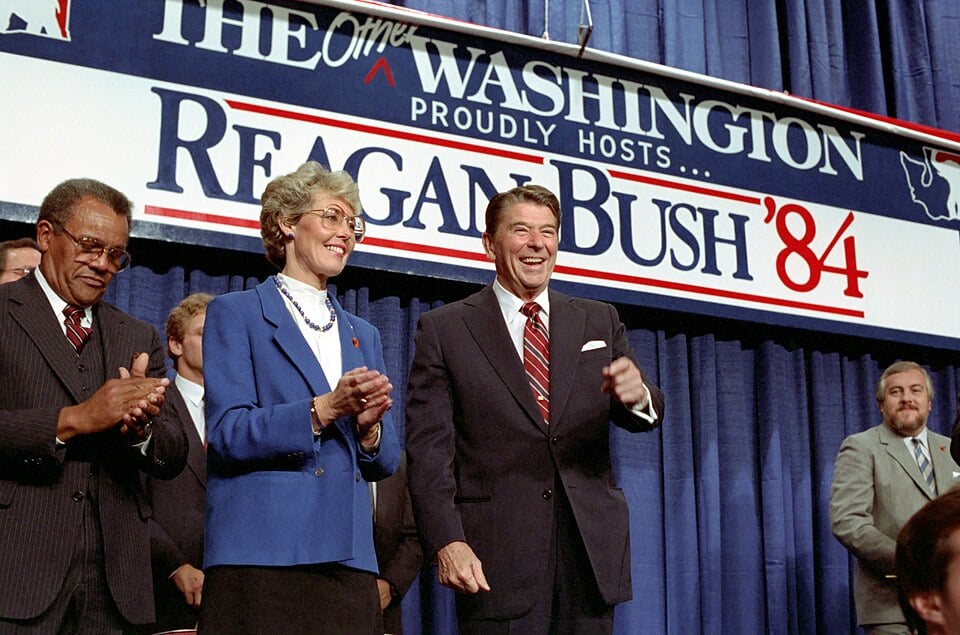
In 1984, President Ronald Reagan won a second, and even more decisive national landslide. In that year’s election, he once again carried Washington decisively. However, despite Reagan’s double-digit win in the state that year, this would be the last time a Republican nominee would win the state of Washington in a presidential election. That year’s Democratic nominee, Walter Mondale, although losing the state decisively to Reagan, as Carter, the man Mondale served as vice president under, had in 1980, Mondale actually got more raw number of votes in Washington in 1984 than Carter had in 1980 and even got over 40 percent of the vote.
Washington’s Political Shift: The 1988 and 1990s Elections
The 1988 U.S. Presidential election saw a third consecutive Republican landslide as Reagan’s vice president, George H.W. Bush, won decisively against Democratic nominee Mike Dukakis. However, Washington was one of the eight states that voted for Dukakis, albeit narrowly. Much of the popularity of Reagan enabled Bush in 1988 to become the closest a Republican nominee has come to winning Washington since it last voted Republican four years prior.
Four years later, President Bush, despite having seen great popularity following his handling of Desert Storm, was seeing low approval ratings. The country experienced a small recession in 1992. In addition, Bush had been primaried by Pat Buchanan, thereby causing more conservative Republicans to become at odds with the president. Democratic nominee Bill Clinton, despite character flaws, presented a New Democrat message that championed a combination of liberal and conservative policies. To add to the matter, Independent nominee Ross Perot offered a populist message which appealed to many fiscally conservative voters.
Clinton’s Growing Support and Democratic Gains
The 1992 U.S. presidential election saw Bill Clinton win the national election by a plurality, which mirrored his results in the state of Washington. Ross Perot received over 23 percent of the vote in Washington. Perhaps this indicated that while Washington was moving towards the Democratic Party, there were still voters hesitant about Clinton, who, despite winning Washington, did not win a majority of the vote in the state that year. Nonetheless, Clinton’s message enabled certain suburban areas that voted for Bush in 1988 to come to his side.
The 1996 U.S. Presidential election saw President Clinton win a more decisive national victory, although still not winning a majority of the national vote. Ross Perot was once again a nominee, although his presence was not as much a factor this time. Clinton defeated Republican nominee Bob Dole in the state of Washington by double digits in 1996; however, although the former came close, he still did not win a majority of the vote in Washington.
The 2000 Presidential Election: Al Gore’s Victory in Washington
In the year 2000, Republican nominee George W. Bush, son of George H.W. Bush, defeated Democratic nominee Al Gore, Bill Clinton’s vice president, following a controversial recount in the state of Florida. Nonetheless, it proved to be the closest presidential election since 1960. In the state of Washington, Gore defeated Bush by a single-digit margin. Despite this, the former was able to win a majority of the vote in Washington, whereas Clinton hadn’t. In 2000, Bush would prove to be the second-closest Republican nominee, after his father in 1988, to winning the state of Washington. Although the Democratic Party was taking hold in the state, there were some suburban voters who voted for Clinton who went for Bush.
Despite President Bush having seen high approval ratings for his handling of 9/11, by the time the 2004 U.S. Presidential election came around, the country was split once again. Despite maintaining some political capital, Bush had lost support due to skepticism of many over the wars in the Middle East. That year, Bush narrowly defeated John Kerry, who ultimately won the state of Washington. Kerry’s win in Washington, like Gore’s in 2000, was in the single digits. 2004 proved the last time that Washington has been decided by single digits in a presidential election and the last time that a Republican nominee, Bush, has received over 45 percent of the vote in the state. Washington was about to be considered a Democratic stronghold.
Washington in the Obama era: 2008 and 2012
In 2008 Democratic nominee Barack Obama, was promising change to a nation that had become even more adverse to Bush’s War on Terror and was also experiencing an economic recession. That year, Obama defeated Republican nominee John McCain in an electoral landslide, and the former’s numbers in Washington reflected this pattern. Obama increased the Democratic voting percentages in suburban areas of the state compared to previous elections.
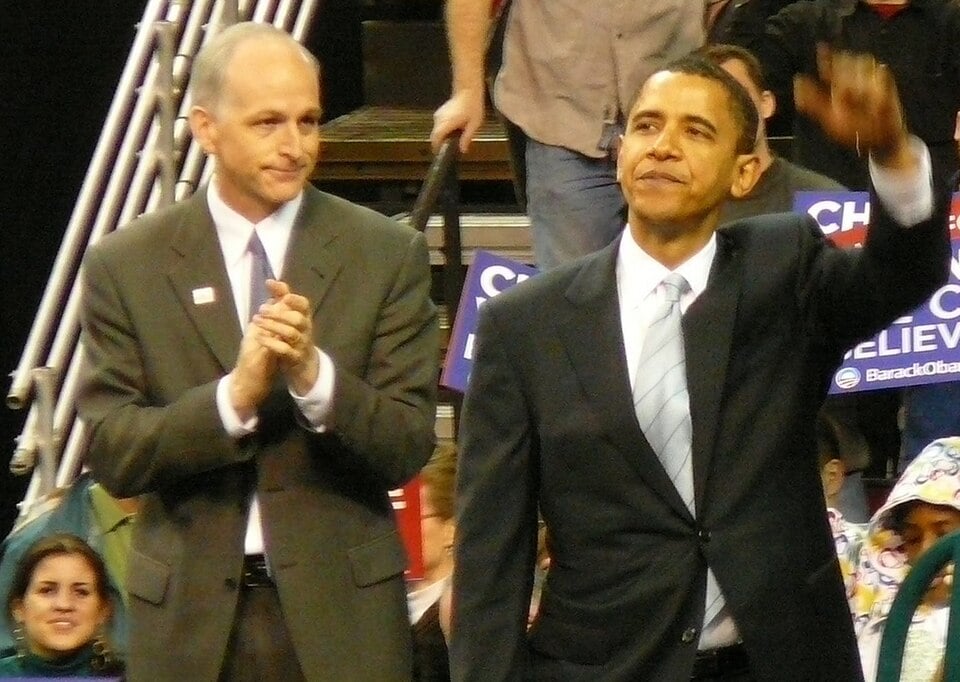
Four years later, despite some in the nation frustrated with Obama over what was perceived as ‘insignificant change,’ the then-incumbent President defeated Republican nominee Mitt Romney in a somewhat closer election than four years prior. That year, Obama easily won the state of Washington, even receiving a higher number of raw votes than in 2008. Mitt Romney received a slightly better percentage of votes than McCain had. Interestingly, the 2012 presidential election would prove to be the last time a Republican nominee has cracked 40 percent of the vote in Washington. This factor, along with Obama’s decisive win, showed that Washington was about to be considered one of the most Democratic in the nation.
Washington’s Presidential Elections: 2016-2024
The 2016 U.S. Presidential election proved to be one of the biggest upsets in U.S. history since 1948 as Republican nominee Donald Trump narrowly won the Electoral College over Democratic nominee Hillary Clinton, who won the popular vote. Hillary Clinton won the state of Washington comfortably. This election was notorious in that both its main party nominees held high unfavorability ratings. Trump did not receive the suburban support that Romney and McCain had, thereby dropping his percentage. Despite Hillary’s decisive win in Washington, four Democratic electors defected, with three voting for Colin Powell and one voting for Faith Spotted Eagle.
Washington’s Democratic Stronghold in a Polarized Era
The 2020 U.S. presidential election took place in the midst of the COVID-19 pandemic. President Trump had gained some political capital in the Republican Party during his time in office. However, the economic turmoil associated with the pandemic caused significant backlash. In an election marked by a record number of mail-in votes, Democratic nominee Joe Biden, who had served as vice president under Obama, defeated Trump. Although Biden decisively defeated Trump via the popular vote, the Electoral College results were tight, as Biden did not receive the amount of support in certain states that Obama had in 2008 and 2012. The results in the state of Washington did not reflect the razor-thin margins in other states, as Biden defeated Trump handily in the state.
Although initially running in the 2024 U.S. presidential election, President Joe Biden dropped out of the race following a disastrous debate performance. This led the way for Biden’s vice president, Kamala Harris, to secure the Democratic nomination. Like Biden in 2020, Harris would also face Donald Trump, who was pledging a political comeback. In the end, Trump won both the Electoral College and the popular vote, becoming the first U.S. president since Grover Cleveland to win two nonconsecutive terms. Not surprisingly, Harris carried the state of Washington decisively, making the state one of her strongest wins. Although coming close, Trump did not quite crack 40 percent of the vote in Washington.
How Washington’s Presidential Voting Habits Have Changed
Washington favored the Republican Party prior to the 1932 New Deal alignment, subsequently operating as a competitive swing state before shifting decisively toward the Democratic Party. Regional political differences now divide the state, with the densely populated Puget Sound region anchoring a consistent Democratic advantage while eastern rural counties lean Republican. Although Washington has voted entirely Democratic in presidential elections since 1988, this state trend remains distinct from nationwide electoral outcomes.
Conclusion: Washington’s Place in Presidential Election History
Washington’s presidential voting preferences have evolved from a historic Republican stronghold into a reliable pillar of the modern Democratic coalition. This shift reflects how urban growth and changing demographics have reshaped Pacific Northwest politics. While eastern counties remain deeply conservative, the immense population density of the Puget Sound region drives contemporary Democratic victories. Analyzing these shifts provides context for national polarization and shows how regional realignments reshape state dynamics and American politics.
Sources:
Washington Secretary of State — Election Results and Voters’ Pamphlets
National Archives — Electoral College Results
Federal Election Commission — Election Results and Voting Information
National Archives — Historical Electoral College Information
Federal Election Commission — Official 2024 Presidential General Election Results

Editor’s Disclaimer: This article is intended for informational and educational purposes. It examines Washington state’s presidential election history, including changes in voting patterns, political affiliations, and election outcomes from 1892 through 2024. Every effort has been made to ensure the accuracy of the historical information presented. Election results and historical interpretations are based on the sources cited in the article. This article is nonpartisan and does not endorse any political party or candidate.