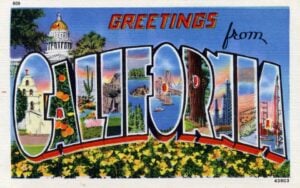
California is currently one of the nation’s most reliably Democratic states in presidential elections. This is reflected in the performances of Hillary Clinton, Joe Biden, and most recently, Kamala Harris. Like most American states, though, California’s presidential voting has gone through various phases and evolutions. California has shifted from Democratic to Republican and back again, eventually becoming one of the nation’s most Democratic states.
The Early Years of California Voting (1852-1948)
The Pre-Civil War & Gold Rush Years (1852-1856)
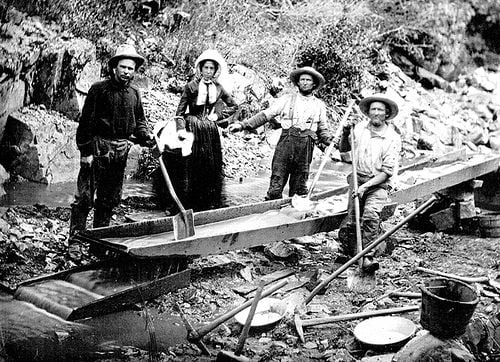
California was a newly formed state by the time of the 1852 U.S. Presidential election. It was the Compromise of 1850, which allowed it to enter the Union as a free state. California voted for the Democratic presidential nominee in its first two presidential elections, in 1852 and 1856.
The Civil War & Reconstruction Era (1860-1892)
By 1860, the Democratic Party had become extremely fractured. This allowed Republican nominee Abraham Lincoln to win California by a very slim margin that year in the midst of his nationwide win. This signified a political party transition for California, as between 1860 and 1892, the state would vote for the Republican presidential nominee seven times, only diverting to the Democratic Party twice, once in 1880 and again in 1892. Republican strength in California during this period coincided with major national developments, including the Civil War, Reconstruction, westward expansion, and the construction of the transcontinental railroad.
The Progressive & Turn of the Century Era (1896-1928)
Aside from voting Democratic in 1916, this period was still marked by Republican dominance in California. However, there were some particularly close races, such as in 1896 when William McKinley barely carried the state over Populist candidate William Jennings Bryan. This took place following the Panic of 1893, when a severe economic depression had affected millions of farmers, including those in California. Bryan was able to capitalize on the woes of many working-class Californians. After this election, though, California would vote comfortably Republican for several years.
Theodore Roosevelt, who had carried California very decisively in 1904 running as a Republican nominee, came back in the 1912 election, this time running as a Progressive. He would narrowly carry the state in 1912, which would be a third-party anomaly during this political era in California. After Democrat Woodrow Wilson narrowly carried California in 1916, the state went back to voting solidly Republican in presidential elections in the midst of the three electoral landslides of the 1920s. However, the United States was about to experience significant economic change, which would greatly affect the voting habits of nearly all U.S. states.
The New Deal & Post-War Era (1932-1948)
By the time of the 1932 U.S. Presidential election, the United States was in the midst of the Great Depression. California joined most of the rest of the country in voting for Democrat Franklin D. Roosevelt decisively in all four of his electoral landslides. However, in 1948, Democrat Harry Truman, who had assumed the Presidency after F.D.R.’s passing, just barely kept California in the Democratic column. This would be a sign that the political climate would change again in the state.
The Republican Era (1952-1988)
The Post-War Establishment Era (1952-1964)
The 1950s marked a renewed Republican era for California in presidential elections. Republican nominee and World War II hero Dwight D. Eisenhower carried the state decisively in 1952 and 1956. The period also included the close 1960 election, when California native and incumbent Vice President Richard Nixon narrowly carried his home state over Democrat John F. Kennedy. Nixon benefited from his home-state advantage and strong Republican support in California’s growing suburbs, while Kennedy gained support from the state’s post-World War II population growth, organized labor, and Democratic Gov. Pat Brown.
In 1963, the United States was traumatized by the assassination of President Kennedy. His Vice President, Democrat Lyndon Johnson, assumed the presidency as the nation, including the state of California, mourned. In the 1964 U.S. Presidential election, Republican nominee Barry Goldwater was seen as too conservative for the mainstream, even for California Republicans. This resulted in Johnson winning the state decisively that year, marking the one Democratic victory during this era and the last one until 1992. However, notwithstanding Goldwater’s decisive loss, his numbers in California in 1964 were the best for a state that is now solidly Democratic, indicating that the Republican Party still had a huge influence on the state.
The Rise of the Reagan Revolution (1968-1976)
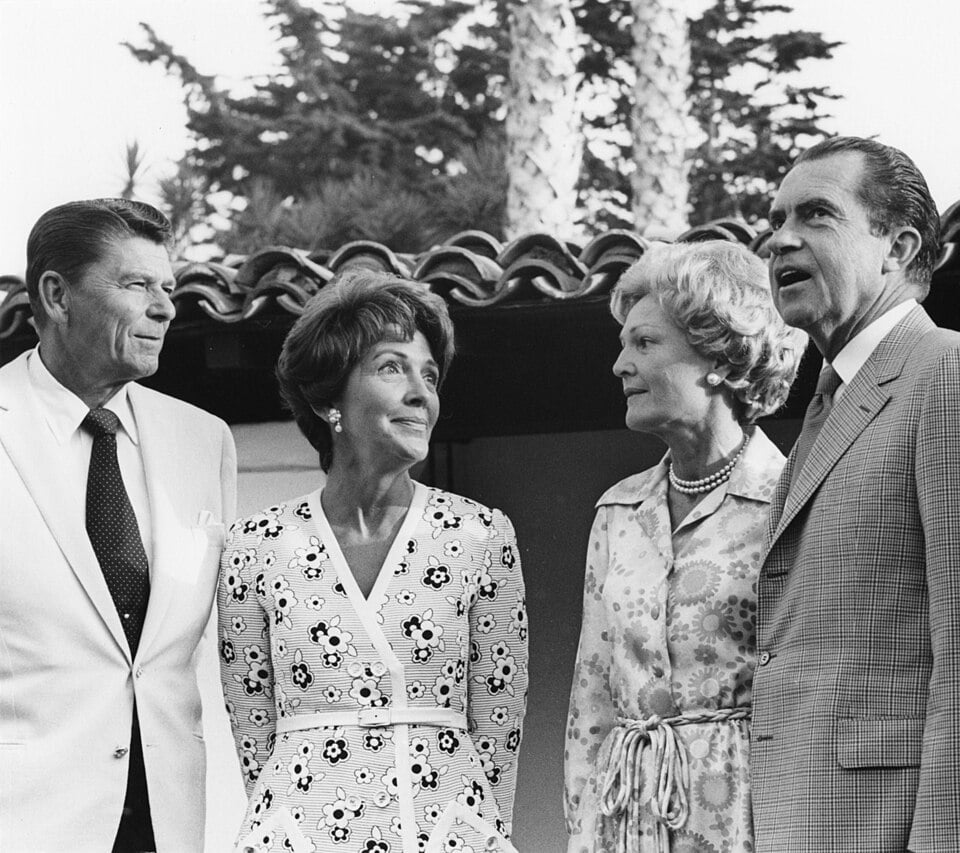
Ronald Reagan, a former actor and Republican politician, served as California governor from 1967 to 1975 and became a prominent conservative voice in the state. In 1968, Reagan supported fellow Californian Richard Nixon, who narrowly carried the state over Democratic nominee Hubert Humphrey. The election followed the assassination of Robert F. Kennedy, who had won California’s Democratic primary before his death in Los Angeles. Many Kennedy supporters eventually rallied behind Humphrey, helping make the California race competitive. Independent candidate George Wallace also received nearly 7 percent of the state’s vote. Nixon ultimately won California with 47.8 percent to Humphrey’s 44.7 percent.
In 1972, President Richard Nixon, again being backed by then California Governor Ronald Reagan, would win his home state for the third time. However, this time it would be a decisive win. Like Barry Goldwater, who had been seen as too conservative for the mainstream, Democrat George McGovern was seen as too liberal. Interestingly, although California joined the majority of the country in voting for Nixon decisively in 1972, the state would prove to be one of McGovern’s stronger states. This was the reverse of 1964 when President Johnson carried California decisively, but Goldwater still performed better in the state than others.
The 1976 Transition and Reagan’s National Ambitions
After leaving the California governor’s office, Ronald Reagan challenged incumbent President Gerald Ford for the 1976 Republican nomination. Ford narrowly secured the nomination after a closely contested primary, but faced difficulty uniting some California Republicans behind his campaign. In the general election, Ford faced Democrat Jimmy Carter, while California Gov. Jerry Brown, who had unsuccessfully sought the Democratic nomination, eventually endorsed Carter. Ford narrowly carried California, benefiting from strong support in Republican suburbs and retaining support in some traditionally liberal areas. Carter, meanwhile, carried several rural California counties. Although Ford won California, Carter narrowly won the presidency, setting the stage for Reagan’s successful return to national politics in 1980.
The High-Tide “Home State” Dominance (1980–1988)
By the 1980 presidential election, the United States faced high inflation, unemployment, and the Iran hostage crisis, contributing to declining approval ratings for President Jimmy Carter. Ronald Reagan, a former California governor, won the Republican nomination and united much of the state’s Republican Party behind his campaign. Carter also faced divisions within the Democratic Party, including a primary challenge from Sen. Ted Kennedy, who won California’s Democratic primary. Independent candidate John Anderson provided another option for moderate voters. Reagan ultimately won the presidency in a landslide and carried California by a double-digit margin, while Anderson received more than 8 percent of the vote in the state.
Four years later, with the economy doing well, Reagan was just as popular as ever. It’s no surprise he won California once again by double digits in 1984. However, the Democratic nominee, Walter Mondale, was able to crack 40 percent of the vote in California, flipping some counties that Carter had lost, and making California vote more Democratic than the nation as a whole. California would last vote for a Republican nominee by double digits in 1984, indicating that, despite Republican dominance, the tide would turn once again in the state. Demographics were beginning to shift heavily in the state, and the next presidential election’s results would certainly reflect that.
The Beginning of California’s Political Shift (1988)
In 1988, Vice President George H.W. Bush succeeded Ronald Reagan as the Republican nominee and faced Democrat Michael Dukakis. With Reagan still popular and the economy relatively strong, Bush won a third consecutive presidential victory for Republicans, including California. However, demographic changes were already reshaping the state, and Dukakis campaigned heavily there, keeping Bush’s margin in the single digits. Although Dukakis regained support from some working-class and rural voters, Bush narrowly carried California. The 1988 election remains the most recent presidential election in which a Republican nominee won the state.
The Democratic Shift (1992-Present)
The Realignment & Flipping Phase (1992-2004)
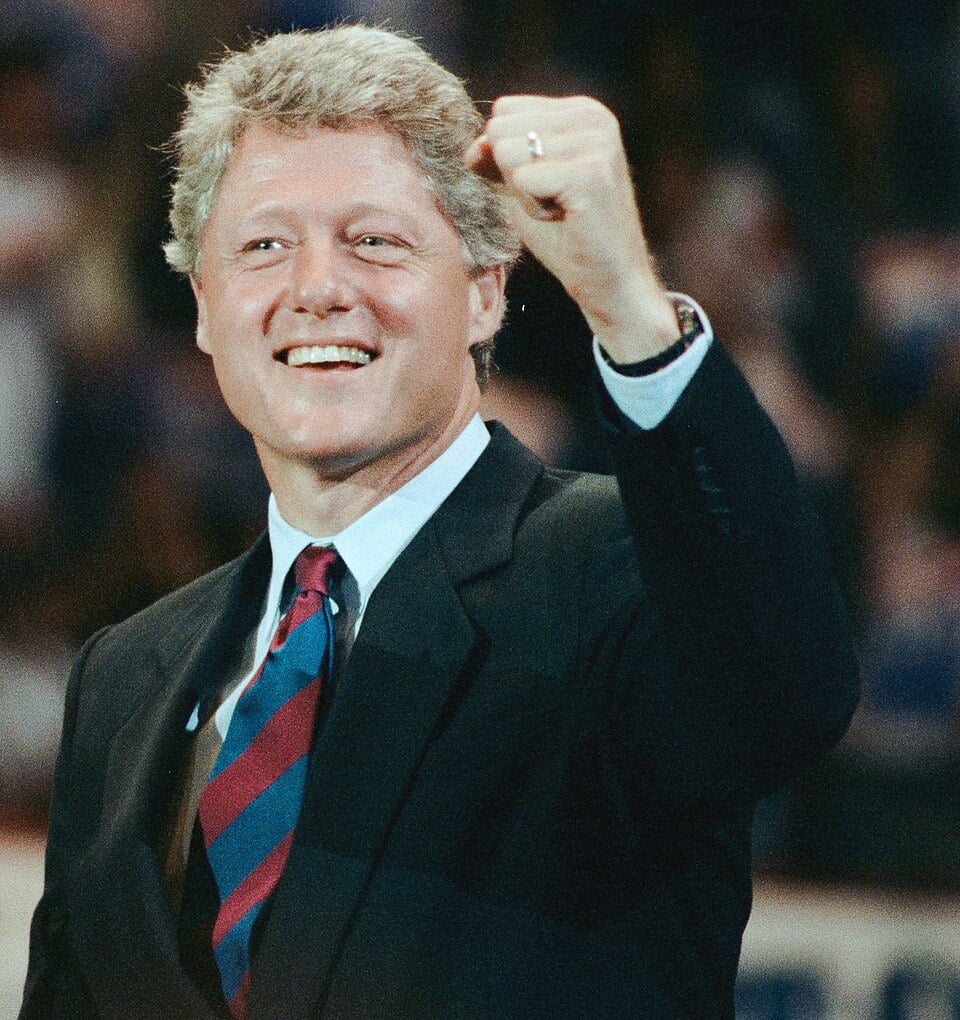
In 1992, California shifted decisively toward Democratic nominee Bill Clinton, reflecting major demographic and political changes that had developed during the 1980s. The growth of Silicon Valley and an influx of young professionals helped reshape the state’s electorate, while Clinton’s “New Democrat” message appealed to moderates, liberals, and some conservatives. President George H.W. Bush also faced an economic downturn and divisions within the Republican Party, including a primary challenge from Pat Buchanan. Meanwhile, independent candidate Ross Perot attracted many independent and moderate conservative voters with his focus on the economy and national debt. Together, these factors helped Clinton win California and marked the beginning of the state’s long-term shift toward Democratic presidential candidates.
Four years later, Clinton once again carried California decisively. This time, Ross Perot’s candidacy, while still relevant, was not as dominant as it had been four years prior. Adding to a healthy economy in 1996, Clinton became the first Democratic nominee to carry the majority of the vote in California since Lyndon Johnson in 1964 and the first since FDR to carry the state in consecutive elections. However, the Democratic realignment was still not totally complete. Some semi-urban, and even a few suburban areas, were still voting Republican. The next century would see these types of voters shift to the Democratic Party while rural and working-class counties, which even voted for or gave a substantial amount of votes to Clinton, would shift to the Republican Party.
Democratic Dominance Emerges, but Republicans Remain Competitive
The 2000 U.S. Presidential election was the closest race in U.S. history since 1960. Republican George W. Bush, son of George H.W. Bush, just barely eked out a victory over Democrat Al Gore, Clinton’s vice president, following controversy over votes in Florida. Gore ended up winning California decisively in 2000, even earning a higher percentage and raw number of votes than Clinton had four years prior. However, his margin of victory was not as high as Clinton’s had been in 1996. Some of the suburbanites who had voted for Clinton came back to the Republican fold. While losing California by high numbers in 2000, Bush still cracked 40 percent of the vote.
Following the September 11 attacks, President George W. Bush initially received strong public support, including in Democratic-leaning states such as California. By 2004, however, the country was more divided over the War on Terror. Republican Gov. Arnold Schwarzenegger supported Bush’s reelection campaign, while the death and state funeral of former President Ronald Reagan also brought national attention to California. Democrat John Kerry ultimately carried the state by 9.95 percentage points, marking the last time California’s presidential margin was decided by fewer than 10 points and the last time a Republican nominee received more than 40 percent of the vote there.
Democratic Dominance Intensifies
By 2008, opposition to Bush’s foreign policies had grown, alongside an economic crisis that affected millions of Americans. That year, Democrat Barack Obama gained momentum nationwide and strengthened Democratic margins in states that had been trending Democratic for years, including California. Obama won California by 24 points, uniting a broad Democratic coalition that included some conservative voters.
Obama would once again win California by large numbers in 2012. Although slightly smaller than 2008, it was a sign that California was a safe ‘blue state’ when it came to Presidential elections. The 2016 presidential election involved two candidates with high unfavorable ratings: Democrat Hillary Clinton and Republican Donald Trump. Trump built strong support among rural and working-class voters, while Clinton gained support from suburban voters, including some who had previously opposed Obama. Although Trump narrowly won the presidency through the Electoral College, Clinton posted one of her strongest performances in California, including flipping Orange County after it backed Romney in 2012.
The Plateau
Joe Biden carried California comfortably in 2020, although his margin was smaller than Hillary Clinton’s in 2016. Biden received more than 11 million votes to Trump’s 6 million amid record turnout and widespread mail-in voting during the COVID-19 pandemic. Trump also gained support among some working-class and non-white voters, while maintaining support in many rural areas. Although Biden won California decisively, the state’s margin shifted modestly toward Republicans compared with 2016.
By 2024, concerns over inflation and dissatisfaction with the Biden administration had shaped the political climate. After President Joe Biden withdrew from the race, Vice President and California native Kamala Harris became the Democratic nominee. Trump won the Republican nomination and defeated Harris, becoming the second president after Grover Cleveland to serve nonconsecutive terms.
In California, Harris won her home state decisively, although her margin was smaller than Biden’s in 2020. Trump increased his share of the vote compared with 2020, marking the strongest Republican presidential performance in California since 2004. The results reflected California’s continued Democratic advantage while also demonstrating the changing nature of its electorate.
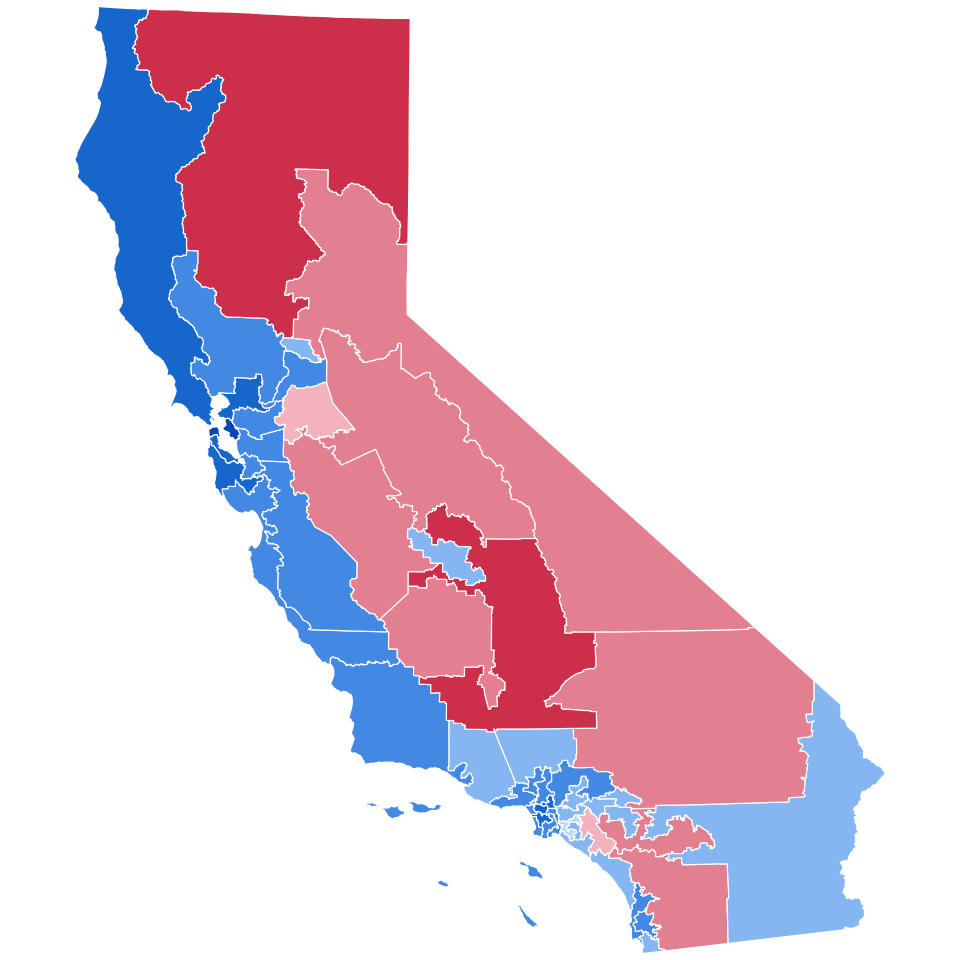
California has also produced nationally prominent Democratic leaders, including Gov. Gavin Newsom, whose political profile has extended beyond the state. Official California election records provide detailed results from the 2024 election.
A Changing Electorate and an Uncertain Future
The 2028 U.S. presidential election is scheduled for November 7, 2028. Time will tell how both parties perform compared with previous elections. California’s political history, however, shows how dramatically the state has evolved over the decades. California shifted from its early Democratic roots to the Republican Party in the 1920s before returning to Democrats during the Great Depression. The state later became a Republican stronghold, with California natives Richard Nixon and Ronald Reagan winning major victories there. By the 1990s, however, Democrats had established a growing advantage as California’s population and political landscape continued to change. While California remains Democratic-leaning, Republicans can still draw significant support depending on the political climate. California’s long electoral history remains a reflection of the state’s changing population, communities, and political priorities.
Sources:
California Secretary of State — Statewide Election Results
The American Presidency Project — Presidential Election Data
Library of Congress — Presidential Election Statistics
Public Policy Institute of California — How Has Party Voting Changed in California?
Encyclopaedia Britannica — California Political History
Editor’s Disclaimer: This article provides a historical overview of California’s presidential voting patterns and political evolution. It is intended for informational and educational purposes and does not endorse or oppose any political party, candidate, or viewpoint. Historical election results and related information were compiled from publicly available government records, academic resources, and other reputable sources. Political trends and historical developments can involve complex factors and may be interpreted differently by historians and political analysts.
