
As artificial intelligence continues to advance, its role in film, television, advertising, and digital media is expanding rapidly. AI-generated video, digital actors, voice synthesis, and virtual production tools are becoming increasingly accessible, prompting discussions throughout Hollywood about how the technology may reshape the future of entertainment.
Over the past six months, Presence News has attended entertainment industry mixers across Hollywood, speaking with filmmakers, producers, actors, entrepreneurs, and technology leaders while learning more about cinematography, lighting, directing, audio production, and post-production workflows. During those conversations, one topic surfaced repeatedly: artificial intelligence.
To better understand public sentiment, Presence News asked business leaders the following question:
As a viewer, how do you feel about the growing use of AI-generated content in film and entertainment? Do you think you’ll continue to prefer movies produced through traditional filmmaking—with actors, directors, physical sets, locations, and cameras—or are you open to AI-generated productions as well? What factors influence your preference?
Here is what they shared.

John Ozuysal
Founder, House of Growth
Website: https://www.housesofgrowth.com
John Ozuysal, founder of House of Growth, believes audiences continue to value authenticity above all else.
“I work with brands, so I see how people react to media. They want something that feels like a real person made it. Sure, AI can create cool visuals fast, but traditional filmmaking has a weird, human spark you can’t fake. I’ll give AI movies a shot, but I’ll always choose stories that come from someone’s actual life. How a movie leaves me feeling is the bottom line.”
His perspective reflects a growing belief that while AI can improve production speed and lower costs, emotional storytelling remains difficult to replicate through technology alone.

Sandro Kratz
Co-Founder & CEO, Tutorbase
Website: https://tutorbase.com
Sandro Kratz approaches the discussion from the perspective of someone working closely with artificial intelligence in the education technology industry.
“Working with AI in edtech makes me cautious about AI-generated films. There’s a human touch with real actors and the creativity on a set that you just can’t fake. I’m open to it, but only if filmmakers are upfront about using it and it actually does something new. Otherwise, I’m sticking with traditional filmmaking for now.”
For Kratz, transparency plays a major role. He believes audiences should know when AI has been used and that the technology should contribute meaningful creative value rather than simply replacing existing production methods.

Dr. Nick Palmer
Founder, Orthodontics.net
Website: https://orthodontics.net
Dr. Nick Palmer says authentic human performances remain one of the strongest reasons he continues to prefer traditional filmmaking.
“I still prefer regular movies. You just can’t fake the way real humans act. My family argued about it, but we decided to stick with old films for movie night because the acting feels real. If AI ever manages to pull off a convincing facial expression, I might give it a shot, but until then, I’m watching the classics.”
His comments echo concerns shared by many moviegoers who believe emotional nuance, subtle facial expressions, and genuine performances remain difficult for AI-generated characters to fully reproduce.
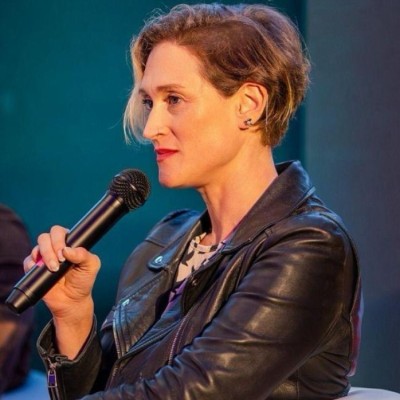
Yael Tamar
Founder & CEO, Microdra.ma
Website: https://www.microdra.ma
Among those interviewed, Yael Tamar offered perhaps the most optimistic outlook regarding AI’s role in entertainment while still emphasizing the importance of human creativity.
Tamar believes AI should be viewed as a new creative medium rather than a replacement for traditional filmmaking.
According to Tamar, the strongest films continue to come from human decisions—the actor’s performance, the director’s perspective, real-world locations, and the chemistry between performers. However, she argues that AI-generated productions should not automatically be viewed as inferior.
She says she is open to AI-generated entertainment when it is supported by strong storytelling, emotionally believable characters, and a compelling creative vision.
Tamar also believes different genres may benefit from AI in different ways. While she still favors traditional filmmaking for dramas, documentaries, comedies, and emotionally driven stories, she sees significant opportunities for AI in fantasy, science fiction, experimental films, branded entertainment, short-form content, and microdramas where creators can build worlds that might otherwise be financially impossible.
For Tamar, the deciding factor is not whether AI was used—but whether it enhances creativity rather than replacing it.
“I don’t want AI content that feels cheap, generic, or soulless,” she explained. “AI should not be used just to cut corners. It should be used to expand what can be made.”
She ultimately believes the industry’s future will likely be a hybrid model, where traditional filmmaking remains the gold standard for many productions while AI becomes another creative tool used for concept development, visualization, marketing, and new storytelling formats.
A Common Theme
Although each respondent approached the topic from a different professional background, several common themes emerged.
All four participants expressed openness to AI when it serves a meaningful creative purpose rather than simply reducing production costs. At the same time, each emphasized that human storytelling, authentic performances, emotional connection, and transparency remain essential ingredients in compelling entertainment.
As AI technology continues to evolve, the conversation surrounding its place in Hollywood is likely to continue. Whether audiences ultimately embrace fully AI-generated films or continue to favor traditional productions may depend less on the technology itself and more on the quality of the stories being told.
For now, these industry leaders suggest that while AI may become a valuable addition to the filmmaker’s toolbox, the human element remains at the heart of memorable storytelling.
