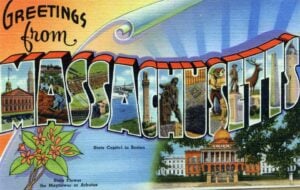
Massachusetts — Since the inception of America, Massachusetts has been an integral part of the nation’s presidential electoral history. As one of the founding 13 states, it participated in the first presidential election ever held in the country and helped shape the development of early political parties. Over the last two centuries, the political preferences of Massachusetts have changed considerably, reflecting the state’s changing role in national politics, the growing population and movement of immigrants, industrialization processes, and shifts in voters’ priorities.
Massachusetts was once a stronghold of the Federalist Party and later became an important center of Republican politics. During the 20th century, however, the state increasingly supported Democratic presidential candidates. The origin of Massachusetts is strongly linked to different influential politicians such as John Adams, John Quincy Adams, and John F. Kennedy.
Massachusetts is now widely recognized as a reliably Democratic state in presidential elections, although its political history includes periods of strong Federalist and Republican support. To understand how the state has reached this point, one needs to go through the history of political development in Massachusetts from the earlier years of the republic to the current electoral age.
The Early Presidential Elections (1788–1860)
Massachusetts was involved in the first presidential election of 1788-89, when George Washington emerged as the first president of the nation. Back then, political parties had not yet evolved into the organized institutions familiar to modern voters. George Washington received all 69 electoral votes cast for president, including all 10 electoral votes from Massachusetts.
At the start of the republic, Massachusetts emerged as a key focus of Federalist politics. The Federalists advocated for a more powerful national government, the growth of commerce, and better economic ties with England. Their persuasion was strong in the commercial society of Massachusetts among merchants and other businessmen.
John Adams was the second president of the US from Massachusetts, and this event was a testament to the success of the Federalist movement and the early ties of Massachusetts to America’s presidential history. John Adams was best known for being Washington’s vice president and his contributions to the American Revolution.
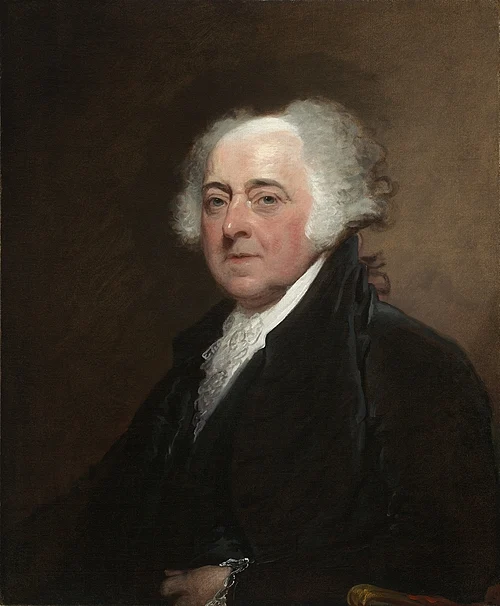
His son John Quincy Adams also held the position of president from 1825 to 1829. He was chosen by the House of Representatives in the election of 1824, and being from Massachusetts further solidified the state’s reputation for providing leaders for national politics.
Over time, the Federalist party disappeared while new political parties appeared. In the 1830s and 1840s, the Whig Party emerged in Massachusetts. It became an important center for this political party, especially among the voters who were interested in economic development, banking, and federal regulations.
Massachusetts also became an important center of the growing antislavery movement. Advocates against slavery and other reformers called for fighting against the expansion of slavery, becoming part of political debates that took place prior to the Civil War period. The founding of the Republican Party in the 1850s offered a new interpretation of the opposition to the expansion of slavery into the western regions for various voters.
As far as the presidential election of 1860 is concerned, Massachusetts already proved to be a major base of the Republican Party. Massachusetts voted for Abraham Lincoln, joining the growing Republican electoral coalition that secured his victory.
Civil War and Republican Dominance (1860–1928)
In 1860, the election of Abraham Lincoln was a great turning point in the history of a presidential ballot in Massachusetts. In this year, the state supported a candidate from the Republican Party while sectional differences related to slavery and the United States intensified.
During the Civil War, Massachusetts provided the Union Army with troops, supplies, and other types of support as its political leaders mostly supported the Republican government and the Union as well.
All through this time, the party’s influence reflected industrial development, commercial interests, and the political traditions established during its struggles.
The 19th century witnessed great changes in Massachusetts, receiving much larger bulk in the fabric of the economy and societal stratification. Manufacturing was flourishing, towns were spreading, and immigration was rejuvenating communities all over the state. Commerce, transport, and political activity increasingly centered on Boston.
As a result of this slow moving process, different elections re-created the dynamics in state politics. The immigrant community, involving the Irish Americans and later various groups of European immigrants, emerged as a powerful element in urban political life. Though Republicans stayed in politics, Democratic political associations continued to gain prominence in different communities.
The presidential elections of the early 20th century reflected these changing political conditions.
In 1900 and 1904, Massachusetts supported Republican William McKinley and Theodore Roosevelt, respectively. The state also supported Republican William Howard Taft in 1908.
The 1912 election produced a different result. In this contest, Democratic candidate Woodrow Wilson triumphed in Massachusetts over Roosevelt, who was a candidate of the Progressive Party, and the current Republican president Taft. The contest indicated that Massachusetts had not settled down in favor of any specific party.
In the years 1916, 1920, and 1924, the Republicans won Massachusetts. The 1928 presidential election marked an important development in Massachusetts politics. Democrat Al Smith carried the state against Republican Herbert Hoover, reflecting the growing influence of urban and immigrant voters.
Smith’s victory reflected the growing political influence of urban and immigrant communities, including Irish American and Catholic voters. His candidacy also demonstrated the changing relationship between religious identity, immigration, and presidential politics in the Northeast.
By the end of the 1920s, Massachusetts had developed a more competitive political environment than the Republican-dominated state of the post-Civil War era.
The New Deal Era and Political Transformation (1932–1960)
The Great Depression transformed American politics and helped establish a new Democratic coalition throughout much of the country. Massachusetts was part of this political shift.
In 1932, Franklin D. Roosevelt defeated incumbent Republican Herbert Hoover, winning Massachusetts as well as the national election.
The Roosevelt campaign focused on economic recovery, federal intervention, and aid to those affected by the Great Depression.
The New Deal programs were crucial in establishing a new relationship between the federal government and the public. Democratic candidates for president enjoyed increasing popularity among Massachusetts voters at that time.
Roosevelt won the elections of 1936, 1940, and 1944 in Massachusetts. His never-ending success showed the growth in the power of the Democrats’ political apparatus and the changes in the makeup of the voter base in the state.
After Roosevelt’s death in 1945, Vice President Harry S. Truman assumed the presidency. Truman won Massachusetts in the 1948 election against Republican Thomas E. Dewey, continuing the state’s Democratic voting pattern.
Nonetheless, Massachusetts returned to the Republican column in 1952 and 1956, electing Dwight D. Eisenhower in both elections. His popularity helped him win states with completely different political backgrounds.
The moment that holds importance in the Massachusetts history of the presidential elections occurred in 1960 when Senator John F. Kennedy won the presidential race against Richard Nixon.
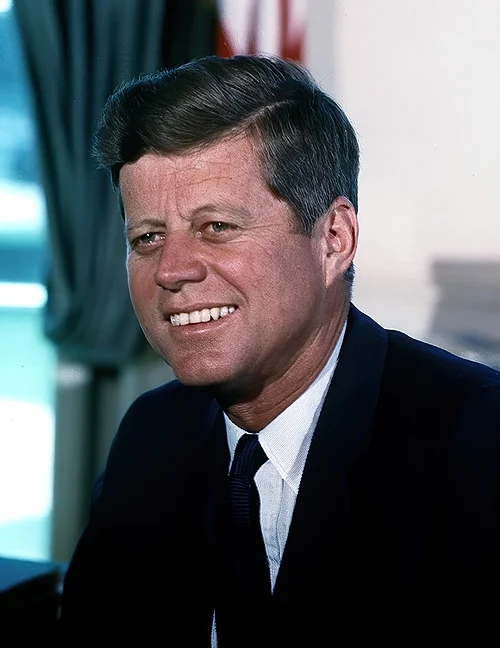
John F. Kennedy was born in Brookline, Massachusetts, and represented the state in the Senate. Kennedy’s victory made another link between the modern president and Massachusetts, thus creating another fact in history.
President Kennedy’s administration brought more prominence to the state and particularly to Boston due to the political history of the Kennedy family.
His win was not only a success for his career but also for the state. It also demonstrated the growing strength of the Democratic Party in the state and its influence within national politics.
Massachusetts in Modern Presidential Elections (1964–1988)
Following Kennedy’s assassination in 1963, Vice President Lyndon B. Johnson became president. Johnson won Massachusetts overwhelmingly in the 1964 presidential election against Republican Barry Goldwater.
The result reflected Massachusetts’ growing Democratic alignment and the national political environment surrounding Johnson’s campaign.
The state continued supporting Democratic presidential candidates in 1968, when Hubert Humphrey defeated Republican Richard Nixon in Massachusetts. Four years later, Massachusetts became particularly notable during the 1972 election.
Despite Republican Richard Nixon winning overwhelmingly in the elections throughout the country against Democrat George McGovern, Massachusetts was the only state to vote for McGovern. This result points to the distinct pattern of voting that the state has exhibited in the period of Republican dominance in the country.
In 1976, Massachusetts supported Democrat Jimmy Carter, who defeated Republican incumbent Gerald Ford in the national election.
The state’s voting behavior became more complicated during the 1980s. Ronald Reagan won the state very narrowly in 1980 and 1984, but Massachusetts supported Democratic candidate Michael Dukakis in 1988.
Dukakis, who served as Massachusetts governor from 1975 to 1979 and again from 1983 to 1991, became the Democratic presidential nominee in 1988. He faced Republican nominee George H. W. Bush, who won the national election.
Although Dukakis lost nationally, he carried his home state of Massachusetts. His candidacy represented another occasion when a prominent Massachusetts political figure sought the presidency. Nonetheless, the 1988 presidential election was the last time a Republican nominee, George H.W. Bush, got over 40 percent of the vote in the state and carried any of its counties.
These elections demonstrated that Massachusetts could occasionally support Republican presidential candidates, even as Democratic influence became increasingly established.
Recent Presidential Elections (1992–2024)
Beginning with the 1992 presidential election, Massachusetts consistently supported Democratic presidential candidates.
Democrat Bill Clinton defeated Republican incumbent George H. W. Bush in 1992 and won Massachusetts. Clinton repeated the result in 1996 against Republican Bob Dole.
The 2000 election continued the state’s Democratic voting pattern. Massachusetts supported Vice President Al Gore, who lost the national Electoral College contest to Republican George W. Bush following the highly contested results in Florida.
In 2004, Massachusetts supported Democratic nominee John Kerry, a U.S. senator representing the state. Kerry faced incumbent President George W. Bush and ultimately lost the national election.
The 2008 presidential election brought another Democratic victory in Massachusetts, with Barack Obama defeating Republican John McCain. Obama also carried the state in 2012 against Republican Mitt Romney.
Romney had previously served as governor of Massachusetts from 2003 to 2007. Despite his political connection to the state, he did not carry Massachusetts in the presidential election.
In 2016, Massachusetts supported Democratic nominee Hillary Clinton against Republican Donald Trump. Clinton won the state while Trump secured the national Electoral College victory.
The Democratic win in the state of Massachusetts continues, as Joe Biden won against Donald Trump on a national scale and in that state as well during the 2020 elections.
The 2024 presidential election continued the pattern. Democratic nominee Kamala Harris defeated Trump in Massachusetts, receiving approximately 61.2% of the statewide vote compared with Trump’s approximately 36.0%.
According to official results released by the Secretary of the Commonwealth of Massachusetts, Harris garnered 2,126,518 votes, while Trump received 1,251,303. Harris takes away all the electoral votes, i.e., a maximum of 11, from the state of Massachusetts.
Even though Massachusetts has been a Democratic state in presidential elections from 1992 to date, the margin of victory has not always been the same.
The state’s presidential voting history demonstrates how regional political preferences can remain relatively consistent while individual elections produce different levels of support for candidates and parties.
Massachusetts’ Electoral Votes and Political Significance
At the moment, Massachusetts has a total of eleven electoral votes during presidential elections.
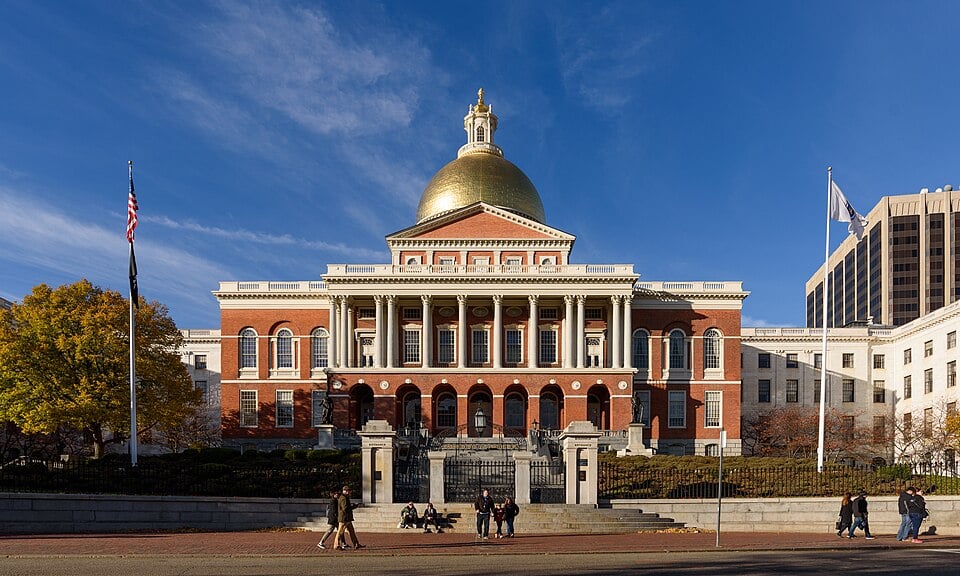
This figure reflects the amount of congressional representation that the state has, both in terms of voting senators and any U.S. House representatives that are from the state.
Changes in the population and districts in the state have led to changes in the number of Electoral College votes. In contrast with other states, Massachusetts employs the winner-takes-all principle when distributing its electoral votes. Under this system, the presidential candidate who receives the most votes statewide generally receives all of Massachusetts’ electoral votes.
Even though Massachusetts is not typically viewed as a variable in the modern presidential election, its importance extends beyond the electoral vote count.
The state has produced two presidents, John Adams and John Quincy Adams, as well as prominent presidential candidates such as John F. Kennedy, John Kerry, and Michael Dukakis.
The state of Massachusetts has played an important role nationally because of its universities, political institutions, financial centers, connection to the American Revolution, and others.
The history of the presidential elections in Massachusetts provides evidence of the transformation of American political coalitions as well as the impact of regional identity, development of the economy, immigration, and national developments on voting behavior in the state.
Conclusion: Massachusetts’ Changing Presidential Voting History
Massachusetts has undergone a lot of political changes since it held its first presidential election in 1788-1789. From having a powerful early Federalist influence, the state saw the rise of Republican dominance in the 19th century and, later, began to consistently support Democratic presidential candidates in modern times.
The state has produced two presidents and an array of important political figures and elections that have witnessed significant events in the history of the United States. Massachusetts has played an important role in American political history, producing presidents such as John Adams and John Quincy Adams, as well as prominent national political figures such as John F. Kennedy and Michael Dukakis.
The development of the state illustrates the change in political views that occurred with the development of social, economic, and demographic changes in the country. Even though Massachusetts remained a Democratic stronghold in terms of presidential elections in modern times, it has been through a number of political transformations.
Sources:
National Archives – Electoral College Results (1789–2024)
Massachusetts Secretary of the Commonwealth – Elections Division
Federal Election Commission – Election Results and Voting Information
Library of Congress – U.S. Election Statistics: Presidential Elections
National Archives – Electoral College History
U.S. House of Representatives – History, Art & Archives
Editor’s Disclaimer: This article is intended for historical and educational purposes. It examines Massachusetts’ presidential election history, political developments, and changing voting patterns using historical records and publicly available election data. Every effort has been made to ensure accuracy; however, historical interpretations and election statistics should be considered in their appropriate historical context. Presence News welcomes corrections and additional information from readers.
