
North Carolina’s presidential election history reflects the broader political realignment of the American South. Like much of the South, North Carolina became a Democratic stronghold for much of the period following Reconstruction. Although Republicans had support in parts of the state, North Carolina remained predominantly Democratic in presidential elections for much of the first half of the twentieth century before shifting toward the Republican Party in the latter half. Unlike some neighboring Southern states, North Carolina has remained competitive in recent presidential elections, although Republican nominees have consistently carried the state since 2012. North Carolina’s political evolution has been shaped by the Civil War, Reconstruction, racial politics, economic change, and demographic shifts. Its electoral history illustrates how these forces have reshaped party coalitions over time.
Early Presidential Elections and Political Foundations, 1789–1860
North Carolina became a state in 1789. North Carolina did not participate in the 1788–1789 presidential election because it had not yet ratified the U.S. Constitution. After ratifying the Constitution in November 1789, North Carolina participated in the 1792 presidential election, supporting George Washington.
During the First Party System, North Carolina leaned toward the Democratic-Republicans, drawn to Thomas Jefferson’s agrarian vision. However, a strong Federalist minority persisted in commercial coastal towns and part of the Piedmont. By the 1830s, the Second Party System brought fierce competition between Whigs and Democrats. The Whig Party enjoyed considerable success in North Carolina during the 1830s and 1840s. Its support for internal improvements, public education, and economic development appealed to voters seeking greater state investment, including in western areas.
The state’s political landscape was deeply shaped by agricultural interests and slavery. The plantation economy of the eastern coastal plain wielded considerable political influence, while many western communities were dominated by smaller farms. These differences contributed to regional disputes over political representation and economic policy. While westerners demanded constitutional reform for fairer representation, both regions remained fiercely protective of the institution of slavery.
As sectional animosity intensified over federal authority and slavery’s expansion, North Carolina initially charted a moderate path. It resisted early secessionist momentum, voting down a secession convention in early 1861. However, following the Confederate firing on Fort Sumter and Abraham Lincoln’s subsequent call for troops, the state’s political dynamics fractured. After President Abraham Lincoln called for troops following the Confederate attack on Fort Sumter, North Carolina’s legislature moved toward secession. The state officially seceded on May 20, 1861, becoming one of the last states to join the Confederacy.
Civil War, Reconstruction, and the New South, 1861–1896
Because North Carolina had seceded from the Union and joined the Confederacy, it did not participate in U.S. presidential elections during the Civil War. The state formally returned to presidential elections in 1868 during Reconstruction. North Carolina’s return to presidential elections in 1868 occurred during Reconstruction, when federal measures and the enfranchisement of Black men substantially expanded political participation.
With the support of newly enfranchised African Americans and white Unionists, the Republican Party rose to power during early Reconstruction. Republicans and their allies helped establish a new state constitution in 1868 that expanded civil rights protections and provided for a stronger public education system. However, this shift triggered a fierce, often violent backlash from white conservatives. White conservatives worked to restore Democratic control through white supremacist campaigns, intimidation and violence by groups such as the Ku Klux Klan, and the 1871 impeachment and removal of Republican Governor William W. Holden.
By the late 19th century, the restoration of Democratic dominance faced a major challenge from the Populist movement. During the 1890s, many farmers dissatisfied with established political parties supported the Populist movement, which challenged Democratic dominance and advocated economic reforms. They forged a powerful “Fusion” alliance with Republicans, successfully capturing the state legislature and the governorship. The 1896 election represented the peak of this Fusion cooperation, highlighting deep class and economic divisions within the state.
The Fusion Coalition and the Rise of White Supremacy
Terrified by this biracial political coalition, the Democratic Party launched a virulent white supremacy campaign in the late 1890s. Democratic leaders used white supremacist propaganda, electoral manipulation, and political violence to undermine the Fusion coalition, culminating in the 1898 Wilmington coup, when white supremacists violently overthrew Wilmington’s multiracial local government.
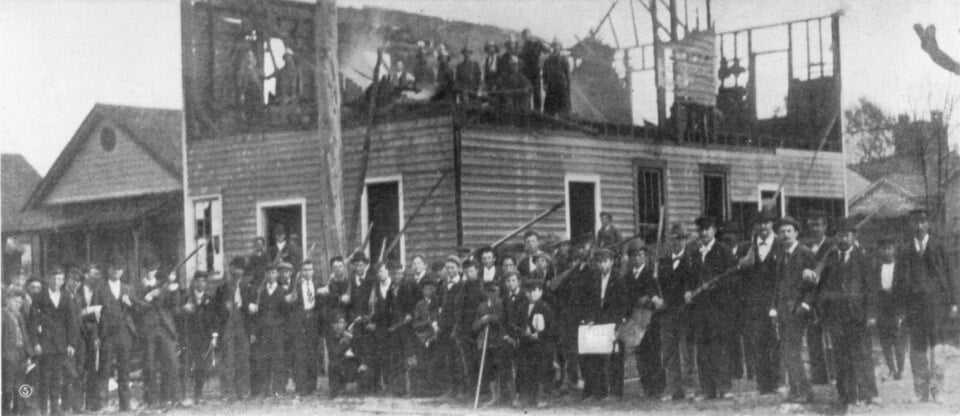
The Democratic political resurgence helped pave the way for Jim Crow segregation and the 1900 state constitutional amendment imposing literacy tests and poll taxes, alongside a grandfather clause. These provisions sharply restricted Black political participation and helped entrench Democratic dominance for decades.
Democratic Dominance and the Solid South 1900-1948
Following the political upheaval of the late 1890s, North Carolina became part of the Solid South, where the Democratic Party dominated state and presidential politics for decades. This Democratic dominance was reinforced by the 1900 state constitutional amendment, which imposed voting restrictions that disproportionately disenfranchised Black citizens. Western North Carolina retained a stronger Republican tradition than many other parts of the state, reflecting its distinctive history and political loyalties. However, voting patterns varied within the region and across different elections.
Many residents of the mountain region had Unionist sympathies and opposed secession, contributing to the area’s distinctive political traditions.
During the early twentieth century, North Carolina generally supported Democratic presidential nominees, reflecting the broader political alignment of the Solid South. One notable exception came in 1928, when Republican nominee Herbert Hoover carried North Carolina and several other Southern states. Smith’s Catholic faith and opposition to Prohibition contributed to resistance among some voters, although economic interests and local political conditions also influenced the result.
Four years later, amid the Great Depression, Democrat Franklin D. Roosevelt won North Carolina as the state returned to the Democratic column. Roosevelt carried North Carolina in all four of his presidential elections. His New Deal policies and the broader economic circumstances of the Depression helped sustain Democratic support among many voters, including those in agricultural communities.
In 1948, some Southern states supported States’ Rights Democratic candidate Strom Thurmond in opposition to President Harry Truman’s civil rights program. North Carolina, however, voted for Truman, remaining in the Democratic column.
The state’s political alignment would gradually shift in the decades that followed.
Political Change and the Republican Rise
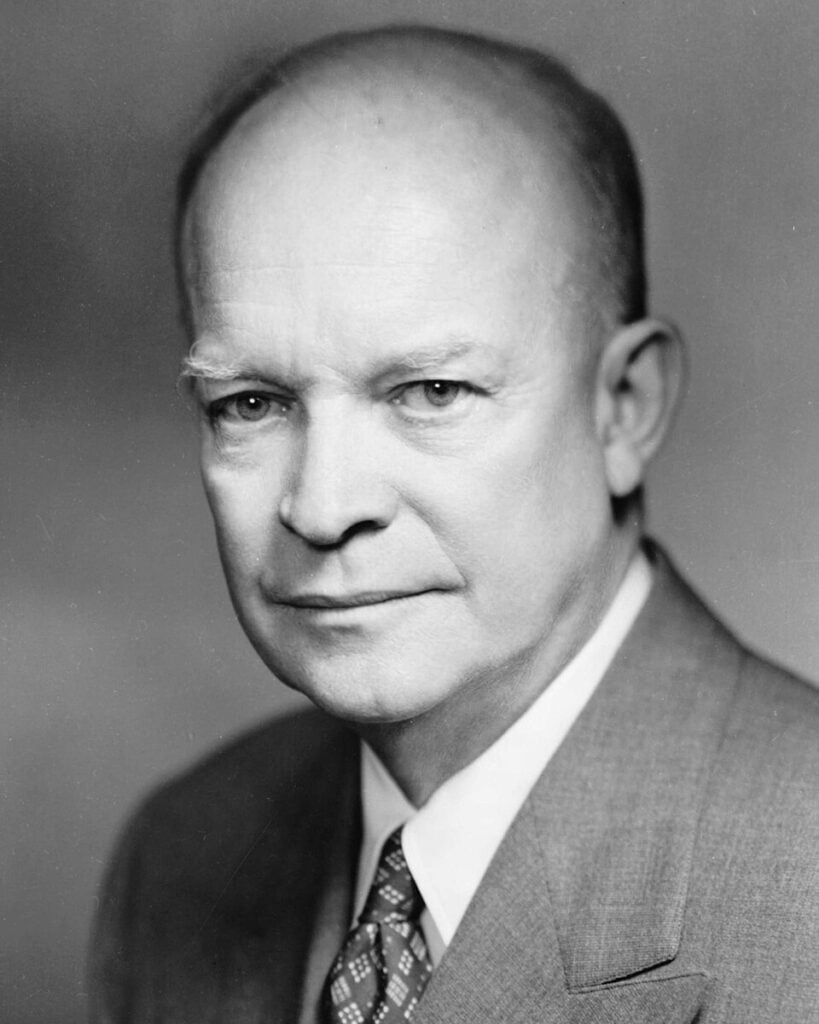
Dwight D. Eisenhower, also known as “Ike,” was a popular World War II hero. His broad national appeal and moderate political image helped him attract voters beyond the traditional Republican base. However, Democratic nominee Adlai Stevenson carried North Carolina in both 1952 and 1956. Eisenhower came close to winning the state in 1956, losing by just over one percentage point. His growing support reflected the strength of the Republican Party in parts of western North Carolina, even as Stevenson maintained enough support elsewhere to win statewide.
Religious concerns also influenced parts of the electorate in 1960, when Democratic nominee John F. Kennedy became the first Roman Catholic elected president. Nonetheless, Kennedy pulled off a narrow win in North Carolina over Republican Richard Nixon that year.
Four years later, the nation was still in mourning following the assassination of John F. Kennedy, showing much support for President Lyndon Johnson. In addition, the 1964 Republican presidential nominee was Barry Goldwater, a candidate seen as too conservative for the mainstream. Even socially conservative voters in North Carolina were skeptical of Goldwater due to his favoring of proposals to reduce federal involvement in agricultural programs, including those affecting tobacco farmers, which had been the state’s primary crop.
Although some Deep South states voted for Goldwater, partly because of his opposition to the Civil Rights Act of 1964, North Carolina decisively supported Democratic nominee Lyndon B. Johnson.
The Southern Strategy and Republican Realignment
In 1968, the Democratic Party was split, and Republican Richard Nixon was pledging a comeback. Nixon pursued what became known as the Southern Strategy, seeking to attract Southern voters who had traditionally supported Democrats, including white voters alienated by changes in civil rights and federal policy. Meanwhile, Alabama Governor George Wallace ran as an Independent nominee, courting voters, especially in the South, who were opposed to integration. In the end, Nixon pulled off a narrow win, with the bulk of his votes coming from Western North Carolina and Wallace’s support primarily in the eastern region. Democratic nominee Hubert Humphrey only carried a handful of North Carolina counties in 1968.
The 1972 U.S. presidential election saw President Nixon pull off a massive landslide against Democratic nominee George McGovern, a candidate seen as too liberal for the mainstream. Nixon won North Carolina decisively in 1972, reinforcing the state’s growing Republican alignment in presidential elections. However, Jimmy Carter’s victory in 1976 would demonstrate that Democratic candidates could still assemble a winning coalition in the state.
Carter Returns North Carolina to Democratic Fold
Republican President Gerald Ford, who had assumed the presidency following Nixon’s resignation amidst the aftermath of Watergate, had gained some political capital by the time the 1976 election came around. However, many Americans were looking for a change, and Democratic nominee Jimmy Carter, from Georgia, was promising that as a Washington outsider. In the South, Carter benefited from support among Black voters, who increasingly formed a core Democratic constituency, as well as many white Southern voters who had historically supported Democrats.
The 1976 U.S. presidential election saw Carter carry North Carolina by double digits. Carter’s victory in 1976 was the last time a Democratic presidential nominee carried North Carolina until Barack Obama’s narrow win in 2008. It was also the last Democratic presidential victory in the state by a double-digit margin.
Reagan’s Rise and the Consolidation of Republican Support
By 1980, Carter faced significant economic challenges, including high inflation and unemployment, as well as the ongoing Iran hostage crisis. Although Carter retained support in parts of the South, Reagan defeated him nationally and carried North Carolina by a little over two points in 1980. Reagan’s narrow victory in North Carolina reflected the state’s continued competitiveness in 1980, even as he won a decisive national victory.
Four years later, with the economy doing well, President Reagan was as popular as ever. The 1984 election saw Reagan win an even more decisive landslide. Reagan won North Carolina decisively in 1984, and Republican nominee George H. W. Bush continued the state’s Republican presidential voting pattern with his victory in 1988. It was obvious that by this time the Republican Party had gained dominance within North Carolina at the presidential level. The long-term Republican realignment in the South, shaped in part by the Southern Strategy and broader changes in party coalitions, was becoming increasingly evident in North Carolina. In addition to suburban voters who had traditionally voted Republican, many of the rural and working-class voters were moving away from the Democratic Party. However, that didn’t mean there still wouldn’t be signs of competitiveness within the state.
Presidential Elections and a Changing Political Landscape, 1992–2004
By 1992, President George H.W. Bush had experienced a decline in his popularity. Amid an economic recession, Bush also faced a challenge from conservative commentator Pat Buchanan in the Republican primaries. Meanwhile, Democratic nominee Bill Clinton of Arkansas promoted a centrist “New Democrat” message intended to appeal to voters across party lines. Clinton’s Southern background and campaign message helped him appeal to some voters who had previously supported Democrats, while Black voters remained an important part of the party’s coalition.
In addition, Ross Perot, the Independent nominee, appealed to many fiscally conservative voters who were frustrated with Bush but hesitant about Clinton. North Carolina ultimately voted for Bush by less than one percentage point in 1992, making it a closely contested state. Four years later, Republican nominee Bob Dole won North Carolina by a little over four points. With the candidacy of Ross Perot less of a factor this time, Dole improved from Bush’s performance four years prior. Although Clinton lost North Carolina in both elections, he remained competitive in parts of the state and carried several counties that would later become more reliably Republican.
Bush’s Resurgence and the Emerging Battleground State
In the 2000 presidential election, Republican George W. Bush defeated Democratic Vice President Al Gore after a disputed Florida recount and a Supreme Court ruling brought the recount to an end. Although Gore carried his home state of Tennessee and kept several Southern contests competitive, Bush won North Carolina by a double-digit margin in 2000.
By 2004, Bush’s handling of national security and the aftermath of the September 11 attacks remained central campaign issues, alongside growing debate over the Iraq War and the broader war on terror. Despite selecting North Carolina Senator John Edwards as his running mate, Kerry could not prevent Bush from winning North Carolina by another double-digit margin in 2004. The 2004 election marked the last time a Republican presidential nominee won North Carolina by a double-digit margin through the 2024 election. The state was about to become one of the most competitive in the country when it comes to presidential elections.
North Carolina Becomes a Battleground 2008-2024
Between 2004 and 2008, North Carolina continued to experience population growth and urbanization, particularly in major metropolitan areas. These changes contributed to an evolving electorate, although demographic change alone does not explain election results. The 2008 election took place amid a financial crisis and economic downturn, while the wars in Iraq and Afghanistan remained prominent issues. Barack Obama’s victory marked the first time a Democratic presidential nominee had carried North Carolina since Jimmy Carter in 1976. As of the 2024 election, Obama remained the last Democratic presidential nominee to win the state, although subsequent elections remained competitive.
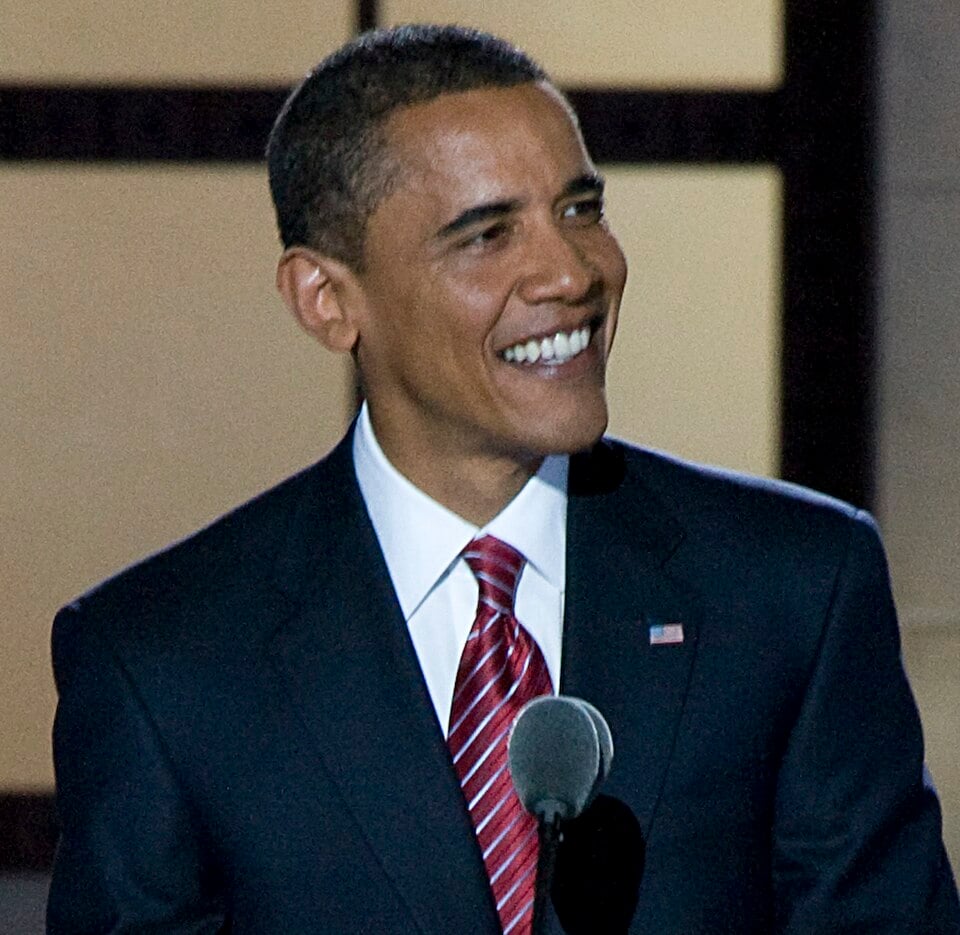
In 2012, President Obama was reelected nationally but narrowly lost North Carolina to Republican Mitt Romney. In 2016, Donald Trump won the state over Democrat Hillary Clinton in another closely contested election.
The Modern Battleground: Trump, Biden, and Harris
The 2020 U.S. presidential election took place during the COVID-19 pandemic, prompting record mail-in voting. The campaign focused on the pandemic, economic disruption, Trump’s leadership, and Biden’s policy proposals. Biden defeated Trump nationally in both the popular vote and Electoral College, though several states were close. Trump narrowly won North Carolina in 2020, but Biden came closest to a Democratic victory there since Obama in 2008.
In 2024, Trump faced Vice President Kamala Harris, who replaced Biden as the Democratic nominee.
Trump won North Carolina for the third consecutive election in 2024, defeating Harris by about 3.2 percentage points. Nationally, Trump also became the second U.S. president, after Grover Cleveland, to win a nonconsecutive second term. Although Harris lost North Carolina, she received more votes there than Biden had received in 2020. The increase in raw votes did not translate into a Democratic victory.

Long-Term Voting Patterns and Electoral Significance
North Carolina’s presidential voting history moved from early party competition to decades of Democratic dominance and, later, sustained Republican strength. North Carolina has shifted from a Democratic stronghold to a competitive battleground that leans Republican in recent presidential elections.
Despite its Republican presidential lean, North Carolina has elected Democratic governors, reflecting split-ticket voting. With 16 electoral votes in 2024, North Carolina remains a key battleground for presidential campaigns.
Conclusion
North Carolina’s political evolution reflects broader Southern changes in voting rights, party coalitions, the economy, and population growth. The state’s electoral history shows how party realignment, voting rights, and changing voter coalitions shape U.S. elections.
North Carolina State Board of Elections. “Historical Election Results Data.”
National Archives. “Electoral College Results.”
Library of Congress. “Presidential Elections: U.S. Election Statistics Research Guide.”
NCpedia. “The Wilmington Coup — 1898.”
University of North Carolina Wilmington. “The Wilmington Coup d’État of 1898.”
The American Presidency Project. “Presidential Election Statistics.”
North Carolina Department of Natural & Cultural Resources. “The 1898 Wilmington Coup.”
Editor’s Disclaimer: This article examines North Carolina’s presidential election history and the political, social, and demographic changes that have shaped its voting patterns. Historical election results and interpretations are based on available records and historical sources. The article is intended for informational and educational purposes and does not endorse any political party or candidate.
