South Carolina is one of the many states located in the Deep South. In fact, before the U.S. Civil War, South Carolina was the very first state to secede from the Union. When it comes to U.S. Presidential elections, it’s also part of what is called the ‘Solid South.’ South Carolina became part of the ‘Solid South,’ a region that voted overwhelmingly Democratic in presidential elections for much of the period following Reconstruction. This changed toward the end of the 20th century, as South Carolina joined many other Southern states in voting Republican, particularly in presidential elections, although its Republican margins have generally been narrower than those of some neighboring states. It’s interesting to learn how South Carolina’s presidential voting habits have evolved over the years.
The Beginnings
South Carolina became the eighth state to ratify the U.S. Constitution in 1788. Between this time and 1860, when it came to U.S. Presidential elections, South Carolina’s electors were chosen exclusively by the state legislature rather than by voters. After the Civil War and Reconstruction, presidential electors in South Carolina were chosen through popular elections rather than exclusively by the state legislature. At first, during Reconstruction, South Carolina’s government was under the control of Republican leaders, which was the party of Lincoln and Grant. However, after southern politicians regained control, South Carolina began the trend of voting solidly Democratic in Presidential elections for the next 100 years.
Opposition to National Democratic Party
Although South Carolina would vote Democratic at the presidential level for a century, it would join its fellow Southern States in opposing certain aspects of the National Democratic Party. In the 1928 U.S. presidential election, some Southern voters opposed Democratic nominee Al Smith because of his Catholicism, opposition to Prohibition, and other cultural and political differences. This resulted in some Southern states voting or coming close to voting for Republican nominee Herbert Hoover. However, South Carolina stuck to voting solidly Democratic.
In the midst of the Great Depression, any previous Republican support for Herbert Hoover in the South quickly evaporated, and Democratic nominee FDR carried the Solid South decisively in all four of his Electoral landslides. However, although South Carolina would vote solidly for FDR in 1944, its opposition towards the National Democratic Party was beginning to show that year.
That year, some Southern Democrats became increasingly dissatisfied with the national Democratic Party over civil-rights issues. Not to mention, this was right after the landmark court case of Smith v. Allwright. At the 1944 Democratic National Convention, Harry Truman replaced Wallace as Roosevelt’s running mate, amid a broader dispute within the party over civil rights and other issues. South Carolina went further by placing a slate of unpledged electors on the ballot. The episode was an early sign that South Carolina and other parts of the Deep South could remain Democratic at both the state and presidential level while increasingly clashing with the national Democratic Party over civil rights and other issues.
Strom Thurmond and Dixiecrats
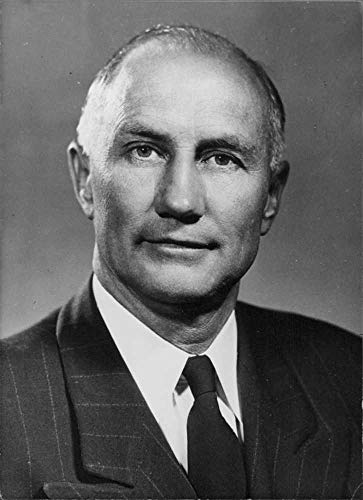
By the 1948 U.S. presidential election, opposition to the national Democratic Party had grown even deeper, particularly after President Harry Truman ordered the desegregation of the U.S. Armed Forces. South Carolina Senator Strom Thurmond, who had long been a Democrat, ran as a ‘Dixiecrat’ in opposition to the policies of President Truman. He handily carried his home state of South Carolina and a few other states in the Deep South.
Four years after Strom Thurmond let his name be known at the Presidential level, the discontent among South Carolinians towards the shifting Democratic Party was further seen. In the 1952 U.S. presidential election, South Carolina Governor James F. Byrnes, a Democrat, endorsed Republican Dwight D. Eisenhower over Democrat Adlai Stevenson. The result was a close race in the Palmetto State, with Stevenson narrowly defeating Eisenhower. However, four years later, opposition to Eisenhower and his administration remained strong among many segregationist Democrats, particularly over federal civil-rights and school-desegregation policies. South Carolina therefore again offered voters a slate of unpledged electors in the 1956 presidential election. Nonetheless, Stevenson won South Carolina again, this time by a wider margin, while Eisenhower’s support declined from his 1952 performance.
The 1960 U.S. Presidential election pitted Democratic nominee John F. Kennedy against Republican Richard Nixon, who had served as Eisenhower’s Vice-President. As in 1928, Kennedy’s Catholicism was an important concern for some Southern voters. Nonetheless, Kennedy, who chose Texan Lyndon Johnson as his running mate, pulled off a narrow win in South Carolina.
First Republican Win in a Century
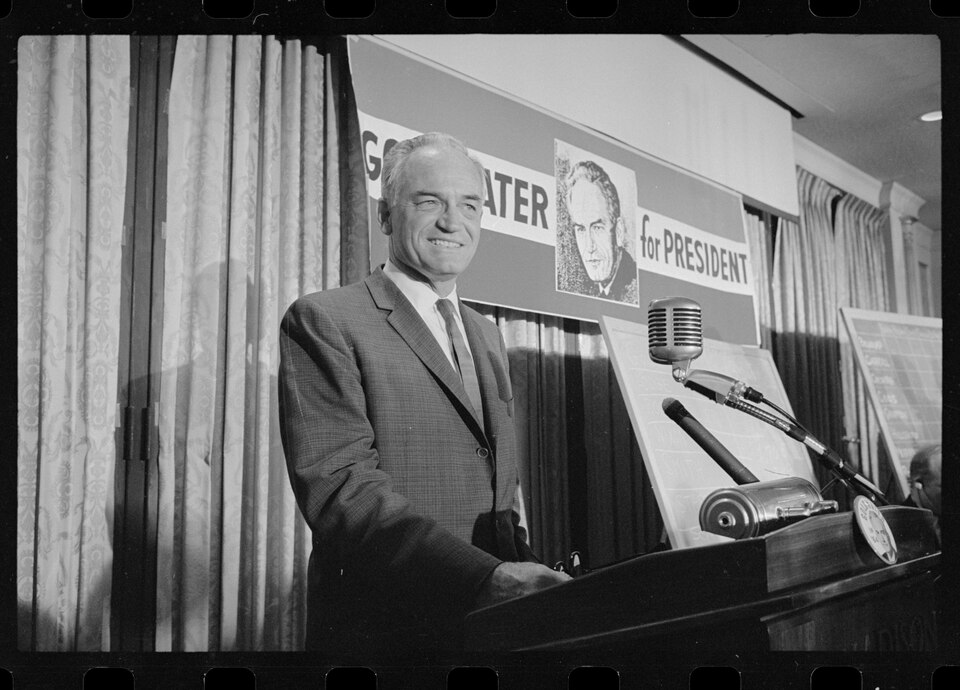
Much changed in American politics after Kennedy was assassinated in 1963. His successor, President Lyndon B. Johnson, a Texan, signed the Civil Rights Act of 1964. This was the same year that South Carolina Senator Strom Thurmond officially became a Republican. Amid strong opposition to the Civil Rights Act among many white Southern voters, South Carolina joined four other Deep South states in voting for Republican Barry Goldwater, marking the first time since Reconstruction that South Carolina had voted Republican for president.
Interestingly, although Goldwater carried South Carolina decisively, many of the areas of the upcountry region of the state voted for Johnson. This area contained some of the poorer South Carolina voters at the time. Although some of these voters also opposed the civil-rights legislation supported by Johnson, economic and class-based loyalties remained important reasons for their continued support of the Democratic Party. Some viewed figures such as Strom Thurmond as members of the political elite. A similar geographic pattern appeared in 1948, when Thurmond received his weakest support within South Carolina in parts of the state’s northern Upstate region.
Changing Times
In the 1968 U.S. presidential election, Alabama Governor George Wallace, a segregationist and independent candidate, won several Southern states, echoing Strom Thurmond’s 1948 Dixiecrat campaign. However, there were some differences in some of the types of southern voters that supported Wallace but may not have been as supportive of Thurmond years prior.
Wallace combined segregationist positions with economic populist rhetoric and attracted support from some working-class voters in the South and elsewhere. In 1968, Wallace was able to win several states in the Deep South as Thurmond had in 1948. However, South Carolina, under the influence of Thurmond, voted for Republican nominee Richard Nixon that year, albeit by a single-digit margin. Wallace’s strongest support in South Carolina came from parts of the northern Upstate, which had, interestingly, mostly supported Johnson four years prior and showed the lowest numbers in South Carolina for Strom Thurmond in 1948.
Four years later, President Richard Nixon was running against Democratic nominee George McGovern, a candidate seen as too far to the left of the mainstream of the country. Therefore, in the 1972 U.S. Presidential election, South Carolina joined most of the rest of the United States in voting decisively for Nixon in the midst of a massive landslide.
Jimmy Carter and One Last Democratic Win
By the time of the 1976 U.S. Presidential election, the country had gone through significant changes following Nixon’s resignation in the midst of Watergate and the end of Vietnam. Then President Gerald Ford was able to maintain some political capital, but many Americans were looking for a change. Democratic nominee Jimmy Carter was a former governor of Georgia who ran as a Washington outsider.
In addition to promising to restore and rebuild faith in Washington, Carter was running as a southerner who was able to bring together an unlikely coalition of African American and southern white voters. Although some southern states had started voting Republican or independent at the presidential level since the 1960s, the Democratic Party was still strong at the state level in many southern states, including in South Carolina. Therefore, many southern Democrats decided to endorse Carter. Of course, on the other hand, Strom Thurmond had become a Republican in 1964. He strongly opposed Carter and endorsed Gerald Ford.
Nonetheless, in the midst of a southern sweep in 1976, Carter carried South Carolina decisively, winning a majority of the vote and defeating Ford by more than 13 percentage points. However, this would mark the last time a Democratic presidential nominee would carry South Carolina.
One Last Close Battle
When Carter ran for reelection in 1980, much of the trust voters had put into him in 1976 had eroded. The country was experiencing high unemployment and double-digit inflation. The ongoing Iranian hostage crisis further damaged Carter’s standing. Republican nominee Ronald Reagan, also endorsed by Strom Thurmond, was targeting many southern voters, as that had been Carter’s main voting bloc in 1976. Nevertheless, despite disappointment in his presidency, Carter had still maintained a decent level of support among southerners. Southern Democratic organizations and voters continued to provide Carter with significant support in 1980, although arguably not as enthusiastically as they had four years prior.
Although Carter was voted out in a national landslide, much of the South, besides Carter’s home state of Georgia, West Virginia, and Maryland, which Carter won, was hotly contested in 1980. This also included South Carolina, which just barely voted for Ronald Reagan over Carter, who had carried the state four years earlier. The 1980 U.S. presidential election remains the last time South Carolina was decided by fewer than two percentage points.
Republicans Ronald Reagan and George H.W. Bush Dominate South Carolina
In 1984, with Jimmy Carter not on the ticket and the economy doing well, President Reagan was able to win the South decisively, along with most of the rest of the country. This, of course, included South Carolina. Four years later, Reagan’s Vice-President, George H.W. Bush, was able to win a third consecutive landslide for the Republican Party. South Carolina again voted decisively Republican in 1988. However, despite an ongoing Republican streak that has continued today, 1988 marks the last time a Democratic nominee has not cracked 40 percent of the vote in the state of South Carolina, indicating changing demographics in the state, which have been seen even more so in the neighboring states of Georgia and North Carolina.
Bill Clinton Slows Down the Republican Trend
Although the 1980 presidential election remains the last time South Carolina was decided by fewer than two percentage points, Bill Clinton was able to mildly contest the state in both 1992 and 1996, losing the state by single digits in both elections and remaining the most recent Democratic presidential nominee to carry several South Carolina counties. After 1996, South Carolina was again decided by a single-digit margin in 2008. Clinton’s 1996 performance remains one of the closest Democratic presidential performances in the state since Carter’s 1980 loss.
George W. Bush continues Republican Dominance
In 2000, Al Gore faced a more difficult political environment in the South than Bill Clinton had faced in the 1990s. That year, George W. Bush, the son of George H.W. Bush, was the Republican nominee. Unlike his father, George W. Bush had actually grown up in Texas. While Al Gore contested some Southern states in 2000, South Carolina solidly backed Bush that year and again in 2004. Nevertheless, Gore and Kerry each received more than 40% of the vote in South Carolina.
One Last Single-Digit Win
The 2008 U.S. Presidential election is the most recent to have South Carolina decided by single digits, albeit just barely. Although he came close to a double-digit victory, 2008 Republican nominee John McCain defeated Democratic nominee Barack Obama by about nine percentage points. Like Mississippi and Alabama, South Carolina last voted for a Democratic nominee in 1976 when it voted for Carter. Coincidentally, South Carolina also shares the trait of both Mississippi and Alabama as last being hotly contested and down to the wire in 1980. However, 1996 remains the last time both Mississippi and Alabama were decided by single digits. Although South Carolina would be in the single digits in 1996, it would be just one more time in 2008.
Continuing Republican Support But Not as Strong as Other States
In the 2012 U.S. Presidential election, Republican nominee Mitt Romney carried South Carolina by double digits over then-President Barack Obama. Nonetheless, Obama still managed to crack 40 percent in the state. In the next three presidential elections, Donald Trump carried South Carolina by double-digit margins. Nonetheless, the Democratic nominee in those elections would still crack 40 percent in the state. In 2024, Kamala Harris lost South Carolina decisively to Trump, although she received a larger share of the vote than the Democratic nominees received in neighboring Tennessee, Alabama, and Mississippi.
Looking Ahead
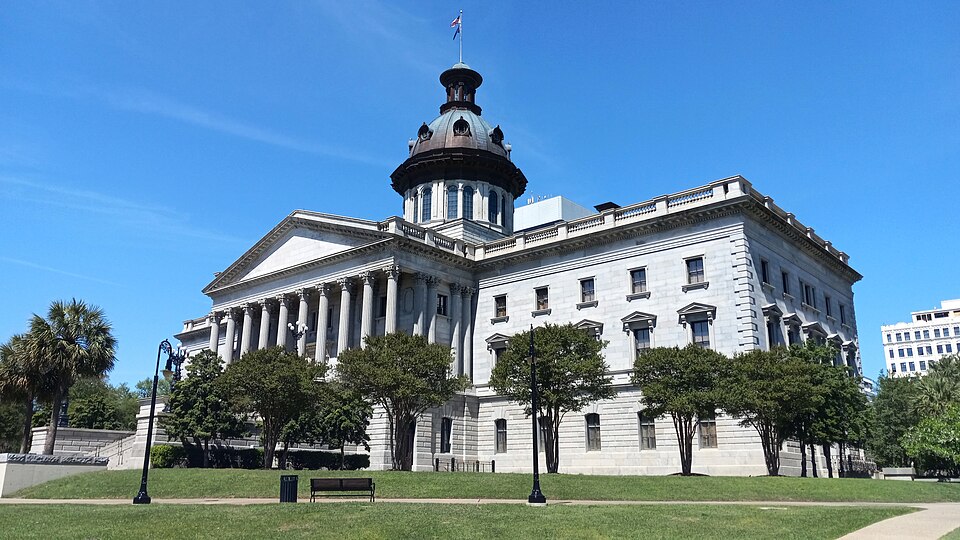
South Carolina has not voted for a Democratic presidential nominee since 1976. Unlike neighboring Georgia and North Carolina, the state has not developed into a presidential swing state in recent decades. Nevertheless, Democratic candidates have generally performed somewhat better in South Carolina than in some other Deep South states. The state’s presidential voting history illustrates how Southern political loyalties gradually shifted from the Democratic Party toward the Republican Party, while regional, demographic, and political differences have continued to shape the size of Republican victories.
Sources:
South Carolina Election Commission — Election Database
270toWin — South Carolina Presidential Election Voting History
South Carolina Election Commission — Election Results
270toWin — Historical Presidential Elections
