
As Halloween approaches, horror fans are revisiting their favorite films and discovering new horror classics. Examples include modern horror films like Get Out (2017) and classics such as Alfred Hitchcock’s Psycho (1960).
Yet one horror film with a dedicated cult following still seems to get overlooked. John Carpenter’s Prince of Darkness (1987) marks its 39th anniversary on October 23, 2026.
John Carpenter is a filmmaker whose work helped shape modern horror cinema. Following Halloween (1978), Carpenter directed The Thing (1982) and Christine (1983), further establishing his reputation in horror. Compared with those better-known films, Prince of Darkness receives less attention.
Prince of Darkness stands out for blending science, theology, and cosmic horror. Rather than relying primarily on monsters and jump scares, Carpenter imagines the Devil’s essence as a measurable, sentient substance, giving the supernatural premise an unsettling scientific dimension. Nearly four decades later, the film’s eerie atmosphere, synthesizer score, and recurring dream transmissions remain distinctive. Why, then, has this ambitious film remained underappreciated by many horror fans?
An Ancient Evil Beneath a Church
In John Carpenter’s Prince of Darkness, a priest discovers a mysterious cylinder of swirling green liquid beneath an abandoned Los Angeles church. Recognizing the potential danger, he recruits a team of scientists and students to investigate the substance.
The orderly laboratory investigation soon descends into chaos. As the scientists study the fluid, they encounter evidence linking it to an ancient supernatural evil, blurring the boundaries between scientific inquiry and religious belief.
The film’s claustrophobic setting amplifies the horror. Trapped inside the crumbling church as a growing crowd of possessed people surrounds the building, the characters become increasingly isolated and must fight for survival while preventing the awakening of a terrifying cosmic evil.
John Carpenter’s Unusual Vision of Horror
The cinematic style of Prince of Darkness sets it apart from more conventional horror films. Carpenter emphasizes isolation, distrust, and unseen forces rather than relying solely on conventional monster-movie threats. Unlike films centered on a visible human killer, Prince of Darkness builds its horror around forces that remain largely unseen.
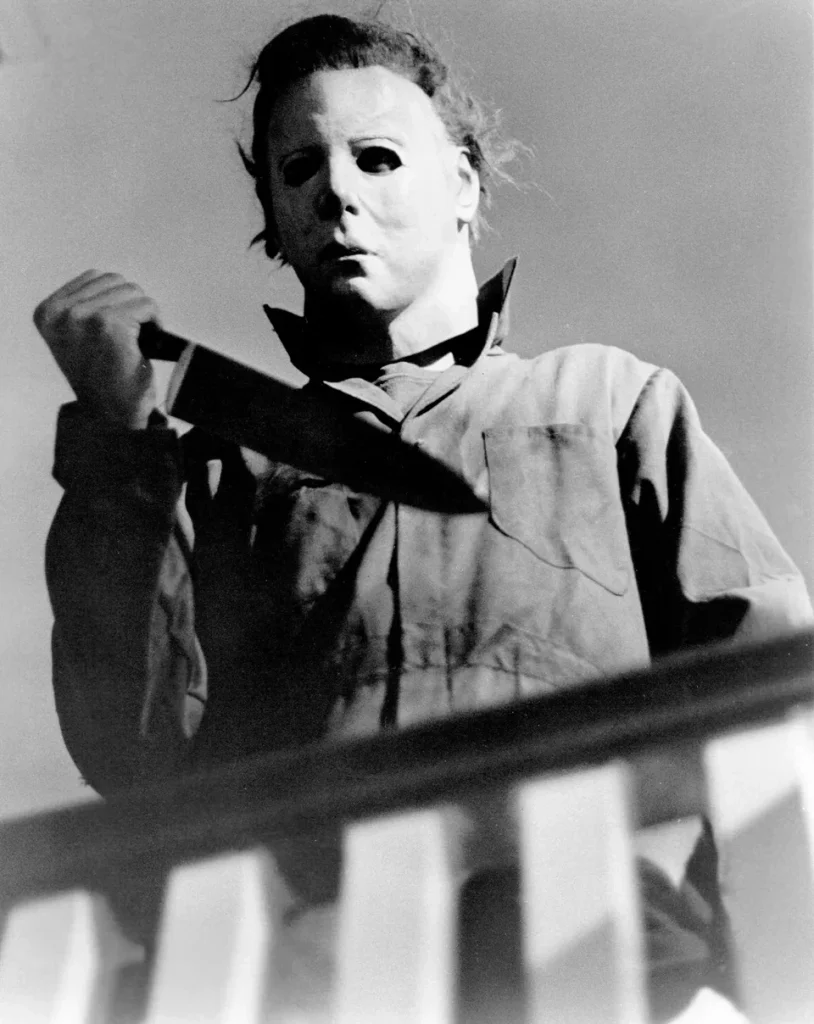
These themes also distinguish the film from other entries in Carpenter’s filmography. The premise of Halloween (1978), for instance, focuses on a masked killer stalking babysitters in a suburban setting. By contrast, Escape from New York (1981) emphasizes action and dystopian adventure.
Prince of Darkness is the middle chapter of Carpenter’s “Apocalypse Trilogy,” between The Thing (1982) and In the Mouth of Madness (1994). Its ambitious premise blends scientific speculation with religious lore to explore the nature of evil. The film blends quantum mechanics with religious lore, presenting humanity’s potential downfall as a consequence of forces beyond its understanding.
When Science and Religion Collide
By bringing scientific inquiry and religious tradition together, Carpenter imagines a world in which both struggle to explain forces beyond human understanding. The church becomes a repository of hidden knowledge, while its priests guard a secret that science alone cannot resolve. As the academics confront evidence of a terrifying force, scientific research becomes a means of confronting existential dread rather than a source of reassurance.

By bringing these ideas together, the film challenges the boundary between scientific explanation and religious belief. Carpenter imagines a world in which religious traditions and scientific inquiry converge around phenomena that challenge humanity’s understanding of reality. The church becomes a repository of hidden knowledge, while its priests serve as guardians of a secret that science struggles to explain.
Ultimately, the film explores the unsettling implications of a universe whose mysteries may exceed the limits of human understanding. As the academics confront evidence of a terrifying force beyond their understanding, science becomes less a source of reassurance than a means of confronting existential dread.
Atmosphere, Cinematography, and Sound
The film’s visual style and atmosphere play a central role in building its sense of dread.
Much of the film takes place inside an abandoned church, whose confined spaces and separation from the outside world heighten the characters’ sense of isolation and dread. The church’s basement is where the entity is contained.
Scenes of the priest, academics, and graduate students examining the liquid alternate with images of the church’s subterranean spaces, gradually emphasizing how difficult escape may become if the entity is unleashed. The dim lighting reinforces the film’s ominous atmosphere, complementing its title, Prince of Darkness.
The film’s 2.35:1 anamorphic widescreen composition creates an unsettling visual contrast. Rather than relying exclusively on tight close-ups, cinematographer Gary B. Kibbe uses wide-angle compositions that emphasize the edges of the frame and give the urban setting an ominous atmosphere. This technique captures the modern, urban environment of downtown Los Angeles in a way that feels wide-open yet deeply ominous, giving the viewer a sense of “panoramic unease.”
The Unsettling Power of the Dream Transmissions
Another distinctive feature of Prince of Darkness is its unsettling dream transmissions, which show a possible future catastrophe. Shared by multiple characters, these grainy, low-tech video sequences blur the boundaries between dreams, technological interference, and warnings from the future. They also introduce a time-bending element, suggesting that the visions might offer a way to prevent the entity’s emergence.
The film’s music is equally important to its atmosphere. The distinctive synthesizer score, composed by Carpenter with Alan Howarth, helps establish the film’s mood and pacing. From the opening moments, the film’s pulsing synthesizer bass establishes a mood of dread and anticipation. Otherworldly synthesizer tones and a delicate piano line deepen the unease throughout the film. Rather than appearing only during individual scares, the score continues beneath dialogue and slower scenes, steadily intensifying the film’s sense of cosmic dread. Alice Cooper also appears in the film as a street-level sleeper and contributes a title track, adding a shock-rock element to the project’s electronic horror atmosphere.
Performances and the Ensemble Cast
The cast’s performances also strengthen Prince of Darkness. Playing the priest is Donald Pleasence, who also starred in Carpenter’s classics Halloween (1978) and Escape from New York (1981). Pleasence’s restrained demeanor adds weight to the film’s unsettling themes. Victor Wong, who also starred in Carpenter’s Big Trouble in Little China (1986), plays Professor Howard Birack.

The contrast between the two characters gives their interactions much of the film’s intellectual tension. Donald Pleasence portrays the unnamed priest as a man whose certainty has crumbled. He appears frantic and sweaty, radiating a sense of absolute doom. Conversely, Victor Wong plays the quantum physics professor with a cool, playful, and grounded intellectualism. Pleasence’s growing panic contrasts with Wong’s measured skepticism, helping balance the film’s extensive exposition.
While Donald Pleasence and Victor Wong provide philosophical depth, Lisa Blount and Jameson Parker serve as the film’s emotional anchors and leads. Lisa Blount’s portrayal of Catherine and Jameson Parker’s performance as Brian give the film an emotional center. Brian’s grief following Catherine’s sacrifice makes the supernatural conflict deeply personal. His futile attempt to reach through the sealed mirror and his traumatized final appearance turn the sci-fi mystery into a personal tragedy.
Contrasting Worldviews and Character Groups
The film also contrasts three groups of characters, each of which responds differently to the supernatural threat. The priest struggles with the collapse of his religious certainty, the academics search for scientific explanations, and the street-level sleepers become instruments of the entity’s influence. The priest attempts to persuade Dr. Birack and the other academics to take the supernatural threat seriously, while the scientists initially approach the mystery through their own scientific frameworks. Meanwhile, the homeless people surrounding the church, often overlooked by society, become unsettling figures as the other characters confront the growing threat.
Why It Deserves Greater Recognition — and Where It Falls Short
Despite its flaws, Prince of Darkness remains a distinctive example of 1980s cosmic horror that challenged conventional slasher formulas. Rather than relying primarily on jump scares and masked killers, Carpenter combines scientific speculation with theological dread. Its ambition makes it a distinctive entry in 1980s horror, exploring humanity’s insignificance in ways that can still captivate audiences today.
However, the film’s greatest strengths also contribute to its limitations. The slow-burn pacing and dense, exposition-heavy mythology of the first half can easily frustrate viewers looking for immediate action. Its surreal, ambiguous ending, which undermines the apparent victory with a lingering sense of dread, may divide viewers. For patient viewers, however, these qualities are part of the film’s appeal. The hypnotic rhythm builds an inescapable atmosphere of claustrophobia that modern horror rarely replicates.
Often overshadowed by Halloween and The Thing, Prince of Darkness is considered one of Carpenter’s lesser works. Its narrative occasionally becomes weighed down by exposition, making it less streamlined than Carpenter’s best-known films. But as the middle chapter of his “Apocalypse Trilogy”, it has rightfully earned a passionate cult following. Despite its flaws, the film’s unconventional approach makes it worth revisiting.
Conclusion: A Nightmare That Still Resonates
Ultimately, Prince of Darkness combines cosmic horror, grainy video transmissions, an unsettling synthesizer score, and a sustained conflict between science and faith. By introducing a fictional Anti-God rooted in its supernatural mythology, Carpenter creates an atmosphere of existential terror. Decades later, the film’s central question still resonates: what hope do we have when reality itself defies human understanding?
For horror fans seeking atmospheric, idea-driven cinema rather than conventional jump scares, this claustrophobic nightmare remains worth revisiting. Its slow-building tension, hypnotic score, and disturbing dream transmissions—including visions of a possible catastrophe in 1999—leave viewers questioning whether the nightmare has truly ended.
Sources:
American Film Institute (AFI) — Prince of Darkness (1987)
John Carpenter’s Official Website — Prince of Darkness
British Film Institute (BFI) — Prince of Darkness (1987)
RogerEbert.com — Prince of Darkness (1987) Review
The Official John Carpenter — Prince of Darkness Soundtrack
Editor’s Disclaimer: This article contains critical analysis and personal interpretations of John Carpenter’s Prince of Darkness (1987). Opinions regarding the film’s themes, cinematography, performances, and cultural significance are those of the author. Scientific concepts discussed in the article relate to the film’s fictional narrative and should not be interpreted as established scientific facts.
