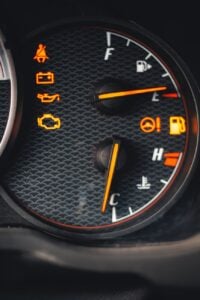
For millions of drivers, few dashboard warnings create as much uncertainty as the check engine light. What begins as a seemingly minor problem can quickly turn into a repair estimate reaching hundreds or even thousands of dollars.
A loose gas cap, failing sensor, vacuum leak, ignition problem, or emissions-system malfunction can all trigger the same warning light. Yet the cost of fixing these problems can vary dramatically.
One driver might leave a repair shop with a $100 bill. Another could face a $2,000 estimate for what initially appeared to be a similar issue.
So why is there such a significant difference?
The answer often comes down to the complexity of the underlying problem, the time required to diagnose it, labor rates, replacement parts, and whether the vehicle was correctly diagnosed before repairs began.
A Check Engine Light Doesn’t Tell You What to Replace
Modern vehicles contain sophisticated onboard diagnostic systems designed to monitor engine performance, emissions, and related components.
When the vehicle’s computer detects a problem, it may store a diagnostic trouble code, commonly known as a DTC, and illuminate the check engine light.
However, one of the biggest misunderstandings among vehicle owners is that a trouble code automatically identifies a defective component.
For example, a code indicating that an engine is running too lean does not necessarily mean the oxygen sensor needs replacing.
The underlying issue could involve a vacuum leak, a contaminated mass airflow sensor, an intake-system problem, or inadequate fuel delivery.
Similarly, a cylinder misfire code might point toward a spark plug, ignition coil, fuel injector, wiring issue, or mechanical engine problem.
A diagnostic code identifies a condition detected by the vehicle’s computer. It does not necessarily identify the part responsible for that condition.
Replacing components based solely on stored codes can result in unnecessary expenses without resolving the original problem.
Why Automotive Diagnostic Fees Can Be Expensive
Many repair shops charge a separate diagnostic fee before performing repairs.
Although a basic code scan can take only a few minutes, determining why a particular code appeared may require significantly more work.
A technician might need to:
- Retrieve stored, pending, and historical trouble codes.
- Review live engine data while the vehicle is running.
- Examine fuel trims, sensor readings, and ignition performance.
- Perform electrical testing on wiring and connectors.
- Conduct smoke testing to locate intake or vacuum leaks.
- Perform compression or fuel-pressure testing.
- Road-test the vehicle to reproduce an intermittent problem.
A diagnostic fee of $100 to $200 might cover an initial evaluation at some repair facilities, but charges vary by location, vehicle, and complexity. More involved testing can cost considerably more.
The important distinction is whether a customer is paying for a basic code retrieval or a genuine diagnostic investigation.
A professional diagnosis should help narrow down the cause of the problem and establish the next appropriate repair or test.
When Replacing Parts Becomes an Expensive Guessing Game
One of the most frustrating experiences for vehicle owners is paying for a repair only to discover that the check engine light returns shortly afterward.
Consider a hypothetical vehicle experiencing rough idle, poor acceleration, and a lean-condition trouble code.
A repair shop might recommend replacing the mass airflow sensor.
If the problem continues, the shop might then recommend oxygen sensors, followed by additional ignition or fuel-system components.
The customer could spend hundreds of dollars replacing parts without addressing the underlying issue.
In some cases, the original problem may have been an intake leak, damaged wiring, or another fault that could have been identified through systematic testing.
Not every unsuccessful repair indicates negligence. Vehicles can have multiple faults, and intermittent electrical problems can be especially difficult to diagnose.
However, customers should understand what evidence supports a recommended repair before authorizing expensive parts replacement.
The Difference Between a $100 Repair and a $2,000 Repair
Two vehicles displaying similar symptoms may require entirely different repairs.
A rough idle caused by a dirty throttle body or a minor intake issue may be relatively inexpensive to address.
A similar symptom caused by a failed fuel injector, damaged wiring harness, internal engine damage, or complicated emissions-system failure can require extensive labor and costly components.
Consider these illustrative scenarios:
| Potential problem | Illustrative repair cost |
|---|---|
| Loose or defective gas cap | $20–$100 |
| Throttle body cleaning | $100–$250 |
| Mass airflow sensor replacement | $150–$450 |
| Ignition coil or spark plugs replacement | $150–$500 |
| Oxygen sensor replacement | $200–$600 |
| Fuel injector replacement | $250–$1,000+ |
| Catalytic converter replacement | $800–$2,500+ |
| Complex engine or electrical repair | $1,000–$3,000+ |
These are broad illustrative ranges, not national averages or quotes. Actual costs depend on vehicle design, parts, local labor rates, and the work required. Diagnostic charges, taxes, and additional repairs may be extra.
The cost difference is not always a reflection of the severity of the initial symptoms.
Sometimes the least noticeable problems require the most labor-intensive repairs.
Why Labor Rates Matter
Automotive labor rates vary significantly across the United States.
Independent repair facilities, dealership service departments, and specialty repair shops may charge different hourly rates based on their operating costs, equipment, training, and location.
A repair requiring six hours of labor at $175 per hour would generate $1,050 in labor charges alone.
Add a $500 replacement component, diagnostic testing, shop supplies, and applicable taxes or fees, and the final invoice can approach or exceed $2,000.
Some repairs also require removing multiple components simply to access a relatively inexpensive part.
A $40 sensor buried underneath next to an exhaust manifold can require substantially more labor than a $200 sensor mounted in an easily accessible location.
That is why the price of the replacement part alone rarely tells the full story.
Can Cleaning a Component Solve the Problem?
In some situations, cleaning an existing component may restore normal performance without requiring replacement.
Throttle bodies, for example, can accumulate carbon deposits that interfere with airflow and idle operation.
Mass airflow sensors can also become contaminated, potentially affecting the accuracy of their readings.
When contamination is confirmed, appropriate cleaning procedures may improve vehicle operation.
However, cleaning is not a universal solution.
A sensor with an internal electrical failure will not necessarily recover through cleaning, and a throttle body with a defective electronic motor or position sensor may still require replacement.
Technicians must also use cleaning products appropriate for each component and follow manufacturer procedures. Improper cleaning can damage sensitive electronics or protective coatings.
The most effective approach is to identify the actual problem before recommending cleaning or replacement.
Five Questions to Ask Before Approving a Major Repair
Vehicle owners do not need to become professional mechanics to make informed repair decisions.
However, asking a few questions can help prevent misunderstandings and unexpected expenses.
1. What diagnostic trouble codes were found?
Request the exact codes rather than accepting a general description such as “bad sensor” or “engine problem.”
2. What testing confirmed the failed component?
Ask whether the diagnosis was supported by electrical measurements, live data, pressure testing, visual inspection, or another appropriate procedure.
3. Is the recommended repair addressing the cause or just the symptom?
A replacement part may temporarily improve performance without resolving an underlying vacuum leak, wiring issue, or mechanical fault.
4. Can I receive an itemized estimate?
A written estimate should identify labor, parts, diagnostic charges, and other anticipated costs.
5. What happens if the repair does not resolve the problem?
Ask how the shop handles follow-up diagnosis, parts warranties, labor warranties, and additional repair authorizations.
These questions can help establish clear expectations before work begins.
California Drivers Have Additional Consumer Protections
California has specific regulations governing automotive repair estimates and customer authorization.
The California Bureau of Automotive Repair requires licensed automotive repair dealers to provide estimates and obtain customer authorization before performing covered repairs.
Repair facilities generally cannot charge customers for additional work beyond the authorized scope without obtaining the required additional authorization.
Customers are also entitled to documentation describing the work performed and charges associated with their repairs.
These protections are particularly important when an initial diagnostic visit develops into a much larger repair.
Vehicle owners should carefully review estimates, ask questions about unexpected charges, and retain copies of repair documentation.
When Should Drivers Stop Driving?
Not every illuminated check engine light means a vehicle must immediately be taken off the road.
A steady check engine light may indicate a problem that requires diagnosis but does not necessarily require immediate shutdown.
A flashing check engine light is more concerning.
It can indicate an active misfire severe enough to risk catalytic converter damage.
Drivers experiencing a flashing warning light, severe shaking, significant power loss, overheating, or other serious symptoms should stop driving when safe and seek professional assistance.
Continuing to operate a malfunctioning vehicle can turn a relatively manageable repair into a much more expensive problem.
The Bottom Line: Diagnosis Before Replacement
The difference between a $100 automotive repair and a $2,000 bill is not always the cost of the faulty component.
It may involve labor-intensive access, complicated electrical systems, multiple underlying faults, expensive emissions components, or the time required to accurately identify a problem.
For consumers, the most important step is understanding what the repair shop has actually diagnosed before approving major work.
For repair facilities, clear communication and evidence-based troubleshooting can help establish trust while reducing unnecessary parts replacement.
A check engine light is a warning that something needs attention. It should not automatically become permission to replace expensive components without understanding why they failed.
For vehicle owners, a properly performed diagnosis may be one of the most valuable services a repair shop can provide.
Presence News covers automotive technology, consumer issues, business, and developments affecting drivers.
