
Beginning in the 1960s and especially during the 1970s, ranchers across parts of the American West and Midwest reported cattle deaths involving unusual injuries or missing tissue, including tongues, eyes, and reproductive organs.
Before long, theories multiplied. Some blamed satanic cults. Others suspected covert government experiments. Some UFO enthusiasts and conspiracy theorists speculated that extraterrestrials might be responsible.
After around 50 years, cattle mutilation conspiracy theories remain one of America’s longest-running paranormal and conspiracy folklore narratives. The theories continue circulating online through UFO culture, social media, and growing distrust in institutions.
Reports of unusual livestock deaths gradually evolved into a uniquely American conspiracy theory that still persists today.
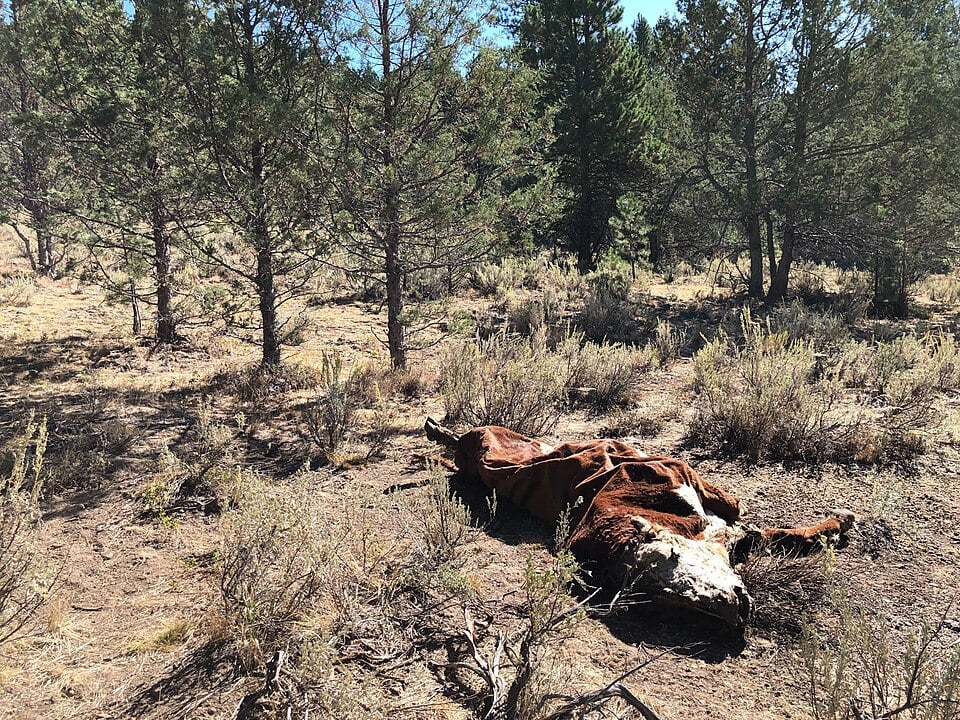
Photo by Anna King / Northwest News Network via Wikimedia Commons.
https://commons.wikimedia.org/wiki/File:Mysterious-bull-deaths_ak_3_custom-386bf0c24ea655fcc3a1d81694edb69b57b17ff2.jpg
https://commons.wikimedia.org/wiki/Commons:PD-US
The Panic of the 1970s
Although isolated mutilation stories date back earlier, public concern surrounding cattle mutilation reports intensified during the 1970s. Reports emerged across multiple states, including Colorado, Nebraska, Kansas, Oklahoma, and New Mexico. Some ranchers reported finding animals with injuries they considered unusual or inconsistent with familiar patterns of predator activity.
The growing number of media reports helped transform local concerns into a national news story. In records published through the FBI Vault, the FBI acknowledged that “reports of scattered animal mutilations in western and mid-western states concerned many people.” Federal authorities investigated the phenomenon between 1974 and 1978, though officials said they lacked jurisdiction unless crimes involved tribal land or crossed state lines.
Rural communities across the East, Midwest, and West faced economic hardship, inflation, Cold War paranoia, and declining trust in the federal government after Watergate. Some historians and sociologists argue that economic uncertainty and political distrust contributed to the spread of conspiracy theories surrounding unusual animal deaths.
Public concern spread through newspaper and television coverage across affected regions. Some ranchers also reported seeing helicopters near locations where dead cattle were later discovered, though investigators never established evidence linking aircraft to the incidents. They also reported observing unusual lights in the sky or other unusual conditions before discovering dead cattle. Some UFO researchers and conspiracy theorists cited the incidents as possible evidence of extraterrestrial visitation.
Theories became increasingly elaborate because some injuries appeared difficult for observers to explain. Witnesses often described cuts they believed appeared “surgical,” leading some observers to question whether predators or natural decomposition alone explained the damage.
How the FBI Became Part of the Mythology
Some researchers argue that the FBI’s involvement may have strengthened conspiracy beliefs rather than calming them.
The Bureau’s files, now publicly available through the FBI Vault, contain correspondence with politicians, ranchers, tribal authorities, and concerned citizens. For some believers, the existence of the investigation reinforced suspicions that authorities possessed undisclosed information, despite the FBI never presenting evidence supporting paranormal explanations.
Some researchers argue that the FBI investigation unintentionally reinforced public suspicion by signaling that authorities considered the reports serious enough to investigate.
Researchers have argued that the mutilation phenomenon became tied to broader American fears about government secrecy, surveillance, and federal power.
This dynamic helped transform ordinary livestock deaths into a lasting mythology. Once distrust entered the picture, official explanations became difficult to accept. Within conspiracy-oriented communities, official explanations were sometimes interpreted as part of a broader cover-up narrative.
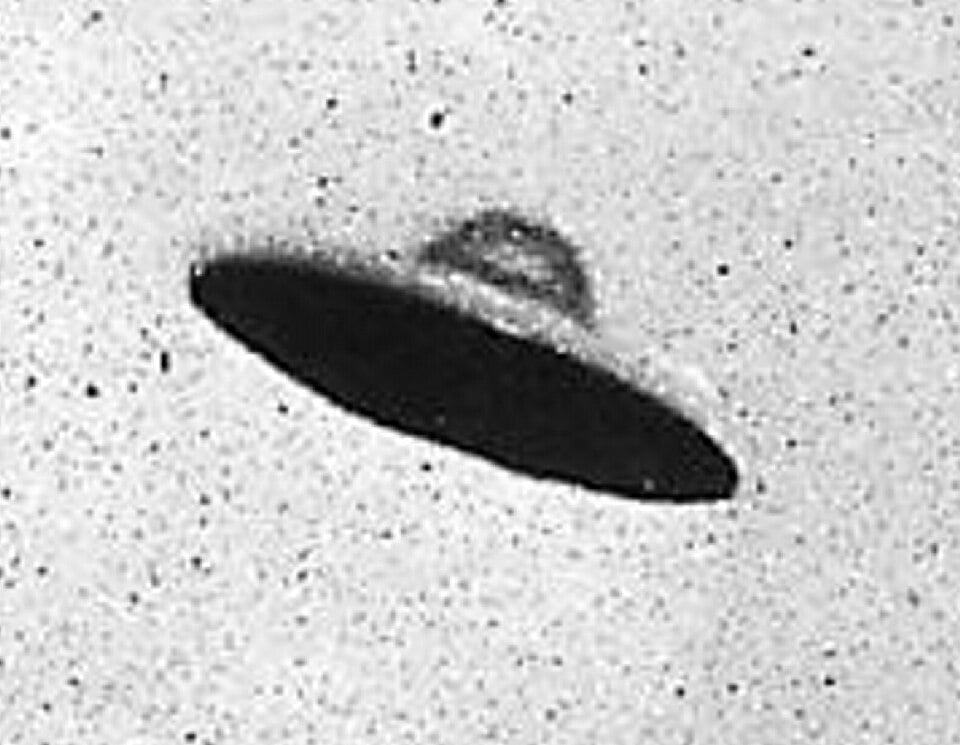
The mythology also intersected with existing UFO culture. By the 1970s, extraterrestrial themes had become increasingly common in American popular culture through films, television, and UFO media coverage. Within UFO culture, cattle mutilation stories became incorporated into broader narratives claiming extraterrestrials were secretly visiting rural America.
https://commons.wikimedia.org/wiki/File:Supposed_UFO,_Passaic,_New_Jersey_(cropped).jpg
https://commons.wikimedia.org/wiki/Template:PD-US-no_notice
The narrative spread through entertainment media like UFO documentaries and The X-Files, which helped popularize themes involving hidden explanations behind unexplained rural events.
Reasons and Explanations for Cattle Mutilations: Scientific Explanations vs. Paranormal Explanations
Most investigators and forensic experts who studied reported cattle mutilation cases concluded there was insufficient evidence to support paranormal or extraterrestrial explanations. Investigators repeatedly stated that available evidence did not support paranormal explanations.
One of the most significant investigations came from Kenneth Rommel, a former FBI agent appointed by New Mexico authorities to study the phenomenon. In his final report, Rommel wrote that in many investigated cases “the carcass was damaged by predators and/or scavengers.”
His investigation concluded that natural decomposition and scavenger activity explained many reported cases.
Scavengers typically consume softer tissue first, including the eyes, tongue, lips, udders, and reproductive organs. To people unfamiliar with animal decomposition, the resulting damage can appear unusually clean or deliberate. Forensic investigators have noted that natural bloating, drying, and tissue shrinkage can create tears and openings that may resemble surgical cuts.
Natural decomposition can also create the impression that a carcass contains little visible blood because blood settles internally and becomes less visible externally after death. As tissues break down after death, blood settles internally and becomes less visible externally. Forensic researchers have repeatedly noted that scavenger activity and decomposition can produce injuries that appear unusual or deliberate to observers unfamiliar with animal remains.
Still, scientific explanations have never fully satisfied believers.
Some researchers argue that psychological and emotional factors also contributed to the persistence of the theories. Many ranchers who encountered unusually damaged animal carcasses were experienced with predators and decomposition. When injuries looked unusual even to them, they trusted their own observations over outside explanations. The emotional impact of discovering severely damaged livestock also intensified perceptions that something abnormal had occurred.
The New Yorker noted in a recent retrospective that cattle mutilation fears persist because they operate at the intersection of rural isolation, folklore, and distrust of institutional expertise. Even when scientific explanations exist, they often fail to address the emotional and symbolic dimensions of the phenomenon.
Folklore for the Modern Age
U.S. National Archives and Records Administration via Wikimedia Commons
https://commons.wikimedia.org/wiki/File:%22Oats_of_C._Sanders,_Jocko_Division.%22_-_NARA_-_293348.jpg
https://commons.wikimedia.org/wiki/Commons:Copyright_rules_by_territory/United_States#Federal_government_works
Folklorist Bill Ellis argued that contemporary legends express anxieties and tensions. In the case of cattle mutilations, those anxieties included Cold War paranoia, distrust of federal authority, and fears about hidden technological or extraterrestrial threats.
Some folklorists and researchers argue that cattle mutilation conspiracies are not simply about dead livestock. Rather, they reflect broader anxieties about uncertainty, distrust, and powerlessness.
Rural areas tend to view themselves as politically and culturally different from those living in urban centers. Researchers in folklore and sociology have argued that during periods of economic and social uncertainty, unexplained phenomena and conspiracy theories can become symbols for broader public fears because they offer explanatory frameworks for unsettling events.
The cattle mutilation panic also reflected broader anxieties unique to the Cold War era. Americans lived under constant awareness of secret military projects, nuclear testing, and covert intelligence operations.
At the height of the panic, some communities became more receptive to unusual explanations because many reports appeared unfamiliar or difficult to explain. Reports of helicopters and unexplained lights in the sky also became incorporated into UFO-related interpretations of the incidents. Media coverage further amplified public interest, with sensational newspaper reports often offering little scientific context.
Sensational media coverage helped spread increasingly dramatic accounts between communities.
Why the Conspiracy Still Exists
Modern social media platforms, including TikTok, Reddit, YouTube, and UFO forums, have helped renew public interest in cattle mutilation conspiracy theories.
Reports involving unusual cattle deaths in Texas and other states circulated widely on social media during 2023, where some online communities have connected isolated livestock deaths to broader UFO and conspiracy narratives. Public interest surged again in 2023 after Texas ranchers reported cattle with missing tongues and unusual wounds. Authorities investigated the incidents, though no publicly released evidence supported paranormal explanations.
Online communities now connect older folklore with renewed public interest in UFO-related topics and recent government discussions surrounding unidentified aerial phenomena. What once spread through local gossip can now circulate globally within hours.
Current UFO discourse has also changed the cultural environment. Congressional hearings on unidentified aerial phenomena and increased media attention to military UFO sightings have made paranormal subjects feel more mainstream than they did decades ago. As a result, older conspiracies like cattle mutilations no longer exist purely on the fringe.
Fear, Distrust, and Digital Communities
Researchers have argued that conspiracy theories can persist because they satisfy emotional and cultural needs for some believers. They can provide emotionally satisfying explanations for unsettling or confusing events while helping people interpret experiences that feel frightening, confusing, or unresolved.
Online communities can also reinforce and circulate shared interpretations of unexplained events.
As Rachel Monroe wrote in The New Yorker, “Naming the source of danger seemed to matter less than stoking a general sense of dread.” That dynamic helps explain why cattle mutilation theories continue to resurface across generations. For some believers and online communities, the unresolved nature of the phenomenon may contribute to its continued appeal.
Cattle mutilation stories contain many of the elements common to enduring folklore: graphic imagery, unexplained deaths, government involvement, and the possibility of something lurking beyond ordinary understanding.
Researchers and commentators have suggested that combination helps explain the theory’s enduring appeal.
From Rural Panic to Modern Folklore
There is no credible evidence supporting claims that extraterrestrials are responsible for cattle deaths reported across the United States. Most investigators who studied the phenomenon concluded that scavengers, decomposition, disease, accidents, or occasional acts of human cruelty explained many reported cases.
Yet the cattle mutilation phenomenon persists in part because the mystery has taken on cultural significance tied to rural identity, distrust of authority, and public fascination with UFOs.
Many investigated cases were ultimately attributed to natural decomposition, scavenger activity, disease, accidents, or occasional acts of human cruelty. However, the mythology surrounding these incidents evolved into a lasting form of American folklore shaped by fear, media attention, and public imagination.
Some researchers argue that the persistence of cattle mutilation conspiracy theories reflects many of the same social anxieties that fueled public concern during the 1970s.
Sources:
Federal Bureau of Investigation (FBI) (FBI Vault) — “Animal Mutilation”
JSTOR Daily — “The 1970s Cow Mutilation Mystery”
The New Yorker — “THE ENDURING PANIC ABOUT COW MUTILIATIONS”
HISTORY — “The Mysterious History of Cattle Mutilation”
Contemporary Legend — “Cattle mutilation: contemporary legends and contemporary mythologies”
Editor’s Disclaimer: This article examines the history and cultural impact of cattle mutilation conspiracy theories in the United States. Presence News does not endorse paranormal, extraterrestrial, or conspiratorial claims presented by individuals or sources discussed in this article. The article is intended as an exploration of American folklore, media culture, institutional distrust, and the persistence of modern conspiracy narratives. Scientific and skeptical perspectives have been included alongside historical accounts and public speculation to provide balanced context.
