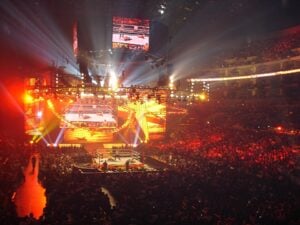
The 39th annual WWE SummerSlam took place this weekend. It was a two-day event with WWE matches on both Saturday and Sunday.
SummerSlam stands as one of WWE’s premier annual professional wrestling events. Dubbed “The Biggest Party of the Summer,” it delivers high-stakes matches and blockbuster entertainment during the peak of the season. Alongside WrestleMania, Royal Rumble, and Survivor Series, it anchors WWE’s foundational “Big Four” premium live events. Since its debut in 1988, the event has evolved from a single-night pay-per-view into a massive multi-night spectacle.
The WWE SummerSlam history began in 1988, when the event debuted and eventually grew into a global phenomenon, breaking attendance records and expanding internationally. Over the years, SummerSlam transitioned to major NFL stadiums to accommodate tens of thousands of fans.
The Beginning of SummerSlam
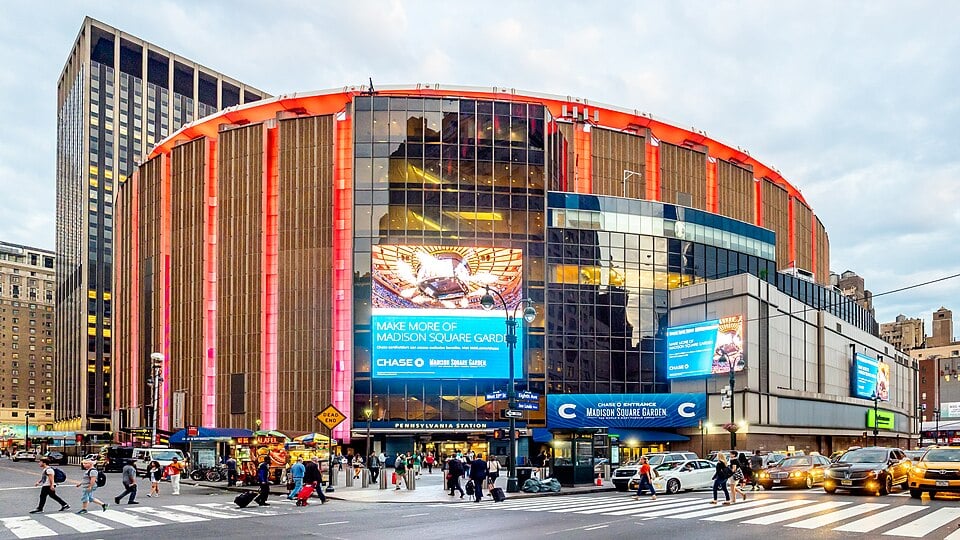
After launching WrestleMania in 1985, WWE added Survivor Series in the fall and Royal Rumble in the winter. However, they noticed a large gap in summer broadcasting. The first SummerSlam took place at Madison Square Garden in New York City in 1988, a venue closely associated with WWE’s early years.
The main event featured the Mega Powers (Hulk Hogan and “Macho Man” Randy Savage) against the Mega Bucks (Andre the Giant and “Million Dollar Man” Ted DiBiase), with Jesse “The Body” Ventura as special guest referee. In addition, the Honky Tonk Man lost the intercontinental title to the Ultimate Warrior in less than a minute after challenging anyone to the back to oppose him. These matches and other memorable moments from the inaugural event helped establish SummerSlam as one of WWE’s premier annual events.
Becoming One of WWE’s Biggest Events
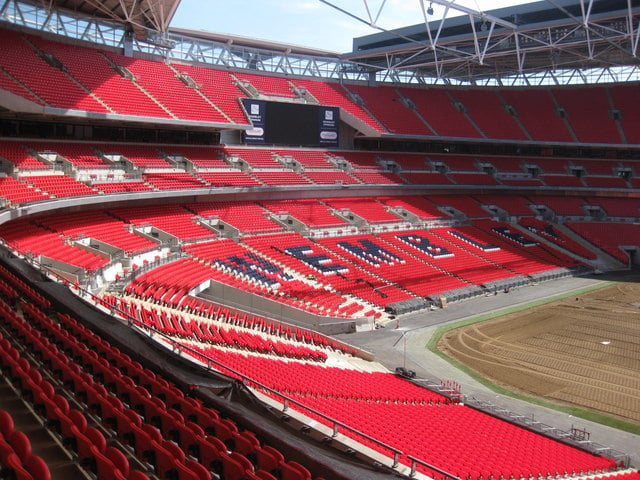
WWE SummerSlam history entered a new chapter in the 1990s and 2000s as the event expanded its audience and popularity. To accommodate growing fan demand, WWE moved SummerSlam from traditional indoor arenas to larger stadium venues. In 1992, SummerSlam reached a historic milestone when it drew more than 80,000 fans to Wembley Stadium in London, England.
SummerSlam has gained popularity due to its legendary matches and main events. The first few editions occurred in the closing years of the so-called Hulkamania era. After SummerSlam of 1988, Hulk Hogan was engaged in major battles against Randy Savage and Zeus in 1989, Earthquake in 1990, and Sgt. Slaughter in 1991. In the mid-90s, SummerSlam produced many legendary battles too, most notably among them being the Steel Cage Match that took place during SummerSlam of 1994. The late 1990s and early 2000s witnessed the peak of popularity of wrestling during WWF’s “Attitude Era” with major wrestling stars such as “Stone Cold” Steve Austin, The Rock, The Undertaker, Kurt Angle, and Triple H participating in it.
Evolution in the 2000s and 2010s
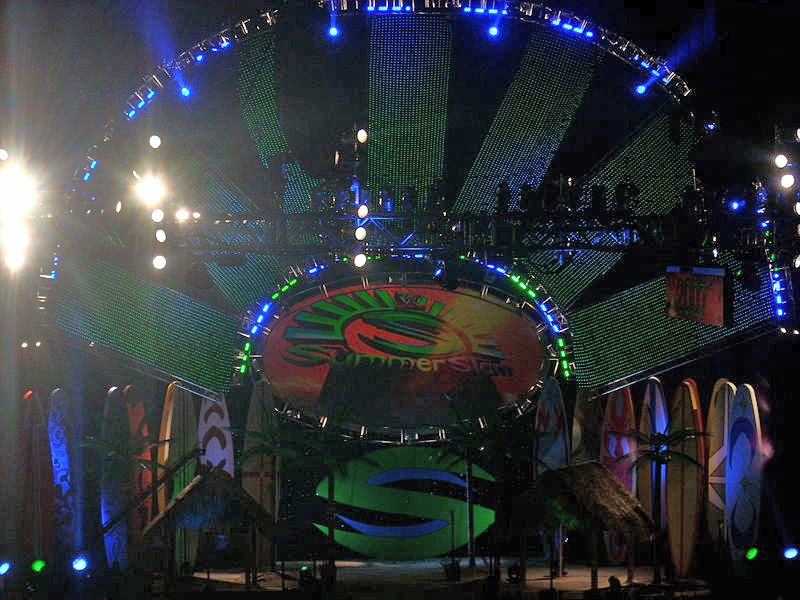
Memorable SummerSlam Moments
The WWE SummerSlam history is filled with some of the most memorable moments in sports entertainment, including championship victories, surprise returns, and unforgettable rivalries. Many historic victories have taken place at the event. The record crowd at Wembley Stadium in 1992 saw The British Bulldog defeat his brother-in-law Bret “Hitman” Hart in one of SummerSlam’s most memorable matches. SummerSlam has also featured numerous surprise returns such as Becky Lynch’s appearance in 2021 and Roman Reigns returning as a fan favorite when he attacked Solo Sikoa in 2024.
SummerSlam is also known for showcasing the culmination of long-time wrestling feuds. In addition to the steel cage match that ended the Bret Hart/Owen Hart feud in 1994, other memorable climaxes have included The Undertaker vs. Edge at SummerSlam 2008 and, just recently, Oba Femi vs. Brock Lesnar this past Saturday. These moments remain memorable because of their dramatic storytelling, emotional stakes, and athletic performances.
SummerSlam Today and its Legacy
Today, SummerSlam remains a cornerstone of WWE’s annual calendar and serves as the company’s premier summer event. Reflecting its growth, WWE expanded SummerSlam into a two-night event, following WrestleMania’s successful format.
SummerSlam continues to play a significant role in WWE storytelling. Fans eagerly anticipate SummerSlam each August for its feud-ending matches, surprise returns, title changes, and spectacular production.
Conclusion
SummerSlam has served as one of the most significant WWE programs due to championship competitions, epic moments, and spectacular production. WWE fans eagerly await SummerSlam every August and for good reason. Every SummerSlam adds to its legacy and keeps its strong position in the world of professional wrestling.
Sources:
WWE – The greatest moments in SummerSlam history
USA Network – Dive Into The Captivating History of WWE SummerSlam By Revisiting These Iconic Moments
WWE Corporate – MOST-WATCHED SUMMERSLAM® OF ALL TIME
The History of WWE – WWF / WWE SummerSlam Results
WWE Corporate – WWE® DELIVERS MOST-VIEWED & HIGHEST-GROSSING SUMMERSLAM OF ALL-TIME
Editor’s Disclaimer: This article is a historical overview of WWE SummerSlam and is intended for informational purposes. It was compiled using publicly available information from official WWE resources and other reputable historical references. While every effort has been made to ensure accuracy, event details, statistics, and historical records are subject to revision as additional information becomes available. Presence News is not affiliated with or endorsed by WWE.
