The buildings powering artificial intelligence and cloud computing promise investment and tax revenue, but their appetite for electricity, water and land is provoking resistance in communities across the country.
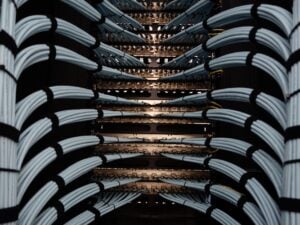
A data center rarely looks dramatic from the road. It may resemble a large warehouse surrounded by fencing, cooling equipment, electrical infrastructure and security cameras. Inside, however, rows of servers process the searches, videos, financial transactions, business records and artificial-intelligence requests that have become part of everyday life.
The facilities are essential to the modern digital economy. They can also arrive in a community with demands more commonly associated with heavy industry: enormous and continuous electricity use, extensive utility connections, cooling requirements, backup generators and large parcels of land.
That combination is turning data centers into some of America’s most debated new neighbors. Supporters see construction spending, property-tax revenue and strategic infrastructure. Critics see rising pressure on power systems, uncertainty about water consumption, noise, altered landscapes and too few permanent jobs to justify the public costs.
AI Has Changed the Scale
Data centers existed long before the current artificial-intelligence boom. Banks, retailers, governments, hospitals, streaming companies and cloud-computing providers have relied on them for years. What has changed is the amount of computing power being requested and the speed at which companies want to build it.
Generative AI requires powerful chips to train models and respond to users. Those chips consume electricity and generate heat, which means the facility must also devote energy and infrastructure to cooling. Unlike a factory that may slow or close overnight, many data centers are designed to operate around the clock.
The scale is visible in federal projections. According to the U.S. Department of Energy’s data-center resource hub, researchers at Lawrence Berkeley National Laboratory estimate that data centers could account for 11.8% of total U.S. electricity use by 2030, with modeled scenarios ranging from 9.5% to 15.3%. Even the lower end would represent a major new source of demand arriving while utilities are also replacing aging equipment, preparing for extreme weather and electrifying other parts of the economy.
The Power Question Reaches Beyond the Property Line
A data-center developer generally pays for the electricity it consumes. The larger dispute concerns what must be built around the facility to serve it. New substations, transmission lines, generating capacity and grid upgrades can cost billions of dollars and take years to complete.
That creates a central policy question: Who should bear the risk if infrastructure is constructed for a major customer whose plans later change? Utilities and regulators must decide whether special contracts, minimum-payment requirements or other protections are needed to prevent households and small businesses from absorbing costs created by unusually large new loads.
Communities also worry about reliability. A project may promise to bring its own generation, batteries or agreements for renewable power, but electricity still travels through a shared regional system. Residents want to know whether the grid can serve a new campus during heat waves, winter storms and other periods when demand is already high.
Water Use Depends on the Design — and the Location
Servers produce heat, and keeping them within safe operating temperatures is a major engineering task. Some cooling systems rely heavily on water; others use more electricity to reduce direct water consumption. Climate, facility design, equipment efficiency and whether water is recycled can substantially change a project’s footprint.
That complexity can make public debate frustrating. A company may announce a national water-replenishment goal, while residents are concerned about one local aquifer or municipal system. A gallon returned in another watershed does not necessarily answer what happens during a drought in the community hosting the facility.
Residents and officials increasingly want project-specific estimates, seasonal demand ranges, the proposed water source and clear reporting after operations begin.
The Jobs Debate Is More Complicated Than It Appears
Large data centers can create substantial construction work. Building the structures, electrical systems, cooling plants and network connections requires skilled trades, engineering and specialized contractors. Local governments may also gain property-tax revenue from valuable equipment and improvements.
Once construction ends, however, the number of permanent on-site employees can be modest compared with the size of the building and the resources it consumes. Many routine operations are automated, while specialized technical positions may be filled regionally rather than from the immediate neighborhood.
The result is an unusual economic proposition. A community may host infrastructure worth billions of dollars without receiving the workforce footprint associated with a traditional factory, office campus or distribution center. Whether the tax revenue makes that trade worthwhile depends heavily on the agreement, local tax rules and any subsidies provided to attract the project.
Public Opinion Reflects the Tradeoffs
Americans do not view every effect of data centers in the same way. A 2026 Pew Research Center survey found that 39% of U.S. adults considered data centers mostly bad for the environment and 38% said they were mostly bad for home energy costs. At the same time, respondents were more likely to see positive than negative effects on local jobs and tax revenue. The findings capture the tension: people recognize potential economic benefits while remaining wary of the burdens placed on the surrounding community.
Opposition does not always follow familiar political lines. Concerns may come from environmental groups, rural landowners, ratepayer advocates, municipal officials, fiscal conservatives or residents who simply do not want an industrial-scale complex near their homes. A proposal can unite people who disagree on almost everything else because the impacts are intensely local.
The debate also becomes sharper when companies seek tax incentives, expedited approvals or confidentiality around power arrangements. Residents may accept that private firms need to protect proprietary information, but they are less receptive when public subsidies and infrastructure commitments are involved without equally detailed public accounting.
What a Local Agreement Could Include
Data centers are unlikely to disappear. Artificial intelligence, cloud services, streaming, cybersecurity and ordinary digital storage all require physical infrastructure somewhere. The practical question is not whether America will build more facilities, but how communities can negotiate the terms.
A strong review process can require clear estimates for electricity and water use, responsibility for grid upgrades, enforceable protections for other ratepayers, noise limits, backup-generator standards, construction and permanent-job projections, emergency planning and regular public reporting. Communities can also examine whether reclaimed water, heat reuse, on-site generation or battery storage are realistic for a particular site.
Developers, meanwhile, benefit from addressing those questions early. Secrecy or vague promises can turn a technically sound project into a symbol of unwanted growth. Specific commitments make it easier for residents to judge what they are receiving and what they are being asked to tolerate.
The Data Center Has a Physical Address
For years, digital services were described as existing in “the cloud,” language that made computing feel weightless and remote. The data-center controversy is forcing a more honest understanding. The cloud is made of buildings, chips, wires, cooling systems, power plants and people — all located in real communities.
Every AI-generated image, streamed movie, stored photograph and business transaction has a physical cost somewhere. As that cost grows, communities are demanding a larger role in deciding how it is distributed.