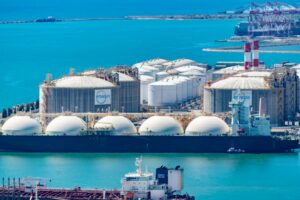
TotalEnergies’ Investment
Mozambique, Africa – The European Center for Constitutional and Human Rights (ECCHR) has filed a criminal complaint against TotalEnergies. They allege complicity in war crimes committed on the company’s property. TotalEnergies operated the Afungi liquid natural gas (LNG) project in northern Mozambique. This project is considered the largest foreign investment in African history. It is valued at approximately $20 billion USD.
The Cabo Delgado Insurgency
In 2021, the Cabo Delgado province saw escalating violence from an insurgency known locally as al-Shabaab (unrelated to the Somali group). TotalEnergies initially remained but invoked force majeure on March 24, 2021, following an insurgent attack on Palma, where many Afungi workers lived.
Force majeure allows companies to suspend contractual obligations due to unforeseen emergencies.
TotalEnergies’ Joint Task Force
After withdrawal, TotalEnergies hired a joint task force (JTF) composed of a thousand Mozambican police and military personnel, along with private security groups such as Blue Mountain and Arkhe Risk Solutions. Because foreigners are heavily restricted from carrying firearms under Mozambique’s Arms and Ammunition Act (Statute No. 1/73), partnering with domestic security was expected. This would have been necessary even if they had stayed.
Violence in the region had already escalated: in 2019, insurgents killed two project workers and a contract driver.
Allegations
The ECCHR accuses TotalEnergies of directly funding a JTF responsible for torture and the killing of approximately 200 men. Some were reportedly held in shipping containers near the site entrance.
While TotalEnergies denies knowledge of these acts, internal company documents reportedly detail systematic abuses by Mozambican forces. This implies an awareness of their violent track record.
Previous Criminal Complaint
In 2023, families of subcontractors killed during the Palma attack filed a complaint. They alleged TotalEnergies had the capacity to rescue workers but failed to act. Authorities declined to pursue the case, and no trial was initiated.
Human Rights Group Involvement
NGOs frequently create the momentum required for international criminal cases. The ECCHR—known for filing complaints against both state and non-state actors, including Germany and Argentina—brings substantial legal resources to the case.
This significantly increases the likelihood that courts may take up the complaint. This is in comparison with the family-initiated filing from 2023.
Discussing Types of Liability
Corporate Criminal Liability
- Corporate criminal liability allows companies to be prosecuted for crimes committed by employees or agents.
- French law permits the criminal prosecution of corporations, but prosecutors have not yet decided whether to open a formal inquiry.
- The case hinges on whether the JTF acted as agents of TotalEnergies or as an independent entity.
Respondent Superior
- This doctrine holds corporations liable for crimes committed by employees or agents acting within the scope of their duties.
- International cases make invoking this doctrine challenging. This is due to jurisdictional limitations, difficulty gathering evidence, state sovereignty issues, and ongoing instability in Mozambique.
Complicity
- The most likely avenue of liability.
- A court could find TotalEnergies liable for aiding and abetting war crimes if:
- They knowingly hired forces with a documented history of abuses.
- Their business activities can be linked to the crimes.
- Internal documentation showing awareness of JTF misconduct could be decisive.
Conclusion
Even if no trial emerges, the consequences for TotalEnergies may still be significant. A credible criminal complaint from a major human rights NGO invites international scrutiny, pressures regulatory bodies, and forces internal reviews. The company may face reputational damage, increased compliance demands, and potential loss of future contracts.
Legal exposure is only one risk—public perception and government oversight may ultimately shape TotalEnergies’ future far more profoundly.
Disclaimer: TotalEnergies’ use of local security companies in Mozambique was influenced by the legal restrictions under the Arms and Ammunition Act (Statute No. 1/73). This law limits foreign personnel from carrying firearms. The allegations detailed in this article pertain to an ongoing criminal complaint filed by the ECCHR, and no formal judgment has been made. All information reflects public reporting and sources as of the time of publication.
Sources
- Politico – TotalEnergies War Crimes Complaint
- IEEFA – Reasons Not to Finance TotalEnergies Mozambique LNG Project
- ECCHR Press Release – TotalEnergies Faces Criminal Complaint
- ECCHR German Press Release
