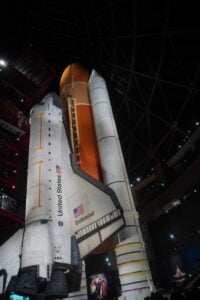
Los Angeles, California — Visitors to the California Science Center can learn more about the history and science of space exploration thanks to its Samuel Oschin Air and Space Center. This center opened its doors to the public on November 13, 2026. Furthermore, visitors will be able to see the technology used by scientists in order to advance the field of space exploration. This is possible thanks to exhibits presented there.
NASA’s Space Shuttle Endeavor carried astronauts into orbit for various space missions and remains one of the most interesting exhibits at the Samuel Oschin Air and Space Center. It can help visitors at the California Science Center learn more about the spacecraft. In this way, people understand how it advanced the space flight program of NASA.
In addition, visitors can find many exhibits devoted to the latest astronomical discoveries. These include the technologies that allow scientists to explore distant areas of the universe.
Exploring the James Webb Space Telescope
Visitors can learn about the James Webb Space Telescope (JWST), which uses advanced infrared technology to observe distant objects in space.
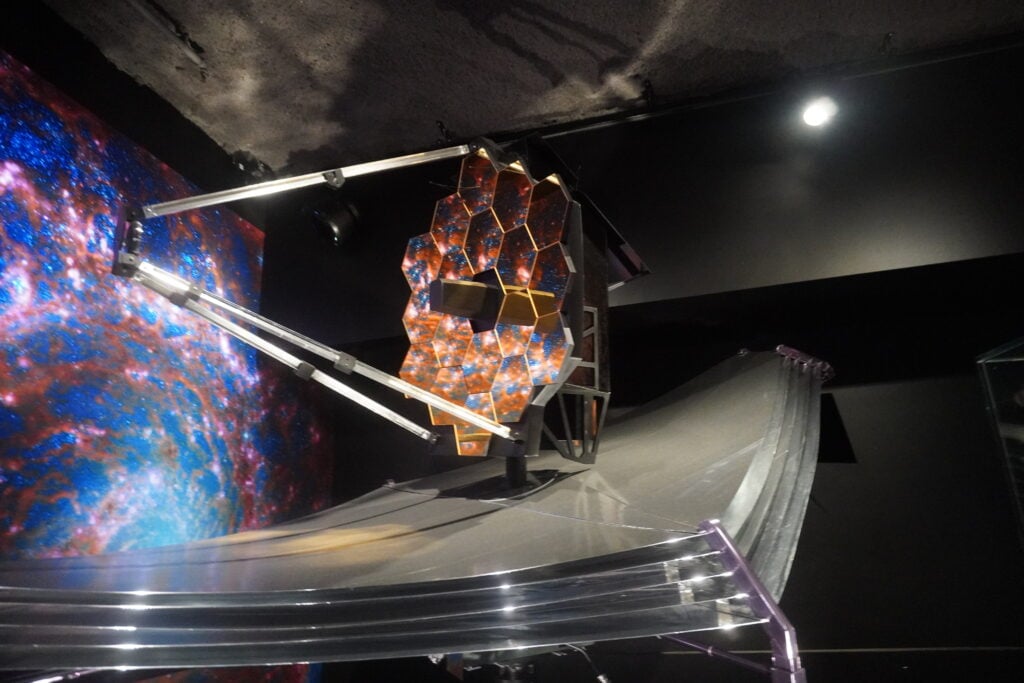
The primary mirror of the telescope comprises 18 segments that collaborate to gather light from far-off galaxies, stars, and other astronomical bodies. Additionally, the secondary mirror helps focus the gathered light inside the telescope.
An additional feature of the telescope is its large silver sunshield that provides protection to the instrument against heat and light from the Sun. Moreover, it clearly explains how a telescope has been engineered to enable research into the cosmos.
Furthermore, the exhibit familiarizes visitors with the habitable zone, also referred to as the Goldilocks Zone. Such a zone around a star enables water to remain in a liquid state on a planet. This is due to certain conditions within the zone.
Spacecraft, Rockets and the History of Exploration
The Samuel Oschin Air and Space Center also showcases historic aerospace technology. It displays equipment used throughout the development of space exploration.
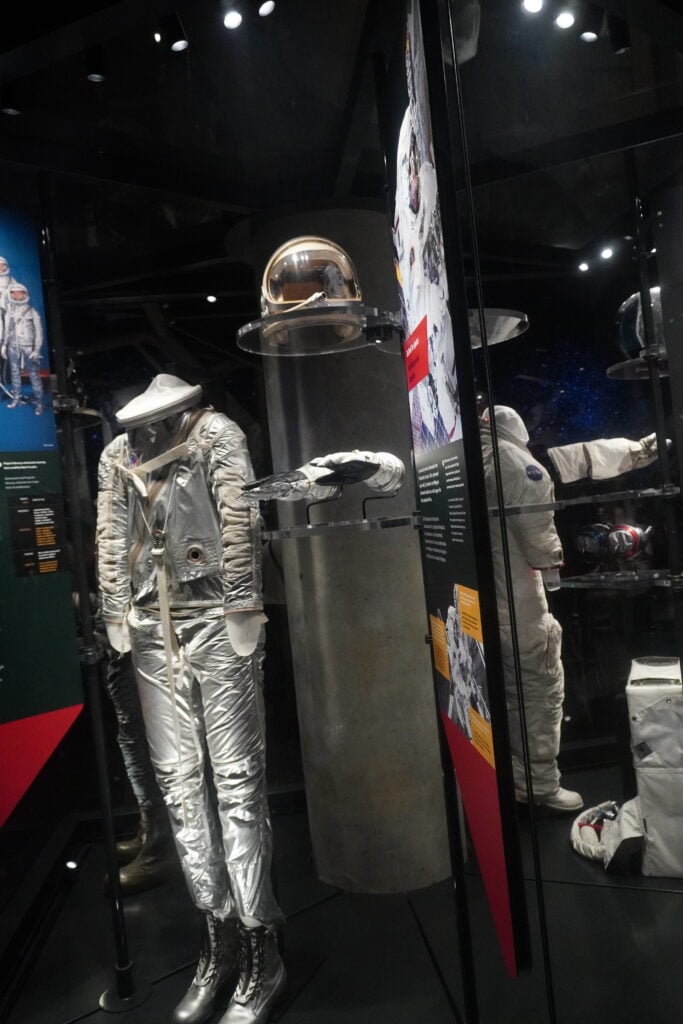
Among the displays is a gray Project Mercury test and training spacesuit featured in the Kent Kresa Space Gallery. Also, the exhibit provides visitors with a closer look at the equipment associated with NASA’s earliest human spaceflight program.
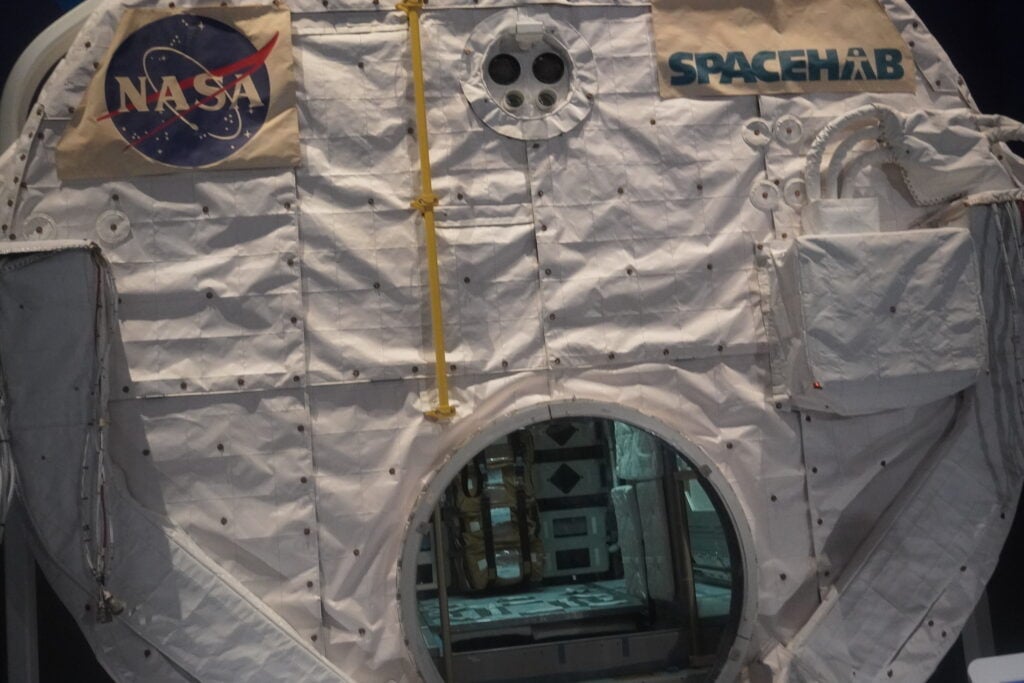
Another featured artifact is the SpaceHAB Logistics Single Module, a pressurized habitat and cargo container that flew inside the payload bay of NASA’s Space Shuttles. This module demonstrates how astronauts and spacecraft missions transported supplies and equipment into orbit.
Visitors can also examine large rocket displays and individual rocket components. This offers a closer look at the technology involved in launching spacecraft beyond Earth’s atmosphere.
Inside the Space Shuttle Flight Deck
One of the experiences mentioned in the article by Presence News reporter Maria Cornejo is the chance to examine the NASA Space Shuttle flight deck.
The cockpit display contains the Multifunction Electronic Display System (MEDS), popularly called the glass cockpit of the Space Shuttle.
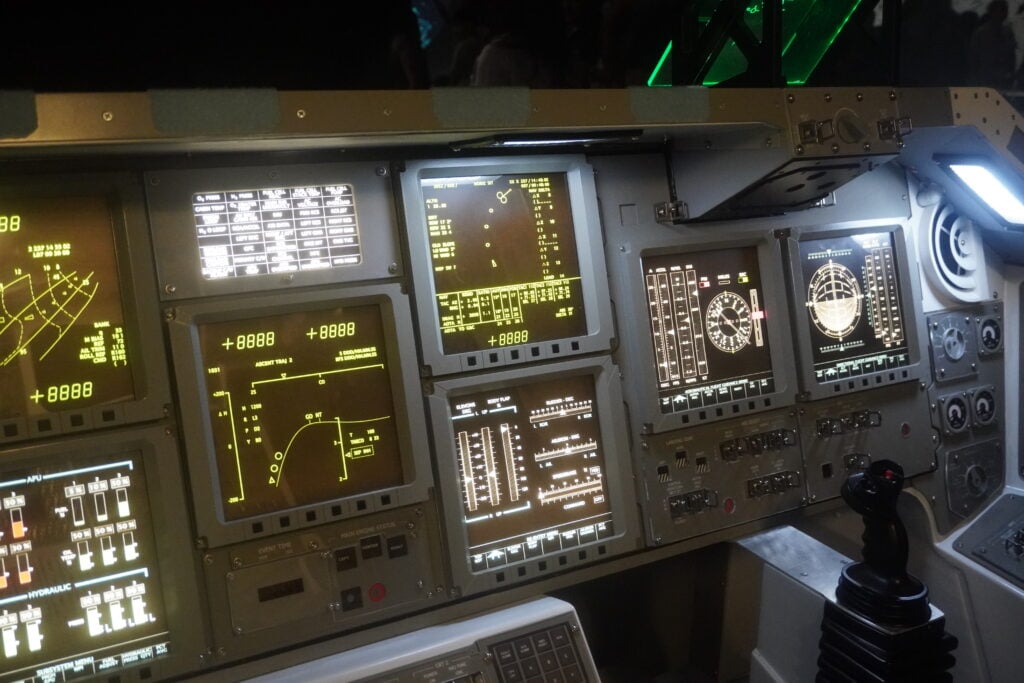
This upgraded system removed the old mechanical devices and introduced several electronic displays. In turn, these provided important flight data to the astronauts.
Cornejo examined the flight deck, examining the seats, buttons, and control mechanisms for controlling the Space Shuttle. The display helps visitors to learn more about the technology used by astronauts for spaceflight missions.
For all the space enthusiasts and people interested in NASA’s history, the flight deck is a chance to see how these missions were executed.
An Educational Experience for the Community
The Samuel Oschin Air and Space Center offers visitors an opportunity to explore several aspects of aerospace history. It covers early human spaceflight to modern astronomical discoveries.
With exhibits featuring Space Shuttle Endeavor, the James Webb Space Telescope, historic spacesuits, rocket technology, and spacecraft equipment, the center provides educational opportunities for visitors of different ages.
Also, the exhibits help visitors understand the achievements and challenges of space exploration, from the technology that sends astronauts into orbit to the methods scientists use to study distant galaxies.
This new facility will be yet another addition to the educational facilities at the California Science Center.
Visiting the California Science Center
The Samuel Oschin Air and Space Center is located at the California Science Center, 700 Exposition Park Drive, Los Angeles, CA 90037. Visitors can consult the California Science Center’s official website for additional information about visiting the facility.
Sources:
NASA – About the James Webb Space Telescope
On-Site Reporting: Maria Cornejo, Presence News.
Publication: Presence News
Editor’s Disclaimer: This article is based on on-site reporting by Presence News reporter Maria Cornejo at the California Science Center’s Samuel Oschin Air and Space Center. Additional background information was obtained from official sources, including the California Science Center and NASA. Exhibit availability, visitor experiences, and facility information are subject to change.
