
At its simplest, this story is about a top horse heading into the Kentucky Derby, but a closer look highlights questions about both the horse’s chances and the broader context surrounding the race. In fact, the recent Mike Repole Derby controversy has brought even more attention to the debate. There appear to be tensions, according to critics within the sport, between established traditions and newer, system-driven approaches to developing racehorses.
At the center is Mike Repole, chasing his first Derby win while preparing a potential legal challenge against the industry.
A Favorite With Momentum
Repole, however, has downplayed the pressure that comes with being the favorite. “With the Derby favorite, there is added pressure. I’ve done this before… I’m comfortable…,” he said, according to a BloodHorse Daily article.
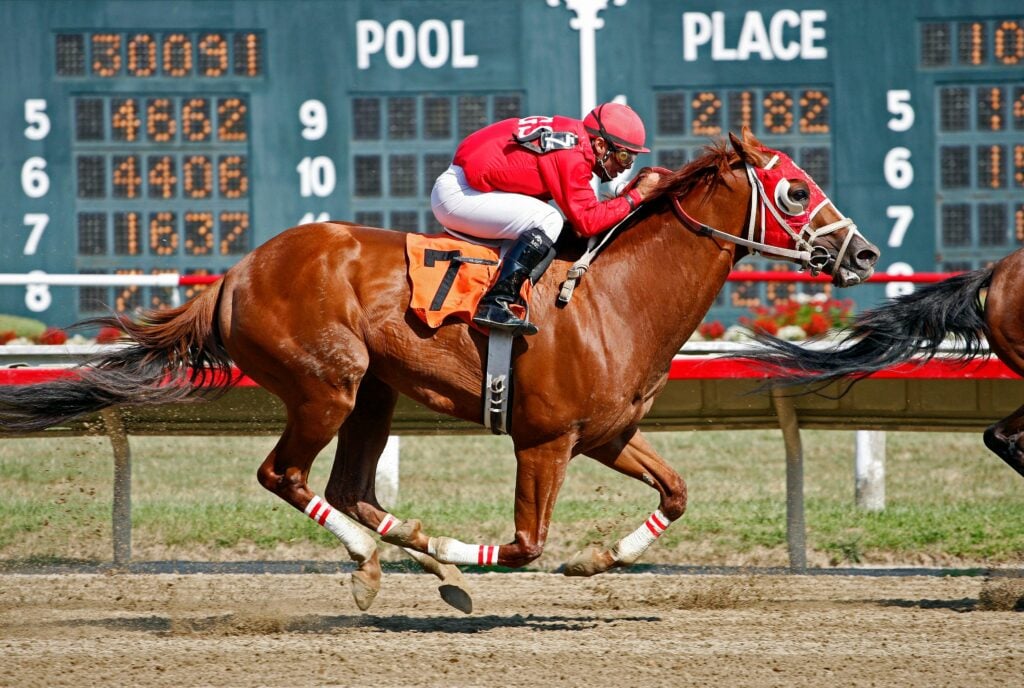
Photo by James Anthony via Pexels
https://www.pexels.com/photo/equestrian-riding-a-brown-horse-11341116/
https://www.pexels.com/license/
Repole, a high-profile owner with a history of near-misses in the Derby, has been here before—close, but never victorious. The context of this year’s race gives added significance. Winning for Repole will not represent another trophy, but validation after years of investment, frustration, and persistence.
Yet even as Renegade—a colt co-owned by Mike Repole—continues to improve, Repole has made it clear that his ambitions extend far beyond the finish line.
As Derby weekend begins, Renegade, co-owned by Mike Repole, is a leading contender after strong prep performances, raising hopes that he will finally secure his long-awaited Derby win. Recent racing coverage suggests those prep wins have boosted confidence within Repole’s camp, signaling this could be his breakthrough Derby moment.
Leverage
In recent months, Repole has publicly stated that he is considering a lawsuit that could involve several of the sport’s most significant organizations within horse racing. He has described the potential case as ‘national in scope,’ possibly involving organizations such as the Jockey Club, the Breeders’ Cup, and other governing bodies.

Photo by Sora Shimazaki via Pexels
https://www.pexels.com/photo/justice-scales-and-gavel-on-wooden-surface-5668882/
https://www.pexels.com/license/
His rationale is blunt: litigation, he argues, may be the only way to force meaningful reform in a sport he believes has been resistant to change. Repole has framed the issue not as a personal grievance, but as an existential one for the industry.
Repole has said that legal action is “the only chance” to drive the kind of progress he believes is necessary for horse racing’s long-term survival.
In an article from Yahoo Sports, he framed his role in unusually direct terms, saying, “I think I’m on a bit of a racing crusade right now,”
This effort has been public rather than behind the scenes. Repole has indicated that multiple organizations have already been notified to prepare for potential litigation, underscoring the seriousness of his intent.
The System Under Scrutiny
Repole’s criticism centers on what he has described as a ‘closed’ and ‘insular’ governance structure within horse racing. In an article by Thoroughbred Daily News, he argued that, in his view, power is concentrated among a small group, saying, “They’re all the same. The same people are controlling the entire sport.”

Photo by Ollie Craig via Pexels
https://www.pexels.com/photo/aerial-view-of-illuminated-race-track-at-sunset-33879867/
https://www.pexels.com/license/
He has also raised concerns about transparency, accountability, and long-term sustainability. Specific concerns he has raised include after-care for retired racehorses and what he views as the industry’s difficulty in addressing systemic problems.
These criticisms align with broader debates that have emerged within the sport in recent years. For example, the establishment of HISA has resulted in continued litigation and regulatory disputes due to federal supervision, enforcement, and disputes over regulatory authority.
According to Reuters reporting on horse racing regulation, the Horseracing Integrity and Safety Authority (HISA) has had several constitutional challenges to the statute on which it is based, which reflects differing viewpoints about how horse racing should be regulated and governed.
In this sense, Repole’s proposed lawsuit can be seen as part of a broader debate about the future of horse racing.
Timing: Why Now?
The timing of Repole’s legal push is notable. That urgency reflects a deeper personal investment. By tying a potential lawsuit to Derby week, he appears to be maximizing public exposure for his message. The Kentucky Derby draws the sport’s widest attention, with national coverage and many casual fans tuning in just once a year. Following his public criticism, he appears to be using Derby attention to amplify his message.
In addition to the publicity value, there is also an element of strategy involved in instituting a lawsuit weeks or months after the fact. In some cases, the threat of litigation can prompt organizations to address concerns before a case is filed.
Repole himself has suggested that the discovery process alone—where internal communications and documents become subject to scrutiny—could bring internal documents and decision-making processes into public view.
A Pattern of Confrontation
Repole’s willingness to challenge the industry is not new. This is not the first time he has expressed frustration with horse racing leadership and regulation, and it reflects a broader pattern rather than a single event.
He has voiced disagreement with leadership decisions and the regulatory environment and has portrayed himself as both a critic and an insider, creating a different dynamic than that of an external observer.
The story revolves around this tension. He isn’t an outsider trying to break into the sport; he’s a key figure within it, benefiting from a system he now seeks to change.
The Stakes Beyond the Finish Line
What makes this story compelling is not just the possibility of a Derby victory, but what that victory could represent.
If Renegade wins, Repole would stand atop the sport at the exact moment he is calling for its transformation. Yet the challenge is not purely symbolic. As Reuters reported, “Ferdinand, the Derby champion in 1986, was the last horse to win from the rail,” underscoring the difficulty of Renegade’s position even as expectations rise. It would present a notable contrast: a leading figure within the sport simultaneously calling for structural change.
Even without a win, the broader questions raised by Repole’s actions will not disappear. The debates over governance, safety, and transparency are likely to continue, with or without a courtroom battle.
The Industry Response
So far, responses from the organizations Repole has targeted have been limited or cautious. Several parties have declined to comment on potential litigation, while others have yet to respond publicly to his allegations.
It is common for parties to remain silent on potential legal action, reflecting uncertainty about what may happen next.
It’s unclear whether Repole will take legal action or if the threat alone will spur industry changes.
The Heart of the Moment
With the Derby approaching, all eyes will return to the actual race—the horses, jockeys, and fanfare.
But this year, coverage extends beyond the track.
Renegade is a favorite, but the bigger story is his owner publicly challenging the sport’s structure at its highest moment.
A rare convergence of sport, business, and conflict that ensures Mike Repole’s impact on this year’s Kentucky Derby will last well beyond the race.
Sources:
New York Times/The Athletic — “Kentucky Derby crown is just one of Mike Repole’s relentless quests”
Reuters — “Kentucky Derby favorite Renegade draws the dreaded rail”
BloodHorse — “Favorite’s Role for Renegade Will Not Faze Repole”
Reuters — “U.S. Supreme Court lets thoroughbred racing authority continue to oversee tracks”
Editor’s Disclaimer: This article discusses potential legal actions and industry criticisms based on statements made by third parties, including Mike Repole. These statements represent allegations and opinions, not established facts. Presence News does not assert the accuracy of such claims and has not independently verified all underlying information.
Organizations and individuals referenced in connection with potential litigation have not necessarily responded to or confirmed the claims described. This article is intended for informational and journalistic purposes only and should not be interpreted as legal conclusions or factual determinations.
