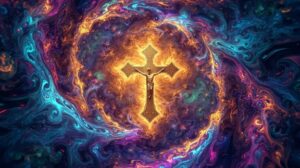
When most people hear the word “Christianity,” certain things come to mind. These may include Sunday worship services at the local churches. And maybe bake sales, and Bibles. “Psychedelics”, however, is a word that most would not conjure when considering the subject.
Until now.
The rise of psychedelics within Christianity has been relatively slow and quiet. But the buzz is getting louder. Even Christians who do not condone or use the substances are starting to discuss these compounds. The conversations are happening in podcasts, videos, interviews, and magazine articles.

Some clergy have gone all out in the context of certain academic studies. With them actually using said drugs for the sake of science and spirit. At one time, the subject of psychedelics in faith was taboo. Today, it is becoming a regular topic of discussion.
Consider recent archeological discoveries of burnt cannabis remains on ancient Jewish temple altars. Such discoveries lend synchronicity to more recent Christian psychedelic news. Most recently, news of clergy participating in the Johns Hopkins psilocybin study. A study that examined psychedelics being used by religious professionals.
Here, we see the intersection of Christ and science.
In this instance, with both coming together at the crossroads of psychedelics.
Media outlets such as the Psychedelic Christian podcast point to this emerging subculture. As do other more progressive elements of modern Christianity. These include “The Christian Left.” Members of which can be seen boosting the visibility of mystical spirituality in modern Christianity. In some cases, via psychedelic experience in Christian communities.
But not all Christians are pro-psychedelic faith. And, perhaps more surprisingly, neither are all major digital and social media platforms. Some of which censor content around the subject matter.
Questions
The topic begs some questions. What is the cause of modern Christian curiosity and even acceptance of psychedelics? Is this a short-term phase, or the sign of a growing movement within the faith? What role, if any, is the developing legal psychedelic medicine industry playing in this?
Finally, is this just a temporary spin-off of the modern psychedelic renaissance? Or, is Psychedelic Christianity a valid and new subculture of the greater Christian community?
What is Psychedelic Christianity?
A better question, for now, might be what role are psychedelics (also known as entheogens, meaning “god within”) playing in Christianity today? And, the answer to that question will likely provide insight into the rise of what is becoming a modern Psychedelic Christianity.
Let’s start in the realm of the second question. Psychedelics are having a moment in what is largely being referred to as the psychedelic renaissance. This is true in both corporate and ceremonial circles.
The psychedelic renaissance is a modern rebirth of a similar event that happened in the 1960s with LSD. This new renaissance boasts a far more mainstream cultural interest in psychedelic substances. One that stems from science and religion’s mutual curiosity.
Curiosity
A Curiosity rooted in the therapeutic potentials of the drugs. This revitalization comes on the heels of years of repression. This was a result of government overreach and the war on drugs since the 1960s.
Out of this second psychedelic renaissance, we find certain things happening. These include curiosity, scientific study, and academic research into these compounds. Research by professionals and laymen alike. And we see this not only in secular culture, but also in Christian circles as well.
But many staunch conservative Christians scoff at the idea. Often, they will claim psychedelics have no place whatsoever within the context of faith. Many progressive Christians, however, are openly discussing the topic. Some are even taking part in the use of said substances.
With that in mind, we could tentatively define Psychedelic Christianity. One could say it is the integration of psychedelics with the teachings of, and faith in, Christ. But, more on that later.
At The Crossroads of Psychedelic Science and Religion
Between 2016 and 2019, 24 faith leaders from religions around the world, including Christian clergy, made the trek to New York. Here, they took part in two-day-long psilocybin mushroom trips as part of a scientific study at Johns Hopkins University. For these clergy members, it was the first time they had ever taken psychedelics.
Their experiences ranged from profound, life-altering beauty to terrifying visions of underworlds. Some even called these trips the most significant spiritual experiences of their lives. While most were positive, there were some notably darker “bad trips.” One Jewish rabbi had a particularly troubling experience. In it, he encountered an all-consuming black void. He noted the experience was filled with feelings of fear and trepidation.
First Hand Experience
I myself am very experienced with psychedelic culture. And as a former Christian of 22 years, I still resonate heavily with certain aspects of the faith. Via personal experimentation, I can attest that both of these experiences are common. Particularly within the secular psychedelic community. The range of experiences mentioned by the Christian adherents above rings true as well.
There is one caveat of importance to note. Many psychonauts try to avoid bad trips, as if they are something to be avoided. But those loudest voices evangelizing psychedelics (outside of the Christian community) say otherwise. They will note that bad trips (for those who can handle them) often produce the most profound and lasting changes for the better.
The findings of the study are controversial. But they led in part to future studies on psilocybin. These studies, which took place at the university, found the mushrooms to be a viable and effective treatment for major depression. Many in the study found relief from depression symptoms for over a year with only 1 or 2 sessions.
Helpful Personal Insights
For those who had severe depression and had exhausted all other treatments, this was miraculous. These findings have proven most interesting to many people with pharmaceutical-resistant depression. And this includes Christians who are also seeking relief.
With that being said, many of the Christian participants largely reported positive experiences. They defined these as spiritual or even divine in nature. It is for this reason, perhaps, at least in part, more and more Christians are talking about, or, in some cases, using psychedelic medicine today.
The Historical Roots of Psychedelic Christianity
It may be tempting to believe that the intersection of psychedelics and Christianity is a manifestation of the 2000s. This would be an error. In the 1960s, a major influx of ex-psychedelic users became Christians.
They let go of their drug-induced spiritual experiences and occultism. They were the Jesus movement, or “Jesus Freaks” as they were known by more conservative Christians. Minus the drugs, they retained many of the hippie aspects of their former counterculture.
Which, if you read Jesus’ teachings (the so-called red letters of the bible), is it really all that surprising? For those who have deeply studied Yeshua’s (that’s Jesus’ real name) teachings, it’s pretty clear he was the archetypal hippie.
Argument
Let’s take a look at the movement from its inception. One could argue that psychedelics, specifically LSD, were at least in part to blame for the group’s formation. Without the invention and ingestion of said substance, perhaps the Jesus Freak movement would not have happened at all.
In this respect, we must consider the Jesus freaks as the first (albeit unintentional) Psychedelic Christians. Today, we see an inversion of said movement. Progressive, usually teetotal and sober people of faith, are turning to psychedelics. They are doing this for healing or spiritual purposes. Based on the studies and information on these drugs’ therapeutic capabilities, this should be no surprise.
These include individual seekers who may be the only ones in their church researching these Substances. Or, networks of Psychedelic Christians coming together in collectives or organizations.
The Legal Psychedelic Medicine Industry and the Rise of Psychedelic Christianity
There is one potential contributing factor to the rise of Psychedelic Christianity to note, particularly in America. This may very well be the budding legal psychedelic medicine industry. It had a market size of $3.6 billion in 2021. And its projected market size is $11 billion by 2034. Legal psychedelics are big business.
But it’s not the money that inspires interest in most Christians when it comes to psychedelics. Rather, it’s their power for healing and potential for transformative experiences. And science proves that psychedelics can achieve at least one of these things.
In 2023, NIH.gov reported on medical MDMA (a psychedelic empathogen). They noted an FDA study on it for treating treatment-resistant PTSD. It was confirmed that the drug was highly effective. The FDA conducted six phase II randomized controlled trials on the chemical. The organization declared that “MDMA-assisted psychotherapy for PTSD received ‘breakthrough therapy’ designation.
MDMA FDA SHUTDOWN
Unfortunately, the FDA shut down hopes of MDMA being legally available for the uses mentioned above within the next couple of years. But organizations such as MAPS continue to fight for legal medical psychedelics.
They push forward with continued international studies on MDMA. And they are assisting in other psychedelic studies the world over. MAPS has evangelized psychedelic medicine into the limelight. They have done this via publications such as Rolling Stone Magazine. As such, it is fair to say that psychedelics are now mainstream, and they are here to stay.
Today, there is more educational content on the therapeutic aspect of psychedelics than ever before. Anyone with a device that can access the internet, including Christians, can research these substances.
Available Studies
With the studies available, is it really that surprising to see a shift in people’s perceptions of these alkaloids? A shift from viewing them as merely dangerous street drugs rather than legitimate medicines? Many are coming to see these chemicals as spiritual adjuncts. Tools with immense potential for healing and mystical connection to the divine. And, Psychedelic Christianity would appear to agree with that sentiment.
The Cultural and Digital Pushback Against Psychedelic Christianity
Proponents of the use of psychedelics in the context of Christian faith see a burgeoning movement of positivity from the combo. But not all Christians are happy about it.
There are countless videos from major Christian influencers attacking the use of psychedelics. This happens within various denominations of the faith. These include Protestant, Catholic, and Orthodox Christian denominations. There are people within each railing heavily against the idea that psychedelic ritual has any place within the faith.
You can find interviews with former psychonauts turned conservative Christians. Often, they detail “demonic” bad trips. Other adherents of the religion liken the use of said drugs to sorcery and, by extension, heresy and sin. Psychedelic Christianity has an uphill battle. One that takes place from within the church itself. If Psychedelic Christianity is to reach its full potential, it will involve much work.
Grass Roots
With that being said, many small grass-roots organizations, such as Ligare, are working to make this happen. With each passing day, new psychedelic awakenings occur within the faith. Time will tell if the movement will expand into the greater culture or not.
Many anti-psychedelic Christians are creating content about psychedelics in Christianity. But that is perhaps more than a little ironic. Especially considering that these nay-sayers are greatly amplifying the visibility of Psychedelic Christianity.
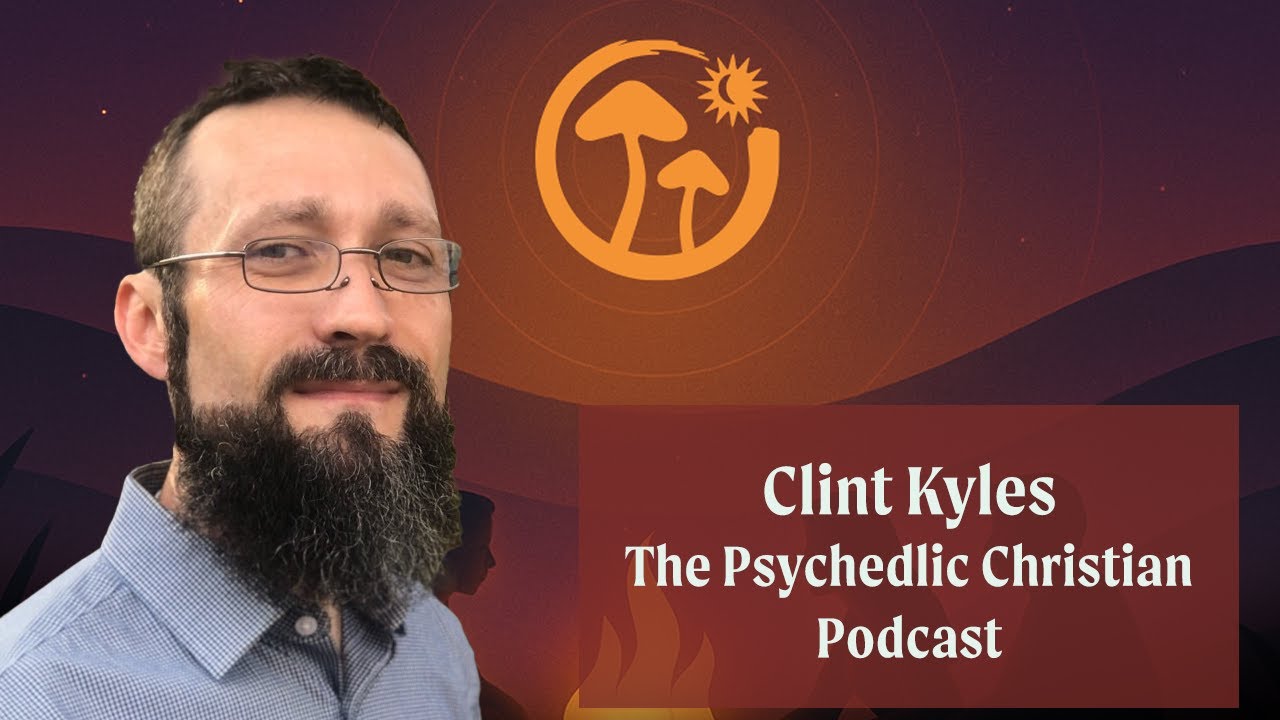
However, it is not only anti-psychedelic Christians who are pushing back against the rise of this community. Major social media networks are censoring content. Content made by the most open proponents of Psychedelic Christianity. This includes people like Clint Kyles, the host of The Psychedelic Christian podcast. Clint’s YouTube channel was recently deplatformed and shut down.
An Interview with Clint Kyles, Host of The Psychedelic Christian Podcast
I reached out to Clint personally. He was kind enough to answer a couple of questions about Psychedelic Christianity. His feedback helps to clarify some things about the movement. Let’s take a look at what he had to say below.
Q: How would you define Psychedelic Christianity?
A: Like many things, I consider “Psychedelic Christianity” to exist as a spectrum. This spectrum can range from traditional Western Christians who just happen to take a passing interest in psychedelics, to Christians who include psychedelic substances as a significant part of their religious life & worship experience.
Some Christians of the latter, more inclusive persuasion often even refer to psychedelic substances as “sacraments”.
Q: What has your experience with Psychedelic Christianity been?
A: As for myself, I probably fall somewhere within the middle of this spectrum. I am neither theologically nor politically ultra-conservative or progressive. I have lived most of my life as a devout Christian family man, active in my church & community.
However, I have had a number of experiences with Psilocybe mushrooms (mostly in my youth) that made a significant impact on me, emotionally & spiritually.
For this reason, having no one within my immediate religious circle with whom to share these formative spiritual experiences, I started The Psychedelic Christian Podcast, in hopes of finding fellow Christians with whom I could openly discuss the topic of psychedelics, and with the intention of inviting all Christians to join in the conversation, regardless of their ultimate conclusions.
Q: Why do you suppose psychedelics are being openly discussed in Christian circles today, where, 20 years ago, if it was talked about at all, they would be shut down as un-Christian or Satanic?
A: I believe there are a number of reasons Christians today are more willing to discuss the topic of psychedelics than we have been in the past.
One of the most significant reasons Christians are willing to openly discuss psychedelics is that these substances are now more openly used & discussed within the broader culture than they have been in recent history.
Christians often quote the phrase that “we are in the world, but not of the world”. Being “in the world” necessitates that we Christians acknowledge the current social circumstances in which we find ourselves, and exercise wisdom, faith, & discernment in determining how we should live faithfully & honorably, within our current social & cultural context.
Perspective
So if the topic of psychedelics is gaining attention, it is wise that we take notice and establish our own perspective.
Today, many Christians are also keenly aware of the ever-growing rate of people suffering from depression, addiction, PTSD, & suicide. Most of us know someone we love who currently does or has suffered from such conditions, and we are well aware that these conditions are often difficult or impossible to adequately treat with traditional methods and pharmaceutical treatments.
Q: What are some other factors contributing to Christian interest in Psychedelics?
A: Upon investigating the current buzz around psychedelics, most Christians will no doubt be presented with personal stories of healing from a wide variety of mental health maladies through the use of psychedelic medicine. Most Christians are heavily invested in reducing the suffering in the world – feeding the hungry, healing the sick, & comforting the distressed.
Recognizing that many people have found relief from suffering through treatment with psychedelics has led to many Christians being willing to investigate the positive potential of psychedelic treatment with an open mind.
Spiritual Life
Last but certainly not least, many Christians today are living spiritual lives that fall far short of our religious ideals. Many Christians are experiencing the lackluster malaise of uninspired observance of religious formalities.
Or they are worshiping in environments where their peers are having vibrant lived spiritual experiences, but for a multitude of possible reasons, they just aren’t feeling it. Psychedelics appear to offer the potential to reinvigorate one’s spiritual paradigm, and I think many Christians are excited about that prospect.
The future of Psychedelic Christianity
In light of all the information above, it appears the Psychedelic Christian movement will continue to grow. It is likely to evolve along with the mainstream as new cultural moves form around such substances.
These may include elements such as the arrival of novel recreational legal designer psychedelics such as 4-OH-DET, which are available in head shops and gas stations in the US as we speak. New legislation and laws that are quickly changing the legal medical psychedelic industry are also sure to contribute to the subculture’s growth.
And with the Christian communities’ more reserved approach to psychedelics and their careful study and research, it is not unlikely that this movement will help psychedelic culture at large to develop safer consumption practices than what you would find in the local nightclub.
Whatever the future holds, it is sure to be colorful.
Sources:
https://thepsychedelicchristianpodcast.com
https://pubmed.ncbi.nlm.nih.gov/35000572
https://www.sneucc.org/postdetail/church-and-the-new-psychedelic-emergence-18417933
https://cswr.hds.harvard.edu/news/2025/10/08/superstar-psychedelic-jesus-counterculture
https://www.nytimes.com/2022/10/25/health/psychedelic-drug-therapy-patents.html
https://www.precedenceresearch.com/psychedelic-therapeutics-market
https://pmc.ncbi.nlm.nih.gov/articles/PMC10660711
https://www.vox.com/future-perfect/365820/mdma-therapy-lykos-therapeutics-maps-psychedelics-ecstasy
Editor’s Note: The views and opinions expressed in this article are those of the author, based on research and analysis of available findings. They do not necessarily reflect the official position of Presence News or its editorial team. Have any interesting topics on your mind? Are you an expert in your area? We want to hear from you! Email one of our top authors on our Meet the Team page.
