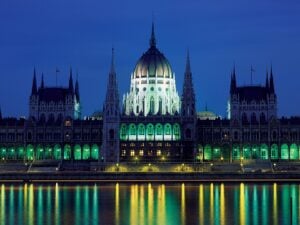
On May 29, 2010, Hungary elected Viktor Orbán as its prime minister. Orbán served from 1998 to 2002, then returned to power on a wave of popularity that kept him in office for over a decade until his defeat in the April 2026 parliamentary election, according to Associated Press reporting. Hungarian voters ousted Viktor Orbán after 16 years in power, with Péter Magyar and his Tisza Party winning the election and set to form the next government. The 2026 election marked a significant turning point in the nation’s political history. Orbán’s tenure has been described by critics and some analysts as marked by democratic erosion and alleged corruption. Reports have highlighted allegations over public lighting contracts and concerns about EU fund use under Viktor Orbán’s administration.
Governance and Rule-of-Law Concerns
Critics argue that Orbán’s tenure involved measures that limited the effectiveness of political opposition. Hungary’s media landscape underwent restructuring that analysts and watchdog organizations have characterized as increasingly centralized. Critics argue that this consolidation may have increased government influence over segments of the media.
A 2022 article in European Political Science discusses the transfer of Hungarian universities to foundation-based governance structures and raises concerns about political influence over these institutions.
Opposition groups and some analysts have raised concerns about possible gerrymandering in the redrawing of Hungary’s electoral districts. According to the Atlantic Council and other observers, Hungary’s governing system has been criticized for reportedly weakening institutional checks and balances and concentrating political power.
Non-governmental organisations faced stigma and legal restrictions. The European Commission’s 2025 Rule of Law Report on Hungary highlights concerns about changes to judicial governance, including aspects of judicial appointments. In fact, the 2026 election became an important event for those hoping for change in these institutions.
Supporters of Viktor Orbán say his policies boosted sovereignty, reduced immigration, and stabilized the economy, fueling his electoral success.
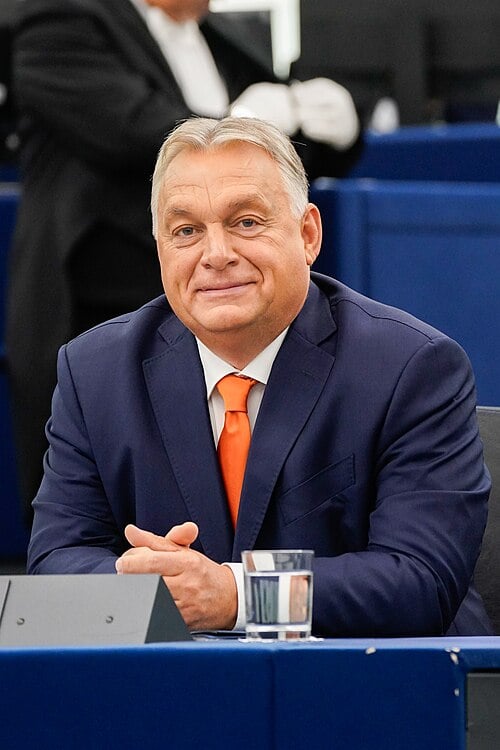
Image by European Union 2024 – Philippe BUISSIN (European Union reuse policy): https://commons.wikimedia.org/wiki/File:Viktor_Orban.2024.jpg | https://commission.europa.eu/legal-notice_en
Meeting the New Prime Minister
Péter Magyar and the Tisza Party as a whole lean toward a center-right political ideology, as opposed to Fidesz, which some analysts and political observers classify as right-wing or far-right. Some analysts argue that Hungary’s political system has been centered around the Fidesz party, with fragmented opposition groups operating on the fringes. This has contributed to what some analysts describe as an entrenched political position for the Fidesz Party. Magyar’s anti-establishment and anti-corruption stances have endeared him to segments of the public that appear to have grown tired of the controversies surrounding Orbán. Some analysts argue that Hungary is further to the right ideologically than most Western European nations in recent decades. Seismic changes in Hungary’s politics reconfigure political actors rather than fundamentally changing ideological alignments. The election paved the way for these new political dynamics.
Implications for Russia
While there are wide-ranging effects of Hungary’s landslide election, some analysts suggest the most immediate effect for Russia may be the loss of a model of illiberal governance that had, to some extent, proven politically sustainable. Russian officials and state-aligned narratives have at times suggested that segments of the European populace are resistant to EU policies, but this election result potentially suggests the opposite. Substantially conservative or nationalist European political parties have often mirrored the movements of Orbán’s.
Hungary has, in some respects, been described by some analysts as a prototype for these other parties. Hungary threatened to block new EU sanctions on Russia and a multibillion-euro EU loan to Ukraine amid a dispute over oil supplies via the Druzhba pipeline. Budapest has, at times, delayed or complicated efforts to implement Russian sanctions. As Viktor Orbán steps down, some analysts suggest Péter Magyar’s government may be more EU-friendly, or at least more neutral.
The Hungarian veto
The Hungarian veto has been a stumbling block for Ukrainian aid for some time now. Despite there being no direct contributions coming from Hungary itself, it has used its veto power within the EU to withhold funding. According to Reuters, Hungary has sought to block a proposed EU loan intended to support Ukraine. As things stand, the European Union faces a choice. If there is no reform to make suspending a voting member’s veto easier, some analysts warn that this behavior could become more normalized.
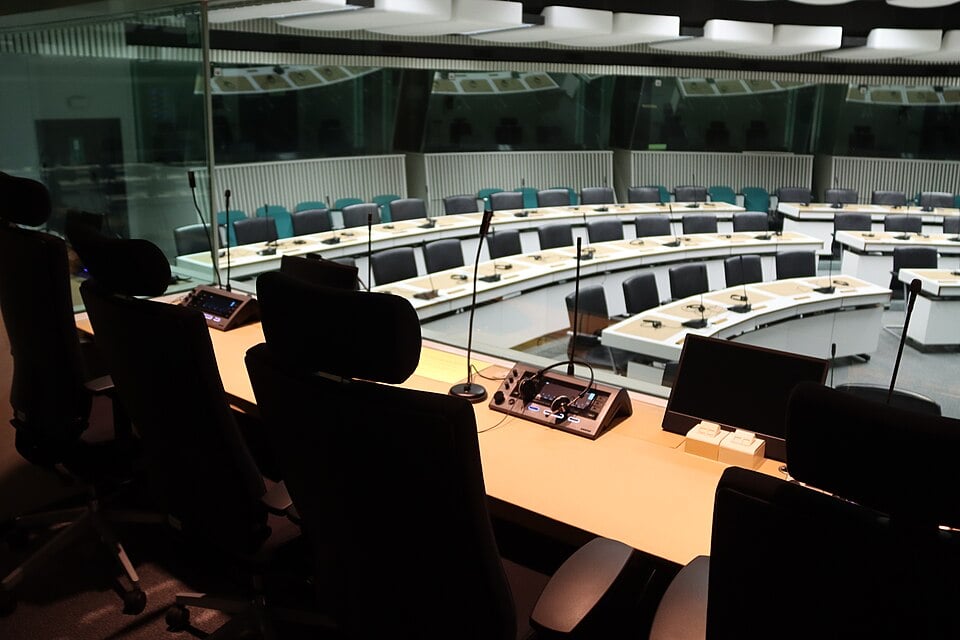
Photo by FrDr via Wikimedia Commons (CC BY-SA 4.0): https://commons.wikimedia.org/wiki/File:Interpreting_booth_Van_Maerlant_building_European_Union_Brussels_02.jpg https://creativecommons.org/licenses/by-sa/4.0/
Regional and Political Implications
Viktor Orbán can run for office again, and the prime minister’s position has been further entrenched by rules introduced during his tenure. Even if this does not occur, it may not prevent another populist figure from pursuing similar strategies. Slovak Prime Minister Robert Fico has run on a nationalist, populist platform, though his administration hasn’t gone as far as Viktor Orbán’s. Some analysts argue that democratic backsliding may be difficult to reverse if institutional leaders continue to allow such trends. And so, the election outcome is set to impact future electoral strategies in the region.
- Obstruction of Aid for Ukraine: Hungary’s veto has prevented much of the EU’s ability to offer support to a potential member facing what many governments describe as a significant security threat.
- Geopolitical Paralysis: Some analysts argue that critical foreign policy decisions have at times been slowed or stalled due to a single member’s actions.
- Undermining or eroding institutions:
Some analysts warn that Hungary’s institutional changes could undermine the EU and NATO through obstruction and contradictory actions. - Destabilizing sanction practicality: Budapest has, at times, delayed or complicated efforts to implement Russian sanctions.
- Leverage tactics: Observers have noted that Hungary has used its veto to leverage the release of EU funds withheld over rule-of-law concerns.
Conclusion
Though it marks a major shift for the EU, Russia, and Ukraine, such obstacles will persist. Slovakia and the Czech Republic both have political figures with similar – albeit far less stark – anti-EU rhetoric.
Some analysts argue that while the EU’s evolving structure may improve efficiency, it doesn’t fully eliminate the conditions that enabled Hungary’s policy influence. In summary, the 2026 election will likely have long-lasting effects on Europe’s political landscape.
Sources:
Reuters — “EU leaders vent anger after Hungary’s Orban keeps blocking Ukraine loan”
POLITICO — “Hungary launches fraud probe into EU-funded projects
Reuters — “Hungary blocks Russia sanctions, EU cash for Kyiv on eve of Ukraine war anniversary”
Editor’s Disclaimer: This article is an analysis of political developments in Hungary and their potential implications for the European Union and international relations. Some claims are based on reporting from third-party sources and reflect ongoing debates. Readers are encouraged to consult primary sources for the most up-to-date information.
