Nepal
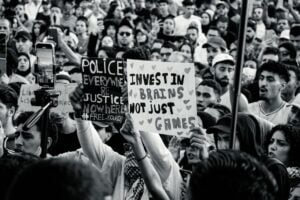
A sweeping ban on social media platforms sparked a firestorm across Nepal in September 2025. Anger over political corruption and property seizures erupted into nationwide demonstrations.
Tensions reached a breaking point when police intervention left 19 protesters dead on September 8th, forcing Prime Minister K. P. Sharma Oli to resign the following month. The capital’s parliamentary building, luxury homes, and hotels were burned as enraged citizens took to the streets, demanding justice and reform.
Madagascar
In Madagascar, the protests were fueled by widespread water and power shortages, along with mounting frustration over rising costs of living and government repression.
By October 2025, President Andry Rajoelina fled the country after CAPSAT, an elite military force, joined protestors instead of disbanding them. The military defection marked a critical turning point in Madagascar’s political crisis.
Peru
Peru’s long-standing crisis of confidence deepened as corruption scandals and violent crime continued unchecked. Even the impeachment of President Dina Boluarte failed to restore public faith.
With Congress leader José Jerí next in line for the presidency, many Peruvians expressed skepticism, viewing his succession as “more of the same.” Protests remain active, fueled by calls for genuine political renewal.
Morocco
Moroccan youth protests erupted over government corruption and lavish spending on international sporting events, seen as prioritizing prestige over public welfare.
With unemployment high and healthcare declining, demonstrators have maintained persistent pressure on the government. As of now, the protests continue without substantive policy change.
The Philippines
A massive corruption scandal involving government flood control projects ignited outrage across the Philippines. The projects were either unfinished, poorly executed, or never started—despite heavy funding.
This revelation compounded frustration over inflation, inequality, and unemployment, resulting in sustained protests that have yet to yield major reform.
Mongolia
Protests in Mongolia began after viral social media posts by the prime minister’s daughter-in-law flaunting her lavish lifestyle surfaced online.
This symbol of nepotism added to public anger over inflation and cost of living. The movement succeeded when Prime Minister Luvsannamsrain Oyun-Erdene resigned, leading to the formation of a new government by the Mongolian People’s Party.
Paraguay
In Paraguay, protesters targeted authoritarianism, organized crime in politics, and land inequality. Demonstrators accused President Santiago Peña and the ruling Colorado Party of silencing dissent through threats and removals from office.
The protests remain ongoing, with no major government concessions so far.
Timor-Leste
Protests in Dili erupted over a controversial budget granting lifetime pensions to Parliament members and the purchase of 65 new government vehicles.
The youth-led movement clashed with police, exchanging tear gas and stones. In a rare success story, the government eventually rescinded both budgetary items, marking a victory for public accountability.
Turkey
Unrest in Turkey surged after the arrest of Istanbul’s mayor, Ekrem İmamoğlu, a key political rival of President Recep Tayyip Erdoğan.
While economic strain added pressure, the protests were met with violent crackdowns: water cannons, tear gas, and over 2,000 arrests. Despite social media bans and repression, the movement amplified support for Erdoğan’s opposition nationwide.
Maldives
In the Maldives, youth-led protests were sparked by a series of rapid constitutional changes, a media regulation bill, and loss of island autonomy—all seen as a consolidation of executive power.
The media bill, in particular, became the central point of contention. Protests remain active, with no substantial change yet achieved.
Conclusion
These twelve nations are part of a larger wave of Gen Z–driven movements shaping the global political climate. Similar uprisings have occurred in Serbia, Kenya, Sri Lanka, Bangladesh, Italy, Indonesia, and France, signaling a growing generational resistance to inequality and repression.
As the decade unfolds, these protests represent more than isolated unrest—they reflect a global transformation in how young people engage with power, justice, and democracy.
Sources
- Reuters | Nepal’s Parliament Stormed
- New Delhi Associated Press | Malagasy Protests
- BBC | Peruvian Protests
- The Guardian | Protests in Morocco Resume Despite Setbacks
- Time Magazine | Filipino Protests Over Flood Project Corruption
- Civicus Monitor | Mongolian Anti-Corruption Protests
- Global Post | Gen Z Protests in Paraguay
- ABC | Timor-Leste Protests
- The Guardian | Turkish Protests
- AP News | Protests in the Maldives
