By William Barber
Spooky season is here, and the countdown to Halloween is officially on. For horror fans, that means one thing: revisiting the eerie woods of Camp Crystal Lake. This year marks the 45th anniversary of Friday the 13th (1980) — the slasher classic that redefined the genre and gave birth to one of cinema’s most recognizable villains, Jason Voorhees.
But as author and film historian R. G. Henning points out, the real fascination often lies not with the original, but with its sequels — the many chapters that helped shape the lore and iconography of horror itself.

From the Woods of Crystal Lake: Jason’s Evolution
In an interview with Presence News, Henning discussed how the franchise evolved from its grounded roots to something larger than life.
“You have a very realistic antagonist in Jason in Part 2,” Henning explained. “He’s a maniacal woodsman — more human and more believable than the hockey-mask behemoth that followed in Parts 3 and 4.”
Fans first learned from Scream (1996) that Jason wasn’t even the original killer — that title belonged to his vengeful mother, Pamela Voorhees, in the first film. But by the time Friday the 13th Part 2 (1981) arrived, Jason stepped out of the shadows, reshaping the tone of the series forever.
Henning believes this was a crucial turning point. “Jason in Part 2 is raw. He’s driven by grief and rage. There’s a tragic realism to him before he becomes a myth,” he said.
Camp Counselors You Actually Care About
The Friday the 13th franchise has a reputation for being a fun, blood-soaked thrill ride — but rarely for its character depth. Yet Henning argues that some of the sequels managed to create connections between audience and victim.
“Part One’s characters are all redeemable — they’re good and likable,” he said. “But with Part 2, they’re fleshed out a little bit more.”
He highlighted several characters from Part 2 who stand out for their charm and believability, including Ginny (Amy Steel), Paul Holt (John Furey), Jeff (Bill Randolph), Mark (Tom McBride), and Ted (Stu Charno).
That empathy, Henning suggests, is what separates the earlier sequels from many modern slashers — audiences actually care when these characters meet their fate.
A Mask That Changed Horror History
Even people who have never seen a Friday the 13th movie know the mask. The hockey mask, introduced in Friday the 13th Part 3 (1982), has become an emblem of horror history.
Henning reflected on the accidental nature of that moment: “Had Shelly pulled out a clown mask, Jason would have made that freaky, too,” he laughed. “Had he pulled out a Lone Ranger mask, that would’ve become scary in Jason’s hands.”
That adaptability, Henning believes, is what cemented Jason as a horror icon — less about the prop itself and more about the presence behind it.
The Man Behind the Mask
For Henning, one portrayal stands out among the many men who’ve played Jason: Richard Brooker in Part 3.
“Richard Brooker is my favorite Jason,” he admitted. “When I have nightmares about Jason — and believe it or not, as a 55-year-old man, I still do — it’s always Brooker chasing me.”
Brooker’s physicality and subtle menace helped transform Jason from an avenging ghost into a cinematic archetype — the silent, unstoppable force that would haunt pop culture for decades.
R. G. Henning: The Chronicler of Crystal Lake

Beyond his insights as a lifelong horror fan, Henning has become a respected voice within the horror community. His books take an in-depth look at the production history, continuity, and emotional subtext of the Friday the 13th films.
“If you’re a serious fan, not having these books in your library is criminal,” Henning said. “I do more than just interview the actors — I go into story resolution, continuity problems, and every question fans have ever had about Part 2 or Part 3.”
His titles include:
- Sackhead: The Definitive Retrospective on Friday the 13th Part 2
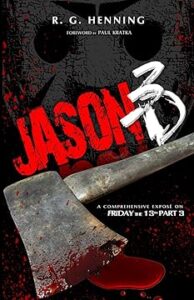
- Jason 3D: A Comprehensive Exposé on Friday the 13th Part 3
- Spielberg Talks JAWS: 50 Years of Memories in His Own Words
Each book dives deep into behind-the-scenes details, lost footage, and creative decisions that shaped the Friday the 13th mythos.
For those who want to explore his work, Sackhead is available now on Amazon.
The Enduring Legacy of Fear
As Friday the 13th celebrates 45 years, Henning reminds readers why the series still resonates. It’s not just about the kills — it’s about atmosphere, tension, and the relatable fear of isolation in the woods.
“Jason is timeless because he represents something primal — the fear of being hunted, the unknown in the dark,” Henning said. “That’s why the story never really dies.”
From Pamela’s revenge to Jason’s rise and the many sequels that followed, Crystal Lake continues to glimmer with eerie fascination — a reflection of horror’s ability to evolve, endure, and still terrify.
Sources:
- Interview with R. G. Henning, conducted by William Barber (10/09/2025)
- Friday the 13th (1980), Dir. Sean S. Cunningham
- Friday the 13th Part 2 (1981), Dir. Steve Miner
- Friday the 13th Part 3 (1982), Dir. Steve Miner
- Scream (1996), Dir. Wes Craven
- https://www.amazon.com/Jason-3D-Comprehensive
