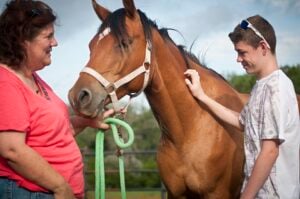
For Army veteran Sarah Janos, one important step in recovery did not begin in a hospital room or counseling office. It began standing quietly beside a horse named Arion at MKE Urban Stables in Milwaukee.
As Janos stood still, the horse approached and gently rested against her shoulder — a moment therapists described as a quiet form of connection-building. The nonverbal horse-human interaction helped Janos build trust, increase emotional awareness, and connect with both the horse and herself. After working with her horse, Janos said she felt calmer and more grounded.
Why Equine-Assisted Therapy Is Growing
As equine therapy programs grow across America, so does the discussion of their role in treating PTSD, trauma, disabilities, and mental health conditions while strengthening communities. Veterans with PTSD, children with disabilities, trauma survivors, and people with anxiety or depression are increasingly turning to equine therapy for support.
Equine-assisted therapy is not a substitute for traditional psychological care, but many therapists and participants say it encourages presence, trust, and nonverbal communication.
Many organizations, including PATH International, set standards for therapeutic riding while training instructors and supporting programs for emotional, developmental, and physical challenges.
The growing interest reflects a broader shift toward experiential, community-based wellness as many Americans feel isolated, overwhelmed, or emotionally disconnected.
How Veterans Are Using Equine Therapy for PTSD Recovery
Through MKE Urban Stables, veterans can groom horses, put them through an obstacle course, or do mindfulness exercises, but there is no riding involved. The emphasis is on emotional regulation and developing relationships.
Veterans Affairs social worker Briana Johnson shared in a feature for Veterans Affairs that practitioners in equine-assisted therapy often describe horses as highly responsive to human body language and emotional cues. Johnson said working with horses may help participants become more aware of their own stress and communication patterns. Those veterans who participate in this program report that their confidence has improved, and they have better awareness of their emotions and communicate better with other people once they have worked with horses.
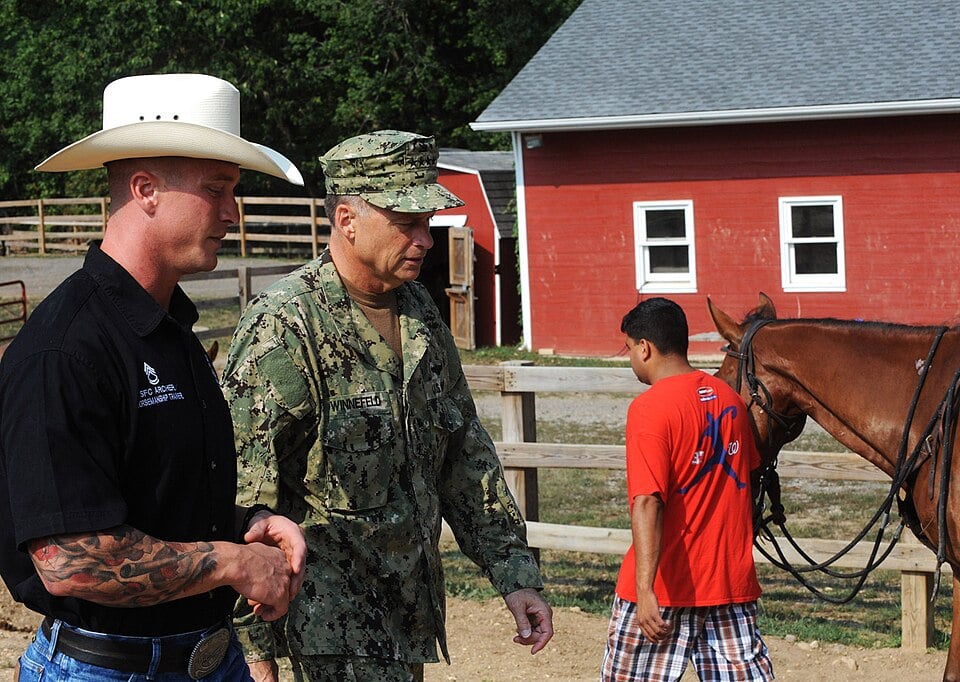
Photo by U.S. Air Force Master Sgt. Chuck Marsh via Wikimedia Commons
Wikimedia Commons Image Page
Public Domain License Information
Emotional Safety and Human Connection
For many veterans, the experience also reduces feelings of isolation. One participant in the Milwaukee VA program described the calming effect of working alongside horses, saying, “It helps with my anxiety a lot because horses just feed off our emotions.” The participant added that the experience felt deeply relaxing and grounding.
Army veteran Andrew Gitzlaff told the VA that the therapy helped him cope with depression while also making it easier to connect with others in the group setting. The sense of shared understanding — combined with the calming presence of the horses — created a therapeutic environment different from traditional clinical spaces.
That sense of emotional safety appears repeatedly throughout equine-assisted therapy programs nationwide.
According to a U.S. Army article published online, veteran participants in Equine-Assisted Psychotherapy (EAP) reported that the therapy helped them manage symptoms related to post-traumatic stress, anxiety, and social isolation. Therapists involved in the program explained that horses are highly reflective of human emotions, allowing participants to become more aware of their stress responses and emotional patterns in real time. As equine specialist Adam Morrison explained, “the horse is highly reflective of the client’s emotions and what they’re feeling.” Additionally, instructor Amy May noted that many veterans said their time with the horses was “the first time in years that they haven’t been thinking about their anxiety or their experiences that are always kind of haunting them.”
That sense of emotional safety and nonverbal connection has become a defining aspect of equine-assisted therapy for many trauma survivors.
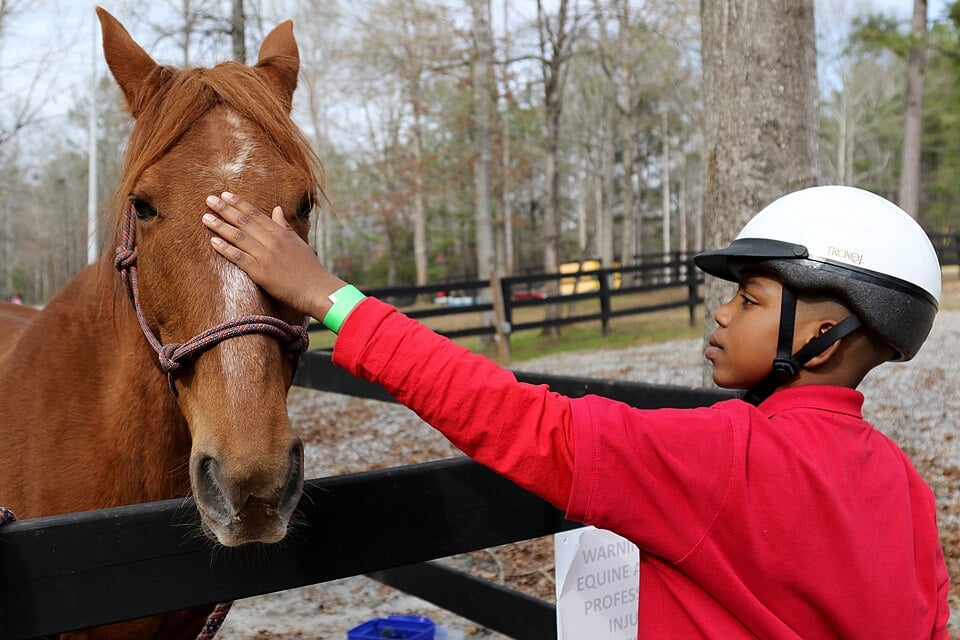
Photo by Maj. Michelle Lunato / U.S. Army Reserve via Wikimedia Commons
Wikimedia Commons Image Page
Public Domain License Information
What Research Says About Equine-Assisted Therapy
Researchers are also beginning to study why these interactions can feel so impactful.
According to Columbia University Department of Psychiatry, one study examined how equine-assisted therapy affected emotion regulation, relationships, and communication skills in veterans.
Researchers found that horses provide nonjudgmental feedback through their physical responses, helping participants develop greater emotional awareness that may benefit daily life.
Large-scale studies are still needed, but early research suggests equine-assisted therapy may help with PTSD, anxiety, and trauma when combined with conventional treatment.
How Therapeutic Riding Helps Children and Families
These difficulties affect non-military personnel as well.
For children with disabilities, therapeutic riding programs often become places of empowerment, confidence, and social development. In a personal essay about her daughter’s experience with cerebral palsy, writer Emily Renee Barton reflected on the emotional impact of therapeutic riding, writing, “When she got on that horse, she wasn’t limited by her disability.” Barton said horseback riding improved her daughter’s health, increased her emotional and social freedom, and helped her build confidence with peers.
Barton wrote that the experience helped her child feel like a kid again — an emotional milestone for their family.
Stories like Barton’s illustrate why many families see equine-assisted programs as more than therapy. For them, the programs create community spaces where children and adults can feel seen, encouraged, and accepted without judgment.
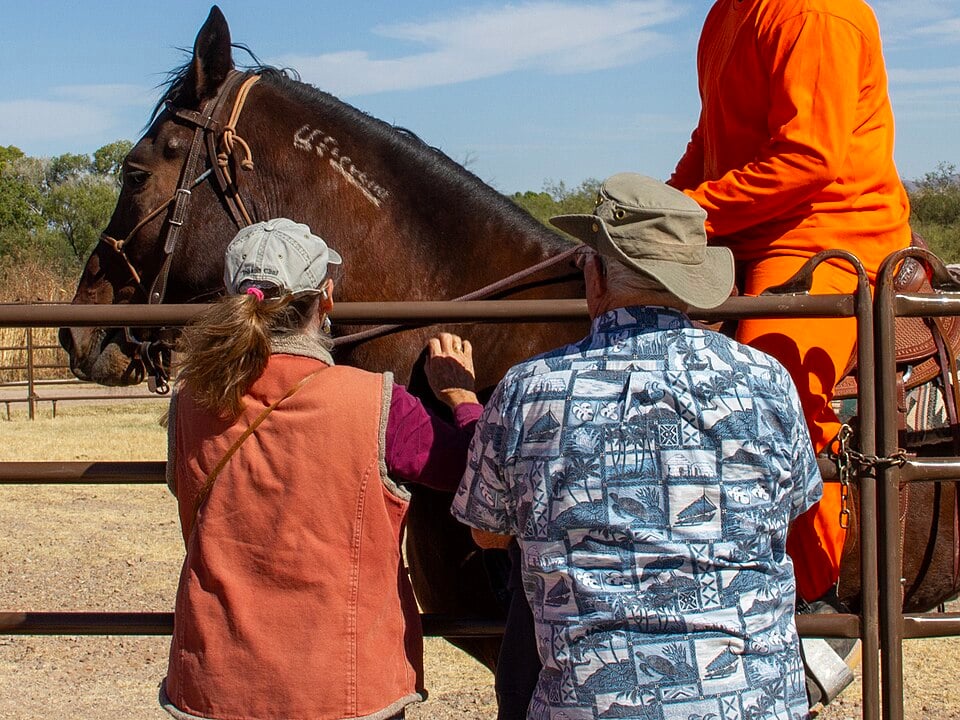
Photo by BLMArizona via Wikimedia Commons.
Wikimedia Commons Image Page Public Domain Licensing Information
The Community Behind Equine Therapy Programs
That community element has become central to many equine-assisted organizations.
According to Points of Light, some participants become volunteers after experiencing the programs’ emotional benefits firsthand. One volunteer, Tressie Hoffman, said, “Volunteering at ROCK has given me the courage to be around people,” describing how the program helped build her confidence and sense of belonging.
Engaging Volunteers:
Many equine therapy programs rely on community volunteers for grooming, facility maintenance, and participant assistance. Many of these centers become intergenerational spaces where veterans, children, therapists, and families connect through shared interests and passion.
That sense of connection helps these programs grow despite the high costs and demanding work involved.
Why Horses Help Build Emotional Awareness
Equine-assisted therapists often say horses help clients engage emotionally in ways that feel less intimidating than traditional talk therapy.
At Take Heart Counseling, practitioners describe equine-assisted counseling as a process rooted in observation, emotional honesty, and relational awareness. Because horses often react to human body language and emotional cues, clients are encouraged to become more mindful of their feelings and behavior during sessions.
Some parents and practitioners report improvements in communication, self-confidence, balance, and emotional expression among children participating in equine-assisted programs. Practitioners say horses respond primarily to observable behavior and body language rather than social expectations, which some participants say helps them build trust and emotional awareness.
A WHYY report described families who said equine therapy helped children with disabilities improve coordination, independence, and self-confidence. Families described the experience as transformative for both the children involved and their households seeking hope and encouragement. One parent recalled introducing her autistic son to horses for the first time, writing, “My son, who is nonverbal, had a huge smile on his face.”
Research on Therapeutic Riding and Emotional Development
Academic research has begun exploring those outcomes more carefully.
A peer-reviewed study archived by National Institutes of Health found that many parents reported improvements in their child’s emotional well-being, self-esteem, and social skills after therapeutic horseback riding programs.
Although researchers say more evidence is needed, many parents report positive emotional and social changes after participating in these programs.
What Experts Say About the Limits of Equine Therapy
Experts have noted that it is important to avoid depicting equine-assisted therapy as a miracle cure. The research into animal-assisted therapy is still very young, and many study samples have been small. Research results likely vary based on the program, participants’ needs, and whether equine therapy is combined with other licensed treatments.
However, even critics recognize the value of environments that encourage mindfulness, emotional presence, and connection.
Some mental health experts caution that equine-assisted therapy should be viewed as a complementary wellness practice rather than a standalone treatment for PTSD or mental illness. Researchers also note that larger long-term studies are still needed to better understand its clinical effectiveness.
Why Many Participants Describe Equine Therapy as Grounding
Supporters of horse-based programs say the activities encourage mindfulness, physical engagement, and emotional presence. Participants must slow down, notice their body language, breathing, and emotions, and act from trust rather than control.
Many participants describe that process as emotionally grounding or restorative.
A Growing Search for Healing and Human Connection
At therapeutic riding centers nationwide, supporters say the programs help veterans find calm, children build confidence, and communities foster empathy, connection, and support.
Sources:
U.S. Department of Veterans Affairs — “Horse sense: Veterans reap benefits of equine therapy”
Emily Renee Barton — “Horse therapy gave my daughter a childhood”
Points of Light — “Journey From Equine Therapy Participant to Passionate Volunteer”
PATH International — “Professional Association of Therapeutic Horsemanship International”
Take Heart Counseling — “Small Beginnings: The Story of Take Heart”
U.S. Army — “Are you overlooking self-care?”
Columbia University Department of Psychiatry — “Horse Therapy Helps Veterans Overcome Trauma”
Editor’s Disclaimer: This article discusses equine-assisted therapy and therapeutic riding programs as complementary approaches to emotional wellness, trauma recovery, and community support. While many participants and families report positive experiences, equine-assisted therapy is not a substitute for licensed medical or mental health treatment. Research into the long-term clinical effectiveness of these programs is ongoing, and outcomes may vary depending on individual needs and circumstances. Readers seeking mental health support are encouraged to consult qualified healthcare professionals.
