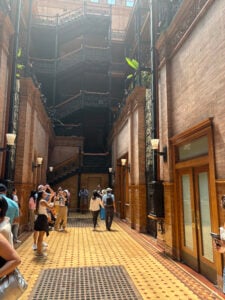
Historic places abound in the city of Los Angeles as a testament to its progress in the form of architecture, public artworks, and heritage. Through the Bunker Hill Historic Core and Downtown, buildings, stairways, parks, and other features will tell you about over a century of history related to Los Angeles.
The district features a remarkable variety of buildings constructed during the first half of the 20th century. Visitors may appreciate the richness of styles, for example: Beaux-Arts architecture, Victorian style, Art Deco, and Egyptian Revival. Details like marble facade maps, staircases, columns, and many other features show the work of craftsmen from previous generations.
Bunker Hill
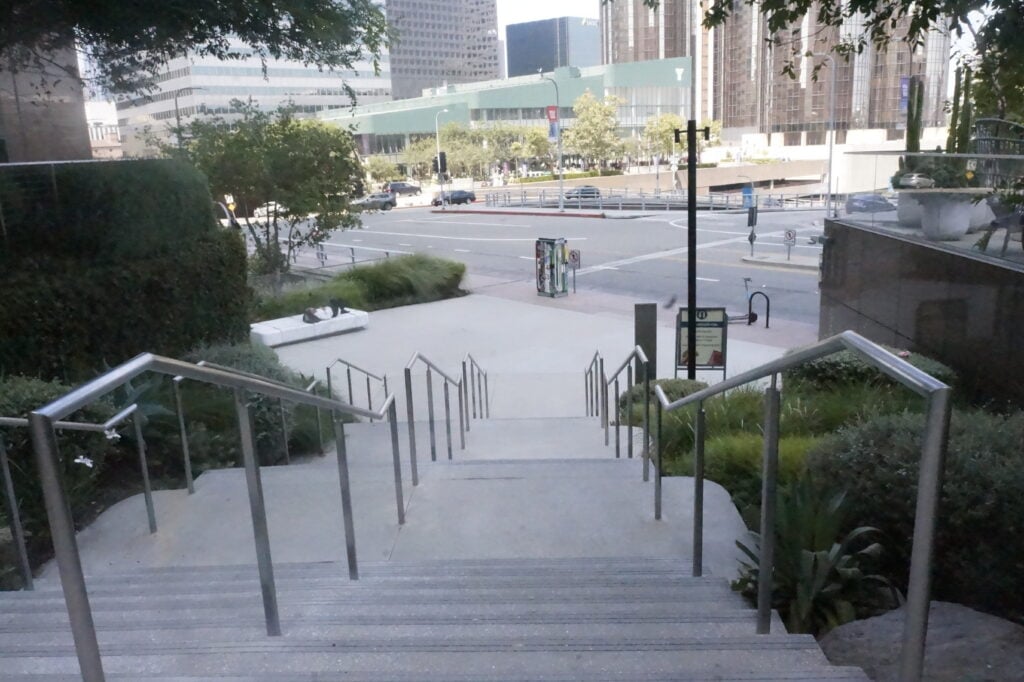
The history of Bunker Hill is that it used to be among the most sought-after places for living in Los Angeles. Many Victorian houses witnessed the growth of the city. The changing structure of transportation and people moving further towards the west eventually led to changes in the neighborhood. In the middle of the twentieth century, the area underwent a process of revitalization. This gave way to new office buildings, hotels, and public spaces.
Today, the neighborhood blends contemporary development with reminders of its historic past. A number of public stairways, beautifully groomed plazas, and art projects provide links among many buildings. At the same time, they maintain a sense of place in the neighborhood for guests and residents alike.
Historic Stairways
In Bunker Hill, huge staircases are not just means of transportation but also serve as artistic contributions to the neighborhood.
Numerous artworks can be seen in the neighborhood as part of public arts projects that integrated art into public areas.
Angels Flight
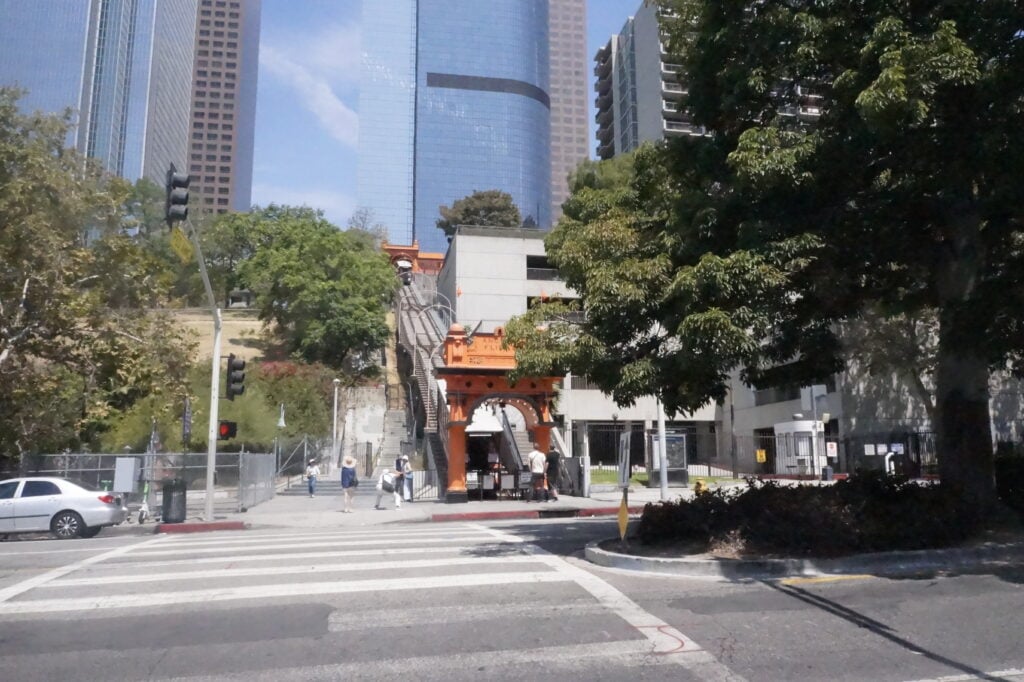
One of downtown’s best-known landmarks is Angels Flight, the historic funicular railway that first opened in 1901. Although only a short ride, it has become one of Los Angeles’ most recognizable attractions. It carries passengers between Hill Street and the top of Bunker Hill. Its distinctive orange-and-black railcars continue to attract visitors from around the world.
Grand Central Market
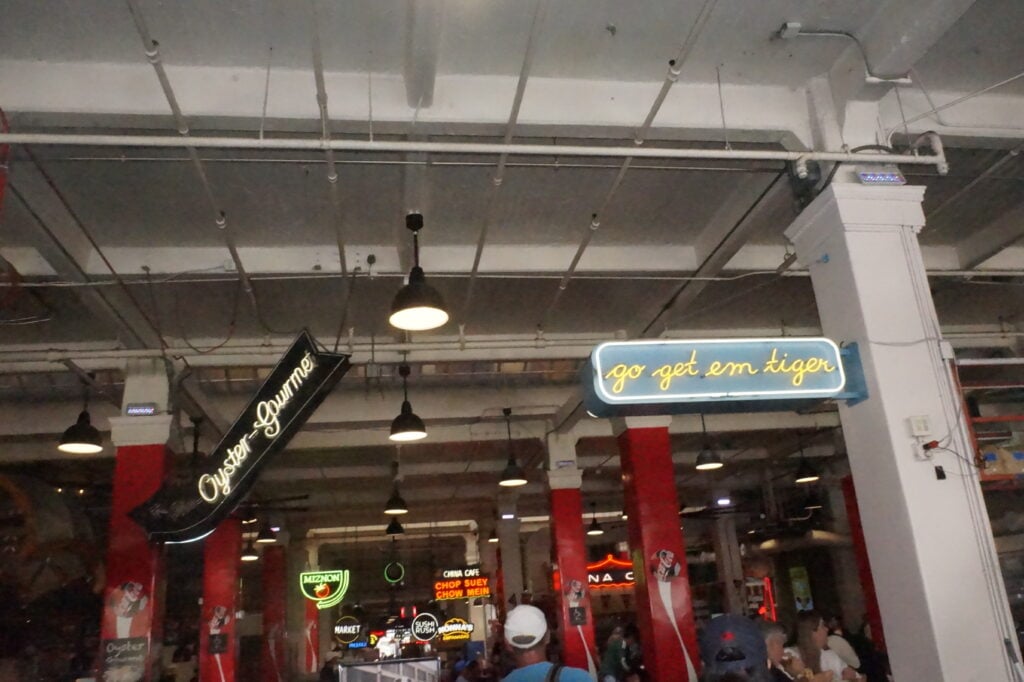
Located right opposite Angels Flight in Los Angeles lies Grand Central Market. Grand Central Market is a historic meeting hub that has revealed the colors of Los Angeles since the early 1900s. It features vendors showcasing various foods from different cultural backgrounds.
Million Dollar Theater
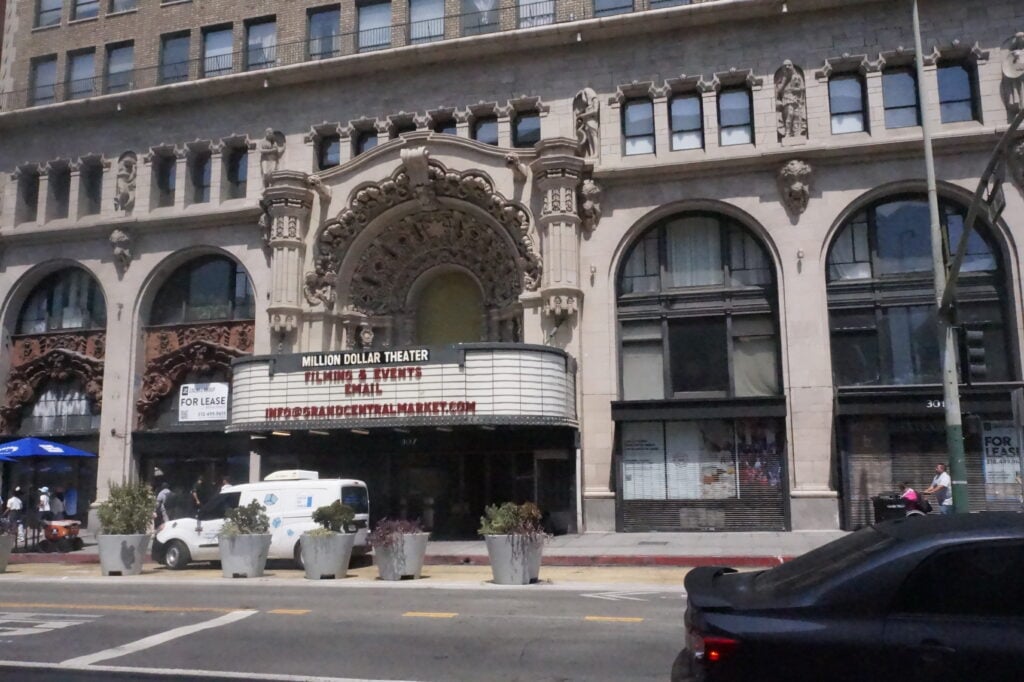
Million Dollar Theater is located on Broadway in the center of Los Angeles. The theater’s interesting architecture serves as a reminder of Broadway’s golden days. During those times, Broadway was the busiest boulevard in Los Angeles and a major center of entertainment.
Bradbury Building
The nearby Bradbury Building is one of the city’s most famous architectural landmarks. The structure is recognized for its beautiful interiors that flaunt intricate ironworks, skylights, as well as open-cage elevators. The building has been in the limelight in various films and TV shows. Even so, it still holds significance in Los Angeles’ history.
Los Angeles Central Library
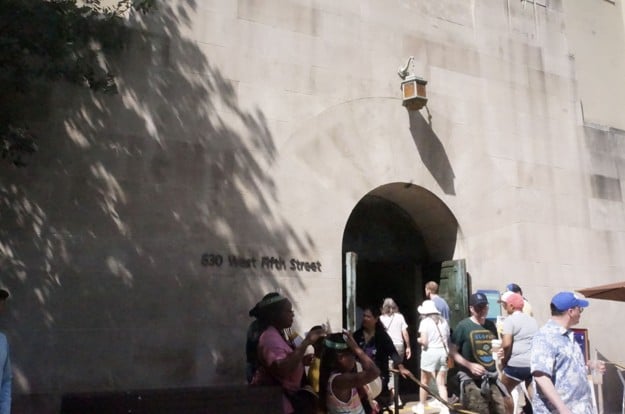
Known for its unique architecture along with a rich collection and community areas, Los Angeles Central Library boasts Egyptian-themed design. It is also another awesome representation of downtown in Los Angeles.
Biddy Mason Park
Biddy Mason Park honors the legacy of Biddy Mason, a formerly enslaved woman who became a successful entrepreneur, nurse, and philanthropist after gaining her freedom. The park celebrates her lasting contributions to the development of Los Angeles. In addition, it serves as a place for reflection and remembrance.
Victor Clothing Company Building
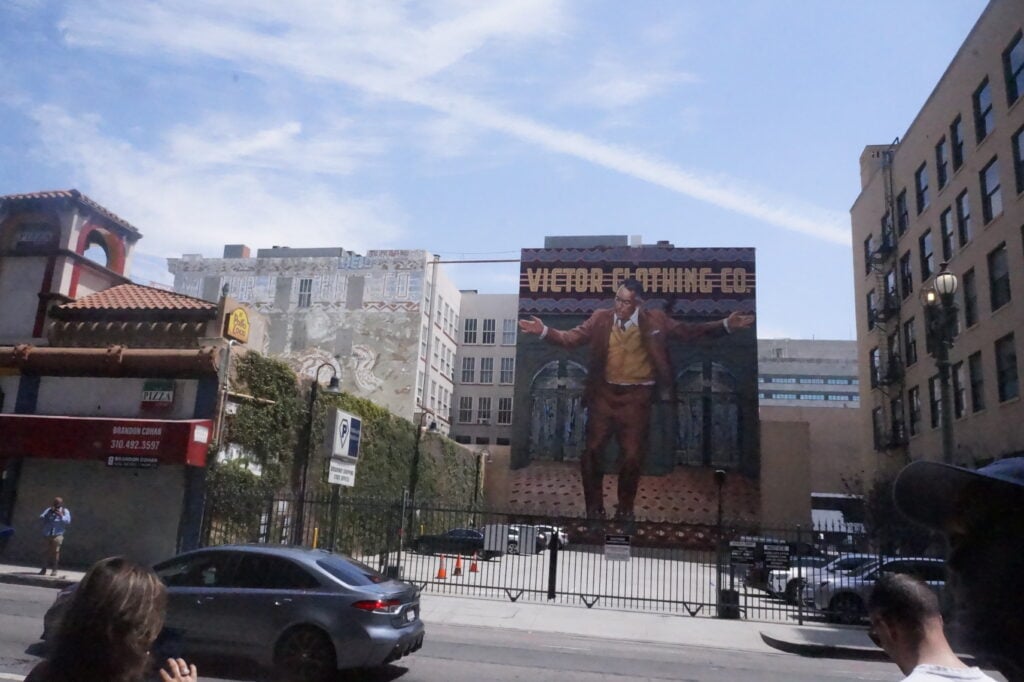
The historic Victor Clothing Company Building, located within the Broadway Theater District, is recognized for its large mural by artist Eloy Torrez. The building remains one of several historic commercial structures. These all contribute to the character of downtown Los Angeles.
You can think of Los Angeles in terms of its architectural and cultural heritage by visiting some of its major landmarks. Whether it’s old buildings, Angels Flight, or Bunker Hill—every stop surprises with news about the people, events, and places. These all made this city what it is now.
Editor’s Disclaimer:
This article is intended as a general overview of the history and architecture of downtown Los Angeles and is based on publicly available historical sources and observations of notable landmarks. While every effort has been made to ensure the accuracy of the information at the time of publication, historical interpretations and site details may change as new research becomes available.
The article is provided for informational purposes only and is not intended to serve as a comprehensive historical or architectural reference. Readers interested in learning more are encouraged to consult official historical organizations, museums, and preservation institutions for additional information.
Unless otherwise noted, photographs are the property of their respective copyright holders and are used in accordance with applicable licenses or with permission. All trademarks, building names, and organization names are the property of their respective owners and are used solely for identification and editorial purposes.
