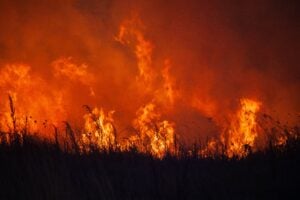
Wildfires are very common during the year, particularly during the summer, and this year, parts of Canada have proven they are no exception. The nation is currently in the process of battling active wildfires, with many considered out of control. This year, the Canadian wildfire season began slowly compared to previous years. However, by late June and early July this year, a large surge of wildfires hit Manitoba, Saskatchewan, and Ontario.
The Canadian wildfires are also considered a global affair as the blazes have extended beyond the borders, thereby affecting parts of the United States. Smoke from the Canadian wildfires is also affecting the densely populated cities of New York City, Chicago, Detroit, Baltimore, and Washington, D.C.
This situation poses a major challenge because it is forcing many people to evacuate or remain indoors, disrupting their daily routines and affecting their current circumstances. Also, the environmental effects of the wildfires pose health risks to many.
Current Wildfire Situation
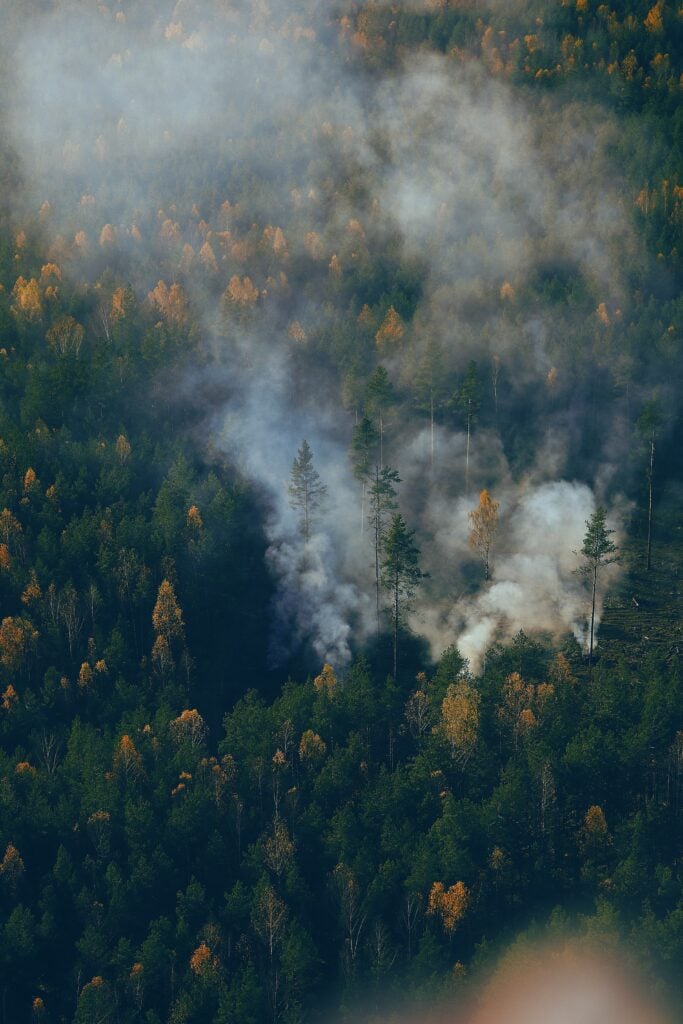
As of yesterday, Canada has reported a total of 838 active wildfires. Officials classify 112 of these wildfires as out of control, and they continue to expand. In addition, roughly 1.9 million hectares of land have been consumed by fire across the country so far. This is the equivalent of 4.7 million acres. Among Canada’s provinces, Manitoba, Saskatchewan, and Ontario have experienced the most severe impacts. In Saskatchewan, the Border Fire has grown beyond 15,000 hectares, while the smaller BUDD Fire burns uncontained near Lac La Ronge. Having experienced a mid-July heatwave, Ontario has seen a massive explosion of nearly 200 active fires.
Many communities in the affected Canadian provinces have seen displacement due to evacuation orders. Unfortunately, many remote, indigenous regions have borne the brunt of this. Many First Nations and northern settlements are still under evacuation orders.
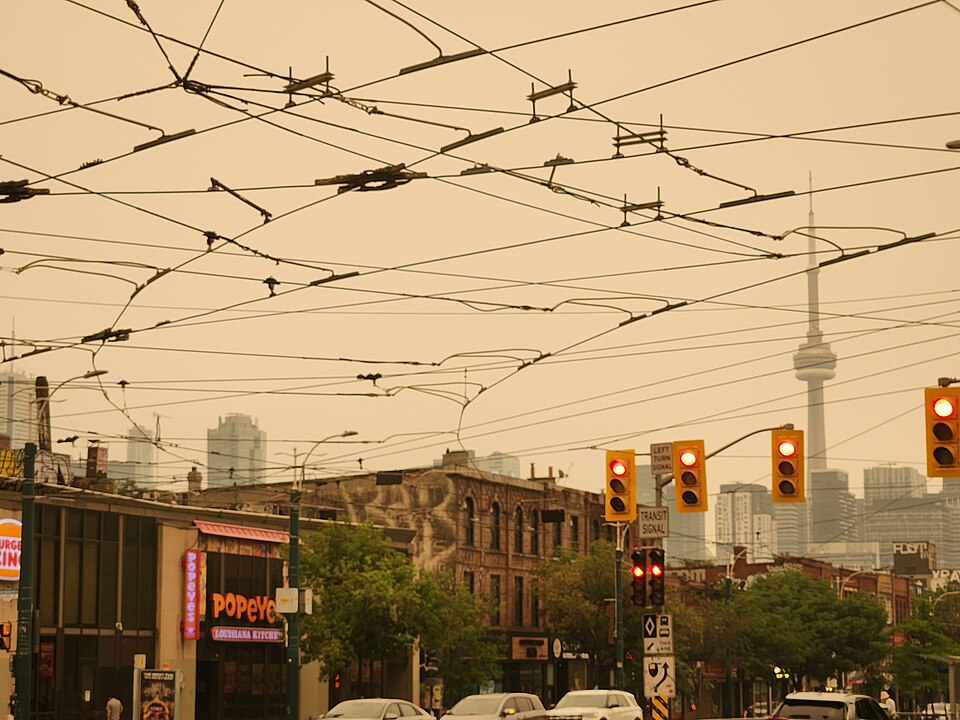
Out-of-control fires have also caused damage to infrastructure in the area. For instance, wildfires have halted key rail transportation links in northern Ontario, while smoke has given Toronto what some describe as the worst air quality of any major city in the world.
Firefighting and Emergency Response
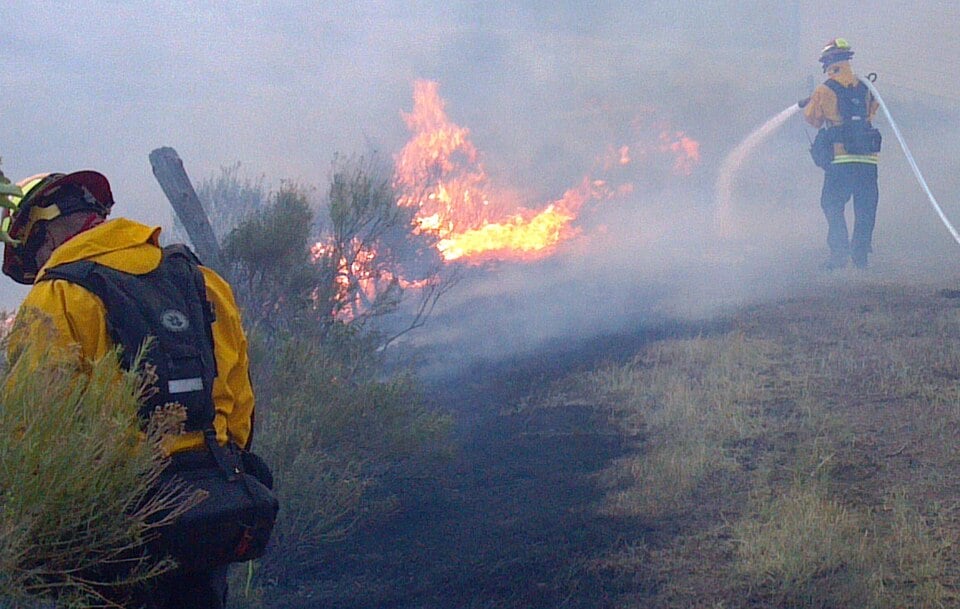
In response to the wildfires, the Canadian Interagency Forest Fire Center (CIFFC) has elevated the country to National Preparedness Level 4. This is an indication of significant wildfire activity across multiple provinces and high demand for shared emergency responses. The nation of Canada has also mobilized thousands of crew members alongside its first-ever federally funded national aerial firefighting surge fleet.
https://commons.wikimedia.org/wiki/Template:PD-USGov-USDA-FS
In Canada, wildfires are generally managed at the provincial level. However, when resources are limited in certain areas, the CIFFC coordinates the internal transfer of personnel, high-capacity water pumps, and heavy equipment from stable provinces to hard-hit operational centers in Ontario, Manitoba, and Saskatchewan.
As far as aerial support, Canada’s federal government deployed its newly funded national firefighting surge fleet, a strategic reserve that adds 10 specialized firefighting aircraft. Also, since the wildfires have been creating havoc on both sides of the border, the U.S. National Interagency Coordination Center (NICC) and Canadian authorities have developed a pact whereby map data is being shared. This agreement also involves the deployment of American incident management teams when necessary.
The overly consistent heat dome which has encompassed much of the North and Midwest, combined with wind shifts and dry lightning produced by severe summer storms, has all presented challenges in the effort to block these wildfires.
Smoke and Air Quality Impacts
The smoke that is being emitted from these fires greatly disturbs the quality of air and, unfortunately, travels vast distances. This prolonged extension of wildfire smoke is due to a variety of reasons, including thermal updrafts and high-altitude jet streams. When hot air is formed following the eruption of wildfires, it rises rapidly, creating powerful thermal updrafts that act like a giant chimney, sucking smoke, ash, and gases upward. Also, once smoke reaches high altitudes, it gets caught in the jet stream – fast-flowing, narrow air currents moving from west to east. This constant travel of smoke causes vast areas to experience less significant air supply.
Currently, over 100 million people across Canada and the United States are being confronted with poor air quality. Some of the most concentrated impacts include the Upper Midwest and the Great Lakes, not to mention a huge stretch of bad air ranging from Ontario to the Northeast and Mid-Atlantic.
https://creativecommons.org/licenses/by-sa/3.0/
Constant exposure to this type of air can contribute to problems associated with both a person’s respiratory and cardiovascular threats. Constant smoke exposure can trigger attacks in people who have asthma and can also increase the likelihood of contracting pneumonia and bronchitis. Not to mention, even the healthiest of individuals can experience symptoms such as stinging eyes, coughing, sinus irritation, and a sore throat, just to name a few. Also, when this wildfire-attributed smoke enters the lungs, it can result in issues such as irregular heart rate, elevated blood pressure, and systemic inflammation. Health officials from the U.S. EPA (AirNow) and CDC recommend that those in affected areas stay indoors and minimize exertion, create a clean air environment inside, and use proper respiratory protection.
Why This Fire Season Has Been Severe?
The 2026 fire season has been particularly active for a variety of reasons. For one thing, Canada’s forests have experienced a prolonged drought. Before spring, a number of what are called ‘underground peat fires’ from 2025 survived the winter. These fires smoldered deep beneath the snowpack, actively drying out the overlying soil layers and root systems. Also, the intense heat wave that has stayed blanketed in certain areas caused moisture to evaporate.
Another contributor to the active fire season is the low humidity that has permeated across Manitoba, Ontario, and Saskatchewan. Without adequate humidity levels, the likelihood of fires is increased. In addition, high winds have been a catalyst for the fires spreading immensely.
Another factor is the amount of lightning produced in thunderstorms. Heat domes often spawn severe thunderstorms, which are, of course, accompanied by lightning. When there is not much rain for a while, a lightning strike on land can produce fires. Let’s not forget that humans have been causing fires as well. These have been caused by a variety of things such as unattended campfires, discarded cigarettes, and agricultural burning.
Conclusion
As Canada continues through the peak of its wildfire season, emergency officials expect firefighting efforts to remain focused on containing existing blazes while preparing for the possibility of new fire starts during periods of hot, dry, and windy weather. Weather conditions in the coming weeks will largely determine how quickly firefighters can bring the fires under control. A lot of rain may still help firefighters make progress in fighting wildfires. Meanwhile, the combination of recent heat and lack of rainfall may lead to the worsening of already existing fires as well as the ignition of new ones.
Both Canadian and U.S. authorities are likely to continue keeping track of the direction of smoke and issuing air quality warnings as the weather conditions change. People living in affected areas should stay informed through local emergency management agencies and follow any evacuation orders they receive.
Despite the challenges that people face in the future, it is important for them to cooperate with one another.
Sources:
Canadian Interagency Forest Fire Centre (CIFFC) – Situation Reports
Government of Canada – Canadian Wildland Fire Information System (CWFIS)
U.S. Centers for Disease Control and Prevention – How Wildfire Smoke Affects Your Body
Environment and Climate Change Canada – Local Air Quality Health Index
U.S. Environmental Protection Agency – AirNow
National Interagency Fire Center (NICC) Coordination and cooperation in wildland fire management.
Reuters – Canadian wildfire smoke chokes Toronto, threatens U.S. cities
ABC News – Canadian wildfire smoke descends on parts of US, including New York City
Editor’s Disclaimer: This article is intended for informational and news reporting purposes only. Information regarding wildfire activity, evacuation orders, fire statistics, and air quality conditions was accurate to the best of our knowledge at the time of publication but may change as emergency officials provide updated information. Readers in affected areas should consult local emergency management agencies, Environment and Climate Change Canada, the Canadian Interagency Forest Fire Centre (CIFFC), AirNow, and local public health authorities for the latest wildfire, evacuation, and air quality advisories.
