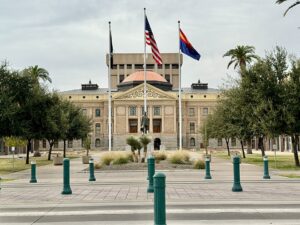
The state of Arizona was historically a strong Republican bastion; however, it is now considered a competitive “swing” state. Arizona’s political evolution is especially evident when examining how the state has voted over the decades. Throughout the history of the United States, the state has voted predominantly for Republican candidates; however, the state has evolved from being strictly a Republican state to being a swing state and back on several occasions since its admission to the Union in 1912.
Progressive Beginnings and Democratic Success
Arizona became the 48th state in 1912, the same year Democratic nominee Woodrow Wilson won the presidency. The state’s early political culture contained a strong progressive element, which helped Wilson carry Arizona in both 1912 and 1916. Wilson’s 1916 victory was particularly decisive as many voters supported his domestic policies and his efforts to keep the United States out of World War I before the nation’s eventual entry into the conflict.
Following Wilson’s presidency, Arizona joined much of the country in moving toward the Republican Party during the prosperous 1920s. The Republican nominations of Warren G. Harding, Calvin Coolidge, and Herbert Hoover were all successful in Arizona during a period of post-World War I economic expansion and political reorganization.
A major impact of the Great Depression was an abrupt change in Arizona’s political landscape with the state moving away from Republicans and towards Franklin D. Roosevelt and the Democratic Party. Roosevelt carried Arizona in all four of his presidential victories from 1932 through 1944, benefiting from support for New Deal programs and widespread dissatisfaction with economic conditions during the Depression. His success marked one of the strongest periods of Democratic support in Arizona’s history.
When Harry Truman won the presidency in 1948, Arizona again voted Democratic. Truman’s victory would prove significant because it marked the last time a Democratic presidential nominee won a majority of Arizona’s vote. It would also be the final Democratic presidential victory in the state for nearly half a century.
The Rise of Republican Dominance
Beginning in the 1950s, Arizona became increasingly Republican. Republican nominee Dwight D. Eisenhower carried the state comfortably in both 1952 and 1956. His popularity as a World War II hero and growing dissatisfaction with the Truman administration helped return Arizona firmly to the Republican column.
During Barry Goldwater’s rise within Arizona’s Republican Party, the state’s Republican identity further solidified as he became one of the most influential figures in the modern conservative movement. He played a significant role in shaping Arizona’s political culture during the 1950s and 1960s.
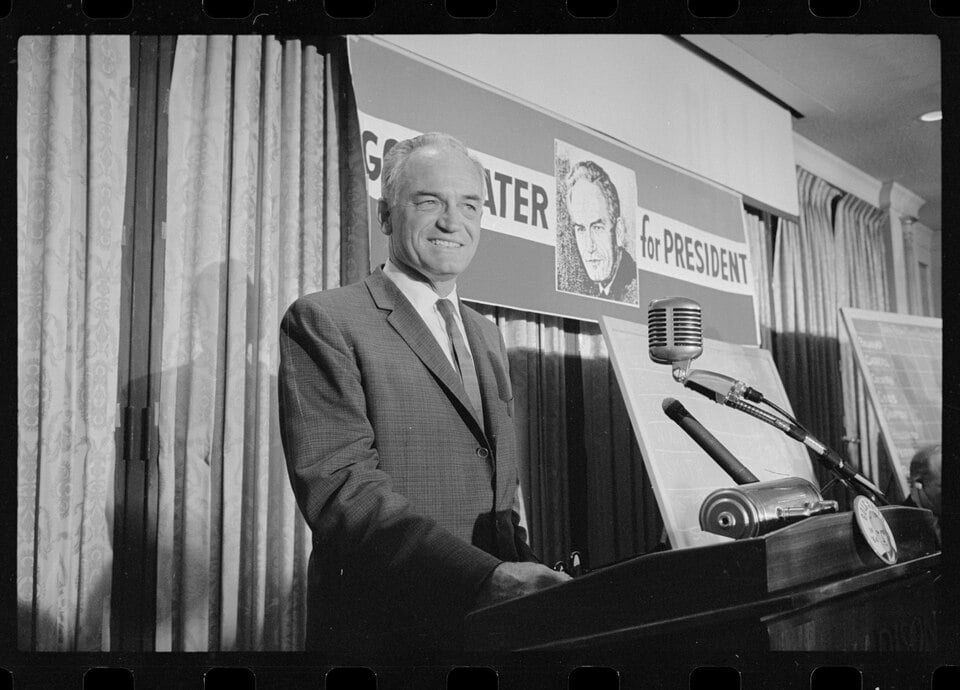
Although Democrat Lyndon B. Johnson won a national landslide victory in 1964, Arizona remained loyal to its native son, making it one of only a handful of states to support Goldwater.
For the next several decades, Arizona became one of the nation’s most reliable Republican states. Republican nominees Richard Nixon, Gerald Ford, Ronald Reagan, and George H. W. Bush all carried Arizona, often by comfortable margins. During much of this period, Democratic presidential candidates struggled to gain significant support in the state.
Arizona’s Republican success has been aided by a variety of factors. The state’s rapid suburban growth, influx of retirees, and creation of a political culture that generally favors low taxation, small government, and conservative policies all contributed to creating demographic and political conditions that allowed Republicans to dominate throughout most of the second half of the twentieth century.
Signs of Change
Arizona’s political evolution entered a new phase by the early 1990s as the state’s political landscape began to change. Population growth, increasing diversity, and changing suburban voting patterns gradually made the state more competitive.
The 1992 presidential election offered an early sign of this shift. Although Republican President George H. W. Bush carried Arizona, the margin was significantly narrower than many previous Republican victories. Democratic nominee Bill Clinton’s centrist message appealed to some moderate and suburban voters, helping Democrats become more competitive in the state.
That trend continued in 1996 when Clinton became the first Democratic presidential nominee since Truman to carry Arizona. His victory was narrow and did not include a majority of the vote, but it demonstrated that Arizona was no longer an automatic Republican victory.
Despite Clinton’s breakthrough, Republicans continued to perform well in Arizona during the early twenty-first century. George W. Bush carried the state in both 2000 and 2004, with his 2004 victory representing the last time a presidential candidate won Arizona by double digits.
Even so, election results suggested that Arizona was becoming more competitive. Republican victories remained consistent, but margins were generally smaller than they had been during the height of Republican dominance.
The McCain Era and Growing Competitiveness
The evolution of Arizona’s politics was evident during Senator John McCain’s political career, as he was one of the state’s most influential political figures during this period. He was known as a conservative but also had the ability to work with Democrats in Washington, D.C. This ability made him popular among many independents and moderates in Arizona.
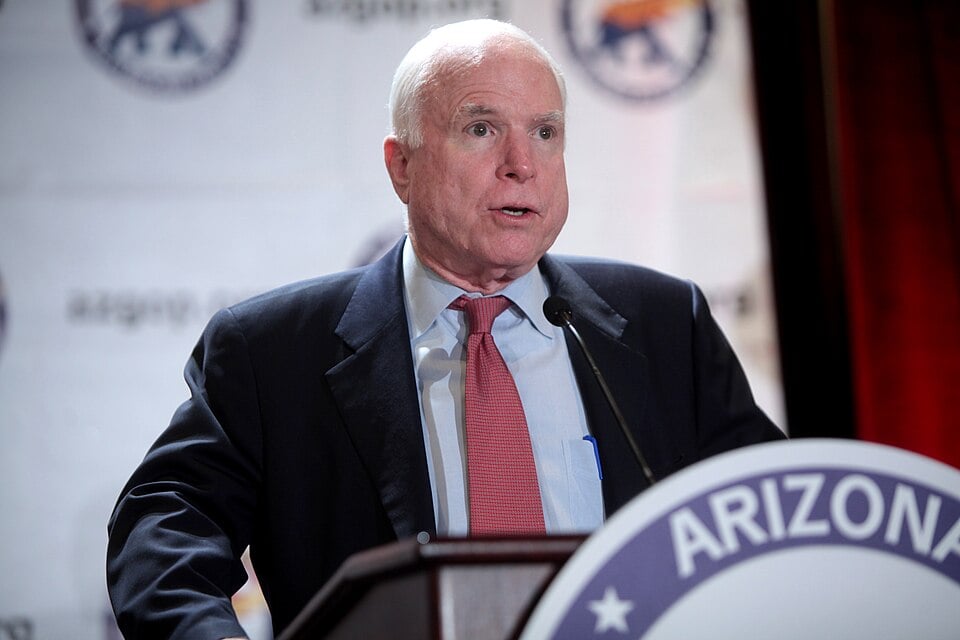
In 2008, McCain became the Republican presidential nominee and carried his home state against Democratic nominee Barack Obama. Population growth, increasing diversity, and changing suburban voting patterns made Arizona an increasingly competitive political landscape. The result reflected broader demographic and political changes that were making the state increasingly competitive.
Four years later, Republican nominee Mitt Romney again carried Arizona. While Romney improved upon McCain’s margin, the state’s election results continued to suggest a closer political divide than had existed during previous decades.
By this point, many political observers viewed Arizona as a Republican-leaning swing state rather than a reliably Republican stronghold.
The Trump Era and Swing-State Status
During Donald Trump’s presidency, Arizona evolved more clearly into a battleground state.

Compared with previous Republican presidential performances in Arizona, Trump’s margin of victory over Hillary Clinton in 2016 was narrower than many observers expected. As a result, Democrats increasingly viewed Arizona as a competitive state in future elections.
Democratic and independent candidates have continued to gain traction in Arizona due to population growth, changing suburban voting patterns, and an increasing willingness among voters to support candidates outside traditional partisan expectations.
The state’s competitiveness became even more apparent in 2020. Democratic nominee Joe Biden narrowly carried Arizona, becoming the first Democrat to win the state since Bill Clinton in 1996. Biden’s victory was historic but extremely close, reflecting Arizona’s nearly even partisan balance.
Four years later, the state returned to the Republican column. The 2024 presidential election saw Donald Trump win Arizona again, as he received over half of all the votes cast in that state. His victory demonstrated that, despite Arizona’s growing competitiveness, Republicans continue to maintain strong support among many voters in the state.
The 2024 result also reinforced Arizona’s reputation as a swing state rather than a state that had permanently shifted toward either party.
Arizona’s Political Future
As the nation looks ahead to the 2028 presidential election, Arizona is expected to remain one of the country’s most closely watched battleground states.
The state’s voting history demonstrates that Arizona’s political alignment has evolved repeatedly over time. Arizona’s early years as a state featured strong progressive influences, and the state later became a Democratic stronghold during Franklin D. Roosevelt’s presidency and the New Deal era. The state later evolved into a predominantly Republican stronghold for much of the twentieth century before becoming a highly competitive battleground state in recent decades.
Today, Arizona remains difficult to predict. Republican candidates have generally enjoyed greater success in Arizona over the long term; however, Democrats have demonstrated the ability to compete and win under favorable political conditions. Changes in demographics, suburban voting patterns, economic conditions, immigration policy, and candidate quality will continue to play important roles in shaping future presidential election outcomes in Arizona.
For these reasons, Arizona is widely viewed as a swing state with a Republican lean. Both major parties recognize its importance in the Electoral College, making it likely that Arizona will once again receive significant attention from presidential campaigns in 2028 and beyond.
Sources:
Arizona Secretary of State — “1996 Election Information”
The American Presidency Project — “1996 Election Results”
National Archives and Records Administration — “Electoral College Results”
Arizona Secretary of State — “2024 Election Info”
Pew Research Center — “Politics & Policy”
Arizona Secretary of State — “2020 Election Information”
Editor’s Disclaimer: This article is intended for informational and historical purposes. It is based on publicly available election records, government data, academic research, and reporting from established news and research organizations. Election results, demographic trends, and political developments are presented to provide historical context and should not be interpreted as an endorsement of any political party, candidate, or viewpoint. Readers are encouraged to review the cited sources for additional information and context.
