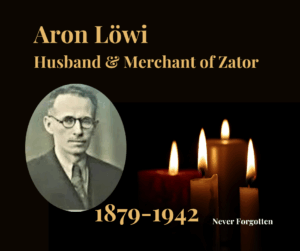
In the Shop of Zator: Remembering Aron Löwi
Aron Löwi was born on April 15, 1879, in the village of Dulowa, Poland. By the time he settled in Zator, he had built a life grounded in family, work, and community. A merchant by trade, Aron ran a modest but vital shop where neighbors exchanged more than goods—they shared stories, greetings, and a sense of belonging.
At his side was his wife, Baila (née Hauptschein). Together, they created a home filled with warmth, hope, and quiet resilience. Their household was a sanctuary in a world that grew increasingly hostile. Through their partnership, Aron and Baila exemplified the strength of love and everyday courage, maintaining dignity in a life of ordinary responsibilities and small-town connections.
Turn of Events:
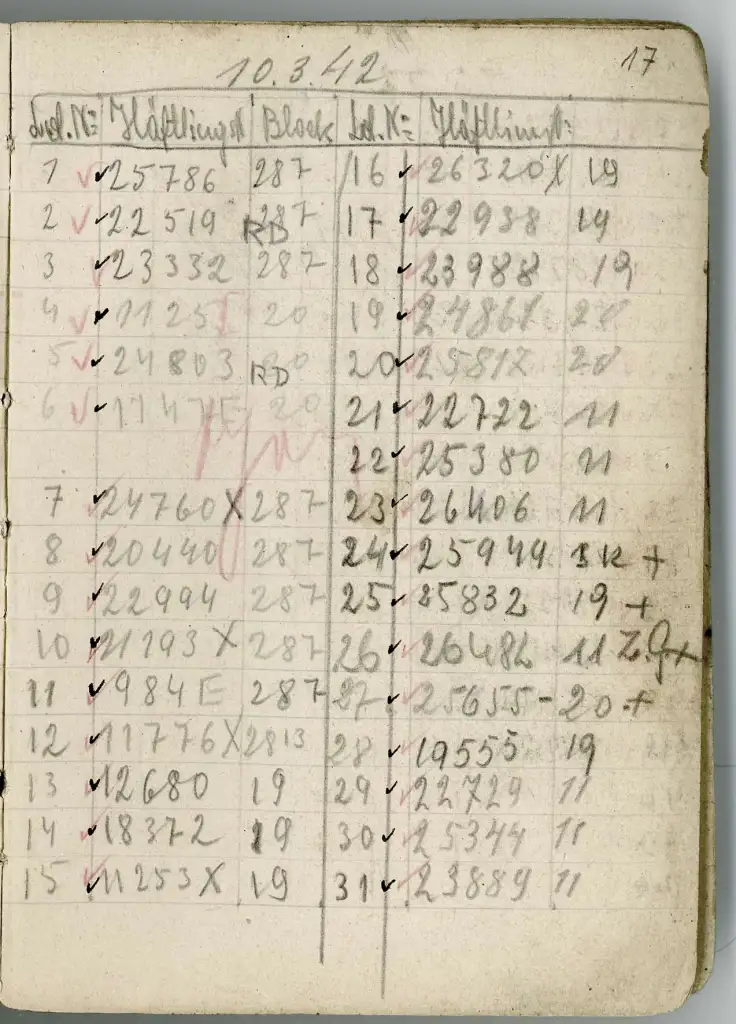
On March 5, 1942, that life was violently interrupted. Nazi soldiers took Aron from Zator, from his shop, from Baila, and from the hands that had shaken in friendship for decades. He was transported through Tarnów and registered at Auschwitz as prisoner 26406. At 62, he was no longer a merchant or a husband—he was a number. Within five days, he was gone.
Yet even in the photograph taken at the camp’s entrance, something remains: the human behind the number. The traces of smiles, the quiet defiance of a life well-lived, the memory of a home and shop full of voices.
Remembering Aron Löwi—and Baila, the partner who shared his life—is not just history—it is resistance. It is seeing the people behind the papers, honoring their lives, and ensuring their stories endure.
Editor’s Note:
This article is a narrative reconstruction based on historical records of Aron Löwi. While grounded in documented facts—including birth, family, occupation, and deportation—some details imagining his daily life, thoughts, and experiences before his arrest are generated for storytelling purposes. It is intended to honor his memory and humanize his story, not as a literal eyewitness account.
Sources: