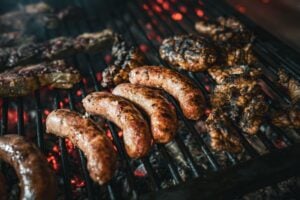
In America, barbecue refers to several cooking styles. There are many fascinating American barbecue styles, each shaped by different regions and ingredients. Various traditions have developed according to the region and the type of meat used. Additionally, different methods and spices of cooking have formed distinct flavors of meats in various places.
Among the best-known traditions are Kansas City barbecue, Texas barbecue and the various styles found across the Carolinas. While all rely on slow cooking and smoke to develop flavor, their approaches to sweetness, acidity, spice and seasoning can differ considerably.
Kansas City Barbecue: Sweet, Tangy and Smoky
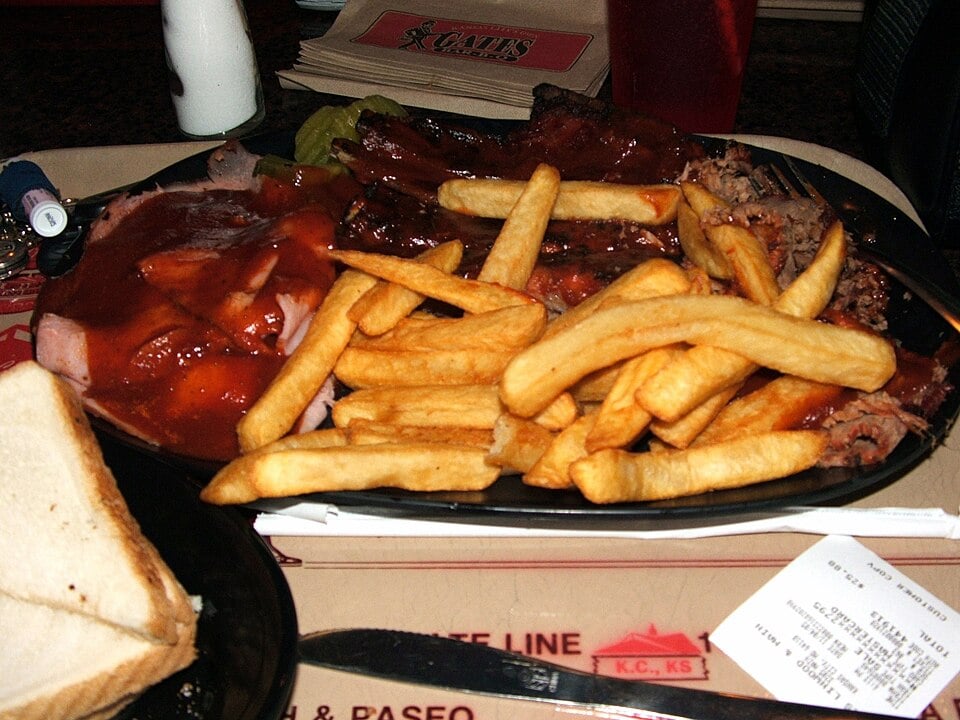
Kansas City barbecue is famed for its thick, sweet, and tangy sauce, made by blending sweet components into a mixture of tomatoes, vinegar, and spices to produce an amazing sauce.
Many sauces utilize brown sugar or molasses to enhance their sweetness, while the addition of apple cider vinegar helps the sauce cut through its creaminess. Most sauces use a tomato ingredient, such as ketchup or tomato paste, while Worcestershire sauce, garlic, and onion add depth to the flavor.
Chili powder, black pepper, smoked paprika, and cayenne pepper belong to the class of spices.
Another major element of Kansas City barbecue is smoke. Hickory and fruit woods such as apple and cherry define the region’s barbecue, although cooks may also use oak and pecan. The low and slow cooking method allows tougher cuts of meat to become tender while the smoke develops gradually.
The result is a style that often combines sweet, tangy, savory, and smoky flavors in the same bite.
Carolina Barbecue: Vinegar, Mustard and Pork
Carolina barbecue is not one single flavor profile. The region contains several traditions, particularly in eastern North Carolina, western North Carolina, and South Carolina.
Eastern North Carolina
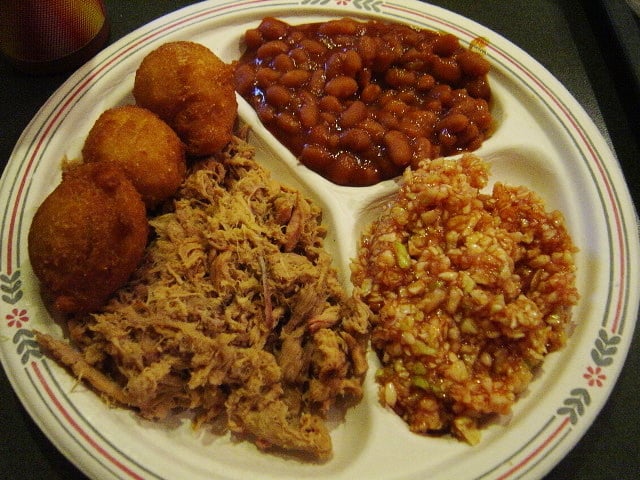
The barbecue from Eastern North Carolina is famous for its whole hog cooking and the use of vinegar-based sauces, unlike other regions where thicker and sweeter sauces are more common. In fact, Eastern North Carolina barbecue combines the tangy flavor of vinegar with pork and spices.
Both apple cider vinegar and white vinegar are used to contribute a strong flavor, though a slight amount of sugar may mitigate the acidic taste. Pepper can offer some heat to the recipe, and such sauces may further intensify the dish.
Whole-hog cooking also contributes to the character of the barbecue. Different portions of the animal provide different textures and levels of richness, creating a naturally savory mixture.
Hickory and oak smoke can contribute another layer of flavor, but the defining characteristic is often the balance between smoky pork, vinegar, and pepper.
Western North Carolina
Barbecue in the western part of North Carolina usually operates slightly differently, using tomatoes as part of its ingredients along with its spices. While eastern North Carolina barbecue emphasizes vinegar-based sauces, western barbecue incorporates tomato for a sweeter flavor, with spices adding another layer of complexity.
Ketchup, brown sugar, and molasses can provide sweetness, while vinegar maintains acidity. Crushed red pepper, cayenne, and black pepper can contribute heat.
The pork itself remains central to the flavor. With the process of slow smoking, pork shoulder becomes rich with flavors through rendered fat, while seasoning the pork shoulder with ingredients like Worcestershire sauce and tomato creates extra savory notes.
Hickory and oak are the most commonly used woods for smoking, giving the meat its distinctive smoky flavor.
South Carolina
South Carolina barbecue is particularly known for mustard-based sauce, often referred to as Carolina Gold.
Yellow mustard and vinegar create a distinctive tangy foundation, while honey, brown sugar or other sweeteners can balance the acidity. Black pepper, cayenne, crushed red pepper and hot sauce may provide additional heat.
Worcestershire sauce, garlic and onion can contribute savory depth, while the slow cooking of pork supplies its own rich, meaty flavor.
Oak and hickory smoke can add another layer of complexity, producing barbecue in which mustard, vinegar, sweetness and smoke work together rather than being dominated by a thick tomato-based sauce.
Texas Barbecue: Beef, Smoke and Seasoning
Texas barbecue is also divided into several regional traditions. There’s the Central Texas region, which is particularly associated with brisket seasoned simply with salt and black pepper, while East, West and South Texas have developed their own approaches.
Central Texas
Central Texas barbecue is perhaps the clearest example of a tradition in which the meat itself takes center stage.
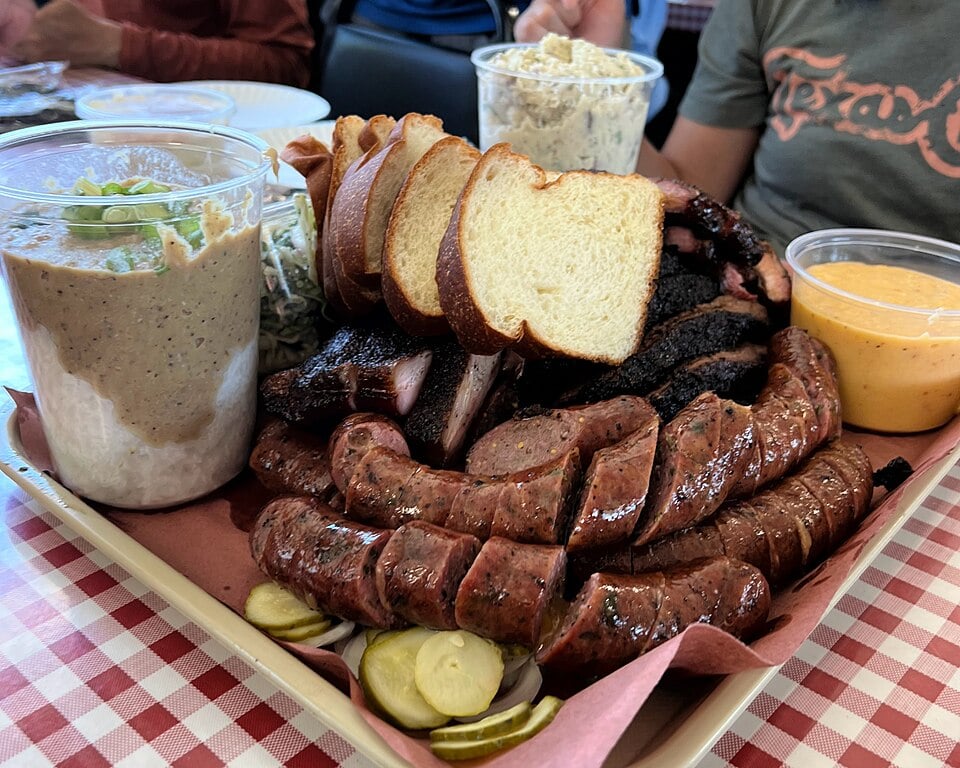
Brisket is commonly seasoned with a simple combination of salt and coarse black pepper rather than covered in a heavily sweet sauce. The seasoning forms a flavorful exterior bark as the meat cooks.
Unlike Kansas City barbecue, sweetness is generally not the primary goal. Instead, the richness of the beef, rendered fat, and browning that occurs during cooking create much of the flavor.
Acidity is also relatively restrained. Raw white onion and dill pickles are common accompaniments that can provide contrast to the richness of the meat.
Smoke is fundamental. Post oak is strongly associated with Central Texas barbecue because it can produce a relatively balanced smoke while burning steadily during long cooking sessions.
The result is a style centered on beef, salt, pepper, bark, and clean smoke.
East Texas
East Texas barbecue generally has a stronger connection to sauce than the Central Texas tradition.
Sauces can incorporate tomato, ketchup, molasses, or brown sugar, creating a sweeter profile. Vinegar may provide acidity, while chili powder, cayenne, and hot sauce can add moderate heat.
Tomato-based sauces may also incorporate Worcestershire sauce and meat drippings, creating a combination of sweet, tangy, and savory flavors.
Hickory and oak can provide the smoke component, while the sauce adds another layer of flavor to the meat.
West Texas
West Texas barbecue reflects the region’s open-flame and Mexican-American culinary influences.
Mesquite is particularly associated with West Texas because the wood is native to the region and produces a strong, distinctive smoke. Compared with the more restrained smoke often associated with Central Texas, mesquite can make its presence immediately apparent.
In thin sauces, it may be possible to add either brown sugar or molasses along with vinegar or tomatoes for acidity. For obtaining heat, it might be best to use cayenne or to use chili powder, with jalapeños serving as either fresh or pickled garnish.
Cooking over an open flame can also give the meat a grilled character in addition to its smoke flavor.
South Texas
South Texas barbecue has strong connections to Mexican and Tex-Mex culinary traditions. Barbacoa is an important influence, with beef cheek and other richly flavored cuts contributing substantial savory character.
Chili powder, jalapeños, and cumin belong to a list of seasonings that will create flavors that are more centered on chili peppers than just using salt and pepper.
Vinegar, pickled onion, salsa, or lime can provide the acidity, whereas the sweet taste can be achieved by adding a small amount of brown sugar or molasses.
Mesquite produces a very strong smoky flavor. Traditional barbacoa cooking meant cooking meat slowly inside a pit, though nowadays it can also be made using various techniques and appliances.
How the Three Barbecue Traditions Compare
Although there are countless variations within each region, a broad comparison helps illustrate the differences.
Kansas City barbecue focuses on a combination of sweet, tangy, savory, and smoky flavor profiles. Dense tomato-based sauces tend to be a very important part of the experience.
Carolina barbecue focuses more on pork, vinegar, and its regional sauce traditions. Eastern North Carolina cooks favor vinegar-based sauces, while western North Carolina cooks use more tomato-based sauces. South Carolina cooks favor mustard-based sauces.
Texas barbecue has a bigger focus on the meat, mainly beef itself. Central Texas does not apply strong spices; it relies on simple seasoning and post-oak smoke, while other areas of Texas use stronger marinades, mesquite, chiles, and Mexican influence in their cooking.
These differences are not absolute. Barbecue traditions overlap, and individual pitmasters frequently develop their own recipes, cooking methods, and sauce combinations.
One Barbecue Tradition, Many Flavor Profiles
The appeal of American barbecue comes partly from this regional diversity. The same basic ingredients — meat, smoke, seasoning and time — can produce very different results depending on where the barbecue tradition developed.
Kansas City barbecue demonstrates how a sweet and tangy sauce can become a defining component of smoked meat. The Carolina barbecue proves to be an example of how vinegar, mustard and pork are important parts of barbecue but differ widely between the states. On the other hand, Texas barbecue shows us how smoke and seasonings, and the characteristics of the beef, are the main aspects of barbecue.
It may be more useful to examine the differences between barbecue styles in determining how particular region-based traditions evolve certain features. Regardless of whether the preferred style is the rich sauce of Kansas City, the vinegar-based style of Carolina, or Texas’s dry rub, American barbecue generally relies on the same principles of low-heat smoking of meat.
Sources:
Visit KC — “The History of Kansas City Barbecue”
Visit North Carolina —A Taste of North Carolina barbecue: styles, history, new twists”
Visit KC — “Barbecue, Kansas City Style”
Discover South Carolina — “South Carolina’s Four Barbecue Sauces”
Smithsonian Magazine — “The Evolution of American Barbecue”
Editor’s Disclaimer: This article is intended for informational and educational purposes and provides a general overview of regional American barbecue traditions. Barbecue styles, ingredients, cooking methods, and flavor profiles can vary among communities, restaurants, and individual pitmasters.
