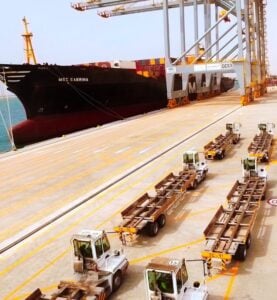
Gulf states continue to play a role in regional discussions surrounding Somaliland’s international status. Current regional tensions and shifting alliances have increased international attention on Somaliland’s recognition efforts.
Unlike Somaliland, which seeks international recognition as an independent state, Puntland officially considers itself an autonomous region within a federal Somali system.
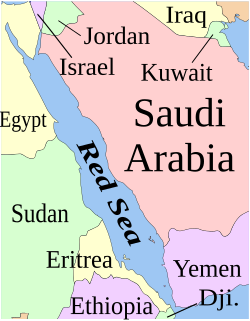
Presidentman, derived from BlankMap-World6.svg by Canuckguy and contributors / Wikimedia Commons (Public Domain)
https://commons.wikimedia.org/wiki/File:Red_Sea_map.svg
https://commons.wikimedia.org/wiki/Commons:Public_domain
Saudi Arabia
Riyadh has consistently supported Somalia’s territorial integrity and has opposed international recognition of Somaliland. Saudi Arabia appears concerned that increased legitimacy for Somaliland or Puntland could alter regional stability dynamics in the Red Sea and Horn of Africa corridor.
Qatar
Qatar has generally aligned itself with Somalia’s federal government and has not supported Somaliland’s independence efforts. Doha criticized Israel’s recognition of Somaliland and has continued to support Somalia’s territorial integrity. Qatar has maintained diplomatic and humanitarian engagement in the region, although analysts differ on the strategic motivations behind those efforts. Qatar is generally viewed as supportive of stronger centralized governance under Somalia’s federal government. Qatar has repeatedly reaffirmed Somalia’s territorial integrity in regional and international diplomatic forums.
United Arab Emirates
The United Arab Emirates has prioritized regional security, port access, and commercial influence in the Horn of Africa. Observers have pointed to differences in how Somaliland and Somali travel documents are treated in some regional administrative systems, although policies may vary over time. According to a Reuters report, regional competition between Saudi Arabia and the UAE also extends into the Horn of Africa, with both trying to pursue trade routes, port access, and geopolitical influence. Analysts often describe Saudi Arabia as emphasizing regional stability, while the UAE has focused heavily on strategic commercial and maritime partnerships.
Turkey
According to a Reuters report, Ankara has emerged as one of Somalia’s closest security partners. This position makes Turkey unlikely to support international recognition efforts for Somaliland. Turkey has also positioned itself as a mediator in disputes involving Somalia and Somaliland. As a result, recognition of Somaliland does not currently appear to be part of Turkey’s regional policy agenda.
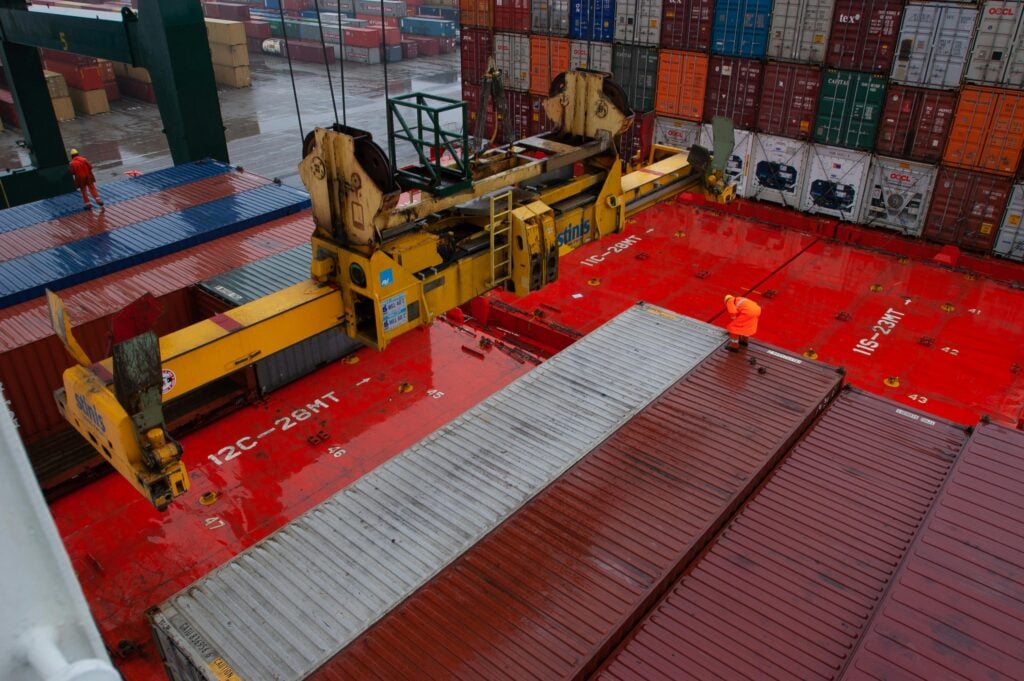
Photo by Simon R. Minshall via Pexels
https://www.pexels.com/photo/crane-in-action-loading-containers-at-the-port-28438281/
https://www.pexels.com/license/
Ethiopia
In 2024, Ethiopia entered into a port-access agreement with Somaliland that raised regional tensions. According to the Associated Press, Somalia condemned the deal as a violation of its sovereignty amid broader diplomatic tensions in the region. Ethiopia has also maintained security and economic relationships with Puntland, particularly regarding trade corridor stability and regional security coordination. Notably, the Somaliland agreement brought renewed international attention to the issue of Somaliland’s international recognition.
Eritrea
Some analysts believe Eritrea could view Somaliland’s potential recognition as strategically threatening because of its implications for Red Sea access and Ethiopia’s regional ambitions. Somaliland’s pursuit of maritime influence and international recognition could reduce Eritrea’s leverage in its long-running rivalry with Ethiopia. Reuters reported that Ethiopia is seeking long-term Red Sea port access following decades of landlocked status after Eritrea’s independence. Likewise, expanding regional security cooperation involving Puntland could diminish Eritrea’s relative influence in Red Sea security affairs. Eritrea continues to formally recognize and work with Somalia’s federal government in Mogadishu. In a potential escalation, the Eritrea-Ethiopia-Somalia dynamic could destabilize the broader region.
Djibouti
Djibouti has several strategic reasons for supporting Somalia’s federal government over Somaliland, not least of which is fear of regional fragmentation and what that would mean for competition over Red Sea ports. In addition, Djibouti does have a rather pragmatic, security-focused relationship with Puntland.
Egypt
Egypt has consistently supported Somalia’s territorial integrity and considers Somaliland part of Somalia. This position has become stronger amid competition with Ethiopia. According to an article in Reuters, the port-access deal between Ethiopia and Somaliland has heightened concern over shifting regional power balances.
Yemen
Both the Houthi movement and Yemen’s internationally recognized government oppose Somaliland’s independence. The Houthis have portrayed Somaliland as a potentially hostile platform for rival regional actors. According to the Associated Press, this rhetoric intensified following reports that Israel moved toward recognizing Somaliland. According to Al Jazeera, the Houthis stated that any Israeli military or intelligence presence in Somaliland would be considered a ‘legitimate military target.’ Yemen’s internationally recognized government also supports Somali unity, especially given Yemen’s own instability and territorial disputes. Yemen’s direct influence over developments in the Horn of Africa remains limited, but they are among parties that benefit more from security cooperation with Puntland rather than stressing formal diplomacy.
Photo by Ekaterina Dotsenko via Pexels
https://www.pexels.com/photo/cargo-ships-on-sea-16691791/
https://www.pexels.com/license/
Israel and Iran Dimension
Following reports that Israel moved toward recognizing Somaliland, it increased tensions in the region. The recognition intensified regional tensions and added another dimension to the broader rivalry between Iran and Israel. Analysts have speculated that Somaliland’s geographic position could increase its strategic relevance for monitoring Red Sea shipping activity. Iran has historically maintained stronger diplomatic ties with Mogadishu than with Somaliland.
Conclusion
Disputes involving Somalia, Somaliland, and Puntland are increasingly intersecting with broader regional rivalries. Rivalries such as Ethiopia and Eritrea, Saudi Arabia and the UAE, and Iran and Israel illustrate the broader geopolitical competition shaping the region. Competition among regional powers, combined with maritime trade concerns and security interests, has given Somaliland and Puntland greater geopolitical relevance than many disputed or autonomous territories typically possess. The long-term trajectory of the region remains uncertain. However, developments such as foreign support for Puntland security forces and diplomatic engagement with Somaliland suggest both entities may continue gaining international visibility and strategic relevance. Ultimately, Somaliland’s quest for international recognition is likely to remain a central issue in Horn of Africa geopolitics.
Sources:
Geopolitical Monitor — “The Egypt-Eritrea-Somalia Alliance: A Strategic Counterbalance to Ethiopia”
African Arguments — “The Horn and the Gulf: How a New Geopolitical Confluence Is Emerging”
Reuters — “Israel becomes first country to formally recognise Somaliland as independent state”
Reuters — “Ethiopia signs pact to use Somaliland’s Red Sea port
Al Jazeera — “Any Israeli presence in Somaliland will be a ‘target’: Houthi leader”
Reuters — “Turkey to provide maritime security support to Somalia -official”
”State Information Service Your Gateway to Egypt — “Egypt, African & Asian states condemn Israel’s recognition of Somaliland”
Ahram Online — “Egypt, Somalia, Turkey, Djibouti reject Israel’s recognition of Somaliland”
Editor’s Disclaimer: The following article is an opinion and geopolitical analysis piece. The perspectives expressed are solely those of the author and are not presented as definitive statements of fact by Presence News. References to state motives, strategic objectives, or potential future developments reflect analytical interpretation based on publicly available information and ongoing regional events. Presence News does not independently verify speculative or predictive claims contained within opinion submissions.
