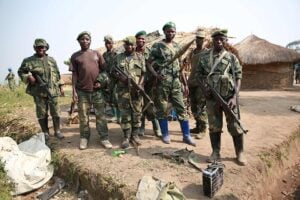
The DRC conflict spans decades of political instability, regional rivalries, and armed groups.
1. The Congolese Government and State Forces
The internationally recognized government of the Democratic Republic of the Congo is led by President Félix Tshisekedi. Government forces are fighting to maintain control over eastern territories amid the ongoing DRC conflict. This happens amid ongoing offensives by M23 and other armed groups. Meanwhile, the Armed Forces of the Democratic Republic of the Congo (FARDC) serve as the country’s national military. In addition, FARDC troops have cooperated with local armed groups, particularly Wazalendo militias, as well as regional military partners. These forces and allied groups have worked to counter rebel advances in eastern DRC.
2. Primary Rebel Movements and Anti-Government Coalitions
Several major armed and political movements have shaped the DRC conflict, alongside numerous smaller militias operating throughout eastern DRC.
• March 23 Movement (M23)
M23 is an armed movement composed largely of ethnic Tutsi Congolese fighters. UN investigators have reported that Rwanda provided significant military support to M23. Furthermore, they have stated that Rwandan Defence Force personnel participated in its operations. M23 has presented the return of Congolese refugees, the protection of ethnic minorities, and the implementation of previous peace agreements as reasons for its rebellion. M23 has also sought greater political influence. However, the Congolese government disputes M23’s stated justifications and condemns its military campaign.
• Congo River Alliance (AFC)
The Congo River Alliance (AFC) was a political and military coalition led by Corneille Nangaa that operated alongside M23. On October 12, 2026, former Congolese President Joseph Kabila announced the formation of the Front for the Refoundation of the Nation (FRN). The new coalition includes M23 and groups formerly associated with the AFC, which the FRN declared dissolved.
The AFC sought to establish an alternative political and administrative structure in territories under M23 control.
• Front for the Refoundation of the Nation (FRN)
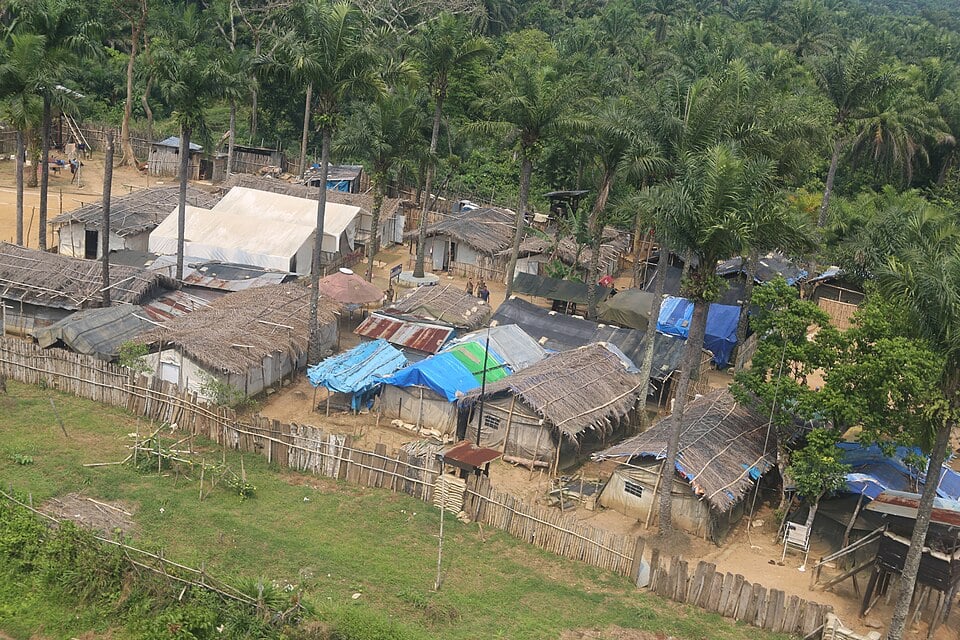
The Front for the Refoundation of the Nation (FRN) is a political-military coalition established in October 2026 under the leadership of former Congolese President Joseph Kabila, according to announcements surrounding its formation. The coalition includes M23 and other former AFC elements. The coalition presents itself as an alternative to President Félix Tshisekedi’s government and seeks to challenge the central government’s authority in Kinshasa.
3. Pro-Government and Local Militias
• Wazalendo
Wazalendo is a broad term used to describe various local Congolese armed groups that cooperate with government forces against M23 and other rebel movements. Many Wazalendo fighters describe their activities as efforts to defend local communities against armed groups and what they view as foreign interference, particularly from Rwanda.
• Various Mai-Mai Militias
Mai-Mai refers to a diverse collection of community-based armed groups operating across eastern DRC. Their leadership, alliances, and activities vary according to local political, economic, and security conditions.
CODECO, or the Cooperative for the Development of the Congo, operates as a separate armed movement with roots in the Lendu community of Ituri province. CODECO’s activities have contributed to intercommunal tensions and disputes over land, political influence, and access to resources.
4. Foreign Armed Groups Operating in Eastern DRC
• Democratic Forces for the Liberation of Rwanda (FDLR)
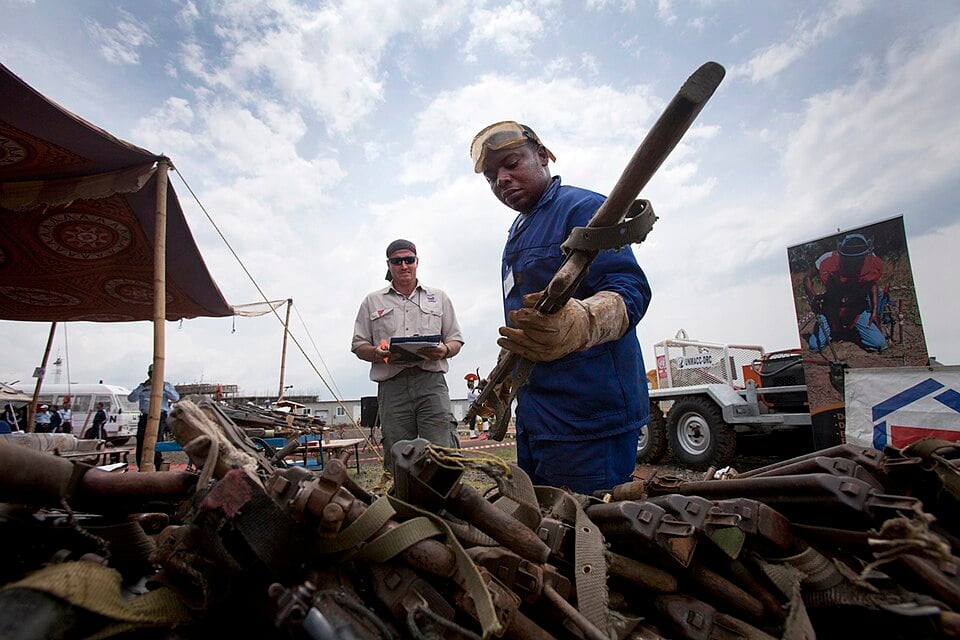
The Democratic Forces for the Liberation of Rwanda (FDLR) is an armed group made up primarily of Rwandan Hutu fighters operating in eastern DRC. The group traces its origins to former Rwandan armed forces and militia members, some of whom participated in the 1994 genocide.
The FDLR has publicly called for political dialogue with the Rwandan government and has identified the rights and security of Rwandan refugees as issues of concern.
• Allied Democratic Forces (ADF)
The Allied Democratic Forces (ADF) is an armed group that originated in Uganda and operates primarily in eastern DRC, particularly in North Kivu and Ituri. The ADF has established ties with the Islamic State and is associated with its Islamic State Central Africa Province (ISCAP) network. The media and analysts also commonly call the group ISIS-DRC. Historically, the ADF sought to overthrow Ugandan President Yoweri Museveni’s government. The group also pursued the establishment of an Islamic state governed by its interpretation of Sharia law.
• RED-Tabara & National Liberation Forces (FNL)
RED-Tabara and the National Liberation Forces (FNL) developed as separate Burundian armed movements, each with its own history and political background. Analysts have linked both movements to Burundi’s broader political and security tensions, although each organization has its own distinct history and activities. The FNL originated as an armed movement during Burundi’s civil conflict before entering the country’s political process as a political party. However, some factions and splinter groups have remained associated with armed activity.
RED-Tabara operates as a separate Burundian armed opposition movement and advocates democratic reforms and adherence to the principles of the Arusha Peace and Reconciliation Agreement, signed in 2000. Key provisions of the Arusha Agreement included political power-sharing arrangements and requirements for ethnic representation within government institutions and the national security forces.
5. Foreign State and Regional Actors
Rwanda
Rwanda has faced accusations from United Nations investigators and Western governments of providing military support to M23. United Nations reports have documented the involvement of Rwandan Defence Force personnel in M23 operations and their role in the group’s territorial expansion in eastern DRC.
Uganda
Uganda has maintained an involvement in eastern DRC through military operations, regional security agreements, and economic and political relationships with neighboring countries. United Nations investigators have examined Uganda’s military presence and its relationships with armed movements operating in eastern DRC. Additionally, a 2025 United Nations report documented an expansion of Ugandan military deployments in North Kivu and Ituri. It also raised questions about Uganda’s relationship with M23.
Allegations concerning the movement of supplies and personnel through Ugandan territory have further complicated regional relations and raised questions about border security measures.
Uganda occupies a complex position in the DRC conflict, balancing its security interests with its broader political and economic relationships in the region.
Uganda and Rwanda have pursued competing regional interests through their political relationships, security policies, and economic activities in eastern DRC. These competing interests can sometimes result in conflicting diplomatic positions and regional security policies.
Burundi
Burundi deployed military forces to eastern DRC to support the Congolese government in its efforts to counter M23 and other armed groups.
Burundi’s military involvement in eastern DRC contributed to tensions with Rwanda, particularly amid competing security interests and mutual accusations of support for opposing armed movements. Burundi closed its border with Rwanda on January 11, 2024, amid deteriorating diplomatic relations and accusations that Rwanda was supporting Burundian rebel groups. Rwanda denied the allegations.
6. International and Regional Peacekeeping and Stabilization Forces
MONUSCO
MONUSCO is the United Nations peacekeeping mission in the DRC. Its mandate includes protecting civilians, supporting stabilization efforts, and strengthening state institutions in conflict-affected areas.
Its mandate also includes supporting disarmament, demobilization, and reintegration initiatives, as well as broader stabilization efforts.
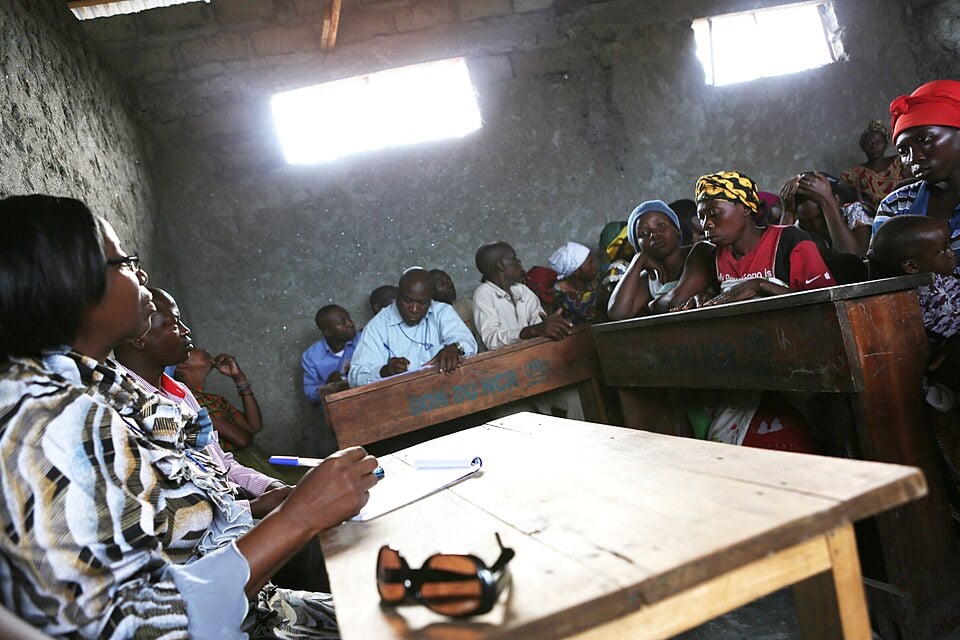
In December 2025, the United Nations Security Council extended MONUSCO’s mandate through December 20, 2026, while maintaining civilian protection and stabilization as its strategic priorities.
SAMIDRC/SADC
The Southern African Development Community (SADC) previously deployed troops from South Africa, Tanzania, and Malawi through its regional military mission, known as SAMIDRC. SADC established SAMIDRC in December 2023 to help Congolese forces address security threats from armed groups in eastern DRC. However, SADC terminated the mission’s mandate in March 2025, and the withdrawal of its troops began on April 29, 2025.
In the next installment of this series, we will examine the key political and military figures shaping the ongoing conflict in the Democratic Republic of the Congo.
Sources:
Amnesty International – DRC: “They Said We Would Die” – M23 and Wazalendo Abuses in Eastern Congo
United Nations Peacekeeping – UN Condemns Deadly Attack on Worshippers in DR Congo
Editor’s Disclaimer: This article is intended to provide an informational overview of the ongoing conflict in the Democratic Republic of the Congo (DRC), including the major armed groups, political movements, regional actors, and international forces involved. The situation in eastern DRC remains fluid, and alliances, military developments, and political circumstances can change. Information is based on publicly available reporting, United Nations documentation, and other credible sources. Allegations of foreign military involvement and support for armed groups are attributed to the organizations and investigators making those claims. The inclusion of any armed group or political movement does not imply endorsement of its activities or stated objectives.
