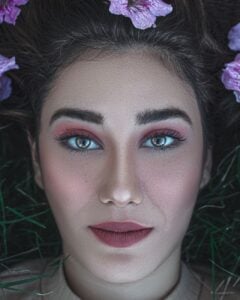
As artificial intelligence makes photo enhancement nearly effortless, the carefully edited social media portrait is no longer primarily a phenomenon associated with teenagers and twenty-somethings. Women in their 40s, 50s and beyond are navigating the same increasingly artificial visual environment.
Scroll through Instagram, Facebook or TikTok today and determining exactly how much a photograph has been altered can be surprisingly difficult.
Skin can appear smoother. Wrinkles and fine lines can disappear. Teeth can become whiter. Facial contours can change. Lighting can be reconstructed, hair enhanced and entire portraits regenerated while maintaining enough of a person’s original appearance for the result to seem like an ordinary photograph.
What once required Photoshop skills can increasingly be accomplished in seconds with artificial intelligence.
And while much of the public conversation surrounding beauty filters has centered on teenagers and younger women, researchers are increasingly examining how social media’s appearance culture affects women in midlife.
A study of 192 female Instagram users ages 40 and older, with an average age of about 51, examined photo-based social media behavior and body image among midlife women. Researchers found differences among participants involving behaviors including photo editing and social media rumination and concluded that some midlife women using photo-based social media may face heightened appearance concerns.
The research is particularly relevant as AI transforms what it means to “edit” a photograph.
Traditional editing might involve adjusting exposure, contrast or color. Modern AI-powered beauty tools can go considerably further, smoothing skin, modifying facial proportions, applying virtual makeup and changing other characteristics of a person’s face.
Research published in 2024 examining social media filters described facial retouching as widespread and noted that modern filters can perform operations including skin smoothing and virtual makeup with little expertise required from the person using them.
The distinction between a filter and an AI-generated portrait is also becoming less obvious.
A user can now begin with an authentic photograph and allow AI to reconstruct or enhance portions of it. The final image may therefore occupy an unusual space between photography and generated imagery: the person is real, the photograph may have been real, but not everything visible in the finished picture necessarily existed when the camera shutter was pressed.
Midlife Women Face Their Own Social Media Pressures
The effects of appearance-focused social media do not suddenly disappear when someone turns 40.
A 2024 study specifically examining women ages 40 and older concluded that midlife women experience appearance pressures on social media. Researchers identified appearance comparisons and the internalization of thin-body ideals as important factors connecting social media use with body image.
More recent research published in 2026 examined 301 women between 40 and 65 and found that greater social media use and internalized appearance pressure were associated with more frequent negative conversations surrounding weight and aging.
Those findings complicate the assumption that beauty filters are primarily an issue affecting younger generations.
There may nevertheless be meaningful differences between generations.
AARP research involving more than 7,000 adult women found that 41% of women ages 18 to 49 reported feeling a great deal of pressure to meet beauty standards, compared with 22% of women 50 and older.
That suggests older women may generally feel less pressure than younger women — but certainly not that the pressure disappears.
AI Makes the ‘Ideal’ Version of Yourself Easier to Create
The newest generation of beauty technology presents another challenge: realism.
Some earlier social media filters were obvious. They produced exaggerated eyes, artificial-looking skin or visual effects that viewers could immediately recognize.
AI-powered enhancement can be substantially more subtle.
A 2026 study published in the Journal of Consumer Behaviour examined AI beauty-filter use across two studies. One included 468 social media users, while another examined 312 users of a specific AI photo-editing application.
Researchers reported associations between AI beauty-filter use and lower appearance self-esteem, negative body-image states and anxiety surrounding how one’s appearance is evaluated.
Other research demonstrates why digitally beautified images can be socially powerful.
A large study involving 2,748 participants evaluated original and beauty-filtered photographs of 462 people. Participants rated the same individuals significantly higher not only in attractiveness after beautification, but also on characteristics including intelligence and trustworthiness.
In other words, digital enhancement can potentially influence more than whether someone looks younger or conventionally attractive. It can alter how viewers perceive the person themselves.
Aging Meets the Algorithm
For women over 40, AI beauty technology arrives alongside another cultural force: attitudes toward aging.
Social media has historically rewarded polished, youthful imagery, while women frequently encounter advertising and entertainment imagery that minimizes visible signs of aging.
AI can now offer an instantaneous digital version of that promise.
Wrinkles do not necessarily need to be completely removed. An application can soften them. Skin texture can remain while appearing unusually even. Facial features can be subtly adjusted rather than dramatically transformed.
That subtlety matters because viewers may not recognize that they’re comparing themselves with an artificially enhanced face.
Ironically, AI has simultaneously produced another viral phenomenon that moves in the opposite direction.
TikTok’s AI-powered “aged” filter became enormously popular by showing users simulated older versions of themselves, adding characteristics such as wrinkles, crow’s feet and sagging skin. Researchers studying reactions to the trend have found responses ranging from discomfort with aging to acceptance and humor.
Social media therefore increasingly gives users access to both directions of an artificial timeline: AI can make someone appear younger or show them a simulation of themselves decades into the future.
When Does Enhancement Become Misrepresentation?
There is nothing inherently new about people wanting flattering photographs.
Professional portraits have involved makeup, controlled lighting, lenses, retouching and carefully selected poses for generations. Even basic smartphone photography automatically performs computational processing before an image reaches the screen.
The difference is increasingly one of degree.
Adjusting brightness is different from removing wrinkles. Removing wrinkles is different from reshaping someone’s face. And enhancing an existing portrait is different again from asking generative AI to reconstruct significant portions of an image.
Yet all of those results can now appear next to one another in the same social media feed without an obvious indication of which technique was used.
That raises questions extending beyond beauty.
Should heavily AI-enhanced portraits be disclosed? Should an image still be considered a photograph if artificial intelligence reconstructed significant portions of the person’s appearance? And as these tools improve, will audiences begin assuming that almost every unusually polished portrait has been digitally altered?
Those questions could become increasingly important for influencers, dating profiles, professional networking, advertising and even journalism.
Authenticity Could Become More Valuable
There is already evidence of a competing movement toward less polished social media.
Even as artificial intelligence makes perfection easier to manufacture, some social media users and brands are emphasizing candid photographs, behind-the-scenes video and intentionally less-produced content.
That could create an unusual divide in the next stage of social media.
One side may become increasingly artificial, populated by perfectly lit faces, AI-enhanced portraits and digital versions of people that exist somewhere between photography and illustration.
The other may place greater value on imperfections precisely because they demonstrate that a human being is actually there.
For women over 40, that tension intersects with longstanding expectations surrounding youth, beauty and aging.
The technology itself is unlikely to disappear. AI enhancement will probably become easier, faster and increasingly difficult to detect.
The larger cultural question may therefore no longer be whether people edit their photographs.
It may be how much of the person we’re seeing on social media is still the person who stood in front of the camera.