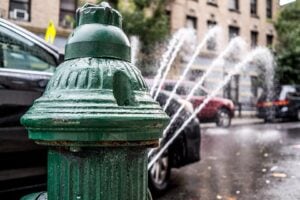
An open fire hydrant sprays water onto a New York City street on a hot summer day in Washington Heights, Manhattan, New York. The photograph was taken on August 31, 2016, and is not from the August 2026 heat wave.
Photo credit: Phil Roeder / Wikimedia Commons / CC BY 2.0
Photo: Presence News
Post Views:271
NEW YORK, New York—The recent weather in New York City has also involved excessively hot weather, with the temperature index hovering around 100°F in some areas of the metropolitan region. The National Weather Service issued advisories for New York City and the surrounding regions because of the weather conditions, which resulted in even more potential for the emergence of heat-related illnesses. Extreme weather is alarming for those who do not have sufficient means of cooling off.
The peak heat event took place earlier in the time frame; heat index values went over 100 degrees Fahrenheit in some areas of the New York Metropolitan Region. High temperatures can present risks to public health, especially among vulnerable groups. Locations with large areas of ground that are paved or have few trees can hold more heat, thus resulting in heightened exposure during times of extreme heat, particularly for those who do not have enough means of cooling their environment.
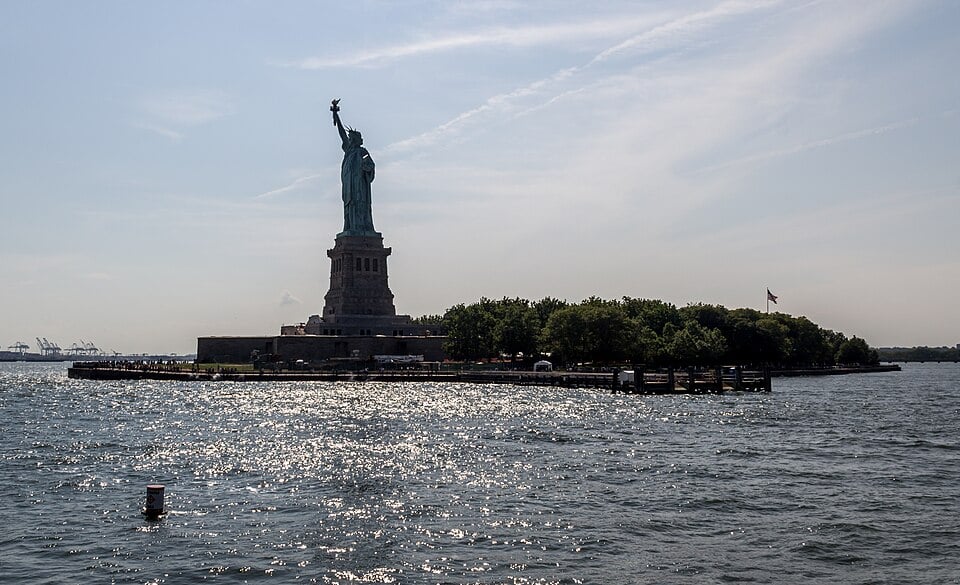
The Statue of Liberty stands in New York Harbor on a summer day in New York City, New York. This photograph was taken on July 30, 2012, and is not from the August 2026 heat wave. Photo credit:Dietmar Rabich / Wikimedia Commons / CC BY-SA 4.0
How Hot Did NYC Get?
New York City’s air temperatures during the early August heat event reached the upper 80s and 90s, while humidity pushed heat-index values higher. National Weather Service forecasts showed heat-index values approaching or exceeding 100°F. The combination of heat and humidity affected much of the New York metropolitan area and surrounding region, including Long Island, northern New Jersey, and the Hudson Valley. Areas with extensive paved surfaces and less tree cover can experience greater heat exposure during extreme heat events.
The hottest times happened in the afternoon since the temperature and heat-index values were very high then. The heat and humidity lasted several days, with conditions varying across the New York metropolitan area.
Heat Across the Five Boroughs
The extreme early August heat wave highlighted existing differences in heat exposure and vulnerability across New York City’s five boroughs. Urban heat islands have the potential to boost heat exposure in places where there are a lot of concrete surfaces and few trees, concerning some people who live in those districts in case of a heat wave.
Marine breezes may help coastal areas since marine air will enable strong winds to ease the temperature. However, high humidity may make any climate uncomfortable. Places with high heat but with no natural ventilation or air conditioning are going to get hot. Moreover, the dense area of Midtown may bring about the accumulation of heat, and hence, less air movement.
NYC Activates Heat Emergency Measures
New York City activated heat-emergency measures as dangerous heat affected the area. The city activated cooling centers across the five boroughs during heat emergencies.
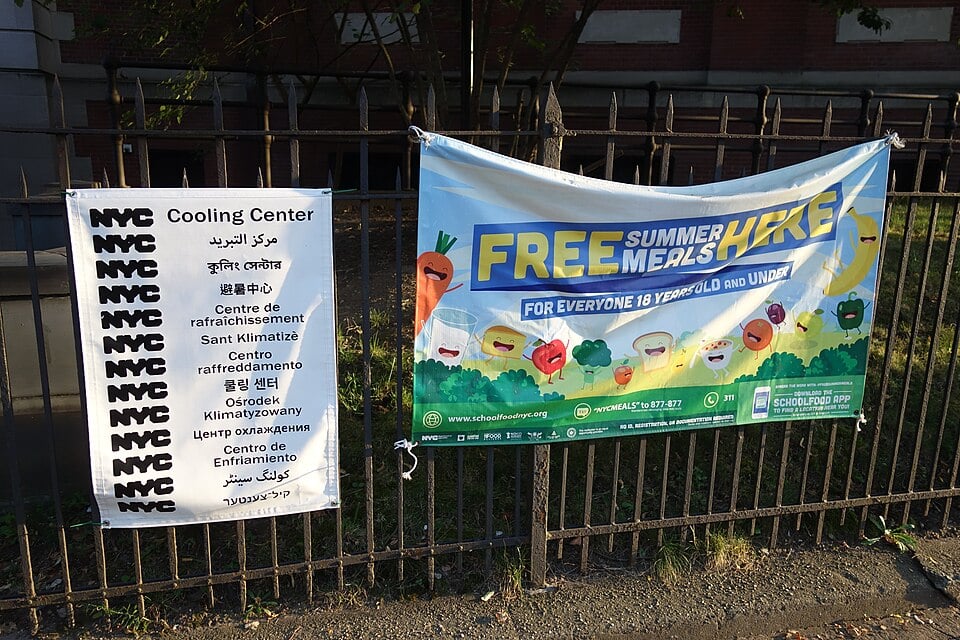
A sign marks an NYC Cooling Center at the Brooklyn Public Library’s Williamsburgh location in South Williamsburg, Brooklyn. The photograph was taken on August 15, 2019, and is not from the August 2026 heat event.Photo: Tdorante10 / Wikimedia Commons / CC BY-SA 4.0
At the same time, Code Red outreach was carried out across the city to broaden street outreach where homeless New Yorkers can find refuge, cooling centers, shelters, and other necessary services. The city’s outreach activities also aimed at checking on people in need and helping them find cooling solutions.
Residents were also urged to conserve electricity during periods of extreme heat.
Who is Most Vulnerable to Extreme Heat?
The effects of heat extremes are experienced by all people. However, some groups are experiencing higher risks than others. For example, older adults and people with some underlying health conditions find themselves in a risky position when faced with extreme heat.
Workforce members whose jobs require them to work outside and people who are homeless are further challenged when it comes to finding ways to cope with extreme temperatures.
The NYC Department of Health also warns that dangerous heat exposure can occur indoors, particularly in homes without adequate cooling. NYC Health has identified exposure to excessive indoor heat, particularly in homes without adequate cooling, as an important factor in heat-related deaths. Without adequate cooling, apartments can become dangerously hot, making access to functioning air conditioning an important protection during severe heat.
What New Yorkers Can Do During Extreme Heat
During high temperatures, New Yorkers can implement actions in order to keep themselves and others safe. One of the safest ways of being secure is to stay in a climate-controlled space, which may include NYC cooling centers when they operate. Moreover, ensure that you continuously drink water so as to remain hydrated, even if you do not feel thirsty.
It is also recommended to limit strenuous outdoor activity during the hottest parts of the day. In addition, it’s important to check on older neighbors, family members, and friends who may need assistance.
Thus, never permit children or pets to remain unaccompanied in a parked vehicle. The temperatures inside cars can rise quickly to dangerous levels.
What Comes Next for New York City?
National Weather Service forecasts called for temperatures to ease as cooler air moved into the New York City metropolitan region.
While the chances of another late summer heatwave may remain, the current forecast does not include a Heat Advisory. With this forecast in mind, temperatures are set to become more comfortable.
A Reminder of NYC’s Heat Risk
The recent heat event serves as a reminder of the challenges extreme summer temperatures can pose for New York City. Heat can quickly become a public safety risk, especially for older adults, outdoor workers, and people without working air conditioning. New Yorkers should listen to warnings from the National Weather Service and the authorities anytime future heat waves hit the area. According to the NYC Department of Health and Mental Hygiene, approximately 500 New Yorkers die prematurely from heat-related causes each year.
Editor’s Disclaimer: This article is based on information from the National Weather Service, New York City Department of Health and Mental Hygiene, and NYC Emergency Management. Weather conditions and forecasts can change rapidly, and readers should consult official government and weather sources for the latest advisories and safety guidance. Presence News does not provide medical advice, and readers experiencing heat-related symptoms should seek appropriate medical attention.
William Barber is an Editor and freelance journalist with Presence News based in Jackson, Mississippi. He regularly reports on community news, business, wellness, culture, entertainment, and human-interest stories throughout Mississippi while helping maintain the publication’s editorial standards. Before joining Presence News, William built professional experience in journalism, librarianship, copywriting, and digital publishing. As a certified copywriter, he has written hundreds of articles spanning wellness media, blogs, digital campaigns, scholarly publications, and poetry. One of his most recognized contributions to Presence News is DDPY: The Workout That’s Changing Lives, which became one of the publication’s most-viewed articles. Through his reporting, William has gained recognition within his local community for covering businesses, nonprofit organizations, entrepreneurs, artists, and community leaders making a positive impact. As an Editor, he has publishing authority at Presence News and works closely with contributors to ensure articles are accurate, informative, and aligned with the organization’s commitment to original, people-first journalism. One of William’s long-term goals is to relocate to New York City, where he hopes to provide regular on-the-ground coverage of local news, business, culture, and community events for Presence News. Story ideas, press releases, and editorial inquiries can be sent to william@presencenews.org More by William Barber