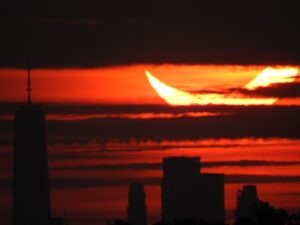
New York, New York— On August 12, 2026, the world will be in awe of a unique solar eclipse that will attract people’s attention to the skies. During this eclipse, the totality will be visible in parts of Greenland, Iceland, northern Russia, the Atlantic Ocean, northern Spain, and a small area of Portugal, while many other countries will also observe a partial eclipse.
The celestial event will also extend into North America, where the Moon will obscure varying portions of the Sun across parts of the northern United States. New York City will be among the U.S. cities to experience a partial solar eclipse. Thus, the people living in New York City will now have the chance to view this eclipse from locations across the city. The event is likely to attract the attention of both professional astronomers and casual stargazers.
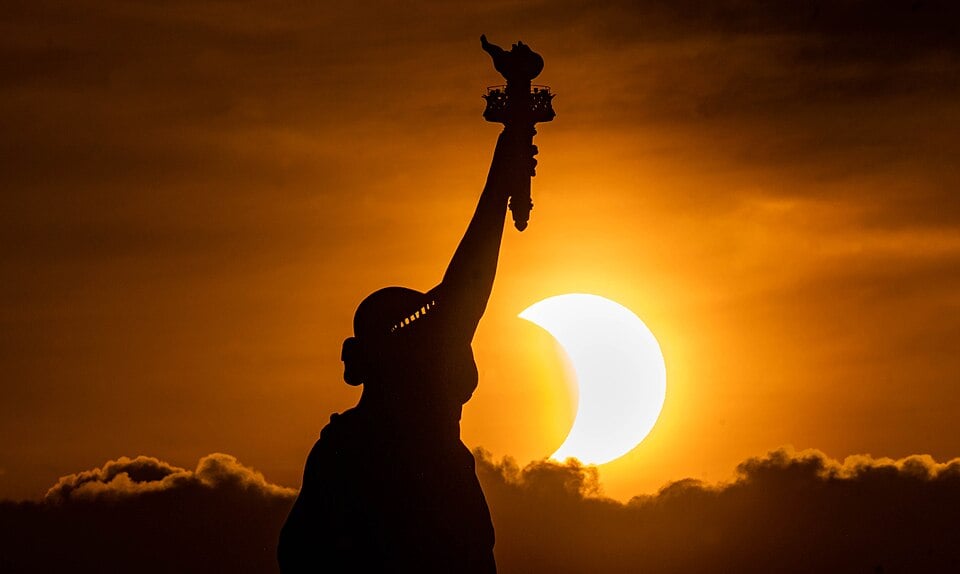
What New York City Will See
New York City will experience a partial solar eclipse rather than totality. According to astronomical calculations from Timeanddate, the partial eclipse will occur during the early afternoon. The partial eclipse begins at 1:07 p.m. EDT as the Moon begins to cross the Sun’s disk. The eclipse will reach its maximum at 1:54 p.m. EDT. Then it will gradually wind down and end at 2:38 p.m. EDT. If you are considering your options, this solar eclipse 2026 New York City experience will surely be one of a kind. Even though it will not be total, it is likely to be an impressive show.
At maximum eclipse, the Moon will obscure about 9% of the Sun’s disk in New York City. Because only about 9% of the Sun will be obscured in New York City, viewers should not expect the dramatic darkness associated with totality, such as a twilight-like sky or the appearance of stars. Instead, the Sun will appear to have a small portion of its disk missing. Because the Sun remains dangerously bright, looking directly at it without proper protection can be harmful.
Other Parts of the U.S. Will See a Partial Eclipse
Other parts of the United States will also experience a partial solar eclipse. Parts of the northern United States, including areas of New England, the Great Lakes region, and the Mid-Atlantic, will also see the Moon pass in front of the Sun. Parts of Alaska and northern New England will also experience the partial eclipse, with the amount of the Sun obscured varying by location.
The amount of the Sun obscured will depend on the observer’s geographic location. Observers farther north will generally see a larger portion of the Sun obscured. Parts of northern Maine will see a larger portion of the Sun obscured than New York City. The greater amount of obscuration will make the Sun appear more noticeably crescent-shaped. Elsewhere, including parts of the Great Lakes and Mid-Atlantic regions, the amount of the Sun obscured will vary by location.
Where the Eclipse Will Reach Totality
New York City will experience only a modest partial eclipse, while observers along the path of totality will see the Moon completely cover the Sun. The path of totality will cross northern Russia, Greenland, Iceland, the Atlantic Ocean, Spain, and a small corner of Portugal. In Iceland, including Reykjavík, observers along the path of totality will experience the Sun being completely covered during totality.
The path of the solar eclipse will pass over certain areas of Spain, where observers can view the eclipse just before nightfall. At that time, the eclipse will cover the Sun completely from the observers’ view, allowing them to see the Sun’s outer layer of atmosphere called the solar corona.
How to Safely Watch the Eclipse
Anyone planning to view the solar eclipse should follow established eye-safety guidelines. New York City and other areas of the United States will only be seeing a partial eclipse. Because the Moon will not completely cover the Sun in New York City, viewers must use proper eye protection throughout the partial eclipse. Viewers should never look directly at the Sun during the partial eclipse without proper eye protection. In fact, the solar eclipse 2026 New York City event will require all viewers to prepare proper eye safety equipment in advance.
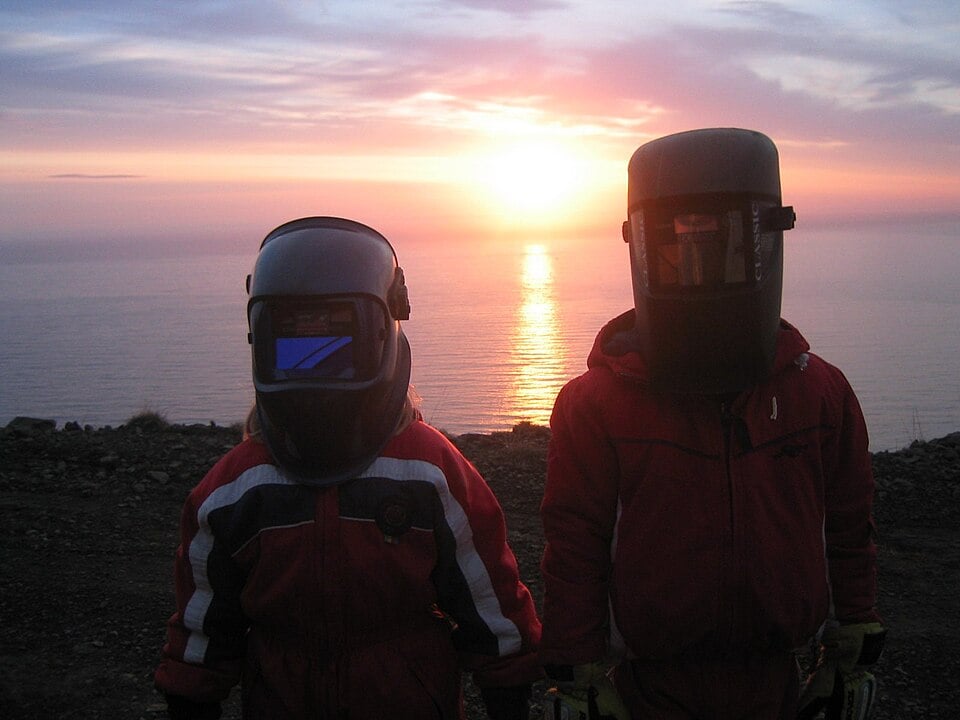
Even everyday sunglasses do not provide adequate protection from a partial solar eclipse. Viewers should use eclipse glasses or handheld solar viewers that comply with the ISO 12312-2 international safety standard. Safe solar viewers are thousands of times darker than ordinary sunglasses.
Before using eclipse glasses or a handheld solar viewer, inspect them for tears, scratches, or other damage and discard any damaged equipment. In addition, it’s also important to remember that for those planning to use cameras, binoculars, or telescopes, these devices require their own dedicated solar filters mounted on the front lens. Never look at the Sun through a camera lens, telescope, binoculars, or another optical device while wearing eclipse glasses. Concentrated sunlight can burn through the filter and cause serious eye injury. Any optical device used to observe the Sun must have a proper solar filter attached to the front of the device.
Why Solar Eclipses Happen
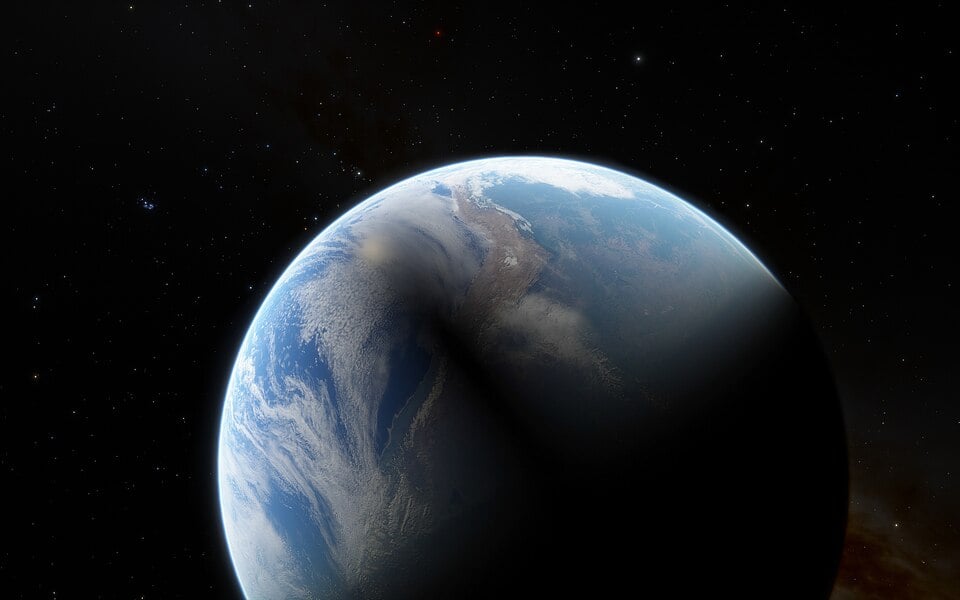
Solar eclipses take place when the Moon is located at a specific position in contrast to the Earth and the Sun. The Moon has to be at an accurate position along with the Sun and the Earth so that the Moon can cover the sunlight and create an eclipse.
The shadow cast by the Moon consists of two parts: the umbra and penumbra. The umbra is the contributor to the formation of a total solar eclipse, while the penumbra enables the formation of a partial solar eclipse. A total solar eclipse occurs when all the Sun’s rays are blocked by the Moon, while the penumbra only obstructs part of the rays from getting to the Earth.
Conclusion
Although New York City will not experience totality, residents will still have an opportunity to observe a partial solar eclipse on August 12. On this date, the Moon covers part of the Sun.
The partial eclipse will begin at 1:07 p.m.EDT, reach its maximum at 1:54 p.m.EDT, and conclude at 2:38 p.m. EDT. For anyone planning to watch from New York City, remember that the Sun will remain dangerously bright throughout the partial eclipse. Never look directly at the Sun without proper solar viewing protection, including eclipse glasses that comply with the ISO 12312-2 safety standard.
Sources:
Timeanddate — “August 12, 2026 Total Solar Eclipse”
NASA Science — “Total Solar Eclipse on August 12, 2026”
Timeanddate — “August 12, 2026 Partial Solar Eclipse in New York, New York”
Editor’s Disclaimer: This article is intended for informational purposes and is based on astronomical information and forecasts from NASA and Timeanddate. Eclipse viewing times and visibility can vary depending on an observer’s exact location and local weather conditions. Readers should follow established solar-viewing safety guidelines and use appropriate, certified solar viewing equipment when observing the eclipse.
