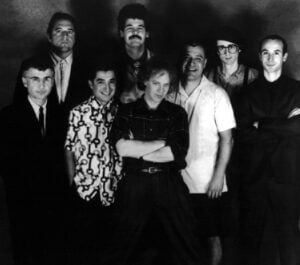
Southern California’s unusual entertainment restrictions created one of rock’s most memorable concert moments
For many Southern California music fans, Oingo Boingo concerts were known for their high-energy performances, theatrical stage presence, and audiences that rarely stood still. Yet during the band’s early years, there were occasions when fans attending performances in Huntington Beach, CA were given an unusual instruction:
Do not dance.
The request wasn’t part of the show—it was part of keeping the venue open.
When dancing became a legal concern
During the late 1970s and early 1980s, many Southern California cities maintained strict regulations governing entertainment venues. In Huntington Beach, businesses operating with alcohol licenses often faced detailed conditions through zoning approvals, Conditional Use Permits (CUPs), and entertainment permits that could regulate everything from live music and operating hours to whether dancing was allowed on the premises. (eCode360)
Entertainment
An event or series of events, or activities or business, occurring alone or as part of another business, to which the public is invited to watch, listen, or participate, (including dancing) or is conducted for the purposes of holding the attention of, gaining the attention of or diverting or amusing guests or patrons, including, but not limited to: live music, recorded music played by a disc jockey (DJ) or other performance which is knowingly permitted by the establishment and attended by members of the public and whether said activities are compensated by the establishment.
Dance or Dancing
Movement of the human body accompanied by music or rhythm.
Land Use Approval
Includes conditional use permit(s), or any other land use discretionary permit.
(3915-9/11)
Unlike today, local governments frequently viewed dancing as a separate activity requiring additional approvals. A venue could legally host live music while still being prohibited from allowing patrons to dance.
Violating those permit conditions could expose a venue to citations, permit revocation, or even closure. (eCode360)
The Golden Bear dilemma
One of Orange County’s most famous music venues, the Golden Bear in Huntington Beach, hosted countless legendary performers before closing in 1986. During the era when Oingo Boingo was building its Southern California following, the venue operated under intense scrutiny from city officials regarding entertainment permits and operating conditions.
According to longtime fan recollections and stories that have circulated for decades within the Southern California music community, Oingo Boingo would sometimes warn audiences before performances that they could enjoy the music—but they could not dance.
If the crowd ignored the request, the venue risked enforcement action and the performance itself could reportedly be stopped.
The unusual arrangement reflected the regulatory environment of the time rather than the wishes of the band.
A different era of entertainment regulation
The restrictions weren’t unique to one venue.
Throughout Southern California during the late 20th century, cities often attempted to separate live entertainment, alcohol service, and dancing through permit conditions designed to reduce noise, crowding, and public disturbances. Entertainment permits could even specify where dancing was allowed—or prohibit it altogether. (eCode360)
While many Americans associate “blue laws” with Sunday restrictions on business activity or alcohol sales, California municipalities also maintained a variety of local ordinances governing entertainment that reflected changing attitudes toward nightlife. Historically, some nearby communities had adopted Sunday restrictions on activities such as dancing, although Huntington Beach’s better-known limitations on venues stemmed primarily from local permitting requirements rather than a statewide Sunday ban. (The Free Speech Center)
An unforgettable piece of Southern California music history
Today, the idea of asking an Oingo Boingo audience to remain perfectly still seems almost impossible to imagine.
Yet the story serves as a reminder of how differently live music was regulated only a few decades ago. What is now remembered as an amusing piece of concert folklore also illustrates the complex relationship between musicians, venue owners, and local governments during Southern California’s club scene of the late 1970s and early 1980s.
For fans who were there, hearing Danny Elfman and Oingo Boingo perform while everyone tried not to dance remains one of the more unusual—and uniquely Southern California—moments in local music history.
Source:
Presence News heard about the blue laws how it affected the Oingo Boingo concert in Huntington Beach, CA from Richard Gibbs in Malibu, CA at a Composers Meeting. He said that it was interesting to tell fans not to dance or they could be arrested. Richard Gibbs mentions this in his new book that he is writing. Richard Gibbs was member of Oingo Boingo from 1980-1984.
