
Three people will no longer be part of the EAC after the recent shakeup in Washington. Last Thursday, the Trump administration dismissed Democratic commissioners Thomas Hicks and Benjamin Hovland from the EAC, while Christy McCormick, the commission’s only Republican member, submitted her resignation. There has also been one more seat vacant at the EAC since Republican Donald Palmer left the commission in April.
The dismissals appear to be unprecedented in the history of the Election Assistance Commission, leaving vacant the bipartisan four-member structure established by Congress under the Help America Vote Act. The dismissals also come just months before the 2026 midterm elections, when many states are preparing for federal and state contests. Without a single commissioner, the agency lacks the statutory quorum required to take numerous actions.
What is the Election Assistance Commission?
The U.S. Election Assistance Commission (EAC) is an independent, bipartisan federal agency dedicated to improving the administration of federal elections. Created in 2002 under the Help America Vote Act (HAVA), the EAC was formulated by Congress following the controversy surrounding the 2000 U.S. Presidential election, a contest which was both extremely close and surrounded by a great deal of controversy. The primary motive behind the agency’s creation was to fix voting system flaws and prevent future counting disputes.
The following are some of the primary responsibilities of the EAC:
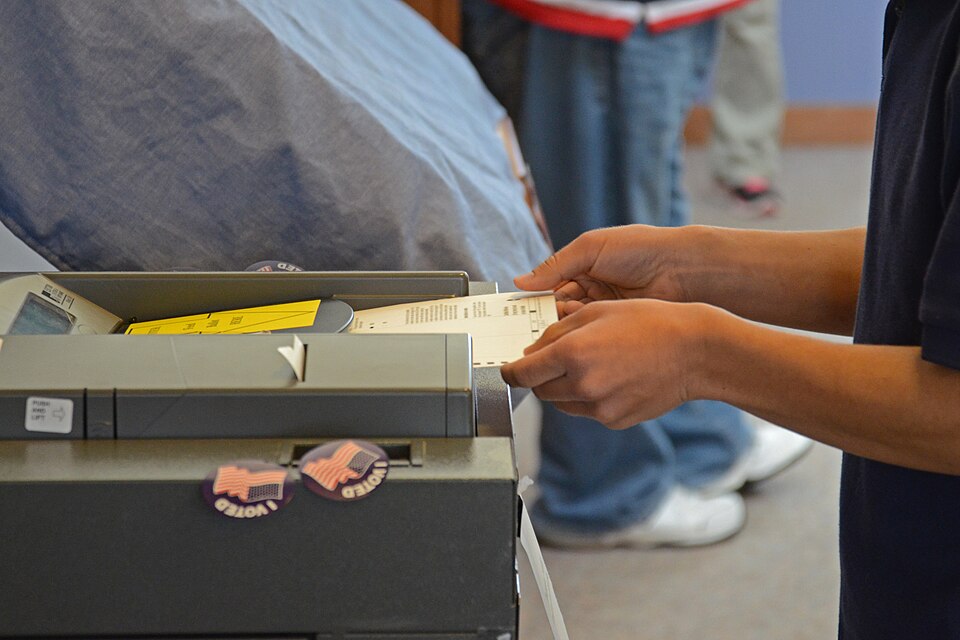
- Certifying Voting Systems:
The EAC develops testing and certification programs for voting system hardware and software to help improve security, reliability, and accuracy.
https://commons.wikimedia.org/wiki/File:Columbia_polls_run_smoothly_without_long_waits_(16886296870).jpg
https://creativecommons.org/licenses/by/2.0/
- Administering Grants:
Grants are distributed by the EAC to states to improve election security and infrastructure.
- Developing Guidelines:
To improve system accuracy, the EAC created Voluntary Voting System Guidelines (VVSG).
- Maintaining Forms
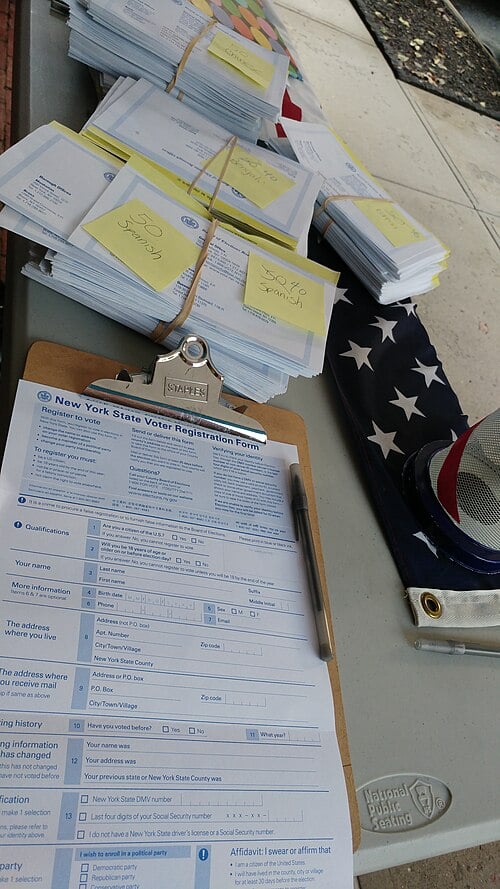
The EAC maintains the National Mail Voter Registration Form used by eligible voters in participating states and jurisdictions.
It’s good to point out that in no way does the EAC run, manage, or administer any elections directly. Those duties are left to state and local officers.

Details of the Dismissals
Two Democratic commissioners were fired from the EAC. Their names were Thomas Hicks and Benjamin Hovland. Meanwhile, the remaining Republican commissioner, Christy McCormick, resigned. This all occurred after the fourth seat of the commission became vacant earlier this year.
This past Thursday, July 9th, 2026, termination emails were sent to the Democratic commissioners around 4:00 p.m. E.T. Meanwhile, the remaining Republican commissioner received a phone call at around the same time from the White House requesting her resignation.
These recent dismissals mean that the EAC is currently without any sitting members. While agency staff can still perform routine duties under existing policies—such as distributing pre-approved grants and certifying voting systems—the lack of a quorum prevents the commission from voting on new guidelines or expanding programs. As of this writing, no replacements have been announced yet. Any new commissioners must be confirmed by the U.S. Senate, a process that can take significant time and leaves the agency’s long-term leadership uncertain.
Trump Administration’s Position
The White House made an official statement Friday concerning the dismissals. They declared that the President “reserves the right to remove individuals who may not be totally aligned with the important task of securing America’s elections and ensuring every legal vote is counted.” The White House said the personnel changes align with the administration’s stated policy goals of safeguarding elections from fraud and abuse ahead of the 2026 midterm elections.
Legal Basis for the Dismissals
Officials in the administration used a recent decision by the Supreme Court as part of their legal justification for the dismissals. The ruling narrowed some legal protections for leaders of certain independent federal agencies by reducing some legal protections that applied to such dismissals. According to the Court, agencies that perform executive functions may be subject to greater presidential removal authority than previously understood, though the precise application of that ruling to the Election Assistance Commission remains legally contested.
There have been prior altercations between the Trump administration and the EAC with respect to the execution of strict federal voting regulations as ordered by President Trump when he issued an order in 2025 to various federal agencies to bring about policies that concern electoral matters such as the introduction of proof-of-citizenship in the national voter registration form. Indeed, there have been legal struggles with the implementation of some parts of this order. Meanwhile, the White House holds that Article II of the U.S. Constitution puts all public officials and independent regulators who are engaged in performing executive functions under the President’s authority, and that the bipartisan structure of the EAC does not prevent its members from being removed from office by the President at any time.
Reactions from Lawmakers and Election Officials
Congressional Responses
- Democratic Lawmakers
Following the dismissals, Democratic officials strongly condemned the administration’s actions. Representative Joe Morelle (D-N.Y.) warned that the sudden firings would heavily disrupt election administration right before the midterms. Meanwhile, Democratic leadership and voting rights advocates cautioned that leaving the agency completely vacant severely damages the bipartisan framework built to protect U.S. voting systems.
- Republican Lawmakers
Public responses from Republican lawmakers have generally supported the administration’s authority to make the personnel changes, while others have not publicly commented. House Administration Committee Chairman Bryan Steil (R.-Wis.) defended the move, stating the president has the authority to ensure federal agency leadership aligns with the administration’s goals, though he urged swift action to nominate replacement commissioners.
Election Officials and Organizations
- State Election Officials:
Several election administration organizations expressed concern that the absence of commissioners leaves the EAC without a legal quorum and that the shutdown freezes critical federal functions.
- Nonpartisan Election Organizations:
Several nonpartisan election organizations emphasized that the firings will not disrupt the immediate execution of the upcoming midterm elections and clarified that the local election offices operate independently of Washington.
- Voting Rights Groups
The Brennan Center for Justice has challenged these administrative voter roll cleanups, arguing that they are an unlawful attempt to force strict proof-of-citizenship requirements onto national registration forms. Meanwhile, the Campaign Legal Center has publicly condemned the executive firings, warning that targeting independent agency leaders undermines public trust in democratic systems.
Conclusion
The resignation of the latest commissioner and the termination of the other two commissioners resulted in the U.S. Election Assistance Commission having no existing members at this very crucial time for the election cycle. Although state and local high officials will take care of carrying out the process of the 2026 elections, the fact that the commission is unable to do its job will create delays in some of its functions, such as certification of voting systems, grant distribution, and adoption of new federal election regulations, until the appointment and confirmation of new commissioners.
Such changes are defended by the White House as compliant with constitutional authority of the President over executive branch officials, while critics assume that these moves will erode the bipartisan nature of the commission established by Congress. The discussion concerning both legal and practical aspects of dismissals is in progress, while it is still unclear when new commissioners will be appointed, how fast the Senate will act with respect to them, and what influence the absence of a leader will have on the work of the commission.
Sources:
U.S. Election Assistance Commission. Voluntary Voting System Guidelines (VVSG).
Reuters. Trump fires Election Assistance Commission members ahead of midterms.
U.S. Election Assistance Commission. National Mail Voter Registration Form.
ProPublica. Trump Pushes Out Remaining Members of Bipartisan Election Commission Ahead of Midterms.
U.S. Election Assistance Commission. About the EAC.
Votebeat. Trump fires all Election Assistance Commission members, leaving agency unable to act.
U.S. Congress. H.R.3295 Help America Vote Act of 2002 (HAVA)
Editor’s Disclaimer: This article is intended solely to provide factual reporting on recent developments involving the U.S. Election Assistance Commission (EAC). Information has been compiled from official government resources and reputable news organizations available at the time of publication. Statements and viewpoints attributed to public officials, government representatives, lawmakers, and advocacy organizations are presented for journalistic purposes and do not necessarily reflect the views of Presence News. As this is a developing story, additional information may become available after publication. Readers are encouraged to consult the cited sources for the latest updates.
