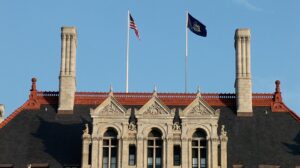
The modern American politics has long regarded New York as one of the safest States for Democrats when it comes to presidential elections since 1988, with Democratic nominees winning over New Yorkers with an average of 11 percentage points; however, this has not always been the case.
New York has been one of the leading battlegrounds for presidential elections for much of the 19th and 20th centuries. The state’s large population and large number of electoral votes meant that New York was very important to winning each election, as each party won and lost to the other. Candidates traveled extensively all over New York because winning New York usually made it easier to get to the White House.
The state’s evolution from a fiercely contested swing state to a reliable Democratic stronghold reflects more than changing election results. This reflects changes in population, urbanization, immigration, economic development, party coalitions, and the increasing importance of New York City to statewide politics. The Republican Party was able to achieve some success over the past ten years in elections, including a larger percentage of votes in the year 2004 and then again in 2024; the trend overall has remained stable for the past thirty years.
A State That Could Go Either Way
In the 19th century, New York State had been among the most competitive presidential states in the United States. At this time period, the two major political parties in the United States are the Democrats and the Republicans. As both political parties continue to develop their respective coalitions in order to build a larger base of voters, New York repeatedly becomes the battleground for tightly contested elections. Due to its growing population and economy, New York became an electoral prize that neither political party wanted to miss.
Political loyalties among New York City’ s rapidly growing urban area and the state’ s more numerous rural/small-town population created an unpredictable voting population that often switched its allegiance due to the national political environment. Though the two major political parties had their share of winning cycles, the margins by which they typically won were small and often decided by 1 or 2 percentage points.
Republican Dominance at the Turn of the Century
By the closing years of the nineteenth century, Republicans began establishing stronger support throughout New York. William McKinley’s decisive victories in 1896 and 1900 reflected both national trends and the state’s growing preference for Republican economic policies during a period of industrial expansion.
Following the assassination of President McKinley in 1901, the Republican advantage in New York was maintained through the popularity of its native son, Theodore Roosevelt. Due to Roosevelt’s energy and Progressive agenda, the party held a solid grip on the New York electorate while also maintaining competitive Democratic candidates in some parts of New York City.
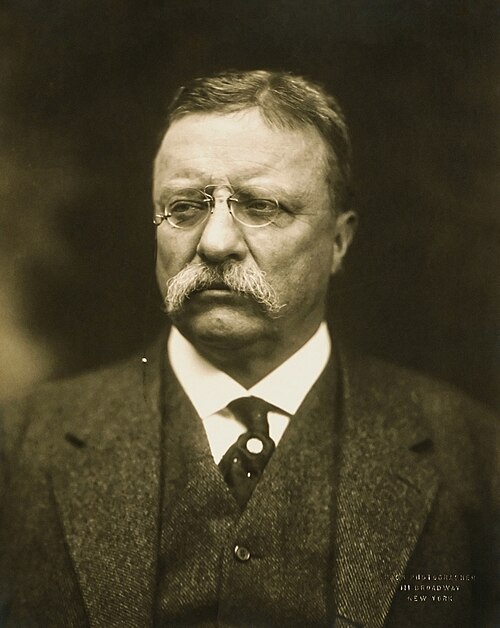
https://commons.wikimedia.org/wiki/File:T_Roosevelt.jpg
https://creativecommons.org/publicdomain/mark/1.0/
The continuing Republican success into the early 20th century under President Taft changed dramatically in 1912 when President Theodore Roosevelt chose to run against his former protégé, William Howard Taft, for the presidency on behalf of the newly formed Progressive Party (also known as the Bull Moose Party). The result of this split in the Republican Party was that Democrat Woodrow Wilson was elected President of the United States. New York’s history as a place of fierce competition continued in 1912.
The New Deal Reshapes the Political Landscape
Franklin D. Roosevelt was one of the most important political leaders in New York State when the Great Depression changed America forever. Franklin D. Roosevelt had a tremendous effect on altering American Politics as well as New York’s role in said alteration. He was a pivotal figure in transforming the American political landscape as a result of the onset of the Great Depression. Roosevelt served as Governor of New York prior to becoming President in 1932, when the people of New York overwhelmingly endorsed the New Deal by voting for Roosevelt in the New York elections.
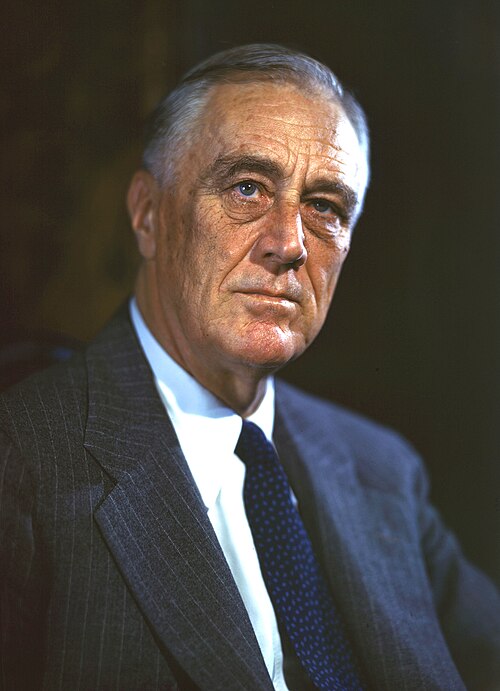
Roosevelt’s popularity helped strengthen Democratic support throughout New York, particularly in urban areas. Nevertheless, Republicans remained highly competitive statewide. New York continued producing nationally prominent Republican leaders, including Thomas E. Dewey, who twice carried the state during his presidential campaigns despite losing nationally.
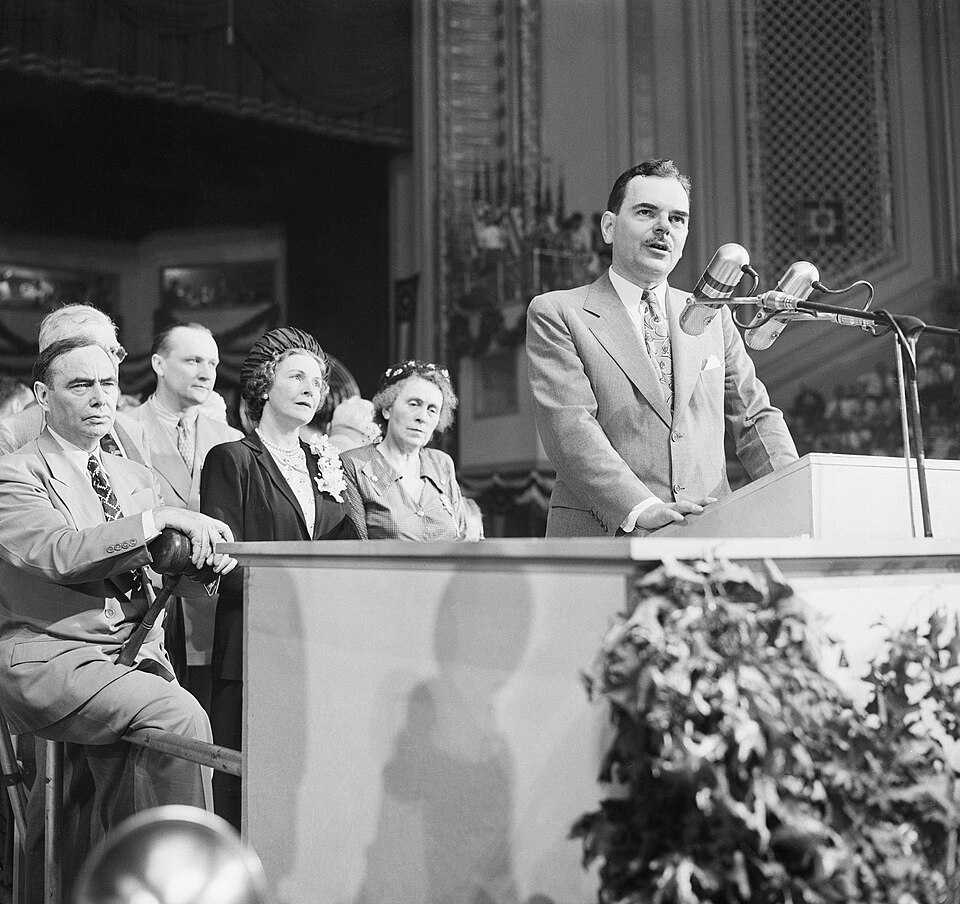
https://commons.wikimedia.org/wiki/File:Thomas_Dewey_Accepting_Nomination.jpg
https://creativecommons.org/publicdomain/mark/1.0/
Postwar Competition Continues
The decades following World War II demonstrated that New York had not yet become a reliably Democratic state. Dwight D. Eisenhower won convincing victories in both 1952 and 1956, carrying New York by comfortable margins while remaining personally popular across much of the electorate.
The elections of the 1960s and 1970s reflected the state’s continuing competitiveness. John F. Kennedy carried New York in 1960, Lyndon B. Johnson won overwhelmingly in 1964, and Richard Nixon later returned the state to the Republican column in both 1968 and 1972. These frequent shifts illustrated that New York voters remained willing to support candidates from either major party, depending on the political climate.
The Democratic Realignment
The political landscape of New York has changed dramatically since the 1980’s and continues to evolve through the 1990s and beyond. Factors such as increased population growth in New York City and surrounding suburbs, changing demographic patterns, the demise of the Republican Party in most of the Northeast, and changing political coalitions in the nation have all supported winning Democratic presidential candidates.
Bill Clinton’s victories in 1992 and 1996 firmly established New York as part of the Democratic Party’s electoral foundation. Although Republicans continued performing strongly in many rural and upstate counties, Democratic margins in New York City and several suburban counties consistently outweighed Republican gains elsewhere in the state.
Twenty-First Century Trends
The first quarter of the twenty-first century reinforced New York’s Democratic reputation. Al Gore, John Kerry, Barack Obama, Hillary Clinton, Joe Biden, and Kamala Harris all carried the state comfortably, even as national elections often remained closely contested.
Republican nominees, however, have periodically shown signs of renewed competitiveness. George W. Bush improved Republican performance in 2004, and Donald Trump posted the party’s strongest statewide showing in years during the 2024 election. Republican gains in several counties suggested that while New York remains safely Democratic overall, electoral dynamics continue to evolve.
Looking Ahead
Past improvements by the Republican Party have helped to create New York State as one of the Democratic Party’s top states for election success. The continued growth and diversity of New York’s urban areas, combined with a history of long-standing voting behavior, have provided Democrats with an ongoing statewide advantage.
Like other states, the history of New York has shown that no one party maintains dominance for any significant period. For almost 200 years New York has experienced being both a competitive battleground, to a Republican stronghold, to a swing state and ultimately to what can be described now as a Democratic voting bastion. Whether or not the next election cycle continues this pattern will remain open to interpretation until after the next election cycle is complete; the history of New York’s voting records illustrates how rapidly the political landscape has changed from one party system to another throughout New York’s long and storied political past.
Sources:
National Archives – Electoral College Results
Encyclopaedia Britannica – United States Presidential Election Results
270toWin – New York Presidential Voting History
Federal Election Commission – Election results and voting information
Miller Center (University of Virginia) – U.S. Presidents
Office of the Historian (U.S. House of Representatives)
U.S. Census Bureau – Historical Census Data
Editor’s Disclaimer: This article is a historical overview of New York’s presidential election history and political evolution based on publicly available election records, government publications, and other reputable historical sources. It is intended for informational and educational purposes and does not endorse or oppose any political party, candidate, or viewpoint. While every effort has been made to ensure factual accuracy, historical events and political developments may be interpreted differently by scholars and researchers. Readers are encouraged to consult the cited sources for additional context and information.
