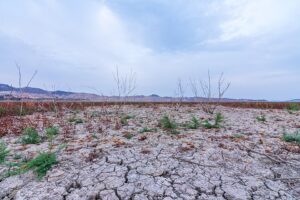
The March 17, 2024, UN World Water Development Report highlights that worsening water scarcity could significantly threaten global stability and prosperity if not addressed. The international response has so far been limited. At the same time, a quieter shift is underway: we can increasingly describe it as a water diplomacy crisis.
The Foundations of Water Diplomacy
For years, water diplomacy has promoted stability through cooperation, with shared waterways managed by treaties and joint institutions rather than conflict. Water diplomacy aimed to turn scarcity into cooperation, but growing pressure is straining—and in some cases quietly undermining—these governance mechanisms. These mounting pressures are contributing to a growing strain on water governance systems.
These frameworks have historically reduced conflict but are now under growing strain, fueling what some analysts describe as a growing crisis in water diplomacy.
Water Scarcity as a Systemic Global Risk
The UN World Water Development Report 2024 warns that the global water crisis is intensifying due to climate change, population growth, and weak governance. The report emphasizes that water scarcity now extends beyond arid regions and is becoming a widespread global challenge. As the report notes, “roughly half of the world’s population experiences severe water scarcity for at least part of the year.” This framing is critical: water is now a systemic risk to economies, food systems, and geopolitical stability.
How Water Cooperation Has Traditionally Worked
Water diplomacy and bilateral cooperation both assume collaboration as the primary mode of negotiation.
Historically, agreements have managed international river basins by allocating water, sharing data, and resolving disputes. Additionally, institutions have supported systems for the peaceful resolution of disputes over shared water resources.
Climate Change and the Breakdown of Agreements
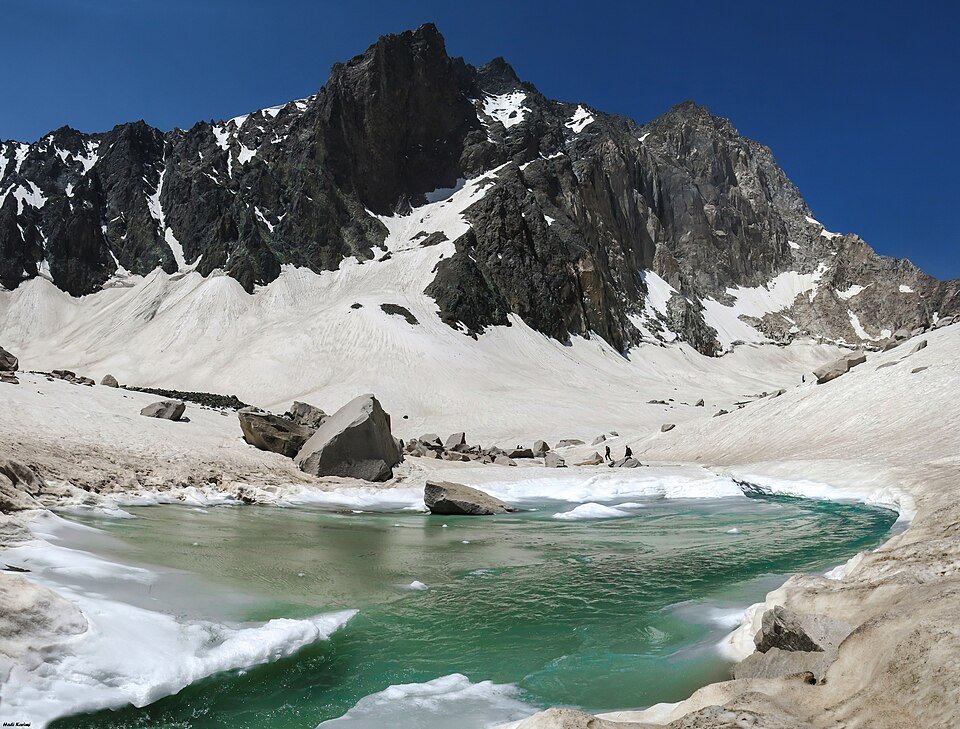
Nonetheless, due to rapid changes in environmental conditions, the future stability of these agreements is becoming increasingly uncertain. Climate change is making water flows less reliable as glacial melt, rising aridity, and irregular rainfall alter river systems.
The existing treaties do not cover the new conditions of the rivers. At the same time, the political landscape is shifting. Rising nationalism and economic competition are undermining the trust required for effective river management negotiations.
Credit:
Photo by Hadi Karimi, via Wikimedia Commons (CC BY 3.0)
Source: https://commons.wikimedia.org/wiki/File:Glacial_lake_in_Alam_Kuh_by_Hadi_Karimi.jpg
License: https://creativecommons.org/licenses/by/3.0/
Rising Water Conflict and Violence
This trend extends beyond isolated regions, spanning multiple continents and involving both state and non-state actors.
Forms of Modern Water Conflict
Various forms of conflict arise from large-scale infrastructure development, such as dams that limit downstream access to water; from attacks on water systems (e.g., pipelines, treatment plants, reservoirs) as part of broader disputes; and from water scarcity—even in relatively stable regions—which drives migration, social upheaval, and potential economic collapse.
Weak Governance and Fragile Agreements
This trend is concerning because of rising tensions and diminished ability to resolve conflicts. There are many transboundary water basins without sufficient agreement, and older treaties may not be suitable because they do not reflect current conditions or are not enforceable in terms of promoting peace.
The Stockholm International Water Institute has confirmed that incomplete or weak arrangements govern large portions of shared water, creating disputes that remain unresolved.
The Shift from Cooperation to Competition
At the same time, the geopolitical framing of water is shifting. Water was once primarily considered an issue of development or the environment; however, it is now increasingly viewed as a matter of security and strategic concern. The Council on Foreign Relations has pointed to water stress as being a force behind instability in areas experiencing other crises, such as political or economic. As the availability of water decreases, it is also becoming more strategic (i.e., water is something that countries will want to possess, protect, and use against their enemies).
This shift has profound implications for diplomacy. When water is seen as a shared resource, cooperation is the logical approach. But when it is seen as a strategic asset, competition often takes precedence. This transition from cooperation to competition is at the heart of what can be described as the “silent collapse” of water diplomacy.
The Silent Collapse: A Water Diplomacy Crisis
The term ‘silent’ is important. In contrast to conventional conflicts, the breakdown of water relations does not typically produce an immediate or newsworthy crisis. There is no abrupt termination of a treaty between two countries or sudden failure of an organization. The process is much slower than that; stalled negotiations may also cause the sharing of data between the parties to fail, thereby destroying trust between the parties. Over time, these tiny fractures accumulate and begin to undermine the totality of the systems in question.
Understanding the Deeper Drivers of Conflict
Some analysts have begun to recognize this pattern. The 2024 World Water Development Report: Water for Prosperity and Peace highlights how water management supports both prosperity and peace. Water disputes often involve many different types of issues beyond simply water. They may arise from larger conflict areas such as politics, economy, and society; this makes them harder to resolve than traditional diplomatic means.
Case Study: The Nile Basin

Photo by Emmanuel Kwizera, via Wikimedia Commons (CC BY-SA 4.0)
Source: https://commons.wikimedia.org/wiki/File:An_aerial_of_Nyabarongo_River_from_Nyungwe_National_Park_to_River_Nile._Emmanuel_Kwizera.jpg
License: https://creativecommons.org/licenses/by-sa/4.0/
An example of these dynamics is seen with significant river systems that are still in dispute. For example, long-standing tensions exist regarding the construction of dams and the allocation of water from the Nile basin. Negotiations are continuing; however, progress has been slow, and mutual confidence continues to be low between those involved in the negotiations. Additionally, there are similar issues in other places, with upstream and downstream states having different desired outcomes, and while they may be able to find some common ground, they do not have many options available through which to do so.
A Widening Governance Gap
These cases illustrate a broader trend: water diplomacy is struggling to adapt to a more complex and volatile world. Frameworks created in the past 20 years are not adequate for today’s large and fast-growing issues; as an example, climate change is rapidly exacerbating changes in the environment, while a lack of geopolitical unity only makes working together harder. The result is a widening gap between how much water governance is needed and how much capacity exists to achieve it.
Global Consequences Across Sectors
This gap has great implications for water, which is the basis for agriculture, energy, and public health. Disruptions in water systems will cause a ripple effect throughout all sectors, causing food insecurity, economic losses, and humanitarian crises. Thus, water diplomacy challenges present not only as an issue of diplomacy, but also as a global risk with long-term impact.
Rethinking Water Diplomacy
Water diplomacy is not doomed to collapse, even though there are many obstacles. There continue to be instances of successful collaboration and a growing realization that new methods are required. However, in order to change course, we need to rethink both the idea and how we execute it. First, water governance has to be more adaptive. Agreements have to establish mechanisms for flexibility and modification that will cope with both variability and uncertainty. Secondly, increased resources must be allocated towards supporting institutions that facilitate collaboration, including but not limited to basin organizations.
Conclusion: A Crisis Already Underway
Above all else, we need to reaffirm our commitment to working together through cooperative frameworks. It is not easy to do this now when we are faced with increased competition from all quarters; however, if we do not, then we will live in a world where water will lead to ongoing conflict. Signs of this reality are visible today; increased violence, declining agreements, and changing international priorities indicate a system under pressure. These changes are happening gradually, small and piecemeal; it is possible that they could go unnoticed until it is too late. We should not think that the collapse of water diplomacy is something that can happen sometime in the future; it is already happening. The issue is not whether it will happen, but whether or not we will see it in time.
Sources:
UN-Water — “UN World Water Development Report 2024: Water for Prosperity and Peace”
Pacific Institute — “Water Conflict Chronology”
The Guardian — “Dramatic rise in water-related violence recorded since 2022”
UNESCO — “UN World Water Development Report 2024: Statistics”
Editor’s Disclaimer: This article reflects analysis and interpretation of current global water trends and publicly available reports. While every effort has been made to ensure accuracy, the views expressed are those of the author and do not necessarily reflect those of the publisher.
