For generations, buying a brand-new vehicle came with an almost unavoidable financial reality: the moment you drove it off the dealership lot, it became a used vehicle and started losing value.
Then COVID-19 turned the automotive market upside down.
During one of the strangest periods in the history of the American automobile market, some drivers found themselves in an unusual position. Trucks and cars they had purchased new a year or two earlier — and had already put thousands or even tens of thousands of miles on — could suddenly be worth as much as or even more than what they originally paid.
In some cases, dealerships were actively trying to buy those vehicles back.
COVID-19 disrupted the normal cycle of depreciation
Vehicle depreciation is normally predictable. A new truck becomes a used truck, mileage accumulates and its value generally declines over time.
But the COVID-19 pandemic disrupted both sides of that equation.
Automobile factories temporarily shut down or reduced production, while manufacturers struggled with supply-chain disruptions and shortages of critical components, particularly semiconductor chips.
The U.S. Bureau of Labor Statistics later noted that new-car production declined during the pandemic because of factory shutdowns and supply-chain problems. Fewer new vehicles also meant fewer trade-ins, reducing the supply of used vehicles at a time when consumers were still looking for transportation.
The result was a dramatic increase in used vehicle prices.
By June 2021, prices for used cars and trucks had increased 43.3% compared with February 2020, the final month before the pandemic began significantly disrupting the U.S. economy. Source
In June 2021 alone, the government’s used cars and trucks price index jumped 10.5% in a single month. It was the largest monthly increase recorded since the index was established in 1953.
By July, used car and truck prices were still 41.7% higher than a year earlier.
Dealerships needed vehicles to sell
The shortage created an unusual problem for automobile dealers.
Dealerships traditionally depend on manufacturers to continuously replenish their inventories with new vehicles. Customers buy those vehicles and frequently trade in older ones, supplying dealerships with additional used inventory.
When new-vehicle production slowed, that cycle was disrupted.
Suddenly, a relatively new truck sitting in someone’s driveway could be extremely valuable to a dealership that had customers looking for vehicles but fewer new ones arriving from manufacturers.
Instead of waiting for customers to come in looking for a new vehicle, dealerships and automotive retailers increasingly had an incentive to find people willing to sell the vehicles they already owned.
That created a rare opportunity for some owners.
I sold my truck back for more than I paid
I happened to be one of those vehicle owners.
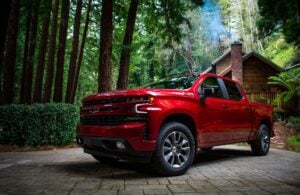
I had purchased a new truck from a dealership in 2020 before the vehicle shortage reached its extraordinary peak. Roughly a year later, after I had already driven the truck (2019 Chevy Silverado now had 25,000 miles on it) and accumulated mileage on it, the market had changed dramatically.
Under normal circumstances, that truck should have been worth less than what I paid for it.
Instead, the dealership bought it back for more than my original purchase price.
I had essentially been able to own and drive a brand-new truck for approximately a year and then sell the now-used vehicle for more money than I originally paid for it.
It was one of those financial situations that would have sounded almost impossible in a normal automotive market.
Trucks were particularly valuable
Pickup trucks were already among America’s most popular vehicles when the pandemic began, and the broader shortage made late-model used vehicles increasingly valuable.
Federal consumer expenditure data illustrates how dramatically the market shifted.
The average amount reported by consumer units purchasing a new truck increased from about $33,090 in 2019 to $43,670 in 2021, according to the Bureau of Labor Statistics. For used trucks, the corresponding figure increased from about $14,487 in 2019 to $19,012 in 2021.
The situation wasn’t simply a temporary fluctuation lasting a few weeks. Vehicle supply constraints continued into 2022, with BLS citing ongoing supply-chain problems and microchip shortages as factors keeping new vehicle inventories depressed.
A rare moment when depreciation temporarily worked backward
It would be an exaggeration to say that every person who purchased a truck before or during the early pandemic could sell it for a profit.
Purchase price, model, mileage, location, financing, incentives and timing all mattered.
But the broader phenomenon was very real.
Used cars and trucks increased 45.2% in price during the 12 months ending in June 2021 — at the time, the largest 12-month increase ever recorded for the government’s used vehicle index.
By December 2021, used cars and trucks were still 37.3% more expensive than a year earlier, while new vehicles were up 11.8%.
For consumers accustomed to watching vehicles depreciate every year, it represented an extraordinary reversal.
A truck with 10,000 or 20,000 miles wasn’t necessarily viewed simply as a depreciating used vehicle anymore. During the height of the shortage, its biggest advantage was that it already existed and was available for someone to buy.
Could it ever happen again?
The COVID-19 vehicle market demonstrated what can happen when manufacturing capacity, global supply chains and consumer demand become severely disconnected.
It would take an unusual combination of circumstances for used vehicles to appreciate that dramatically again. Automobiles are generally depreciating assets, and consumers should not purchase a new truck expecting to sell it for a profit later.
But for a brief period during the pandemic, the traditional rules of vehicle ownership were turned upside down.
Some people bought new vehicles, drove them for a year or two, accumulated thousands of miles — and then discovered that the vehicle sitting in their driveway was worth more than when they bought it.
I was fortunate enough to be one of them.
For once, driving a brand-new truck off the dealership lot didn’t necessarily mean watching its value immediately disappear.
In one of the strangest automobile markets in modern American history, the miles were going up — and for some owners, so was the value.
