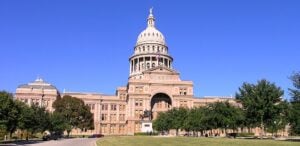
The state of Texas, also known as the Lone Star State, is a location all its own. It’s the second largest state in the United States and blends various types of rural, urban, suburban, and multi-ethnic cultures. Nonetheless, although Texas is not the ‘Deep South’ per se, it is considered part of the Southern United States census area. Texas has shared many of the South’s presidential voting patterns over the years.
For years, Texas was a part of the ‘Solid South’, which voted primarily Democratic for years in presidential elections. With the exception of a few elections, Texas voted solidly Democratic. However, Texas shifted sharply in the late twentieth century and hasn’t voted Democratic for president since 1976. Although Texas hasn’t backed a Democratic presidential nominee in 50 years, recent demographic and suburban voting shifts have made it more competitive.
Democratic Beginnings
Texas joined the Union in 1845 and voted in its first presidential election in 1848. Early settlement was concentrated in the state’s rural eastern regions, which strongly favored Democratic candidates. Democrats carried Texas in 1848, 1852, and 1856, while Southern Democrat John C. Breckinridge won the state decisively in 1860 despite Abraham Lincoln’s national victory. The Civil War and Reconstruction would temporarily interrupt Texas’ longstanding Democratic voting pattern.
Civil War and Reconstruction
The Civil War marked a major turning point in American history. After Texas seceded from the Union in 1861, it did not participate in the 1864 or 1868 presidential elections because of the war and Reconstruction. When Texas returned to voting in 1872, most Democrats backed Liberal Republican Horace Greeley in opposition to President Ulysses S. Grant’s Reconstruction policies. The shift was temporary, however, as Texas soon resumed its long tradition of supporting Democratic presidential nominees.
Back in the Democratic Fold
The 1876 U.S. Presidential election pitted Democratic nominee Samuel J. Tilden against Rutherford B. Hayes, and Texas, whose Democratic Party had regained control in the state, voted overwhelmingly for the former. For the next 50 years, Texas would vote overwhelmingly for the Democratic nominee until 1928, when there was a brief disturbance.
1928 Election
The Democratic nominee in the 1928 U.S. Presidential election was Al Smith. Many Southern Democrats, including those in Texas, opposed Al Smith because of his Catholicism and opposition to Prohibition. As a result, Herbert Hoover became the first Republican presidential nominee to win Texas, albeit narrowly.
The Aftermath of the Great Depression
Any support that had been given to Hoover in 1928 had quickly eroded by the time of the 1932 U.S. Presidential election. The country had entered the Great Depression, and people were suffering economically. In Franklin D. Roosevelt’s first landslide win, he won every single county in Texas, which would be the last time that this would occur. However, despite the fact that a small number of counties would flip over the next few presidential elections, FDR would win Texas by huge margins in all of his other national landslide wins. When FDR died in 1945, his Vice-President, Harry Truman, assumed the office of U.S. President. Due to some of Truman’s policies, there began to be a backlash from many southern Democrats. Nonetheless, many Texas Democrats remained Truman loyalists as evidenced by his comfortable win in the state in 1948.
Texas Liked Ike
In the 1952 U.S. presidential election, Republican Dwight D. Eisenhower, known as “Ike,” faced Democrat Adlai Stevenson. Although raised in Kansas, Eisenhower was born in Texas. Many conservative Texas Democrats backed him because of his support for state control of offshore oil rights. As a result, Eisenhower became the first Republican since Herbert Hoover to win Texas and the first U.S. president born in the state. He carried Texas by an even larger margin in 1956, becoming the first Republican to win the state by double digits. However, Republicans would not win Texas again at the presidential level until 1972, as Democrats reclaimed the state throughout the 1960s, albeit by narrower margins than during the Franklin D. Roosevelt era.
1960
In what has been considered one of the closest presidential elections in U.S. history, the 1960 race was very memorable to say the least. This time, it was Democratic nominee John F. Kennedy, being challenged by Republican Richard Nixon, who was Eisenhower’s vice-president. However, like in 1928, when many Texas voters were skeptical of Al Smith, the same hesitance was shown towards Kennedy, who, like Smith, was also Catholic. Kennedy chose Lyndon Johnson, a U.S. Senator from Texas, as his running mate to try to alleviate some of the resistance towards him in many southern states, including Texas, which has always been comprised of many votes in the electoral college. Kennedy would end up winning Texas narrowly in 1960, which reflected his extremely close win nationwide. Unfortunately, JFK would become more synonymous with Texas for another reason.
JFK’s Assassination/A Texan Assumes the Presidency
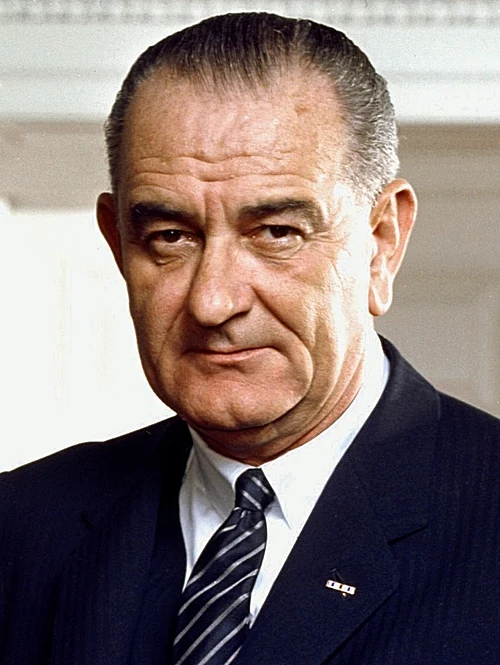
In November 1963, President John F. Kennedy was assassinated while campaigning in Dallas, and Vice President Lyndon Johnson, a Texas native, assumed the presidency. By the 1964 election, much of the nation was still mourning, while Republican nominee Barry Goldwater was viewed by many as too conservative. Although Goldwater carried several Deep South states, Texas backed its native son, giving Johnson a decisive victory. Johnson became the second U.S. president born in Texas and remains the last to have both been born and raised in the state. His 1964 victory was the last time a Democratic presidential nominee won Texas by double digits, though not the last Democratic win in the state.
1968
In 1968, incumbent U.S. President Lyndon Johnson, fearing a defeat in that year’s presidential election due to his low poll numbers, decided to drop out of the race. Therefore, his Vice-President, Hubert Humphrey, ended up becoming the Democratic nominee that year, while Richard Nixon would once again be the Republican nominee, and former Alabama Governor George Wallace ran as an American Independent. Despite not having the local appeal of Johnson in Texas, Humphrey was able to pull off a very narrow win in the Lone Star State. Some of this was attributed to the fact that Humphrey favored the abolition of the poll tax via the Twenty-Fourth Amendment that permitted previously disfranchised Mexican-Americans to vote for the first time. Three counties in South Texas provided Humphrey with over thirty percent of his margin.
Republican Landslide
Just like how Republican Barry Goldwater was seen as too conservative for the mainstream in 1964, 1972 Democratic nominee George McGovern was viewed by many as too far to the left of most Americans. In 1972, incumbent president Richard Nixon would end up winning one of the largest landslides in U.S. history, and his margins in Texas reflected this pattern. Texas went solidly for Nixon that year and, perhaps, this may have been an indicator that the Republican Party was about to take over Texas at the presidential level, but not until after one last Democratic victory.
One Last Democratic Win
The 1976 U.S. presidential election was another closely contested race. Incumbent Republican President Gerald Ford, who had assumed office after Richard Nixon’s resignation, faced Democratic nominee Jimmy Carter, the former governor of Georgia. Carter’s image as a Washington outsider, his Southern roots, and his appeal to both African American voters and many white Southern Democrats helped him build a broad coalition. In Texas, he performed well among rural, working-class, urban, and minority voters, although many suburban voters favored Ford. Carter narrowly carried Texas, marking the last time a Democratic presidential nominee has won the state.
Reagan Takes Over
By 1980, President Jimmy Carter faced high inflation, unemployment, and the Iran hostage crisis, weakening his standing with voters. Republican Ronald Reagan capitalized on the nation’s desire for change and defeated Carter in a decisive victory. Although Carter retained support in parts of the South and won his home state of Georgia, Reagan carried much of the region, including Texas, Florida, Virginia, and Oklahoma, by double-digit margins.
President Jimmy Carter campaigned heavily in Texas in 1980 but lost the state decisively to Ronald Reagan as Republican support expanded, particularly in the suburbs. Even so, Carter received just over 40 percent of the vote and was the last Democratic nominee to carry many Texas counties until later campaigns by Mike Dukakis and Bill Clinton. Reagan’s victory marked the beginning of Texas’ uninterrupted Republican winning streak in presidential elections.
Republicans Dominate Texas
The 1984 U.S. Presidential election saw Ronald Reagan win a second, and even more decisive, landslide over Walter Mondale, who had served as Carter’s vice president. Regardless of who or what political party was responsible for it, the economy had recovered by 1984, and Reagan had endeared himself to many Americans. That year, Reagan won 49 states just like Nixon had in 1972. The margins in Texas certainly reflected Reagan’s massive national victory in 1984.
Four years later, Reagan’s Vice-President, George H.W. Bush, became the Republican nominee. Although a New Englander by birth, Bush had settled his family in Texas. He continued the ongoing Republican dominance as he gave his party a third consecutive landslide win in 1988. However, some urban and working-class voters were not as supportive this go around. Nonetheless, in 1988, Bush became the second U.S. President to claim Texas as his home state, even though he didn’t grow up there. Although Bush won his home state of Texas by double digits in 1988, his opponent, Democratic nominee Mike Dukakis, got a little over 40 percent of the vote that year, even becoming the last Democratic nominee to carry a handful of Texas counties that year. Dukakis had chosen Lloyd Bentsen, a U.S. Senator from Texas, as his running mate.
Close Battles
By 1992, President George H.W. Bush faced an economic slowdown, conservative dissatisfaction, and a strong challenge from Democrat Bill Clinton and Independent Ross Perot, a Texas native. Although Bush carried his home state of Texas, his margin was the narrowest for a Republican there since 1976. Clinton became the last Democratic nominee to carry several Texas counties, while Perot recorded his strongest performance in Texas and won a number of counties across the state.
With the economy improving, President Bill Clinton defeated Republican Bob Dole in the 1996 election. Although he did not carry Texas, Clinton lost the state by single digits, receiving 43.83 percent of the vote. He remained competitive in parts of rural and working-class Texas and became the last Democratic nominee to carry or strongly contest several counties in those areas. It would be the last time a Democrat lost Texas by single digits until Hillary Clinton’s 2016 campaign.
Another Texas Presidency

The 2000 U.S. presidential election was the closest since 1960, with Vice President Al Gore facing Texas Governor George W. Bush. Although born in Connecticut, Bush was raised in Texas and carried his home state by a wide margin. Gore, despite being from neighboring Tennessee, failed to match Bill Clinton’s Southern appeal and did not receive 40 percent of the vote in either Texas or Oklahoma. Following the disputed Florida recount and a Supreme Court ruling, Bush became president, the third to claim Texas as his home state and the second to be the son of a former president.
George W. Bush’s presidency was defined early by the September 11, 2001, terrorist attacks, which initially gave him high approval ratings. By the 2004 election, however, opinion had become more divided as debate over the wars in the Middle East intensified. Bush defeated Democrat John Kerry nationally and carried his home state of Texas by a decisive margin. The election marked the last time a Democratic presidential nominee failed to receive 40 percent of the Texas vote, and Bush became the first president to claim Texas as his home state and win two elected terms.
Democrats Start To Gain Small Ground
The 2008 election took place amid a severe financial crisis and declining public support for the wars in the Middle East. Democrat Barack Obama campaigned on change and defeated Republican John McCain nationally. Texas remained in the Republican column, though McCain’s margin was smaller than George W. Bush’s in 2004. Obama received just over 40 percent of the Texas vote, becoming the first Democratic nominee since Bill Clinton to reach that mark. While Republicans continued to dominate most rural areas, Obama made modest gains in some suburban and working-class counties, trends that would influence future elections.
President Barack Obama won reelection in 2012 over Republican Mitt Romney, though by a smaller margin than in 2008. Texas again backed the Republican nominee, with Romney improving on John McCain’s 2008 performance and posting the state’s strongest Republican showing since George W. Bush’s 2004 victory. Even so, Obama received just over 40 percent of the Texas vote, while Romney became the last Republican nominee to carry several suburban counties before voting patterns began to shift in subsequent elections.
Back to the Single Digits
During the 2020 presidential election, the COVID-19 pandemic played a key role as Republican Donald Trump was challenged by Democrat Joe Biden, who had previously served as Barack Obama’s vice president. Biden’s campaign focused on the idea of restoring order following the pandemic, and he was successful nationwide. In Texas, however, Republicans remained in power. Trump boosted his support among rural voters and made further inroads into South Texas while Biden performed better in suburban areas. Although Trump won the state of Texas by a margin of 5.58%, Biden achieved the best result for Democrats in decades.
Republican Rebound
Donald Trump once again achieved the status of Republican candidate for the presidency despite having faced two impeachments and being confronted with various legal issues. When President Joe Biden withdrew from the presidential race after performing poorly in a debate, Vice President Kamala Harris became the Democratic candidate. While campaign issues revolved around inflation and the economy, votes started shifting from Democrats to Republicans halfway through the campaign. Trump became the first president since Grover Cleveland to serve non-consecutive terms, which made him a winner in the election.
In Texas, Trump’s performance was even better than it had been in the past two elections, as he scored a double-digit victory supported by the powerful rural and South Texas voters, and also made some progress among the suburban populace. While Kamala Harris managed to get slightly over forty percent of the votes, Trump outperformed McCain, but still failed to exceed the achievements of either Mitt Romney or George W. Bush in his presidential elections.
Looking Forward
Texas is among the four states that have not cast their vote for a Democratic president since 1976. Similar to large portions of the South, Texas also transitioned from being a long-time Democratic bastion to one that is solidly Republican. Democrats such as Jimmy Carter, Bill Clinton, and Barack Obama were still able to attract some voters; however, in recent elections, the Republicans have been maintaining their edge.
Sources:
Texas Secretary of State. Presidential Election Results.
National Archives – Electoral College Results
Library of Congress – Presidential Elections and Voting in U.S. History
Texas State Historical Association – Handbook of Texas
The American Presidency Project (University of California, Santa Barbara)
Encyclopaedia Britannica – Texas
Library of Congress – Texas: Selected Primary Sources
Miller Center – American President
Editor’s Disclaimer: This article is intended as a historical overview of Texas’ presidential voting history from 1848 through the 2024 election. It is based on official election records and information from government agencies, academic institutions, and established historical references available at the time of publication.
Election outcomes, demographic trends, and political realignments are summarized for historical and educational purposes and should not be interpreted as endorsements of, or opposition to, any political party, candidate, or ideology. Because history and political science are subjects of ongoing scholarly research, interpretations of certain events and long-term voting trends may vary among historians and political scientists.
Presence News is committed to accuracy, fairness, and impartial reporting. If a factual error is identified, we will review the information and make corrections as appropriate.
