
Five months after Australia introduced a law banning social media access for children under 16, the United Kingdom announced plans for a similar restriction targeting the same age group.
Several other countries, including France, Norway, and some U.S. states, have also proposed or implemented measures requiring parental consent or stricter age verification for young users.
Prime Minister Keir Starmer announced the government’s decision in a video statement, saying his government is taking the step for children’s safety and happiness. Speaking as both a parent and the country’s leader, he acknowledged that the decision would face resistance but argued that many nations are moving in the same direction.
UK PM’s Statement
Prime Minister Keir Starmer said the government decided to move forward with the restriction after reviewing evidence and consulting with parents. He argued that excessive social media use can negatively affect children’s mental health and well-being by reducing time spent sleeping, playing, and interacting with family. Starmer also acknowledged that the policy is likely to face opposition from major technology companies but said the government believes action is necessary to address growing concerns about the impact of social media on young people.
“Thousands of parents say their children are addicted to social media. It can leave them trapped in a cycle of endless scrolling that displaces play, sleep, and time with family. It can harm their mental health.”
Starmer said the government had studied evidence from other countries that have adopted similar measures and pledged to adapt its approach as technology continues to evolve.
“This decision will face resistance from some of the most powerful companies in the world, but we will take them on because the need for action could not be clearer.”
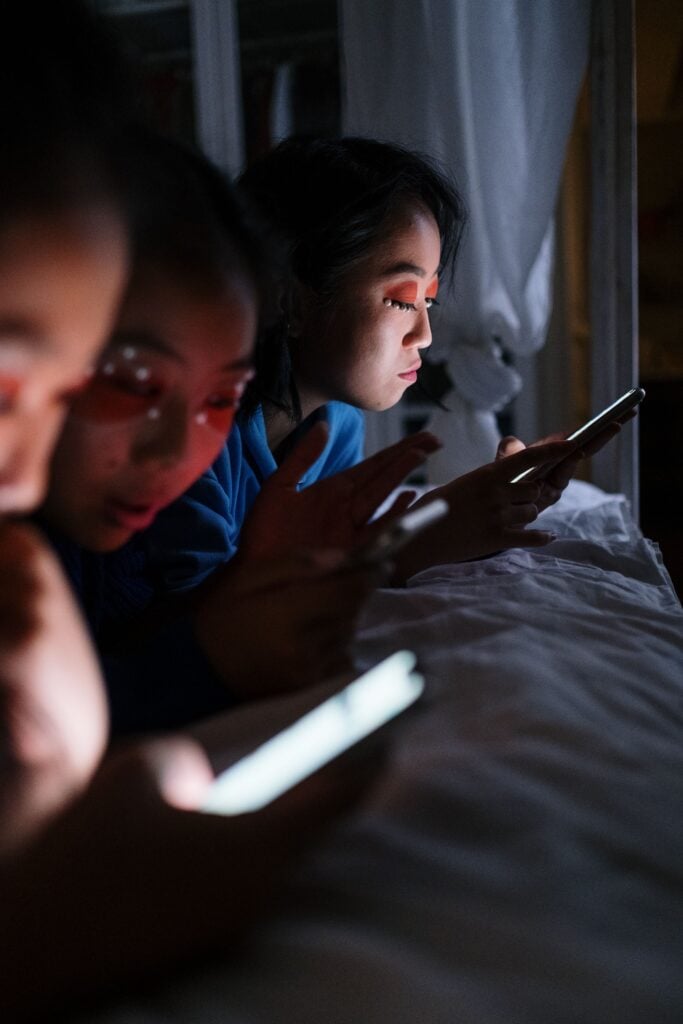
Teen Mental Health and Social Media
Social media has increasingly become part of the global mental health debate, affecting users of all ages. For children and teenagers, however, experts argue that the risks are often greater because they are more vulnerable to online scams, cyberbullying, harmful content, and excessive screen time.
Several studies have found that passively viewing curated social media feeds without actively interacting may negatively affect mood and overall well-being. Other studies have linked evening social media use with lower sleep quality and higher levels of anxiety and depression among adolescents.
According to a survey by Pew Research Center, YouTube was used by 95% of U.S. teens ages 13 to 17 in 2022. The survey found that 67% of teens reported using TikTok, while 62% reported using Instagram and 59% reported using Snapchat. Survey data also suggests that Facebook and X (formerly Twitter) have become less popular among teenagers in recent years.
Is a Ban the Complete Solution?
Some critics of age-based restrictions argue that delaying access could increase curiosity or encourage unsupervised use once restrictions are lifted, although evidence on this question remains limited.

The Bigger Question
The broader policy debate extends beyond whether children should have access to social media. Digital platforms are already deeply integrated into education, communication, and entertainment.
Policymakers continue to debate whether restrictions alone are sufficient or whether greater emphasis should also be placed on digital literacy education, parental guidance, and online safety training.
Supporters of digital literacy initiatives argue that teaching responsible internet use and critical-thinking skills may help prepare young people to navigate digital environments safely and effectively.
Many researchers, educators, and policymakers argue that a combination of regulation and education may be more effective than either approach alone. Advocates of digital literacy programs contend that helping children develop safe online habits may be an important complement to age-based restrictions.
Sources
Psychology Today – “How Social Media Really Impacts Teen Mental Health”
Pew Research Center – “Teens, Social Media and Technology 2022”
Editor’s Disclaimer: This article reports on government proposals, policies, public statements, and research related to social media use among young people. References to potential benefits or risks associated with social media are based on cited studies, official statements, and expert opinions available at the time of publication. Presence News does not endorse any particular policy position regarding social media regulation and encourages readers to review multiple sources and perspectives when evaluating this evolving issue.
