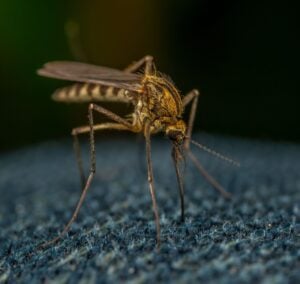
The northern hemisphere is making the dramatic transition from spring to summer. With this transition come hotter temperatures, and with warm weather come bugs. One very common bug in many parts of the world during the summer months is the mosquito.
Many people see mosquitoes as a nuisance, and rightfully so. More than just providing an irritating buzzing in one’s ear, mosquitoes are a big health concern. There are several different types of mosquitoes that can make people sick.
In order to counter the mosquito problem during the hot summer months, communities have come together. They have used science-based strategies to keep populations under control. It’s important to understand the science behind these strategies so that people can continue to fight the mosquito problem.
Why Mosquitoes are a Public Health Concern:
As mentioned, mosquitoes can spread disease. In the United States, West Nile virus is one of the most common diseases associated with mosquitoes. According to the Centers for Disease Control and Prevention (CDC), approximately 2,000 cases of West Nile virus are reported in the United States each year, and “no licensed vaccines or medicines are available to prevent or treat” it. Other mosquito-borne illnesses include the following: Cache Valley, Eastern equine encephalitis, Jamestown Canyon, La Crosse encephalitis, and St. Louis encephalitis.
In order to prevent humans from succumbing to sickness due to mosquito bites, health departments use various methods to monitor mosquito activity. Through these measures, the departments can identify what specific areas of a region might be at high risk of mosquito-related illnesses. This is because certain mosquito species are known to carry specific diseases, allowing health officials to identify areas where transmission risks may be higher. Applying mosquito-control treatments in targeted areas can help prevent illness by reducing people’s exposure to mosquito bites.
These efforts taken by health departments are important because outbreaks of mosquito-related illnesses can be very costly, both economically and personally. According to researchers publishing through the National Institutes of Health’s PubMed Central database, mosquito-borne diseases cause substantial mortality worldwide and cost the global economy billions of dollars annually.
Understanding the Mosquito Life Cycle
Before delving into the processes of how mosquito control works, it’s important to take a look at the life cycle of a mosquito. Like with many living beings, the life of a mosquito starts at the egg stage. Mosquito eggs are laid by an adult female mosquito in standing water.
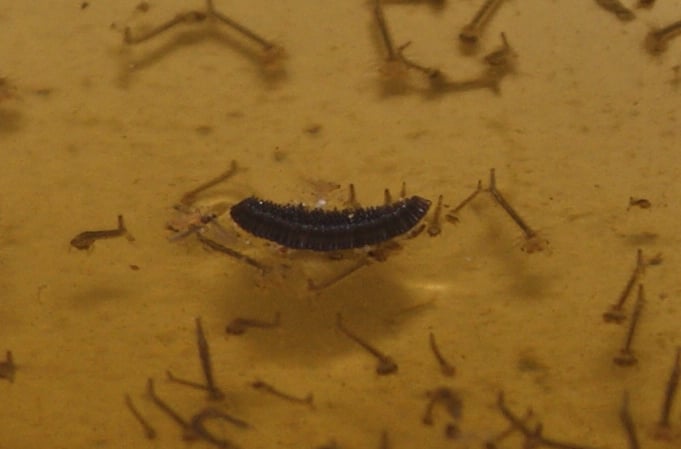
https://commons.wikimedia.org/wiki/File:Stechmuecken-Eischiffchen_Mosquito-Eggraft_1.jpg https://creativecommons.org/licenses/by-sa/3.0
It is this standing water that is necessary for the very development of the mosquito. This is a very important factor when it comes to controlling them. After additional hydration, the eggs hatch into mosquito larvae. The larvae continue to thrive in the water before developing into pupa. After a few days, the pupa develop into adult mosquitoes.
How Mosquito Control Works
Mosquito control involves much more than simply spraying for adult mosquitoes. According to the American Mosquito Control Association, many mosquito control programs use a strategy known as Integrated Mosquito Management (IMM), which combines multiple methods to reduce mosquito populations while protecting public health and the environment. These methods are based on an understanding of mosquito biology and target mosquitoes at different stages of their life cycle.
Experts consider source reduction one of the most effective mosquito control methods. Since mosquitoes require standing water to develop from eggs into adults, mosquito control programs often focus on eliminating or modifying breeding habitats. This may include improving drainage, managing aquatic vegetation, constructing ditches or canals, and removing areas where water can collect for extended periods. By reducing suitable breeding sites, communities can prevent large numbers of mosquitoes from developing in the first place.
Another important strategy is larval control, commonly referred to as larviciding. Larvicides target mosquito larvae and pupae before they develop into biting adults. Mosquito control professionals apply these treatments directly to bodies of water where mosquito larvae are present. Because larviciding targets mosquitoes during an early stage of development, mosquito control professionals consider it one of the most efficient ways to reduce mosquito populations.
Monitoring Mosquito Populations
https://creativecommons.org/licenses/by/2.0/
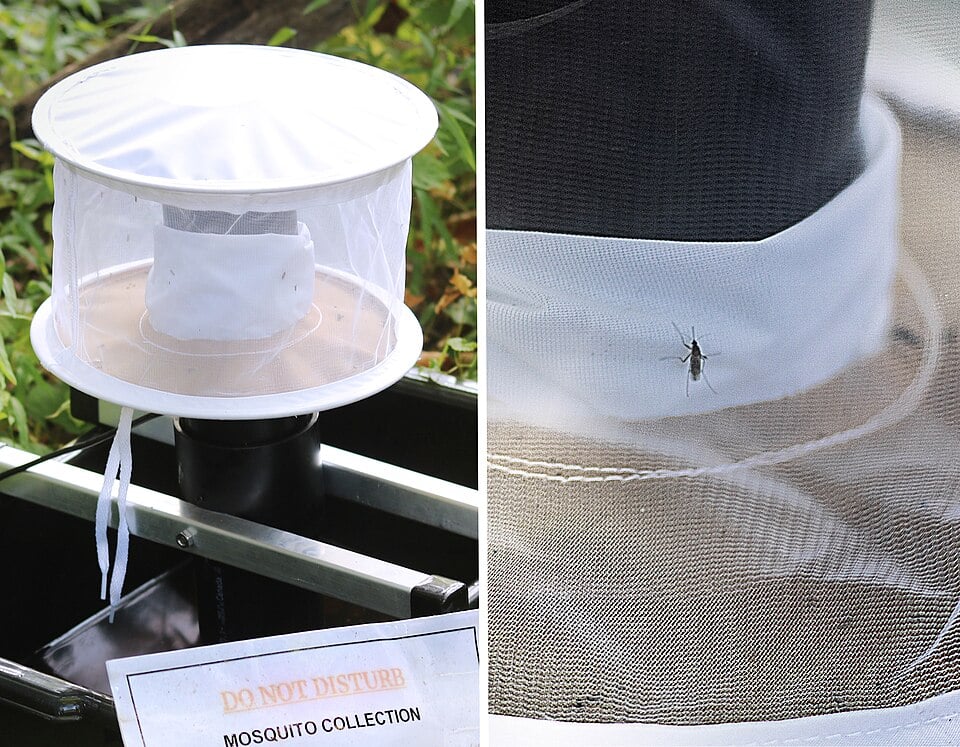
Mosquito control agencies use surveillance programs to track mosquito activity. Mosquito control professionals gather mosquito samples, identify species, assess population densities, and test the samples they collect for diseases (e.g., the West Nile Virus). This data allows mosquito control agencies to identify locations in which to focus mosquito control efforts. Therefore, agencies can quickly respond when they identify disease-carrying mosquitoes.
If they get abundant enough or are carrying diseases, adult mosquito control measures may be utilized. Adult mosquito control measures generally consist of adult-targeted insecticide applications (in the form of approved insecticides) distributed with truck-mounted or aerial equipment to eliminate adult mosquitoes found in communities where the population is problematic. While applying adulticiding can provide a quick reduction of a mosquito population, many experts will say that this is simply one tool in an overall effective mosquito management approach and not a solution by itself.
What People Can Do to Help Control Mosquitoes
Although government agencies play a major role in mosquito control, residents can also take steps to reduce mosquito populations around their homes. In fact, many mosquito breeding sites are found on private property. The American Mosquito Control Association and the CDC recommend eliminating standing water wherever possible, since mosquitoes can develop in surprisingly small amounts of water.
It is recommended that homeowners regularly empty or refresh water in containers, birdbaths, flowerpot saucers, old tires, and other items that can collect standing water. Rain gutters need to be cleaned so that they cannot hold back water. Additionally, all containers used for storing water need to have lids on them; this will help keep mosquitoes from reproducing by laying eggs in these containers.
Residents can also help by checking tarps, boats, outdoor equipment, and low-lying areas of their property for trapped water after rainfall. Ornamental ponds and all other permanent bodies of water should be properly maintained. Livestock watering troughs should be cleaned out on a regular basis.
Individual households can significantly reduce mosquito breeding sites on their properties. You can also reduce mosquito bites by using repellent and wearing long sleeves and pants when needed. You can also maintain window and door screens and participate in community mosquito control efforts.
Conclusion
Mosquitoes have long been one of the world’s most persistent public health challenges. Though often seen as a summertime nuisance, many mosquito species can spread diseases to humans and animals. Learning about how mosquitoes reproduce informs us of why most new pest management systems focus on preventing them from breeding. This includes eliminating breeding sites, targeting larvae, and using methods beyond adult mosquito spraying.
Mosquito control relies on scientific research, public health monitoring, and community involvement to reduce disease risks. Mosquito populations and activity typically increase during the summer due to warmer temperatures. This is why experts view mosquito control as a shared responsibility between government agencies and property owners.
Sources:
Centers for Disease Control and Prevention (CDC) — “About West Nile”
American Mosquito Control Association — “Mosquito Control”
Centers for Disease Control and Prevention (CDC) — “Life Cycle of Aedes Mosquitoes”
Nashville and Davidson County Metro Public Health Department — “Mosquito-Borne Disease and Control”
Editor’s Disclaimer: This article is intended for informational and educational purposes only. It is based on information from public health agencies, scientific literature, and mosquito control organizations available at the time of publication. It should not be considered medical, environmental, or pest-control advice. Readers should consult local health departments, mosquito control authorities, or qualified professionals for guidance specific to their area and circumstances.
