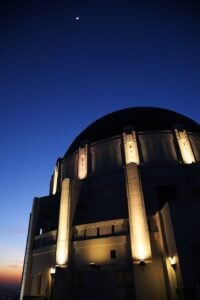
LOS ANGELES, Calif. — Clouds covered much of the sky Thursday night, but they did not completely stop visitors at Griffith Observatory. Maria Cornejo of Presence News reported onsite as visitors gathered at the Observatory, located at 2800 E Observatory Rd, Los Angeles, CA 90027, hoping to catch a glimpse of the lunar eclipse.
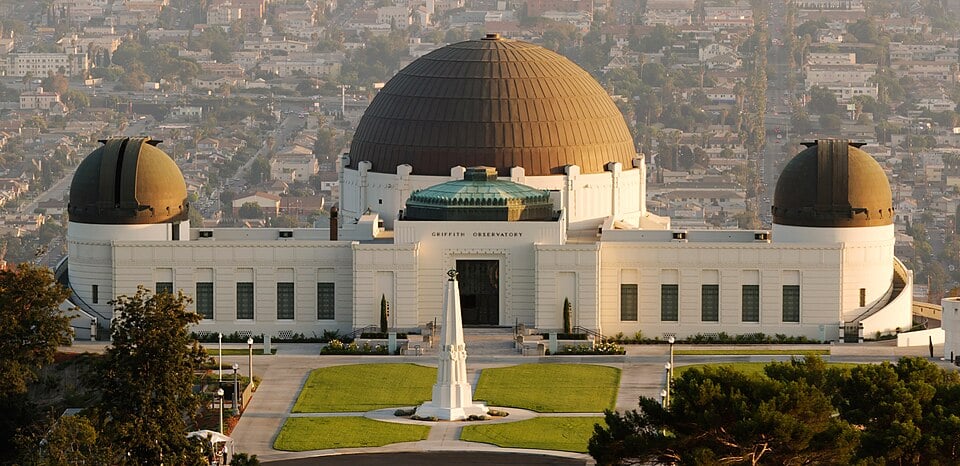
Photo by Matthew Field/Wikimedia Commons, CC BY-SA 3.0.
The deep partial lunar eclipse took place overnight from Thursday, August 27, into Friday, August 28. Approximately 96% of the Moon’s disk entered Earth’s darkest shadow, known as the umbra, at the height of the eclipse.
The event came close to totality but remained a partial lunar eclipse.
At Griffith Observatory, however, weather conditions became a major challenge for people hoping to watch the celestial event. The evening demonstrated the unpredictability of stargazing in Los Angeles, where weather conditions can affect visibility even during major astronomical events.
Griffith Observatory Eclipse Viewing Faces Cloudy Conditions
The announcement from the Observatory stated that the event for public viewing of the lunar eclipse, which was to take place on the night of Thursday, has been canceled due to severe cloud cover and the possibility of rainy weather.
Still, the Observatory continued its planned online broadcast.
Despite the cancellation, visitors were still outside the Observatory grounds hoping for a break in the clouds.
During her onsite coverage, Maria Cornejo of Presence News spoke with Griffith Observatory Director Mark Pine, who explained how a lunar eclipse occurs and discussed what viewers could expect from the night’s event.
During the interview, Pine explained that approximately 96% of the Moon’s disk would enter Earth’s umbra. Because the eclipse was not total, a small portion of the Moon’s disk would remain outside the umbra.
The clouds made the eclipse difficult to see from Los Angeles. At times, however, visitors were able to catch glimpses of the Moon through openings in the cloud cover.
When the Moon appeared, some visitors celebrated and applauded.
The scene created a different kind of community experience. Rather than simply watching a clearly visible eclipse, visitors waited together. They looked toward the sky and took advantage of brief opportunities to see the Moon.
Some guests brought or used telescopes in hopes of getting a better view. Meanwhile, others used their phones to photograph the Moon whenever the clouds allowed it.
A Moon Hidden Behind the Clouds
The Moon appeared bright at times. Portions of the lunar surface took on the reddish or coppery appearance associated with a lunar eclipse.
The reddening of the Moon is an effect caused by sunlight passing through the Earth’s atmosphere prior to arriving at the Moon. The scattering and refracting of sunlight in Earth’s atmosphere results in a greater proportion of red and orange wavelengths appearing on the Moon.
But from Griffith Observatory, the clouds often made the effect difficult to see.
The grayish-white cloud cover surrounding the Moon created a different dimension to the nighttime scenery. Despite the limited visibility, the setting became part of the experience for many people who had gathered to witness the eclipse.
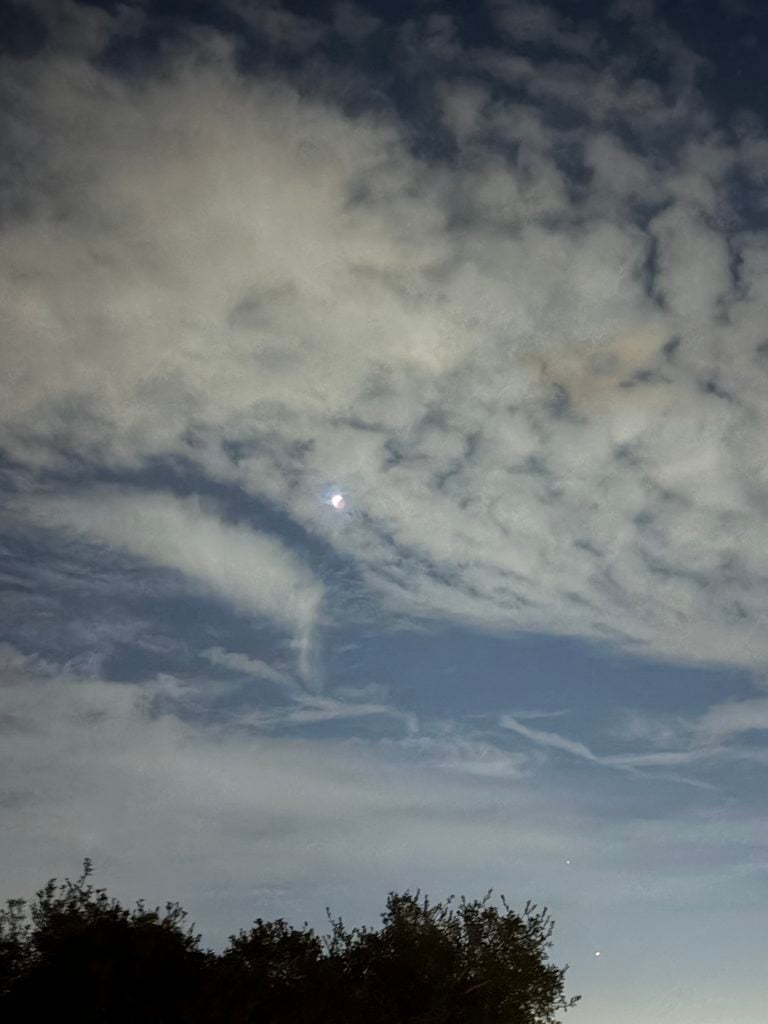
Despite the limited visibility, visitors continued watching the sky for another break in the clouds.
An Evening of Performances and Community
The eclipse was not the only attraction of the evening.
Attendees were treated to different types of entertainment and activities surrounding the event at the Observatory. They also encountered performers dressed in moon-inspired costumes, adding a festive element to the evening.
Although the weather was unfavorable, families and other guests experienced a combination of astronomy, performances, and the opportunity to see the eclipsed Moon.
The cloudy conditions demonstrated one of the challenges of observing astronomical events. Even when the timing and celestial conditions are perfect, viewers on Earth still have to contend with the weather.
Looking Ahead to 2029
For those who were disappointed by the clouds, another major lunar eclipse offers a future opportunity for viewers in Los Angeles.
Griffith Observatory states that the next total lunar eclipse visible in Los Angeles will occur on June 25, 2029. The anticipation is already building for the next Griffith Observatory lunar eclipse in Los Angeles.
Unlike a solar eclipse, a lunar eclipse can be viewed safely with the naked eye. No special eye protection is required, although binoculars or a telescope can provide a closer look.
For the visitors who gathered at Griffith Observatory in August, the weather may have prevented a perfect view. Nevertheless, it did not prevent people from coming together to look toward the sky.
For a few moments, whenever the clouds opened, the Moon appeared — and the people waiting below were ready to see it.
Editor’s Disclaimer: This article is based on firsthand observations and reporting from the August 27–28, 2026 lunar eclipse viewing event at Griffith Observatory, including onsite reporting by Presence News contributor Maria Cornejo and an interview with Griffith Observatory Director Mark Pine. Weather conditions affected visibility during the event. Astronomical information in this article is based on information provided by Griffith Observatory and established astronomical references. The archival Griffith Observatory photograph accompanying this article was not taken during the August 2026 lunar eclipse and is identified as such in its caption.

Pingback: Inspiration News