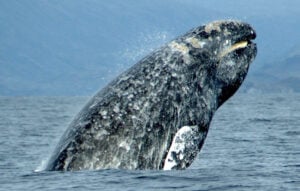
A troubling trend is emerging in the San Francisco Bay Area, where gray whales are increasingly entering the bay and dying in greater numbers. Experts are increasingly concerned about the rising number of gray whale deaths in the region.
Researchers have found that a significant percentage of tracked whales that entered the bay were later found dead, highlighting the elevated mortality risk associated with this behavior, according to a study published in Frontiers in Marine Science.
This growing crisis is not an isolated phenomenon. Researchers suggest these findings may reflect broader ecological disruptions in the Arctic, as reported by the San Francisco Chronicle and other outlets. They also link these disruptions to warming oceans and declining food availability. Researchers also believe human activities contribute to shifts in marine mammal migration patterns.
A Dangerous Detour
Gray whales traditionally migrate between feeding grounds in the Arctic and breeding lagoons in Mexico. In recent decades, whale migration patterns have shifted, according to marine researchers. Certain whales have begun straying away from their expected paths. In some cases, they are making unusual detours into San Francisco Bay. Scientists suggest whales are choosing this route due to a lack of food, based on findings reported by organizations such as the California Academy of Sciences.
Recent studies suggest whales are visiting this area primarily in search of food, according to research from groups including the California Academy of Sciences. As Arctic ecosystems change, the whales’ primary prey has become less reliable. Consequently, many whales become malnourished and search for alternative feeding areas.
Marine scientists believe the bay may act as a kind of emergency stopover for struggling whales, according to regional marine research organizations. However, this detour can come with significant risks, including increased mortality.
“San Francisco Bay is a highly trafficked waterway,” said researcher Josephine Slaathaug, in a study published in Frontiers in Marine Science, noting the risks whales face when entering the area.
The bay is not a natural feeding or breeding habitat for gray whales; heavy ship traffic—including cargo, ferry, and recreational vessels—makes navigation through the Golden Gate Strait difficult.
Rising Deaths in a Crowded Waterway
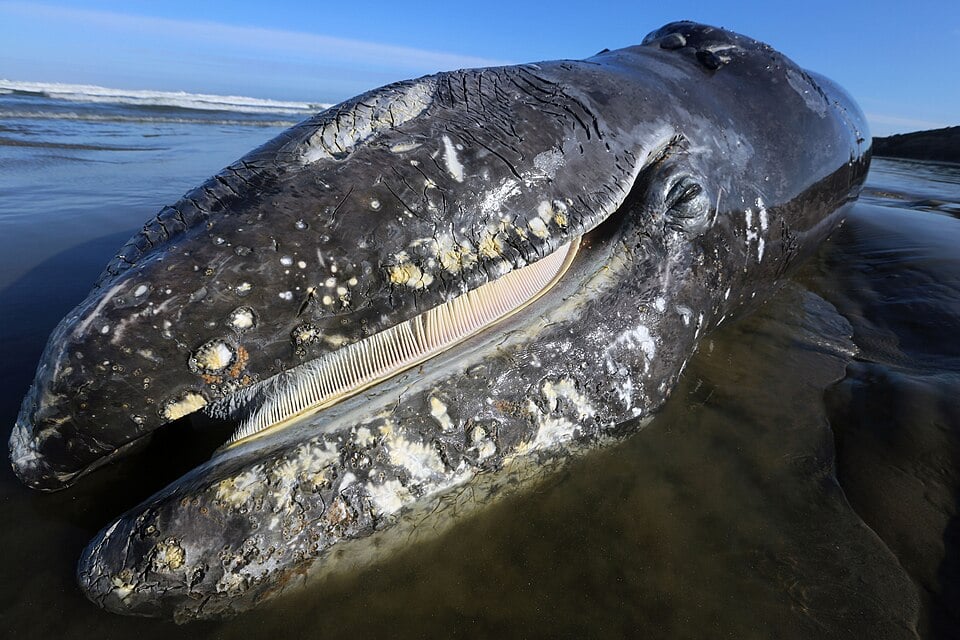
Photo by Peter Pearsall / U.S. Fish and Wildlife Service (CC BY 2.0)
https://commons.wikimedia.org/wiki/File:USFWS_gray_whale_(23223172463).jpg
https://creativecommons.org/licenses/by/2.0
Available data from recent studies further highlights the risks associated with this behavior.From 2018 to 2025, more than 100 gray whales were tracked entering the bay, according to Frontiers in Marine Science. Of those, a significant number were later found dead near the bay.
Many of these deaths are linked to vessel strikes. The whales’ low profile in the water and the region’s frequent fog make collisions more likely.
A study led by Josephine Slaathaug and colleagues, published in Frontiers in Marine Science, found that roughly 18% of identified gray whales entering San Francisco Bay were later found dead nearby.
Recent reporting by the San Francisco Chronicle suggests the situation may be worsening. Increased whale presence in the bay coincides with high mortality from ship strikes and poor health.
Given the species is already under stress, the continued loss of breeding-age females is especially concerning.
A Population Under Pressure
The surge in deaths follows a broader crisis for gray whales. From 2019 to 2023, the species experienced a major die-off classified as an “Unusual Mortality Event” by NOAA.
This period saw a significant reduction in the population. Scientists attribute the deaths to increased malnourishment and changes within the ecosystem of the Arctic region.
“The culprit was a critical drop in food availability,” said Padraig Duignan, a pathologist with The Marine Mammal Center, in reporting cited by the Los Angeles Times.
Food availability also declined in their northern feeding grounds, particularly among prey species such as amphipods.
This same problem has led whales into new, unfamiliar, and potentially hazardous environments.
Research from organizations such as the California Academy of Sciences and The Marine Mammal Center indicates a reduction of amphipods and other prey species that whales rely on in Arctic waters. Without enough food to sustain themselves over the course of their long migrations, whales may be forced to search for food opportunistically during migration. One area that could see an increase in whale foraging due to this issue is the San Francisco Bay.
Local Impacts, Global Causes
Local data underscores the scale of the problem. The California Academy of Sciences has recorded many whale deaths within the Bay Area over the past several years, according to its published reports. This suggests a steady increase in the number of whales that have stranded or died in the Bay Area.
In addition, marine rescue organizations and researchers have documented that whales are spending more time in the Bay region, according to regional monitoring reports.
Experts warn that this trend could represent the emergence of a new, riskier migration pattern. Whales that rely on the bay as a feeding stop will continue to be exposed to human activities and environmental threats if this behavior persists.
Climate Change and the Future of Migration
Credit:
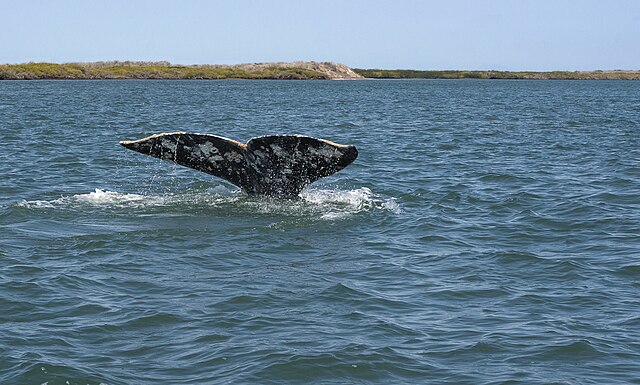
Photo by Carlos Valenzuela (CC BY-SA 4.0). Source: https://commons.wikimedia.org/wiki/File:Eschrichtius_robustus_ALM_1702_p2.jpg | License: https://creativecommons.org/licenses/by-sa/4.0
The ongoing crisis highlights how the effects of climate change on marine ecosystems can be amplified through interconnected processes. It all begins as an upset to Arctic food webs and culminates in the deaths of whales in the United States’ busiest shipping corridors. This unfolds through a series of cascading effects across vast distances.
Human factors increase the level of vulnerability faced by whales entering the bay due to ship traffic, noise pollution, and disturbance of habitats.
Several experts have suggested implementing mitigation measures such as reduced vessel speed and amended shipping routes, according to marine conservation organizations and researchers.
A Warning Sign from the Ocean
Dying gray whales in San Francisco Bay highlight the risks facing others in the population. The occurrence of these deaths may indicate broader population stress.
Because whales are considered indicators of ocean health, their deaths signal broader issues within the marine ecosystem.
In this case, whale deaths appear to be linked to ecosystem stress potentially caused by food shortages, climate change, and human activity.
If this trend continues, scientists are concerned that these altered migration patterns and the deaths associated with them may become a permanent part of gray whale migration.
For now, each whale that enters the bay carries both a sign of resilience and a risk. Whether that journey ends in survival or tragedy may depend not only on the whale’s condition, but on how quickly humans respond to the changing oceans around them.
Sources:
San Francisco Chronicle — “In San Francisco Bay, whales are entering — and dying — more frequently”
NOAA Fisheries — “Closure of 2019–2023 Eastern North Pacific Gray Whale Unusual Mortality Event”
Frontiers — “18% of gray whales that enter San Francisco Bay die there, scientists find”
Editor’s Disclaimer: This article is based on publicly available scientific research, government data, and reporting from reputable sources, including the National Oceanic and Atmospheric Administration (NOAA), the California Academy of Sciences, and The Marine Mammal Center. While every effort has been made to ensure accuracy, ongoing research into gray whale migration patterns and mortality means conclusions may evolve as new data emerges.
