When it comes to modern U.S. Presidential elections, Colorado is one of the states that has only recently become a Democratic stronghold. For years, Colorado voted solidly Republican, then briefly became a swing state before solidly voting Democratic at the presidential level. Interestingly, though, Colorado’s initial participation in presidential elections saw the Rocky Mountain state go through a similar transformation.
Republican Beginnings
Colorado was admitted as a U.S. state in 1876, the same year that the presidential election took place between Rutherford Hayes and Samuel J. Tilden. Colorado cast its three electoral votes for the Republican Hayes that year. However, this resulted from a vote by the Colorado state legislature and not the popular vote. Four years later, however, a popular vote contest took place with the Republican Chester Arthur becoming the victor over Democratic Winfield Scott Hancock in a close race. However, the new elections would see solid Republican wins in Colorado, which was consistent with the Republican leanings of many surrounding Plains states during that era. However, there was about to be a change in this pattern.
A Change in the Pattern
By 1892, dissatisfaction with the major political parties had helped fuel support for the Populist movement in Colorado. That year, Populist candidate James Weaver campaigned on free silver and economic relief for working people, positions that resonated strongly in Colorado, then the nation’s leading silver-producing state. The 1896 election would see Colorado cast its vote decisively for Populist Democrat William Jennings Bryan, who, like Weaver before him, campaigned on the promise of ‘free silver.’ Running again four years later, Bryan won Colorado once again in 1900. This would contrast to four years later when Republican Theodore Roosevelt won Colorado on the heels of a massive landslide and his ‘Square Deal’ platform. However, this would prove to be the last Republican win for years in the Rocky Mountain state.
Back to the Democratic Fold
Four years after Colorado went Republican, TR’s predecessor, William Howard Taft, ran as a Republican against William Jennings Bryan, who was once again the Democratic nominee. Having performed well in Colorado in earlier elections, Bryan narrowly carried the state again in 1908. Four years later, Democratic Woodrow Wilson would win Colorado decisively in 1912 and repeat that success four years later.
Brief Republican Dominance
By 1920, much of the United States had become opposed to many of the policies implemented during Woodrow Wilson’s presidency. That year, Colorado voted Republican for the first time in 16 years as it backed Warren Harding in the midst of a massive Republican landslide. This scenario would be repeated in the following two U.S. Presidential elections, which were also Republican landslides. However, changes were about to occur in the United States that would change presidential voting habits in many states across the board, for a while at least.
FDR’s Two Colorado Wins
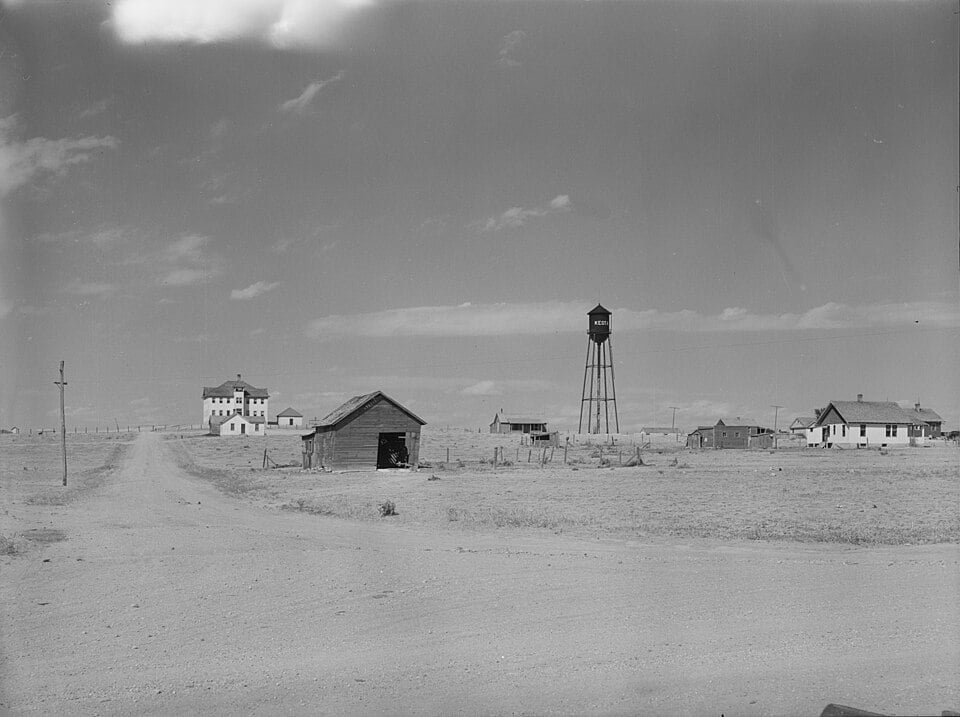
Herbert Hoover’s presidency coincided with the Stock Market Crash of 1929 and the onset of the Great Depression. The nation was economically devastated, and this financial strain was also felt in Colorado. In 1932, the Rocky Mountain state voted decisively for Franklin D. Roosevelt. He carried Colorado again in 1936 by another comfortable margin.
Flip Flop
The 1940 U.S. Presidential election saw F.D.R. running for an unprecedented third term. Although the then-president’s New Deal programs had been implemented, there appeared to be some backlash against the expanded government role that accompanied them. As a result, Republican Wendell Willkie narrowly carried Colorado in 1940. Four years later, FDR again lost Colorado to Republican Thomas E. Dewey, despite winning a fourth term nationally. However, Democratic Harry Truman, who had assumed the presidency after FDR’s passing, surprisingly won Colorado in another close-fought battle.
Eisenhower Sweeps Colorado
Dwight D. Eisenhower, a moderate Republican, was a popular World War II hero. In both the 1952 and 1956 U.S. Presidential elections, Colorado joined most of the country in voting for Eisenhower (Ike) by landslide margins. It arguably was a sign that Colorado, with the exception of one particular election, would be dominated by Republicans at the presidential level for the next few decades. The 1960 U.S. Presidential Election was one of the closest in the nation’s history. However, it would prove to be one of Nixon’s stronger states over John F. Kennedy.
Brief Democratic Detour
JFK’s assassination in 1963 meant that much of the nation was still in mourning by the time that the 1964 U.S. Presidential election took place. This, combined with the perception that Republican nominee Barry Goldwater’s platform was too conservative for many mainstream voters, contributed to Lyndon Johnson’s nationwide landslide victory. Colorado joined most of the nation that year in voting for Democrat Lyndon Johnson. However, this would be the last Democratic win in Colorado at the presidential level for almost three decades.
Solid Republican Colorado
After LBJ’s 1964 win in Colorado, the state returned to the Republican fold in voting for the returning Richard Nixon in 1968. Four years later, Nixon’s decisive win in Colorado paralleled his national landslide win over George McGovern. The 1976 U.S. Presidential Election pitted Incumbent President Gerald Ford, who was the Republican nominee, against Democrat Jimmy Carter, an outsider candidate promising change to Washington. Carter appealed to voters across much of the South as well as many urban and rural communities nationwide. Although some of those rural areas included parts of Colorado, Carter did not appeal to much of the state’s population, particularly in the growing Denver suburbs. Despite losing nationally by a narrow margin, Colorado would end up being one of Ford’s strongest states in 1976.

The Reagan Era Strengthens Republican Support
By 1980, Carter’s presidency had disappointed many Americans as it was accompanied by high unemployment, double-digit inflation, and Americans being held hostage in Iran. It was no surprise then that the 1980 Republican Nominee, Ronald Reagan, trounced Carter in Colorado in that year’s Republican landslide, as the latter’s rural appeal didn’t hold as much weight as it had four years prior, at least outside of his native South. Four years later, during Reagan’s second and larger landslide, Reagan dominated Colorado once more. However, while Republicans still held ground in Colorado after this election, the 1984 race would prove to be the last double-digit win for Republicans at the Presidential level in the state.
George H.W. Bush would win the third consecutive Republican landslide in the 1988 U.S. Presidential election. However, while Bush maintained the popularity among suburbanites that had been seen under Reagan, he did not have as much rural appeal as the latter. One possible explanation is that, while Bush won Colorado by a comfortable margin in 1988, it was in the single digits, as all the presidential elections would be in Colorado for the next 30 years.
Back to Flip Flopping
By the time of the 1992 U.S. Presidential election, the incumbent president Bush was facing low poll numbers and a less-than-stellar economy. This, combined with a young Democratic nominee, Bill Clinton, promising a new kind of party platform and the presence of Independent nominee Ross Perot, meant it was an uphill battle for Bush. Clinton ended up defeating Bush in the presidential election. In Colorado, Clinton narrowly won the state while Ross Perot received a substantial share of the vote for an independent candidate.
It was a sign that both the demographics and suburban voting habits of local suburbanites were changing.
Last Republican Wins
The 2000 U.S. Presidential election saw Republican George W. Bush win Colorado by a pretty comfortable margin, although just slightly under double digits. Four years later, Bush became the final Republican presidential nominee to win Colorado. The suburbs in Colorado were growing and becoming more diverse; many suburban voters who had traditionally supported Republicans backed a Republican presidential nominee for the final time.
The Democrats Win Back Colorado
Barack Obama ran on a platform of Change in 2008 in response to the national backlash that had occurred against Bush following opposition to the wars in the Middle East, and not to mention a huge economic meltdown. The 2008 U.S. Presidential election saw Obama win Colorado by a little over 8 points. Four years later, although many states shifted to the right after claiming to have not seen the ‘change’ under Obama they had hoped to see, Colorado was again won by Obama, thereby becoming the first Democratic Presidential nominee to carry Colorado in two consecutive U.S. Presidential elections since FDR.
Colorado Evolves into a Democratic State
The 2016 U.S. Presidential election proved to be one of the biggest upsets in presidential election history as Donald Trump won the Electoral College over Hillary Clinton, who won the Popular vote. Trump’s brand of Republicanism appeared to be at odds with some of the suburbanites who had previously voted Republican in Colorado. Nevertheless, Hillary Clinton was also unpopular among certain sects of voters. 2016 saw Hillary Clinton win Colorado but, due to the influence of third-party nominees, combined with the unpopularity of both major party candidates, Clinton did not win the majority of the vote in Colorado and her victory was in the single digits. Nonetheless, this would prove to be the last U.S. Presidential election in Colorado where the state was decided by under 10 points.
Colorado’s Democratic Advantage Grows
Four years later, the United States was in the midst of the COVID-19 pandemic. Although Trump had maintained popularity among Republicans, he was vulnerable as Democrat Joe Biden challenged him. Colorado, which conducts elections primarily by mail, continued its extensive use of mail voting during the 2020 election.
Despite Trump getting a larger raw number of votes in 2020 than he had in 2016, Biden became the first Democratic nominee to win Colorado by double digits since Lyndon B. Johnson in 1964.
The 2024 U.S. Presidential election had Donald Trump, who had been defeated four years earlier, returning as the Republican nominee. This time, he would face Vice-President Kamala Harris, who had become the Democratic nominee after Biden dropped out. Trump campaigned on issues including immigration and the economy, while Harris emphasized protecting democratic institutions and argued that Trump posed a threat to democracy.
In the end, Trump won the election, becoming the first U.S. President to win two nonconsecutive elections since Grover Cleveland. In the case of Colorado, the state went Democratic again and, interestingly, by double digits again. Some election analysts noted that Colorado remained more strongly Democratic than several other traditionally Democratic-leaning states.
It could be a sign that Colorado has become a solid Democratic state at the presidential level. Whether this trend continues will become clearer after the 2028 presidential election.
Sources:
Colorado Secretary of State – Colorado Elections Database Every election at your fingertips.
Library of Congress – U.S. Presidential Election Statistics Resource Guide
American Presidency Project – Presidential Election Data
National Archives – Electoral College
Federal Election Commission – Election results and voting information
Encyclopaedia Britannica – Colorado
Colorado Secretary of State – About the Colorado Elections Database
Editor’s Disclaimer: This article is a historical overview of Colorado’s presidential voting patterns based on publicly available election results and historical sources. It is intended for informational purposes only and does not endorse or oppose any political party, candidate, or viewpoint. Historical interpretations and political trends may be subject to differing scholarly perspectives. Readers are encouraged to consult official election records and the referenced sources for additional context.
