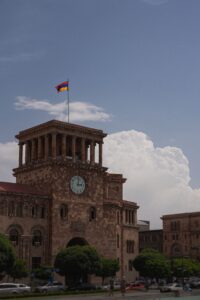
Russia’s protracted invasion of Ukraine continues to limit its ability to address world issues. Its reduced ability to respond to the interests of some partners has strained relationships with several countries, reflecting broader challenges facing Moscow. Among those straying away from Russia’s sphere of influence is Armenia, a former Soviet republic.
The Fall of Nagorno-Karabakh
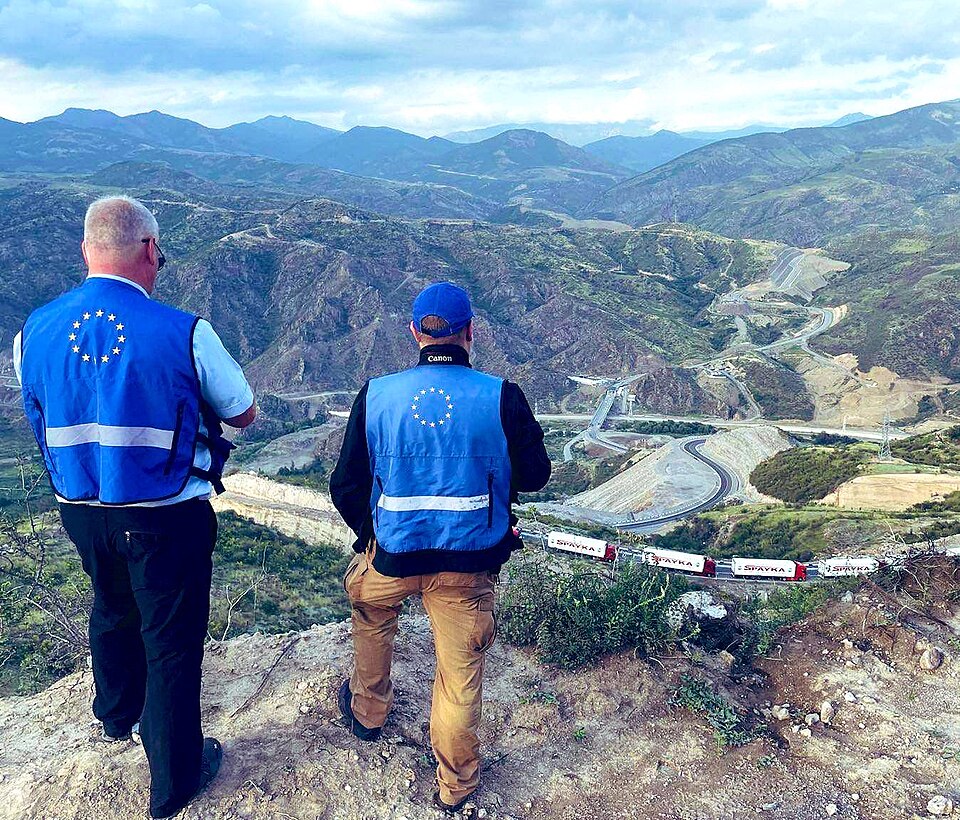
Armenia’s most prominent geopolitical touchstone was the decades-long dispute over the Nagorno-Karabakh region, a territory internationally recognized as part of Azerbaijan but historically populated largely by ethnic Armenians. The conflict reignited in 2023, ending with an Azeri offensive that captured the territory. Russia offered little mediation or intervention during the conflict, sending shockwaves through what many viewed as a solid relationship with Armenia. In recent years, Armenia-Russia relations have faced significant challenges, especially after the events in Nagorno-Karabakh.
https://creativecommons.org/licenses/by/4.0/
Security & Defense
Armenia has reduced its reliance on Russia in the realm of security. It has ceased arms purchases from Russia and has begun seeking out arms sourced from countries such as France and India, while sourcing additional defense technology from China, Iran, and Belgium. This marks a notable shift in Armenia Russia relations, especially in terms of military cooperation.
Western Integration
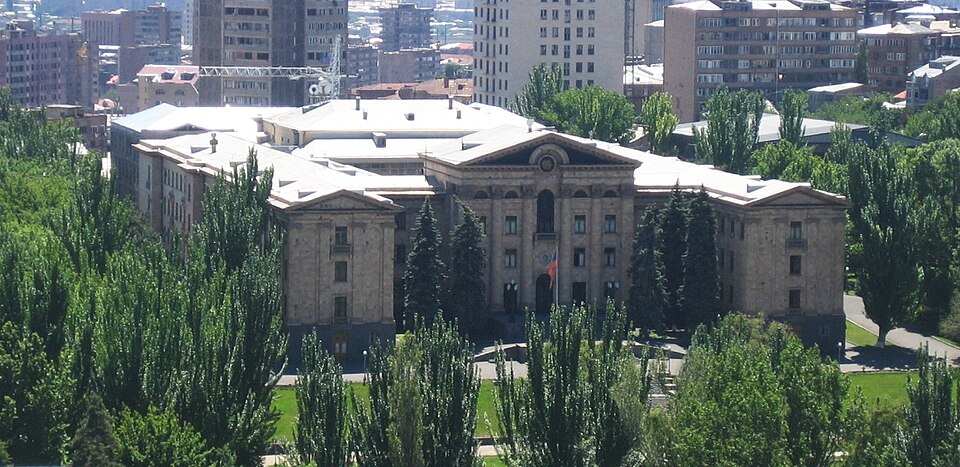
In the wake of Russia’s failure to intervene on Armenia’s behalf during the conflict with Azerbaijan, Yerevan has made strides toward integration with Western powers. While it has not formally applied for accession to the European Union (EU), Armenia’s parliament has passed the EU Integration Act to officially start on that path. Armenia has frozen its participation in the Russian-led Collective Security Treaty Organization (CSTO), which effectively serves as a geopolitical counter to the North Atlantic Treaty Organization (NATO). Analysts generally regard the CSTO as less militarily integrated than NATO, and the organization lacks the level of unified military planning found within NATO. Russia’s failure to mediate or assist in the Nagorno-Karabakh conflict exposed significant weaknesses in the CSTO and further frayed operational cooperation among its members. Therefore, Armenia has further strained Armenia Russia relations by looking to the West for new partnerships.
Border Control
Russia and Armenia signed a bilateral agreement in 1992, shortly after the dissolution of the Soviet Union. Under the agreement, Russia stationed Russian Federal Security Service (FSB) guards along Armenia’s borders with Iran and Turkey. This has changed, with Armenia implementing a multistep plan that phased out FSB guards by March of 2025. The initial agreement was seen as a solution to regional vulnerability. At the time of the collapse of the Soviet Union, Armenia was at risk of not being able to secure their borders, especially against powers with which it had a history of friction. Now, it has decided to shore up those borders alone. As a result, the situation reflects broader shifts in Armenia-Russia relations.
A Grain of Salt
It is a demonstrable overstatement to say that Armenia will soon be outside of the Russian sphere of influence. While Armenia has been shifting toward Western integration and has distanced itself from Russia in both diplomacy and economics, it continues to depend heavily on Moscow for energy and economic support. While Armenia has increased trade with China, the United Arab Emirates (UAE), Iran, and the European Union, Russia remains Armenia’s largest trading partner and accounts for a significant share of the country’s foreign trade. Russian firms continue to play significant roles in Armenia’s rail and natural gas infrastructure. Critical infrastructure in Armenia’s economy will need to be replaced in order for it to further decouple from Russian influence.
Economic Dependence Remains
Furthermore, Armenia continues to purchase natural gas from Russia at rates reported to be below prevailing European market prices. A rapid transition away from Russian energy supplies could impose significant economic costs on Armenia. As a result, energy dependence remains one of the most significant obstacles to a complete economic decoupling from Russia.
This is all to say that observers should pay close attention to geopolitical shifts in former Soviet states away from Russia, while also placing those changes in their proper context. Whether Armenia ultimately deepens its integration with Western institutions or renews closer strategic ties with Russia remains uncertain. Such shifts may indicate challenges for Moscow as it seeks to maintain influence among some traditional partners. This is also not to say that Russia is without new, growing relationships. In the Sahel, countries such as Mali, Niger, and Burkina Faso have moved away from security partnerships with France and expanded cooperation with Russia. Moscow’s geopolitical position remains complex and continues to evolve as international alliances and regional conflicts change. The shifts illustrate how Russia’s war in Ukraine has affected relationships that had remained relatively stable for decades. In summary, the direction of Armenia Russia relations will continue to be a major geopolitical factor for the region and beyond.
Sources:
Reuters — “Armenia freezes participation in Russia-led security bloc – Prime Minister”
Time — “In the Shadow of War, Armenia Tries to Make Its Economy Indispensable”
Editor’s Disclaimer: This article is an analysis of geopolitical developments involving Armenia, Russia, and the broader post-Soviet region. It is based on publicly available reporting, official statements, and economic and security data available at the time of publication. Geopolitical conditions are subject to rapid change, and future developments may alter the circumstances discussed herein. References to governments, political organizations, and international actors are presented for informational and analytical purposes and should not be construed as endorsements by Presence News.
