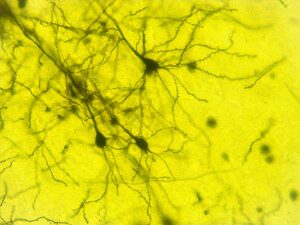
The human brain begins converting into goo almost immediately following death. Oxygen runs out; cells lose their energy stores; connections within the nerve become disconnected in a matter of hours. For many years, scientists have assumed that this process was irreversible. New advances in brain science and consciousness research have raised new questions about how long certain cellular functions can persist after death, raising troubling questions about memory, consciousness, and the boundaries of life itself.
Moreover, the neuroscience of consciousness has become central to re-evaluating what is possible with brain preservation and revival.
Researchers today are not reviving fully functioning brains or restoring human awareness. However, they have succeeded in restoring certain cellular functions in preserved brain tissue. Combined with breakthroughs in brain organoids—miniature lab-grown neural clusters—scientists are exploring territory once confined to science fiction and consciousness research.
Restoring Activity in Preserved Brain Tissue
One of the biggest questions is whether consciousness could ever survive preservation. As one Scientific American article on lab-grown brains notes, “Creating a conscious system might be a whole lot easier than defining it.” Scientists still do not fully understand what consciousness is or how it emerges from neural activity, which makes it difficult to know what, exactly, would count as success.
As neuroscientist Christof Koch writes, “Consciousness is everything you experience.” There’s still no complete understanding of how consciousness arises from activity in the brain or if it will survive after the body is no longer alive and breathing. According to neuroscientist Christof Koch, consciousness is one of the biggest scientific mysteries and is hard to quantify objectively because you cannot measure your own experience like other parts of your physiology.
That uncertainty has become increasingly important as neuroscience advances. In recent years, researchers studying lab-grown brain organoids discovered that some clusters of human neural tissue can produce coordinated electrical activity similar to patterns seen in developing brains.
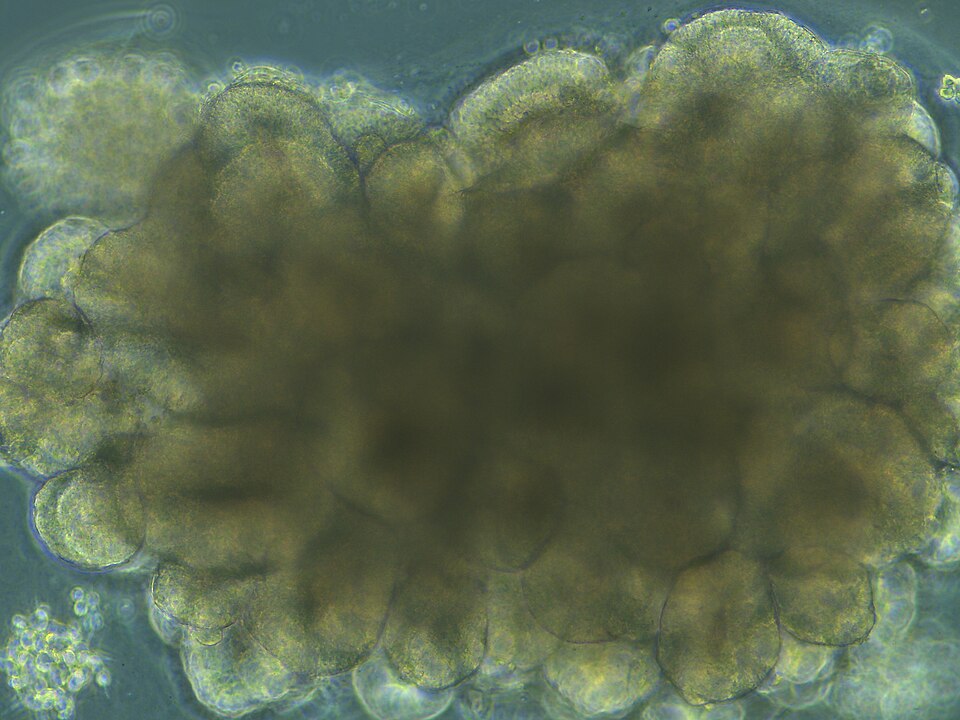
Image by NIH Image Gallery (Bethesda, Maryland, USA) via Wikimedia Commons. Public domain.
https://commons.wikimedia.org/wiki/File:Organoid_during_development_(48062903426).jpg
These organoids are not conscious by current scientific standards, but they demonstrate how even isolated neural tissue can organize itself into surprisingly complex systems. In fact, neuroscience of consciousness research often examines these organoids to search for markers of awareness.
Organoids and the Limits of Neural Complexity
The debate becomes even more complicated when scientists study preserved or damaged brains. Research published in Communications Biology found that consciousness appears closely tied to the stability and complexity of communication across different brain regions. Once a person has lost their consciousness, the brain’s whole network of large-scale size becomes uncoordinated and unstable.
This shows that a person’s state of consciousness can rely on the survival of their whole neural system (i.e., integrated groups of neurons) as opposed to just being reliant on the survival of their individual neuron.
A second paper published in NeuroImage: Clinical examined individuals with severe brain injuries and disorders of consciousness. The study was made publicly accessible through an open-access publication.
In some cases, these patients had measurable levels of metabolic and neurological complexity despite having suffered brain damage; therefore, it is possible that there may be patterns of brain activity that exist beneath the surface of what appears to be complete unresponsiveness.
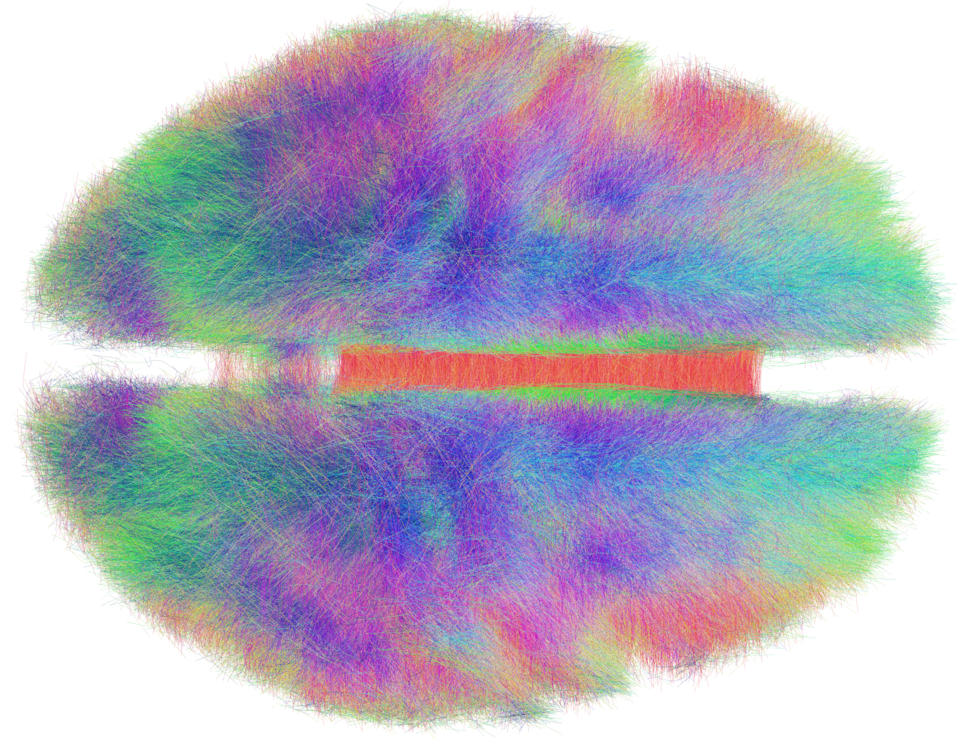
Image by Andreas Horn via Wikimedia Commons, licensed under CC BY 4.0.
https://commons.wikimedia.org/wiki/File:The_Human_Connectome.png
https://creativecommons.org/licenses/by/4.0
This research supports the idea of consciousness existing along a continuum, and therefore, in conjunction with this research, more scientists are working on a definition of consciousness.
Is Consciousness a Continuum?
These discoveries have fueled growing interest in brain preservation and cryonics. Some futurists argue that if the physical structure of the brain can be preserved well enough, future technologies might eventually reconstruct memories, personality, or even consciousness itself. Neuroscientist Ariel Zeleznikow-Johnston has argued that personal identity may be encoded in the brain’s physical wiring, meaning preservation of that structure could theoretically preserve the self.
None of this research demonstrates the ability to restore a dead human brain or recover human consciousness. Still, there is a massive gap between preserving tissue and reviving a person.
The Limits of Current Science
Scientists have never restored human consciousness after true brain death. Restoring activity in cells differs greatly from rebuilding the trillions of connections needed for thought, memory, emotion, and self-awareness. Even the most advanced organoids lack the sensory systems, body integration, and large-scale architecture associated with conscious experience.
Ethicists are also beginning to ask difficult questions about where this research could lead.
Ethical Questions in Emerging Neuroscience
If scientists someday create neural systems capable of awareness, how would they recognize it?
Scientists still lack a clear definition of consciousness, making it difficult to determine whether organoids or preserved brains could experience discomfort or deserve legal and moral protections.
Presently, the concept of “reviving” frozen human brain cells is still largely theoretical. There are no labs that have done the following: revived a human brain; returned memory to a formerly deceased person; and reverted a person from being dead to being alive. However, recent findings continue to raise questions about how scientists define irreversible brain failure and consciousness.
Scientists can now preserve neural structures, restore limited cellular function, and grow increasingly sophisticated brain-like systems in laboratories.
These findings are prompting scientists to re-examine how consciousness and irreversible brain failure are defined. But until scientists fully understand consciousness, the prospect of reviving a preserved brain remains one of science’s greatest mysteries — and one of its most controversial possibilities. As a result, the neuroscience of consciousness will remain at the forefront of these debates for years to come.
Sources:
Scientific American — “Can Lab-Grown Brains Become Conscious?”
Scientific American — “What Is Consciousness?”
Editor’s Disclaimer: This article discusses ongoing and emerging areas of neuroscience, including experimental research on brain tissue, organoids, and theoretical discussions of consciousness. Many of the findings referenced are preliminary, actively debated, or not yet fully understood within the scientific community. The content is intended for informational and educational purposes and should not be interpreted as definitive conclusions about consciousness, brain death, or future medical capabilities.
