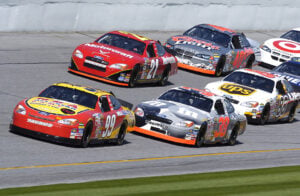
When the Cummins NASCAR return was announced alongside Ram and Brenden Queen for 2026, the news initially felt like a traditional sponsorship story. A major American engine manufacturer was partnering with a rising young driver and returning to NASCAR once again.
A Sponsorship That Means More Than Racing
But the announcement may represent something far larger than a standard motorsports partnership.
In the official announcement, Cummins described the partnership as one that “pairs Cummins’ 100+ year history of engineering expertise and innovation with one of NASCAR’s fastest-rising talents.”
The Cummins NASCAR return comes at a moment when both the automotive industry and NASCAR itself are rapidly evolving. Automotive manufacturers are navigating rapid changes involving internal combustion engines, electrification, hydrogen development, hybrid systems, renewable fuels, and decarbonization goals. At the same time, NASCAR has positioned itself as a platform for sustainability initiatives and future automotive technologies.
Taken together, the partnership between Cummins, Kaulig Racing, Ram, and Brenden Queen may say more about NASCAR’s future relevance than many people realize.
For years, critics have questioned NASCAR’s relevance in an era dominated by EVs, software-defined vehicles, and sustainability mandates. Yet the sport continues attracting major brands and technology partners that still see racing as a valuable proving ground for engineering and innovation.
The return of Cummins may indicate that NASCAR still holds strategic value within the evolving transportation industry.
Cummins Is No Longer Just a Diesel Company
Cummins itself is no longer simply a diesel engine company.
Although the brand built its reputation around heavy-duty diesel powertrains, the company has spent the past several years aggressively expanding into alternative fuel and zero-emission technologies. Cummins launched Accelera in 2023 as a business division focused on electric batteries, hydrogen fuel cells, electrolyzers, and other sustainable energy technologies.
When Cummins launched Accelera by Cummins in 2023, the company described the initiative as part of its effort to “secure a sustainable future for the industries that keep the world running,” signaling a broader transition toward hydrogen, electrification, and zero-emissions technologies.

Photo courtesy of NASA Stennis Space Center via Wikimedia Commons (Public Domain).
Wikimedia Commons – Hydrogen-Fuel Engine Component Tests Near Completion
NASA Public Domain / Wikimedia Commons License Information
Cummins has been accelerating the development of hydrogen engines for their product line and has communicated this on their hydrogen technology website, including details of its hydrogen internal combustion engine and hydrogen decarbonization initiatives focused on commercial transport. The company has also worked to expand its public identity beyond traditional diesel engine manufacturing while continuing to retain its engineering expertise in that sector.
These facts will help anyone who is trying to understand what the NASCAR sponsorship program is all about.
The partnership appears to extend beyond simple nostalgia or historical association with motorsports. It appears that this will continue to evolve along with other parts of NASCAR’s overall marketing strategy in accordance with NASCAR’s plan to modernize itself.
NASCAR’s Push Toward Sustainability
The National Association for Stock Car Auto Racing (NASCAR) has become increasingly committed to environmentalism through the promotion of sustainable practices, renewable fuels, emissions reduction, and the advancement of environmental initiatives.
As part of their NASCAR IMPACT program, NASCAR has publicly committed to achieving net-zero operating emissions by 2035. This commitment by NASCAR indicates a major shift in how the organization wants to represent itself going forward in the automotive industry.
NASCAR’s long-term strategy became especially clear in 2023 when the organization publicly committed to achieving net-zero operating emissions by 2035. Calling the initiative “an ambitious goal,” NASCAR Chief Communications & Impact Officer Eric Nyquist said the effort was designed to “hold us accountable” as the sport rethinks sustainability and future operations.
For a sport long associated with large V8 engines and fuel consumption, the announcement represented a substantial cultural and strategic evolution.
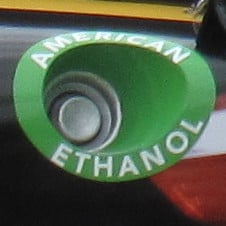
NASCAR has also spent years integrating renewable fuel technologies into competition operations. The sport has spent years integrating renewable fuel technologies into competition. In 2022, NASCAR announced it had surpassed 20 million miles driven on renewable fuel blends across its national series.
Credit
Photo by IowaPolitics.com via Wikimedia Commons (CC BY-SA 2.0).
Wikimedia Commons Image Page
Creative Commons BY-SA 2.0 License
More recently, NASCAR strengthened that positioning by naming POET as its official bioethanol partner in 2026. The partnership reinforced NASCAR’s ongoing emphasis on renewable fuels as part of its future competition strategy and broader sustainability goals.
In announcing the partnership, NASCAR Chief Impact Officer Eric Nyquist described the sport as “a real-world proving ground for innovation,” emphasizing NASCAR’s growing focus on renewable fuels and emerging technologies.
This is where Cummins’ involvement becomes especially interesting.
Why Manufacturers Still See Value in NASCAR
Companies investing in alternative fuels and advanced powertrain technologies increasingly need platforms where engineering credibility still matters. Motorsports has historically filled that role. NASCAR, despite perceptions that it lagged behind Formula One or endurance racing technologically, still offers manufacturers and suppliers a massive audience tied directly to automotive culture.
That audience remains valuable.
NASCAR is still popular with millions of television viewers and maintains strong links to truck culture and performance fans. That makes NASCAR a valuable platform for brands seeking year-round exposure connected to durability, innovation, and American manufacturing. For Cummins and Ram, forming connections between these markets is critical as both brands share much of their customer base with NASCAR’s fans.
Why the Truck Series Matters
The Truck Series specifically may be one of the most strategically important areas of NASCAR’s ecosystem for brands like Cummins.
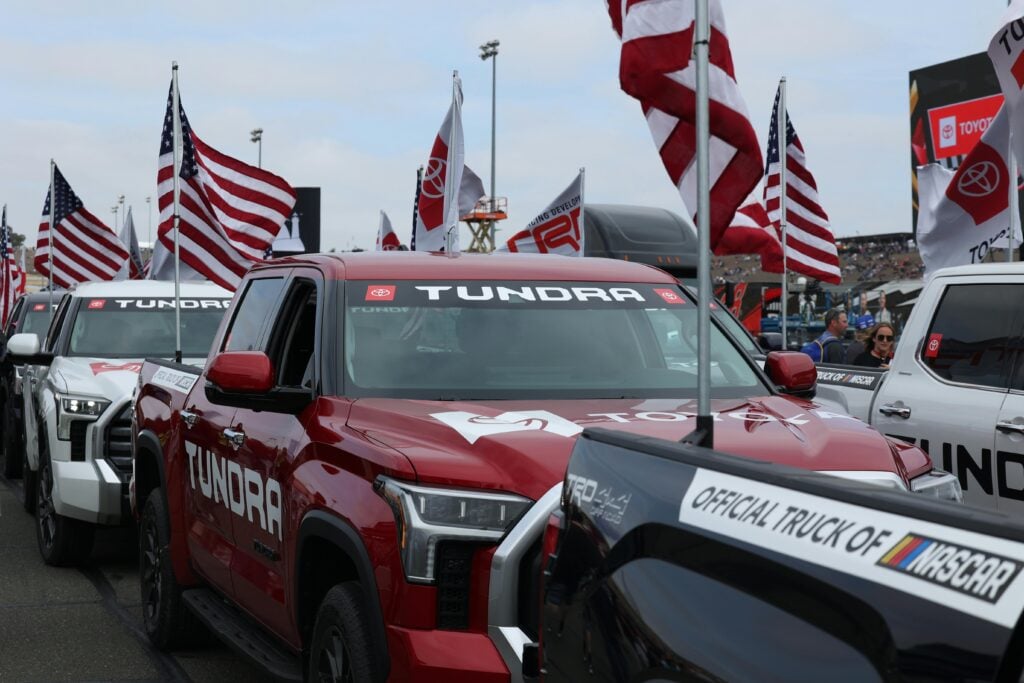
Photo by Sean P. Twomey via Pexels.
Pexels Image Page
Pexels License
Unlike the Cup Series, the Craftsman Truck Series maintains a direct visual and cultural connection to production trucks and commercial vehicle branding. That alignment creates natural synergy for companies tied to heavy-duty transportation, towing, commercial engines, and fleet operations.
It also provides a lower-risk environment for experimentation and brand development.
Ram’s broader return to NASCAR in 2026 already represented a major development for the sport. The manufacturer had not fielded a factory-supported NASCAR effort since 2012. The collaboration suggests there is still considerable manufacturer interest from manufacturers in participating in the Truck Series.
Cummins entering alongside Ram amplifies that significance.
The partnership suggests that automotive and transportation companies continue to view NASCAR as a valuable marketing platform. The partnership reflects a broader trend in motorsports where manufacturers are balancing technology development with brand positioning.
Businesses are trying to update their customers and replace their older customers while transitioning to more energy-efficient transportation methods.
Balancing Tradition and Innovation
Cummins has a direct relationship with this tension.
Cummins has long been associated with heavy-duty diesel-powered equipment, but the company is also trying to encourage new ways to transport people and goods based on electricity or hydrogen fuel. NASCAR offers a unique platform where Cummins can maintain credibility with traditional truck enthusiasts while also positioning itself as a forward-looking engineering company.
That balancing act matters because the automotive industry itself is currently fragmented. Consumers, regulators, and manufacturers are all moving at different speeds regarding electrification and alternative fuels. Many companies are attempting to present themselves as technologically adaptive rather than tied to a single future solution.
NASCAR’s evolving strategy reflects that same uncertainty.
Rather than abandoning combustion engines outright, NASCAR has leaned toward renewable fuels, emissions reduction, hybrid exploration, and sustainability initiatives that preserve core racing identity while modernizing the sport’s image. This approach may ultimately appeal more to companies like Cummins than a fully electric racing series would.
NASCAR increasingly represents a balance between tradition and technological modernization; this might help to explain why business manufacturers have not abandoned their investments in NASCAR, even as they are experiencing widespread change within the automobile manufacturing industry.
Additionally, it is important to appreciate the cultural context in which the two have partnered.
The Cultural Value of NASCAR
There is also a cultural element to the partnership that should not be ignored.
Brenden Queen represents a new generation of NASCAR talent with grassroots racing roots and a growing personal brand.
The partnership creates an authentic story that connects with fans through its blue-collar image, authenticity, and focus on technology.
For NASCAR, that combination is valuable.
The sport has spent years trying to modernize without alienating longtime fans. Partnerships like the Cummins and Ram collaboration suggest NASCAR is successfully balancing tradition with a future-focused image.
That balance could become increasingly important as manufacturers evaluate future motorsports and marketing investments.
Formula One has grown globally, Formula E has positioned itself as a future-facing electric series
Formula One has expanded globally, Formula E has positioned itself as a future-focused electric series, and endurance racing has seen renewed manufacturer interest. NASCAR’s challenge has been defining its own role in that changing environment.
Whether NASCAR ultimately becomes a major proving ground for alternative propulsion technologies remains uncertain. However, partnerships involving companies like Cummins suggest manufacturers still see strategic value in maintaining a presence within the sport during a period of significant transportation industry change
Cummins’ return may offer part of the answer.
The investment suggests NASCAR continues to hold value as a platform for innovation and brand visibility.
Trucking, manufacturing, and technology companies still see NASCAR’s relevance through its fans, culture, and focus on mechanical innovation.
That relevance matters because motorsports partnerships are rarely accidental. Large corporations do not commit to full-season sponsorships without believing the investment aligns with broader strategic objectives.
The return of Cummins to NASCAR seems to be about more than just racing. It is also about heritage, truck culture, Ram’s NASCAR return, and Cummins’ place in the future of transportation technology.
Viewed through that lens, the partnership becomes much more than a sponsorship announcement.
The partnership suggests NASCAR may remain relevant as the automotive industry continues evolving.
Sources:
NASCAR Impact — “HEALTHY ENVIRONMENTS”
Cummins — “CUMMINS LAUNCHES ACCELERA BY CUMMINS TO ADVANCE THE TRANSTION TO A ZERO-EMISSIONS FUTURE”
NASCAR — “On Earth Week, NASCAR commits to net zero operating emissions by 2035”
Cummins — “Transition to cleaner power with hydrogen engines”
NASCAR — “NASCAR reaches 20 Million miles driven on renewable Fuel”
