
Traditionally, motherhood was seen as child-rearing or balancing family and career, with little discussion of its emotional complexities. Modern motherhood in 2026 has been reshaped by remote work, mental health awareness, delayed fertility, and online parenting culture.
Modern-day mothers enjoy an unprecedented amount of freedom and information. However, many say they are overwhelmed, isolated, and emotionally stretched beyond what mothers have historically been.
Today’s mothers are expected to be emotionally present, successful, fit, patient, and to project the perfect family image online.
At the center of this cultural shift is a growing recognition that motherhood is not simply a role women step into overnight. Increasingly, experts and mothers alike describe it as a transformational process that reshapes identity, relationships, mental health, and daily life.
One term that has gained mainstream attention in recent years is “matrescence,” a concept originally coined in the 1970s to describe the physical, emotional, psychological, and social transition into motherhood. Psychologist Lauren Mahoney described the experience as “becoming something new, yet still holding onto who you were,” emphasizing that motherhood is not simply about having a child, but about undergoing a major identity transformation.
In discussions about modern motherhood in 2026, matrescence is shifting away from the idea of “silent sacrifice” long associated with motherhood. Mothers are now openly discussing their issues concerning burnout, identity loss, loneliness, and pressure to ‘do it all.’
The Rise of Mental Health Awareness Among Mothers
Maternal mental health is also becoming a larger area of focus in the field of motherhood than ever before. While previous generations often treated postpartum struggles as private, mothers today are more openly discussing anxiety, depression, exhaustion, and the mental load of parenting.
A recent advisory from the U.S. Department of Health and Human Services stated that “parents consistently report experiencing high levels of stress compared to other adults.” The report found that 48% of parents say “their stress is completely overwhelming” on most days, driven by financial strain, loneliness, time demands, and growing social pressure.
Social Media, Comparison, and Maternal Identity
At the same time, social media has created both connection and comparison. Platforms like TikTok and Instagram have allowed mothers to discuss difficult experiences more honestly, but they have also fueled unrealistic standards of parenting perfection.
Photo by Pixabay via Pexels
Pexels Image Page
Pexels License
Mothers discussing their experiences of matrescence online often describe the feeling of being “caught between two worlds.” The mother they were during their pre-baby life and the mother that they are becoming now that they have given birth. Many mothers have reported experiencing grief because of the loss of their previous independence, as well as feelings of love and gratitude towards their children.
This ambiguity of emotions is one of the hallmarks of being a mother today. Many mothers are starting to abandon the belief that there must be a distinction between parenting being joyful or difficult, and instead, mothers are starting to recognize that both can exist simultaneously.
The growing visibility of these conversations is helping reduce stigma around maternal mental health. Experts say simply having language to describe these experiences can help mothers feel less isolated and less ashamed. As psychologist Lauren Mahoney explained, “Having a word for it changes how women talk about what they need.”
The growing popularity of terms like matrescence has helped mothers see their struggles as part of a major life transition rather than a personal failure.
Work-From-Home Culture Changed Parenting
Another major shift in motherhood has come from the transformation of work itself.
The COVID-19 crisis accelerated remote and hybrid work, giving many mothers more flexibility by 2026 while also blurring the line between work and caregiving responsibilities.
For some women, remote work has made motherhood more accessible. A 2026 article published by Le Monde argued that flexible work arrangements may help reduce the “career penalty” often associated with motherhood. Researchers increasingly believe remote work could even help slow declining birth rates because women no longer feel forced to choose entirely between career advancement and family life.
Reporting from The Times noted that remote work flexibility may help couples feel more financially stable and encourage earlier family planning.
But flexibility has not necessarily reduced pressure on mothers. Instead, many women now find themselves juggling work emails, childcare, household management, and emotional caregiving simultaneously throughout the day.

Photo by Ron Lach via Pexels
Pexels Image Page
Pexels License
A contemporary work from home mom is frequently switching between roles; one moment she is in a virtual meeting and the next she is making dinner, helping her kids with homework or comforting them. Unlike earlier generations, mothers today often juggle work and home life simultaneously.
The Invisible Mental Load of Working Mothers
This blending of responsibilities has also made invisible labor more visible. Emotional labor — planning schedules, remembering appointments, managing emotions, and organizing family life — still falls disproportionately on women. In the viral Harper’s Bazaar essay on emotional labor, writer Gemma Hartley captured the frustration many mothers feel with one simple sentence: “I don’t want to have to ask.” The quote resonated with women exhausted not only by household tasks, but by managing the mental load of family life.
A Harper’s Bazaar article helped popularize emotional labor, arguing many women are exhausted by the mental responsibility of managing entire households.
That concept has become central to discussions about motherhood in 2026.
Fertility Trends and Delayed Motherhood
Modern motherhood is also changing because women are becoming mothers later in life.
Economic pressures, student debt, housing costs, and career demands have all contributed to delayed family planning. According to data from the CDC National Center for Health Statistics, birth rates in the United States have continued shifting toward older age groups over the last several years.
Research from the Penn Wharton Budget Model found birth rates among women in their early 30s now surpass those in their 20s, reflecting shifts in education, careers, and financial stability.
In 2026, many women view motherhood as a choice, while treatments like egg freezing and IVF are more openly discussed among those balancing careers and family planning.
At the same time, some adults are deciding not to have children at all. Younger generations increasingly prioritize financial independence, mental health, travel, and personal happiness before becoming parents.
Prioritizing these goals over traditional norms has redefined success, making motherhood a choice rather than an expectation.
Social Media and the Pressure to Be Perfect
Perhaps no force has shaped modern motherhood more visibly than social media.
Historically, parents relied on guidance from family, medical professionals, or their community for information about parenting. Nowadays, mothers are inundated with a plethora of parenting information on the internet. Some of it is constructive and informative, but a lot of it leads to comparison and unrealistic standards.
Social media has connected mothers while also creating unrealistic parenting comparisons.
Experts say this environment has intensified feelings of inadequacy among mothers. Women are not only parenting their children — they are also managing how motherhood appears publicly.
Social media has connected mothers while also creating unrealistic parenting comparisons. Platforms like TikTok and Instagram have helped mothers share their struggles openly, but many say social media also fuels unrealistic expectations of “perfect” motherhood.
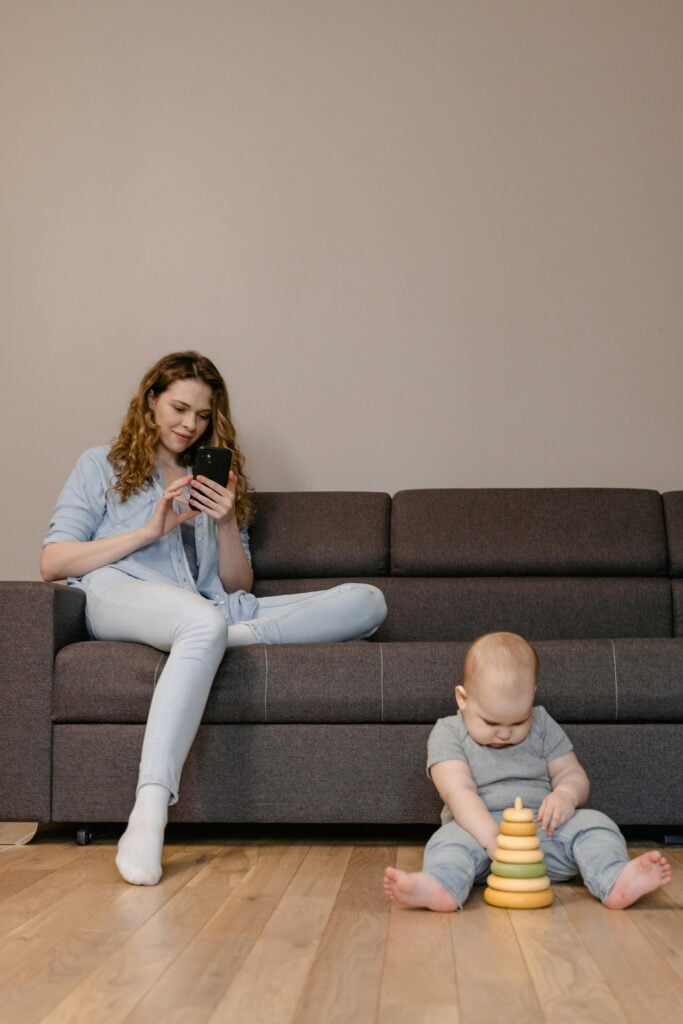
Photo by MART PRODUCTION via Pexels
Pexels Image Page
Pexels License
Online discussions about matrescence demonstrate this change in society. More mothers are rejecting the idea that becoming a parent comes without emotional challenges. Instead, mothers are beginning to view motherhood as a significant transition in their lives deserving of empathy, support, and patience.
A New Era of Motherhood
Motherhood 2026. Easier? Harder? Who’s to say? One thing we can say is that it certainly isn’t the same as it was before.
Today’s mothers navigate technology, economic uncertainty, remote work, and constant online visibility while balancing careers and emotional support for their families. They are encouraged to practice self-care while carrying weighty mental/emotional responsibilities.
While mothers face these challenges, what has changed is that mothers are communicating about their experiences more candidly.
Conversations about burnout, mental health, fertility struggles, identity shifts, and emotional labor are becoming more mainstream. Women are increasingly rejecting the idea that motherhood should require silence, perfection, or self-erasure.
In many ways, the biggest shift in modern motherhood may not be logistical at all.
Mothers are finally being allowed to say what previous generations often could not; becoming a mother changes everything.
Sources:
Parents — “‘Matrescence’ Explained: The Big Life Shift Some New Moms Don’t Expect”
Le Monde — “For women, remote work can reduce the career costs of motherhood”
The Times — “Working from home could help reverse falling birth rates, study suggests”
Centers for Disease Control and Prevention — “Births“
The Atlantic — “The Key to Understanding HBO’s ‘The Sympathizer’”
Parents — “The ‘Matrescence’ Trend Is Growing—What Real Moms Are Sharing Online”
Harper’s Bazaar — “Women Aren’t Nags—We’re Just Fed Up”
Penn Wharton Budget Model — “Measuring Fertility in the United States”
Medium — “What the Hell Is Emotional Labor?”
Editor’s Disclaimer: This article is intended for informational and cultural commentary purposes only. It does not constitute medical, psychological, or professional advice. Experiences with motherhood, mental health, fertility, and parenting vary widely between individuals. Readers seeking personal medical or mental health support should consult a qualified healthcare professional.
