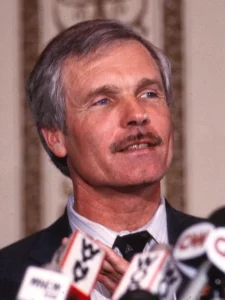
The Birth of 24-Hour News
When Ted Turner launched CNN in 1980, many television executives believed the idea was doomed from the start. The Ted Turner legacy began here, with a network dedicated entirely to news — twenty-four hours a day, seven days a week — that sounded financially reckless and creatively impossible. Americans, critics argued, simply would not watch that much news.
Turner disagreed.
Turner fundamentally changed all aspects of media over the next few decades. Through his establishment of the first successful 24-hour news network worldwide, he transformed the way we cover wars, the way politicians communicate, and how we consume breaking news.
His death this week at age 87 marks the end of one of the most disruptive and influential careers in modern media history.
Turner was never an ordinary executive. He was loud, impulsive, competitive, and often controversial. Nicknamed both “Captain Outrageous” and “The Mouth of the South,” he built a media empire through risk-taking that more cautious executives would never have attempted. Yet beneath the bravado was a businessman who understood earlier than almost anyone else that technology was changing how people would experience news and entertainment.
Before CNN, television news largely operated on a schedule. Americans watched morning news, evening broadcasts, and occasional special reports. Major networks such as ABC, CBS, and NBC controlled the landscape. News divisions were important, but they were still limited by programming schedules and traditional broadcasting structures.
Turner saw a different future. Through his Atlanta-based “superstation” WTBS, he had already demonstrated that cable television could bypass geographic limitations and reach national audiences. That success gave him the confidence to pursue what many considered an absurd dream: nonstop global news coverage.
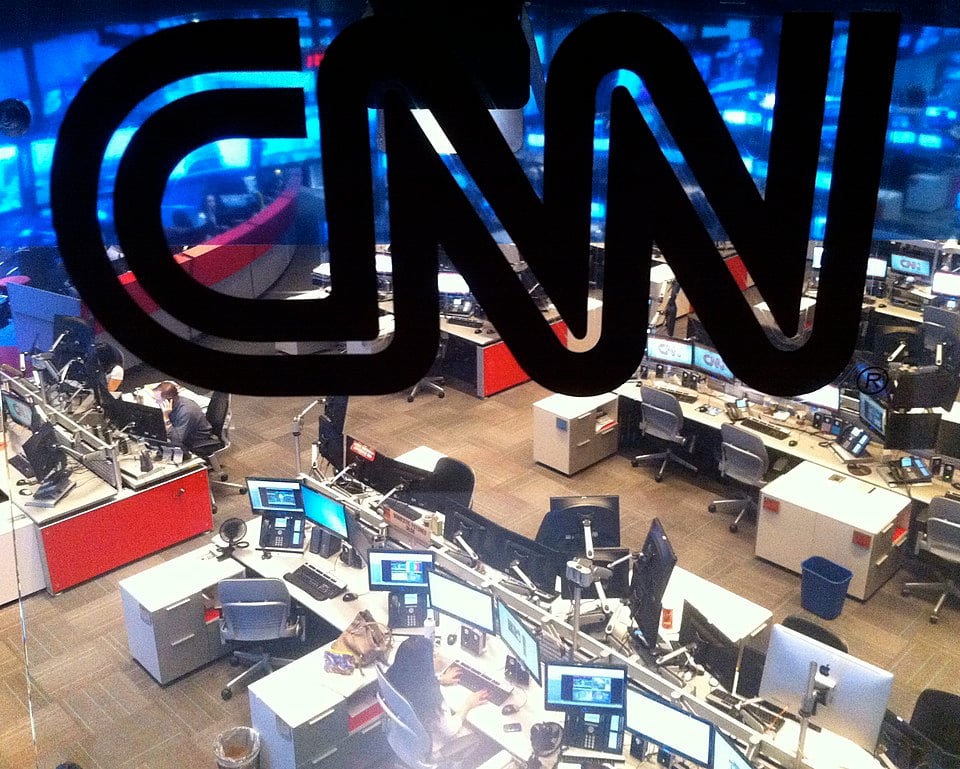
Photo by Charles Atkeison via Wikimedia Commons (CC BY 2.0)
Wikimedia Commons image page
Creative Commons Attribution 2.0 License
Launching CNN Against the Odds
CNN launched on June 1, 1980. Critics mocked it almost immediately. Competitors referred to the network as the “Chicken Noodle Network,” predicting viewers would quickly lose interest. Financial losses mounted early, and Turner reportedly used personal assets to keep the company alive during its difficult early years. As the Los Angeles Times later noted, “The 24-hour news channel was not widely expected to be a success.” Yet Turner remained convinced audiences would eventually embrace nonstop global news coverage. But he remained convinced that audiences wanted immediate access to information instead of waiting for scheduled broadcasts.
That gamble changed journalism forever.
How CNN Changed Television Journalism
CNN’s breakthrough came during major world events where live coverage mattered more than polished production. The network’s reporting during the Challenger disaster, the fall of the Berlin Wall, and especially the Gulf War demonstrated the power of continuous live television news. As later reflected in coverage of his death, Ted Turner’s “24-hour news channel CNN revolutionized TV journalism.” His creation of CNN transformed live television journalism from scheduled reporting into a constant global stream of information. Viewers across the world watched conflicts unfold in real time. Governments, military leaders, and journalists suddenly operated in a media environment where information moved instantly and globally.
Turner once famously declared that CNN would cover “the end of the world live.” The quote captured both his flair for dramatic language and his understanding of where television was heading. He believed news should be immediate, global, and always available.
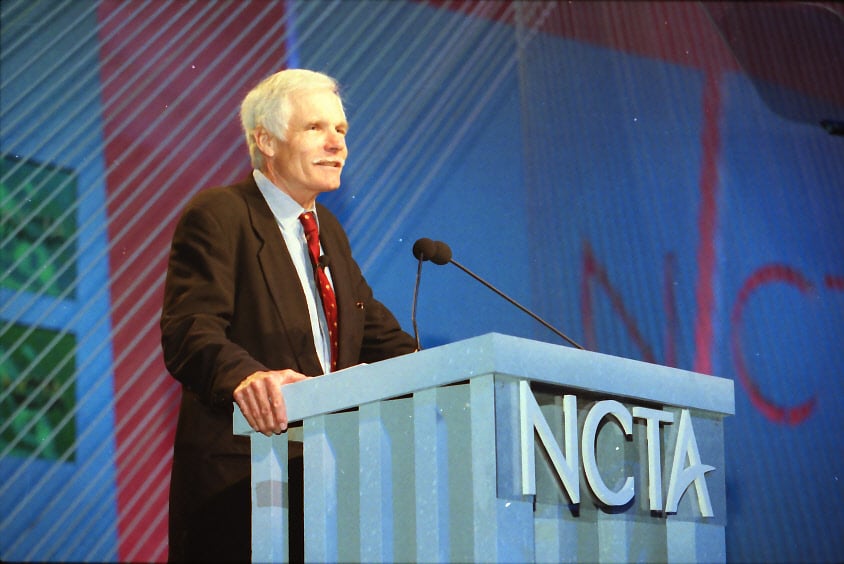
Photo credit: INTX: The Internet & Television Expo / Wikimedia Commons (CC BY 2.0)
Wikimedia Commons image page
Creative Commons Attribution 2.0 License
That philosophy eventually became standard across the industry.
It is almost impossible for people today to remember when they were surrounded by news agencies and television networks showing sports on an almost 24/7 basis, to have access to live streaming videos of sporting events, or to read ongoing commentary through various digital social networking sites.
While the internet and smartphones accelerated that transformation, Turner helped create the foundation long before digital media dominated public life. CNN demonstrated that audiences would indeed consume continuous information — and that the speed of news could become just as important as the news itself.
Building a Media and Sports Empire
His influence extended beyond journalism. Turner built an entertainment empire that included TNT, Cartoon Network, Turner Classic Movies, and a massive film library acquired through MGM. When Ted Turner invested in the Atlanta Braves and Atlanta Hawks, he revolutionized how sports had been previously marketed for commercial broadcasting by utilizing his television networks to create a national broadcasting presence for both teams.
Turner took a very direct style to owning sports teams just as he did to programming television. For example, broadcasting Braves games on TBS was key to building one of the first truly national fan basesfor baseball. Turner’s personality often became involved in the entertainment value of baseball games, as evidenced by the way he once took over as manager of the Braves during along losing streak, showing no willingness to stay out of the public eye.
Philanthropy and Conservation Efforts
Beyond his media and sports-related accomplishments, another major part of the Ted Turner legacy was his commitment to environmental causes and philanthropy.
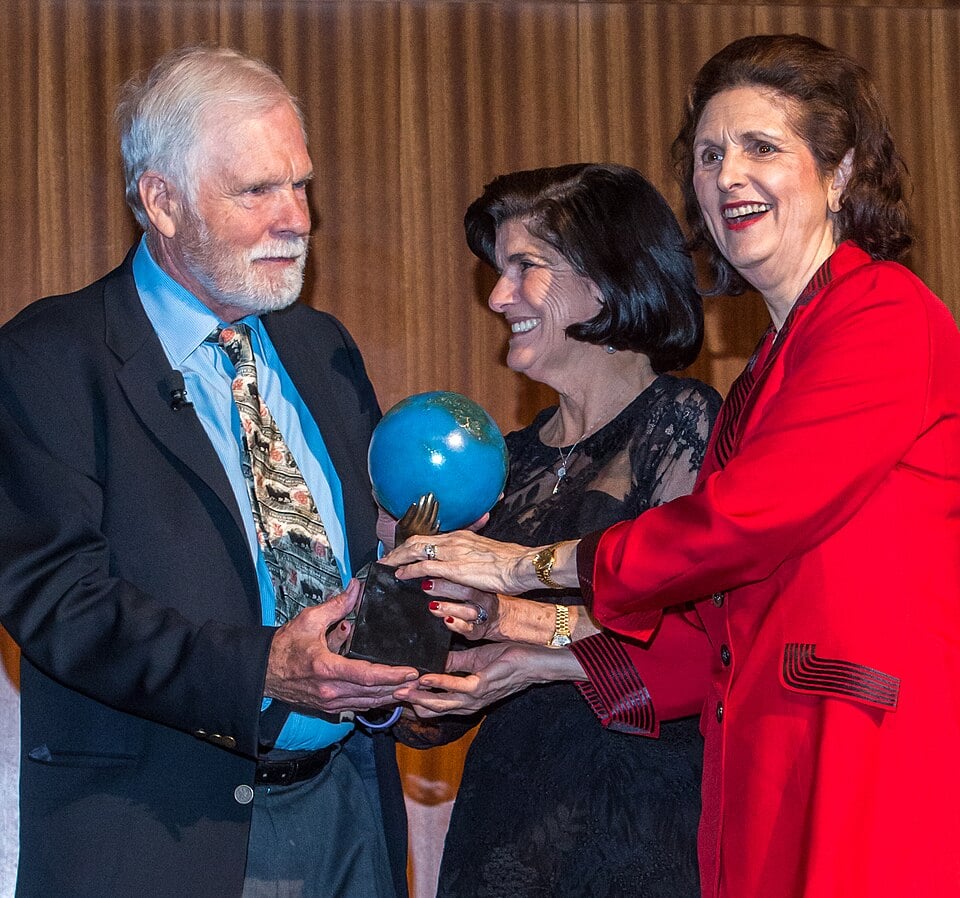
Photo courtesy of the LBJ Library via Wikimedia Commons (Public Domain)
Wikimedia Commons image page
Wikimedia Commons public-domain licensing information
He acquired a large amount of property, establishing one of America’s largest private bison herds, and donated one billion dollars to United Nations projects, which was one of the largest charitable donations ever made prior to this point. Conserving wildlife and habitats became essential to his life during his later years.
The Associated Press reported that Ted viewed his charitable contributions to wildlife conservation as an ongoing commitment rather than as simply an act of benevolence. He worked extensively on conserving wild animal habitat, protecting endangered species, and managing land in a sustainable way.
The Controversial Legacy of Cable News
Even his critics acknowledged the scale of his ambition.
Turner often invited controversy with blunt remarks and unpredictable behavior. Rivals considered him reckless. The traditional broadcasters saw him as being combative and disruptive to their business models. Some of his critics claimed that through nonstop news broadcasts, he contributed to sensationalism, political polarization, and information overload. The modern cable news environment — built on constant urgency and endless commentary — remains deeply divisive today.
The complicated legacy of CNN cannot be overlooked.
CNN’s success inspired competitors that transformed television news into a permanent cycle of breaking updates, ratings battles, and ideological conflict. In many ways, modern media culture still operates inside the system Turner helped create. Being the first to break a story, staying on the air as a live event, and filling the airtime with content led to significant developments in cable news’ economics. Critics claim that the conditions that came with this environment have resulted in an ever-increasing blurring of the lines between journalism and entertainment.
Expanding Global Access to Information
Turner also dramatically increased public access to information historically.
Prior to CNN, audiences worldwide had not seen live coverage of critical events such as international wars or foreign elections. The launch of his network changed that paradigm. Wars, elections, natural disasters, and political turmoil are now all immediate events that are shared by many people worldwide.
The modern expectation that news should be available instantly owes much to the infrastructure and culture Turner pioneered decades ago.
While he influenced journalists and Television Executives, Turner represented a type of American entrepreneur that was increasingly rare in today’s corporate media environment; an entrepreneur who is as muchdriven by instinct and courage ashe is bythe market researchprocess. Turner created his empirelong before streaming algorithms or multinational technology companies changed the business model of the media industry. Part of his success came from betting big on ideas that were ignored by the traditional media industries.
That willingness to gamble defined both his greatest triumphs and his failures.
Due to his increasing power over the company, when Turner Broadcasting merged with Time-Warner in 1996, he ultimately lost control of thevast empire he had created. AOL’s merger with Time-Warner(and then AOL’s resulting collapse) would later be viewed as one of the biggest failures inthe media business. Turner’s contribution to the creation of cable television survived these business failures.
His personal life also remained highly public for decades, including his marriage to actress and activist Jane Fonda. Following his death, Fonda described Turner as “swashbuckling” and praised both his humor and intelligence.
The End of an Era
Even late in life, after being diagnosed with Lewy body dementia in 2018, Turner continued to symbolize a transformational era in American media. His career stretched from billboard advertising to global television dominance, bridging multiple generations of communication technology.
Ted Turner’s Lasting Impact on Media
In the end, Ted Turner did more than create CNN. He changed how humanity experiences events themselves.
Before Turner, journalism was considered the last frontier of the unfiltered world. After Turner, we know about events as they happen.
Whether you appreciate Turner as a visionary or despise him for developing the 24/7 news cycle, the impact he had on mass media in general and on journalism specifically cannot be overstated.
As CNN chairman Mark Thompson said following Turner’s death, “Ted is the giant on whose shoulders we stand.” The statement reflected how deeply Turner’s ideas reshaped modern television journalism and global news culture.
Every breaking-news alert, every live global broadcast, and every twenty-four-hour news cycle carries part of the legacy he left behind.
Sources:
The Guardian — “Ted Turner obituary”
The Washington Post — “Ted Turner, cable TV visionary who created CNN, dies at 87”
Los Angeles Times — “Ted Turner, CNN creator who revolutionized the media industry, dies at 87”
Financial Times — “Ted Turner, media mogul, 1938–2026”
Associated Press — “More than a media mogul, Ted Turner leaves behind a conservation legacy”
Yachting World — “Obituary: Ted Turner, America’s Cup Icon and Founder of CNN (1938–2026)”
Editor’s Disclaimer: This article is an editorial analysis examining Ted Turner’s influence on television journalism, cable news, and modern media culture. Some sections include commentary and historical interpretation alongside reported facts and publicly available statements.
