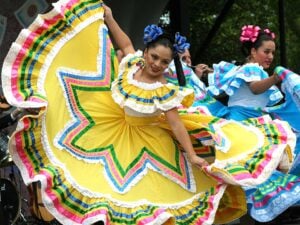
Each year on Cinco de Mayo in the United States, bars fill with people drinking margaritas and celebrating, though many don’t understand what the holiday commemorates. Therefore, I will clarify some of the most common misconceptions regarding the holiday. For example, Contrary to popular belief, Cinco de Mayo is not celebrated in Mexico to commemorate the country’s independence from Spain.
Instead, it marks a single unlikely military victory that holds greater cultural significance in the United States than in Mexico.
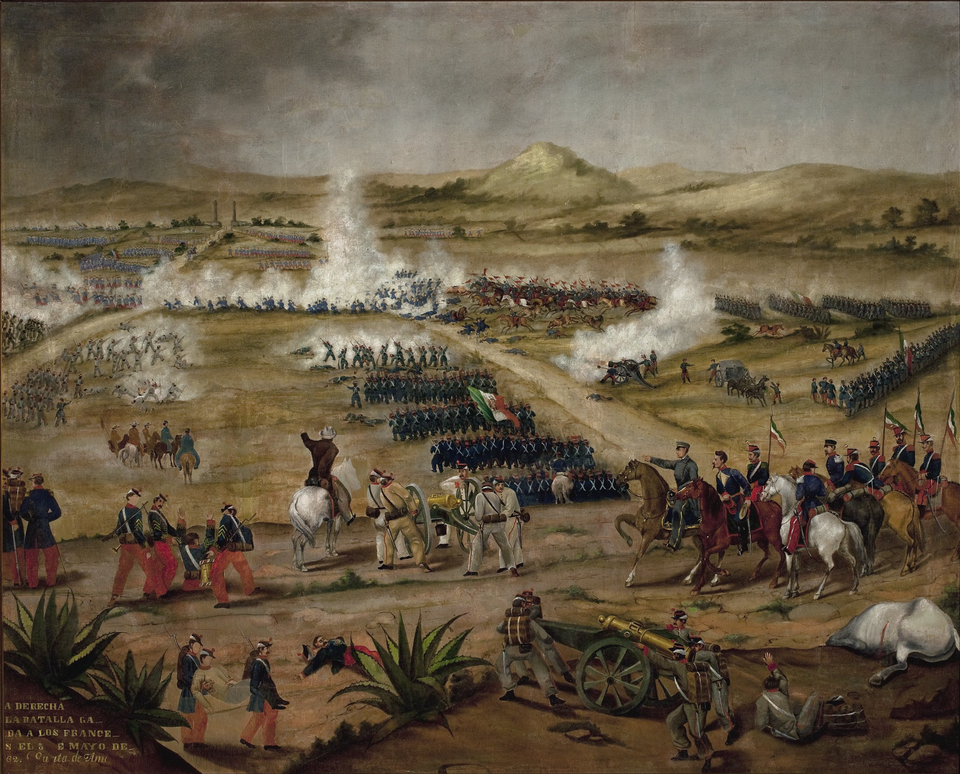
The Origins of Cinco de Mayo
The story begins in the mid-1800s, a period of significant political and economic instability in Mexico. After enduring internal conflicts, including the Reform War, Mexico faced severe financial difficulties. In 1861, President Benito Juárez decided to suspend payments to foreign creditors, which resulted in Britain, Spain, and France all intervening in Mexico’s affairs. After Britain and Spain negotiated settlements with Juarez and pulled out of Mexico, France had broader ambitions to establish a monarchy in Mexico, ultimately installing Maximilian I as emperor under the influence of Napoleon III.
The Battle of Puebla and Its Meaning
This ambition led directly to the Battle of Puebla on May 5, 1862. French forces, considered among the strongest military powers in the world at the time, marched toward Mexico City. A much smaller and less-equipped Mexican army commanded by General Ignacio Zaragoza stood in the way of the larger French Army. The Mexican forces defeated the French outside the city of Puebla, in a surprising outcome. Although the battle was not a long-term strategic victory—France later occupied Mexico City—it carried significant symbolic importance. As the Smithsonian Institution explains, “the victory boosted the Mexican army’s morale and national pride.” The victory showed that a resolute Mexican army is capable of defeating an enormous, established European army, and thus gave Mexicans both national pride and hope against great odds.
Why Cinco de Mayo Is Not Widely Celebrated in Mexico
In Mexico, however, Cinco de Mayo never became a major national holiday. It is primarily observed in the state of Puebla, where the battle took place, with reenactments, parades, and local celebrations. Across most of the country, it remains a relatively minor observance rather than a nationwide event.
Cinco de Mayo in the United States: Early Roots
Ironically, it was north of the border where Cinco de Mayo began its transformation into something much larger.
In the 1860s, shortly after the Battle of Puebla, the holiday began to take on significance in the United States. In California and other western regions, particularly in communities shaped by the legacy of the Treaty of Guadalupe Hidalgo, Mexican American communities began celebrating their victory over France. So the celebrations were not only cultural but also a political statement about France’s invasion, which some contemporaries associated with monarchist interests, and also resonated with Union supporters during the American Civil War.
From Cultural Symbol to Civil Rights Expression
Over time, Cinco de Mayo became a symbol of identity and resistance for Mexican-American communities. As one academic analysis notes, the battle “became a powerful symbol of Mexican national unity that helped to make sense of the violence of the previous decades.” This meaning extended beyond the event itself, transforming the holiday into a broader expression of cultural memory and pride.
The Civil Rights Movement of the 1960s and 1970s reawakened this symbolic power when Chicano activists chose Cinco de Mayo as an opportunity to exhibit their Mexican heritage through the lens of cultural identity within the United States. Cinco de Mayo also served as an avenue for highlighting history, raising awareness, and promoting pride, all while resisting marginalization. In this context, Cinco de Mayo was a reflection of the past but also served as a vehicle for feeling a sense of belonging in the current time.
The Rise of Commercialization
Yet the version of Cinco de Mayo most Americans recognize today took shape decades later, driven less by activism and more by commercialization.
By the 1980s and 1990s, corporations—particularly in the food and beverage industries—began to see the holiday as a marketing opportunity. As TIME notes, “marketers-especially within the spirits industry-seized the moment.” Advertisers used these campaigns to expand the holiday’s visibility which would be celebrated as part of the Mexican Cultural Celebration, like a fiesta or an event where everyone drank and enjoyed a meal together. This promotional effort helped to increase the reach of the event, turning it into an established event for Americans.
Cinco de Mayo Today: Celebration and Debate
Cinco de Mayo is now more widely celebrated in the U.S. than in Mexico. Today, cities like Los Angeles, Chicago, and Houston host large Cinco de Mayo festivals with food, music, and cultural performances.
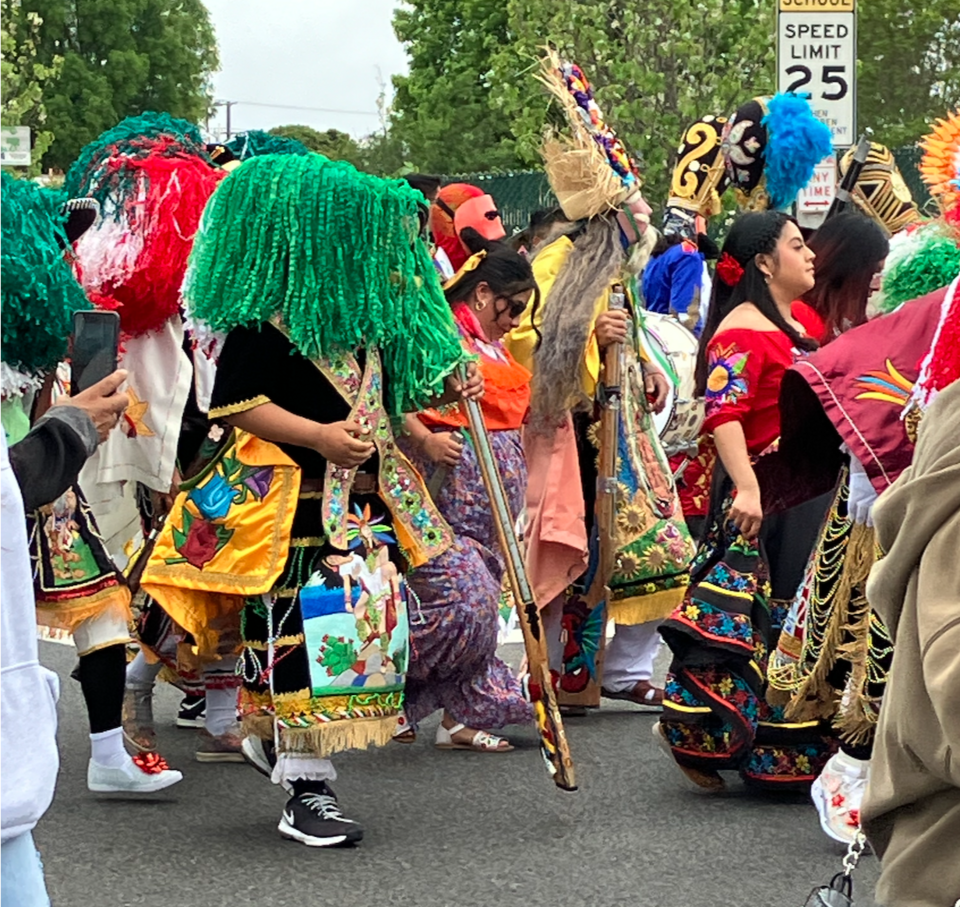
https://commons.wikimedia.org/wiki/File:CincodeMayoGardena2024b.png
Creative Commons CC0 1.0 (Public Domain Dedication)
https://creativecommons.org/publicdomain/zero/1.0/
This shift has made Cinco de Mayo’s roots more visible abroad than in its homeland. In the United States, Cinco de Mayo is celebrated broadly as a celebration of Mexican-American heritage. In Mexico, Cinco de Mayo is still very regionally based and recognized as most significant in Puebla.
There has been considerable debate about this change. Some believe commercialization has reduced Cinco de Mayo to a stereotype rather than a meaningful cultural celebration. Others see it as a chance to recognize the contributions of Mexicans to American society as their population continues to grow.
A Holiday with Two Meanings
These two positions illustrate the fact that the evolution of this holiday is complex.
Its growing celebration has raised awareness of Mexican culture—often inaccurately—while obscuring the deeper meaning of the Battle of Puebla.
The Lasting Meaning of Cinco de Mayo
Understanding Cinco de Mayo requires holding multiple truths at once. Cinco de Mayo traces how one military victory became a symbol that crossed borders and evolved across cultures.
The Battle of Puebla has become an enduring symbol of perseverance through adversity. An outnumbered and poorly equipped army faced a global power and achieved a temporary but meaningful victory. This story has shaped Mexican and Mexican American identity in North America, offering identity and pride amid hardship.
Social, demographic, and economic shifts in North America have turned Cinco de Mayo into a commercialized cultural event, including in Puebla. Cinco de Mayo blends history, identity, and culture across Puebla and the United States, illustrating how holidays evolve over time.
Margaritas and street festivals may define modern Cinco de Mayo, but its deeper meaning lies in resistance, identity, and shared history.
It’s a misconception that knowing the history diminishes the celebration; in fact, it adds meaning. It also highlights how this pivotal moment shaped Mexico’s cultural identity 150 years later.
Sources:
Smithsonian Institution — “The real history of Cinco de Mayo”
El País — “Por qué el Cinco de Mayo se celebra más en Estados Unidos que en México”
Encyclopaedia Britannica — “Battle of Puebla”
Library of Congress — “The Roots of Cinco de Mayo: The Battle of Puebla”
TIME — “The Surprising Evolution of Cinco de Mayo”
Indiana Historical Society — “The Real History Behind Cinco de Mayo”
Editor’s Disclaimer: This article is intended for educational and informational purposes and reflects a historical overview of Cinco de Mayo and its cultural significance in both Mexico and the United States. While every effort has been made to ensure accuracy, interpretations of historical events and cultural traditions may vary across sources and communities.
The views expressed aim to clarify common misconceptions and provide context, but they do not represent a singular or definitive perspective. Readers are encouraged to consult additional sources for a more comprehensive understanding of the subject.
